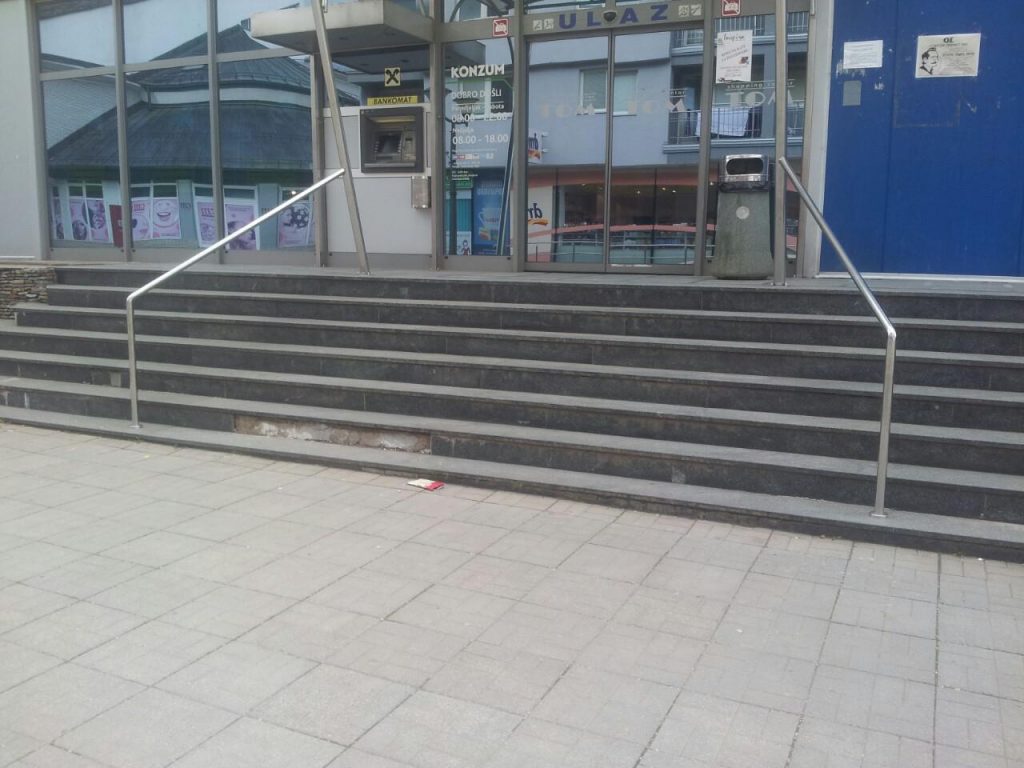
Pale: Poor Urban Planning Presents Obstacles for Wheelchair Users

The urban infrastructure of Pale makes it difficult for wheelchair users to move freely across the town.

The urban infrastructure of Pale makes it difficult for wheelchair users to move freely across the town.

Although the town’s public institutions, such as the university, the hospital and the city hall each have so-called ramps for wheelchairs, the photos that follow show details that are, at first glance, seemingly insignificant, but present insurmountable obstacles in the everyday lives of wheelchair users.

Photos and captions by Mladen Lakić, Eastern Sarajevo
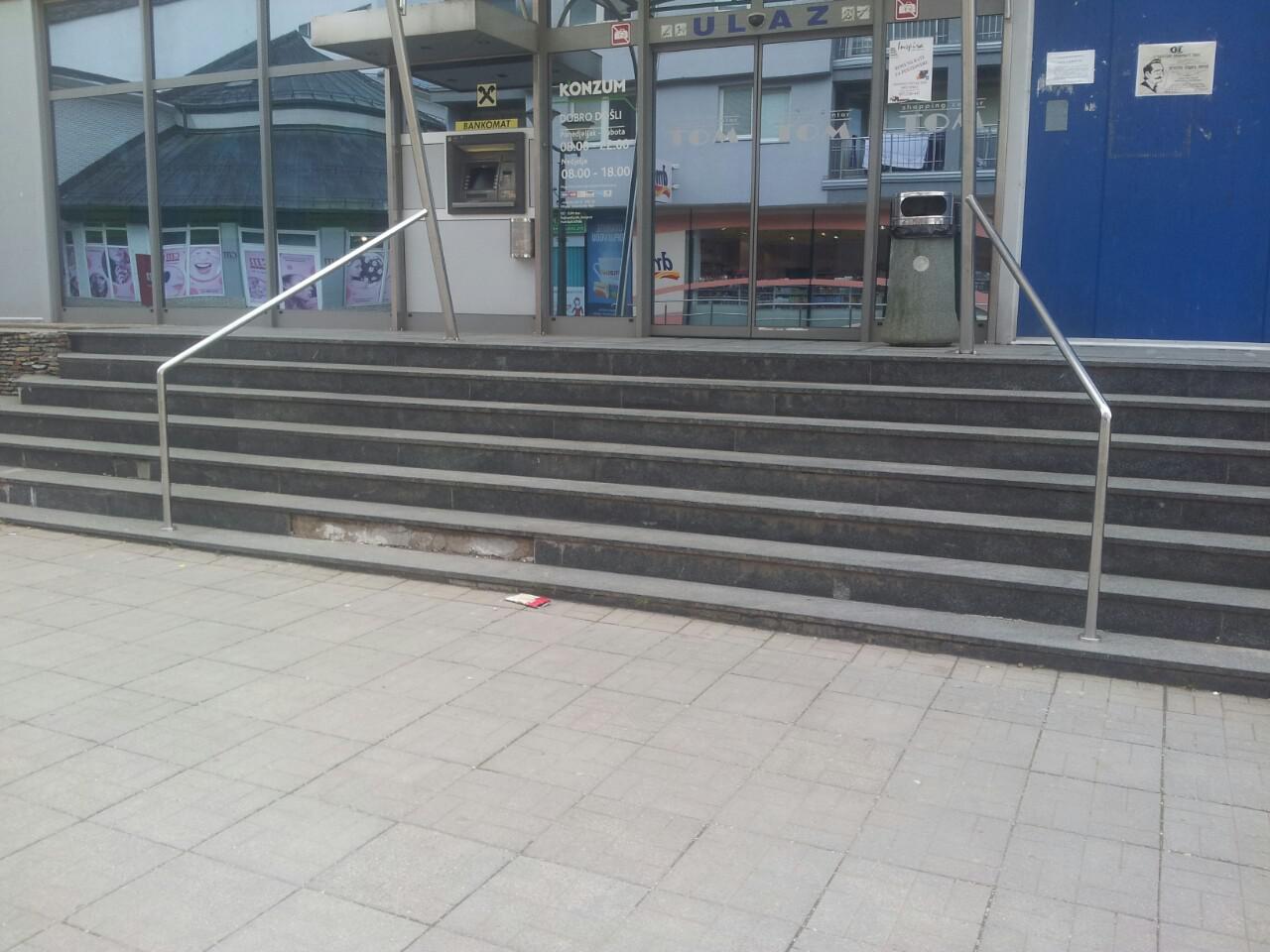
ulaz u trzni centar (Shopping mall)“Sales (un)available to all”. A side entrance to the Tom Shopping Center.
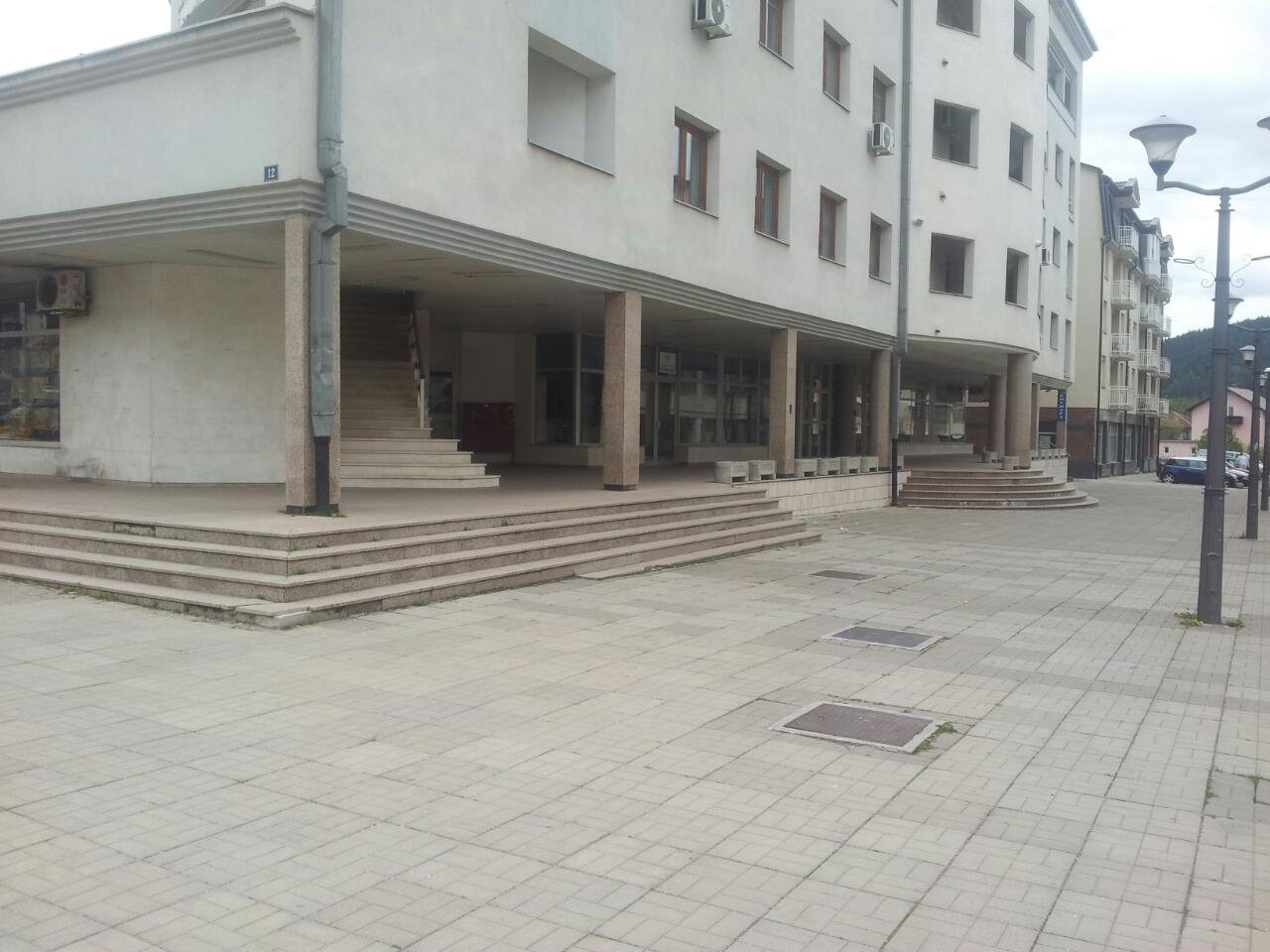
Elektrodistribucija glavni ulaz”How would you like to pay for that bill?”. The main entrance to the Pale Electric Utility Company.
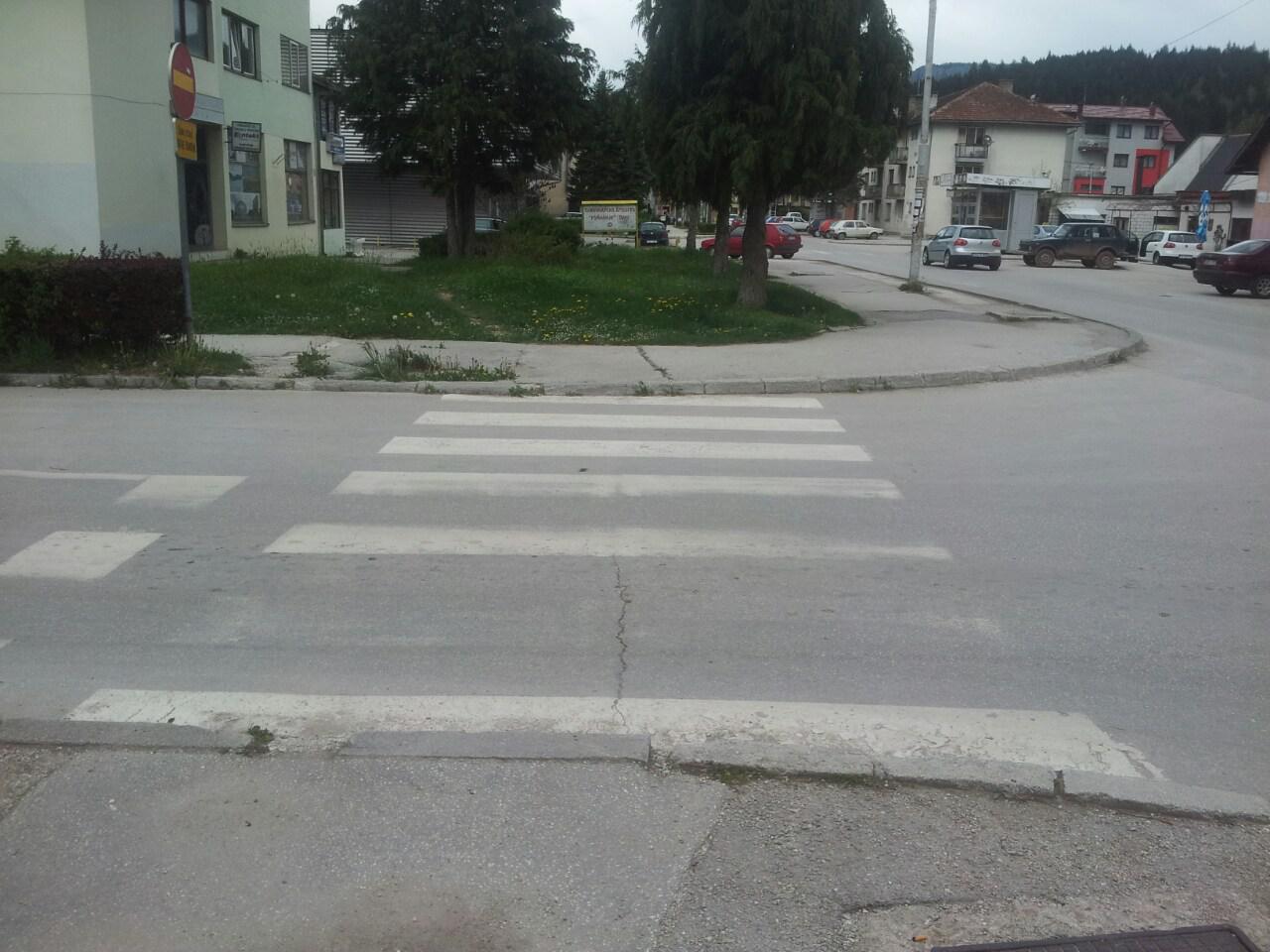
neuslovan trotoarDamaged pedestrian crosswalks make crossing the street in a wheelchair more difficult.
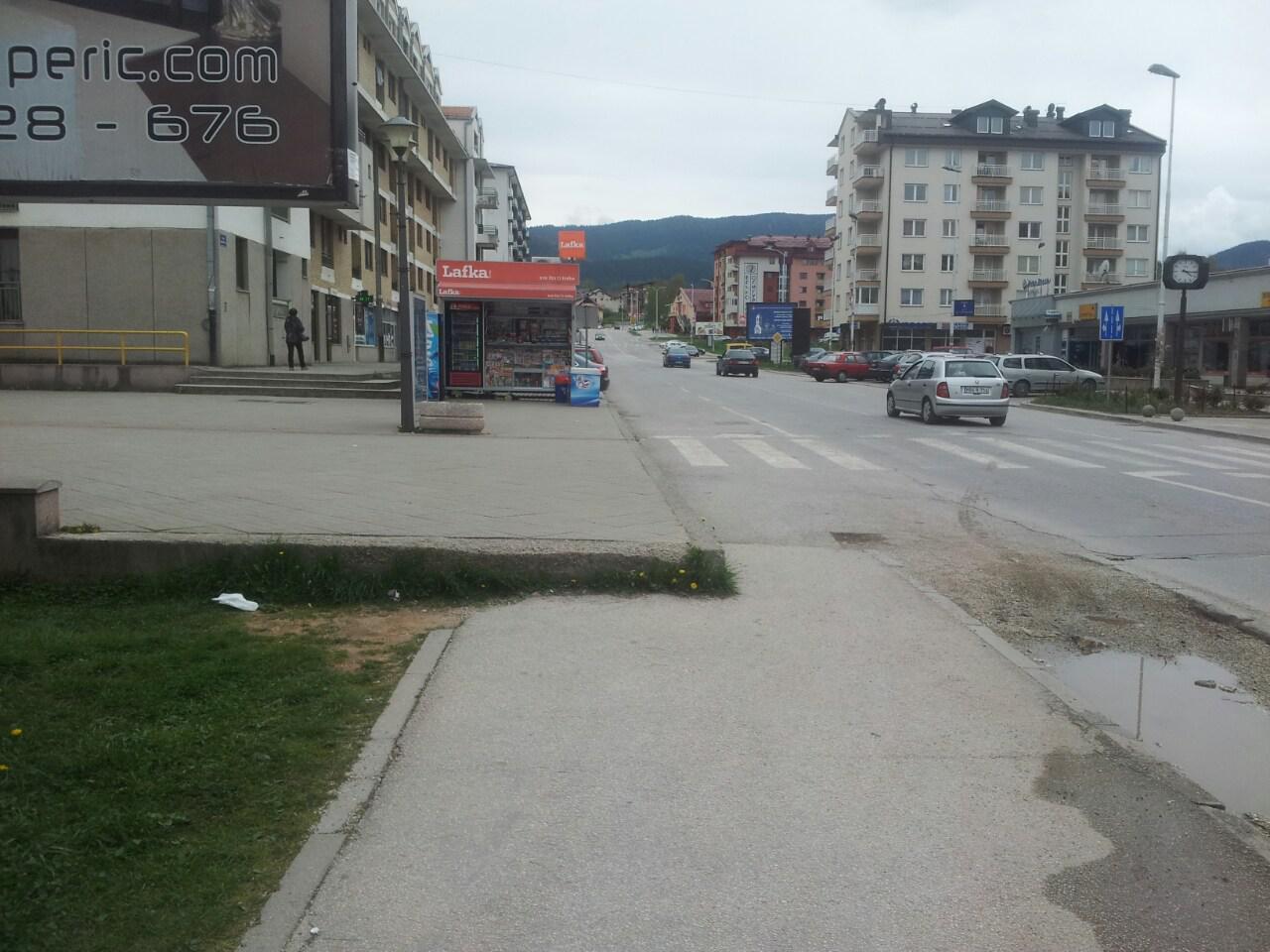
pocetak setalista”The pedestrian zone is available if you can make the jump.”

Bankomat (ATM)”Is it payday?” This ATM proves inaccessible to wheelchair users.

Mladen is a Balkan Diskurs trained correspondent from East Sarajevo, Bosnia-Herzegovina. He studied Journalism at the University of East Sarajevo. In addition to his journalistic endeavors, Mladen works as a human rights researcher and is also an activist.

Related posts

Banja Luka Speaks Out: Let Us Breathe with Clear Lungs
Tobacco came to Europe in the 16th century. In the beginning, only members of the upper class, predominantly men, had access to it. Nowadays, however, it is available across the globe and is easily accessible to anyone and everyone.
The International Commission on Missing Persons: The Search for Bosnia’s Missing is Key to Positive Peace
On July 11th, 2023, thousands of mourners arrived at the Srebrenica Memorial Center in Potočari to commemorate the 28th anniversary of the Srebrenica genocide. This ever-expanding cemetery serves as a final resting place for many of the approximately 8,000 Bosniak men and boys who were killed in the civilian massacres of 1995. Although nearly three decades have passed since the genocide, 30 victims were buried this year, the youngest of whom was a 15-year-old boy. Additionally, the year witnessed 71 re-associations, referring to the burial of newly found remains of victims who have already been identified and partially interred.

Leave a Reply

Your email address will not be published. Required fields are marked *


Winner of the Intercultural Achievement Recognition Award by the Austrian Federal Ministry for Europe, Integration and Foreign Affairs

Post-Conflict Research Center
Join our mailing list