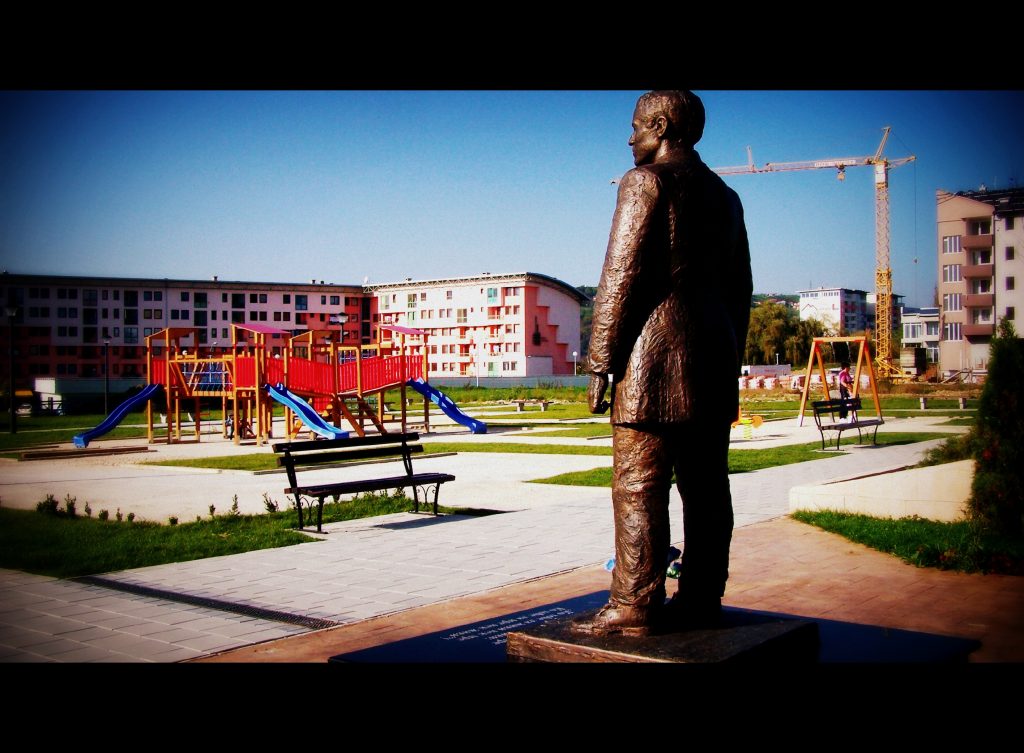
No Room for Truth?

How do truth, peace and justice interact in the transitional justice mechanisms established for the former Yugoslavia?

Taylor McConnell completed an MSc in International Development at the University of Edinburgh in 2015. Originally from Central Pennsylvania, Taylor traveled through the Balkans and developed a keen interest in the post-war history of Bosnia, particularly in reconciling national identity, memory and development policy, leading him to move to Sarajevo in May 2015.

Related posts

Inclusion in Action: New Energy and Strength in “Dragon’s Heart”
“I never had a better coffee than this one,” “Great job, man, congratulations,” “Wow, your coffee was so good, congratulations!” These words can be heard often in Zmajevo Srce [Dragon’s Heart], the only café in Tuzla where people with Down syndrome and other disabilities work as waiters. Such words and praise mean a lot to them. They understand everything very well and they always remember what you order.
The White City and the “Invisible” Photographer
The Bosnian city of Bijeljina, nestled in the northeast, takes its name from the word “bijela” meaning “white”. Despite an absence of visual evidence as to why the city has been given this name, it nonetheless seems fitting. This is not due to an abundance of white buildings, of which there are few, but because the city possesses a muted, uniform complexion, lacking in pigmentation and expression.

Leave a Reply

Your email address will not be published. Required fields are marked *


Winner of the Intercultural Achievement Recognition Award by the Austrian Federal Ministry for Europe, Integration and Foreign Affairs

Post-Conflict Research Center
Join our mailing list