The legislation governing the electoral process in Bosnia and Herzegovina (BiH) includes an article regulating gender representation on candidate lists. In reality however, these measures are not followed, as shown by the statistics of the 2018 general elections, when only 16 percent of women were candidates.
The results of the research were no better in 2020, when 135 mandates went to men (96.5 percent) and five mandates (3.4 percent) went to women. According to the Central Election Commission of BiH, in the general elections scheduled for October 2nd, there are 7,258 candidates for five levels of government, of which 3,058, or 42.1 percent, are women.
Nevena Zelenika, an activist of the Association Oštra Nula, told Balkan Diskurs, that the fact that we are currently talking about the gender of the political subject is in itself an indicator of the dissonance of BiH society.
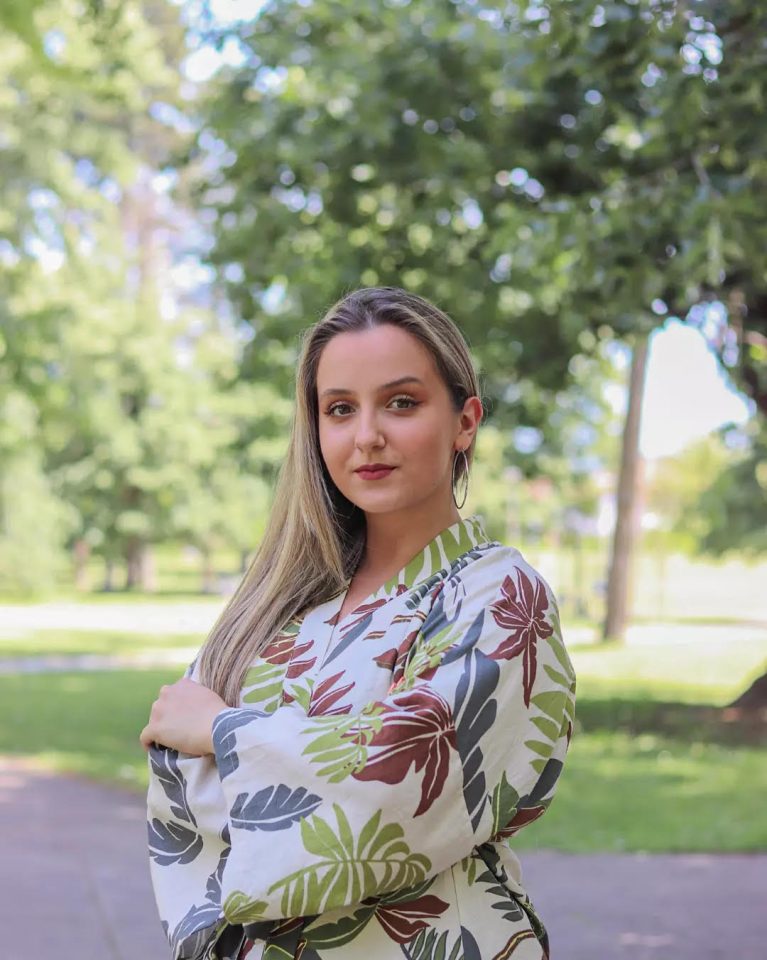
According to Zelenika, Bosnia and Herzegovina is visibly trying to adapt to postmodern trends, to the detriment of marginalized groups in society, including women in public life. Postmodernism brought with it a post-ideological wave of political programs, therefore the political scene increasingly resembles a hand-wringing competition and a Machiavellian struggle for power.
“When we talk about regulations and laws related to the position of women in all spheres of private and public life, for me, as a young woman and activist, they do their job until they go out in the field. And then there’s a total collapse. One of the accompanying phenomena are quotas, and female activists do not have a unified position on them (they call it positive discrimination and/or an undemocratic tool). But I must emphasize that the struggle for the survival of quotas, especially in the post-war period in the 1998 elections, is one of the key factors for stabilizing the position of women in Bosnia and Herzegovina,” said Zelenika.
As she explains, we can talk about women’s political platforms only when women’s survival is ensured at all levels of government and when the validity of quotas is no longer questioned.
“To be a self-actualized member of society, we must find a space that will keep out rain, sexism, misogyny, femicide, and anyone’s lofty opinion about our hairdressers. In order for society to have the outlines of progress, it must necessarily choose a profession and expertise, not half degrees, programless options and the fulfillment of individual interests of political elites,” said Zelenika.
She explained that in her activism, she heard various statements, theories, and convictions, but singled out as her favorite: “Why are you fighting for equality when you’ve got everything? Women should be sent to war, so that they demand the same rights with a rifle on their back.” She concluded that these people do not know that “in our story, David’s sling broke, and our Goliath is ten feet tall.”
The Gap between Participation and Representation
Ljubiša Aćimović, a graduate of Political Science, explained that there is a pronounced gap between women’s participation in political processes and representation in formal political structures.
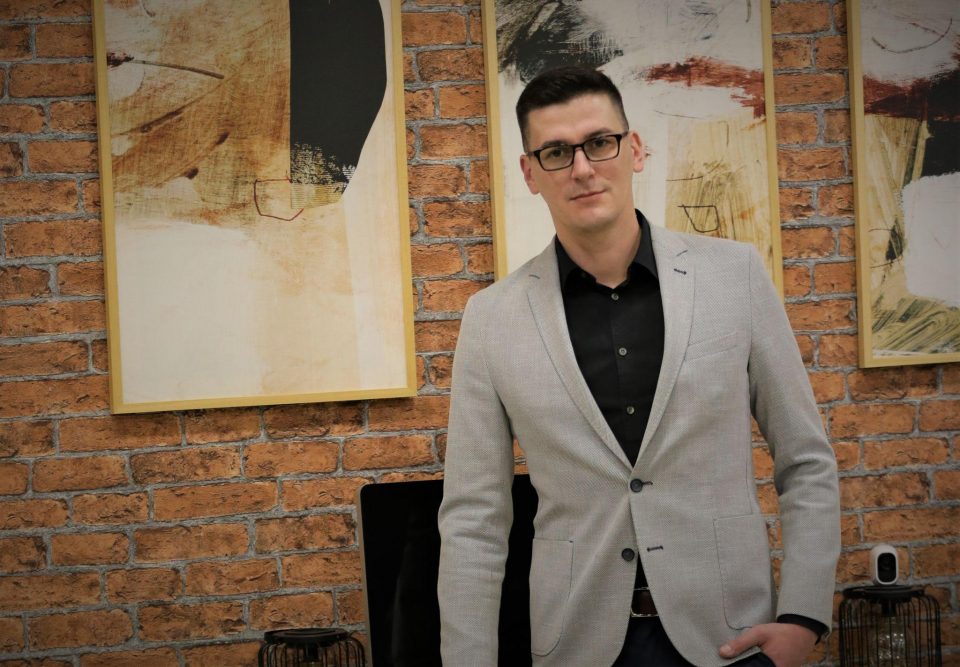
“Despite the legal provision that 40 percent of the underrepresented gender must be found on electoral lists, there are still large differences in gender representation in legislative bodies at all levels of government. We can see that the political scene in Bosnia and Herzegovina is colored by traditionally male characteristics – a lot of arguments, insults, raised voices, aggressive outbursts, warrior-like incendiary rhetoric,” said Aćimović.
He explained that the parties are predominantly led by men. What they have in common is that they are organized in an authoritarian manner. They try to send messages about their own power at every opportunity.
“An important question is what would motivate women to get involved in politics. As the main obstacles, we can point to a lack of time due to household and family obligations, insufficient family support, lack of experience in public appearances, but also lack of self-confidence. And when they ‘succeed’ in climbing the political ladder to high positions, women are exposed more often than men to sexist comments, attacks in the form of photomontages, memes on social networks, as well as open insults. It is certainly not a pleasant experience,” said Aćimović.
Aćimović’s opinion is that violence against women in politics is very complex because it rests on a threefold basis: gender inequalities (which are based on the unequal power of women and men), political inequalities (the inequalities of different political parties and movements), and political culture. This political culture in BiH has been increasingly characterized in recent years by the presence of gender stereotypes, sexism, misogyny and hate speech, which is conducive to increased violence against women in politics.
Zelenika also agreed with these claims, explaining that women fought for the right to vote in 1941. This has been archived in the documents of the Supreme Headquarters of the People’s Liberation Partisan Detachments of Yugoslavia, which at that time had power in the territories liberated from Nazi occupation.
“Unnaturally Forced”
According to Zelenika, our ancestors’ struggle was reduced to the use of women as cannon fodder and shock absorbers for the mass that follows a strong man’s hand and spits in a woman’s hair. In addition, she also recalled the case of Darija Kisić Tepavčević in the midst of the expansion of the COVID-19 virus, the previous general elections in BiH, and comments on the physical appearance of Željka Cvijanović. She also referred to the comments made about Jelena Trivić, Dušanka Majkić, Bisera Turković, and other prominent female political figures.
Aleksandar Stojanović, a long-standing and prominent political journalist, said that although it often presents itself differently, our society is still much more mature than many western and “democratic” societies.
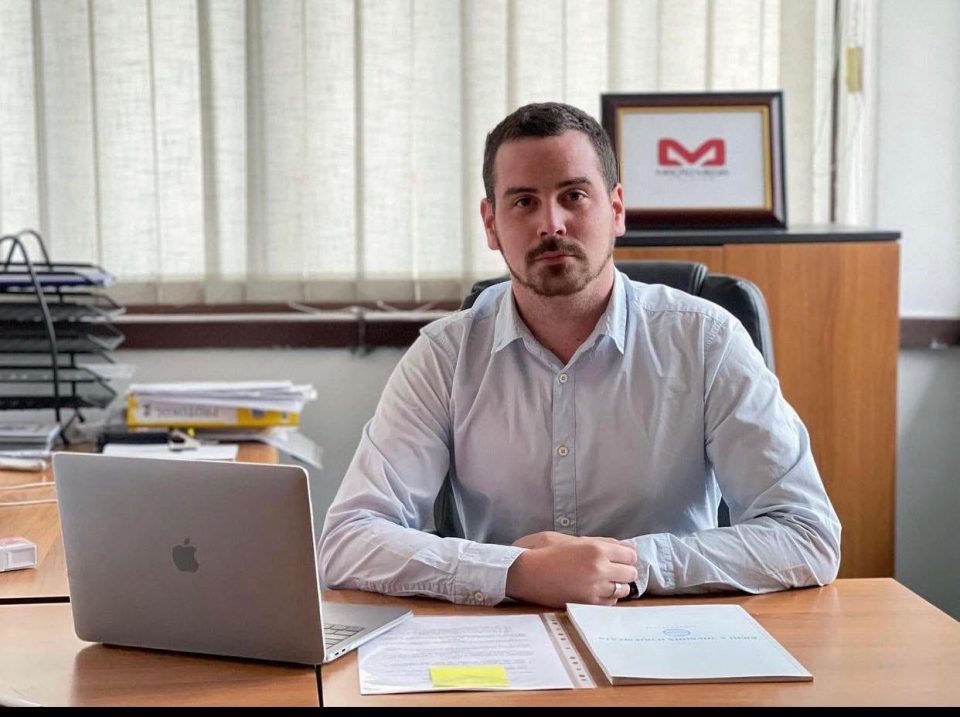
“For example, the USA and France cannot boast of having a female president, but the Republika Srpska may get a third one. I would not like the topic of women in politics to be unnaturally forced, as, for example, in the USA, because that is underestimating women and belittling their abilities,” said Stojanović.
According to Stojanović, when talking about opportunities for women, they legally have a chance, and these 42 percent of women mentioned above say that they used it.
“Who will win the elections is not a question of gender, but of political ability. Personally, I think that many women are more capable than most men, but the question here is who are these women who enter politics and for what reasons. It’s the same with men. If everything goes as it should, I think they have the same chance as men. And I hope that some women will not be dishonorable like many men in politics, and that they will not give anyone a reason to approach them in a primitive or misogynistic way,” Stojanović emphasized.
Stojanović also stated that the fact that 42 percent of the total number of candidates in the upcoming elections are women breaks the mantra that is “imposed on us by outsiders.”
“Nevertheless, we should not reduce it to mere statistics. In the Republika Srpska, women from the two strongest parties hold two positions (President of the Republika Srpska and Serbian member of the BiH Presidency). Borjana Krišto is also a candidate for a member of the Presidency of Bosnia and Herzegovina from the Croatian people. So, hypothetically, we could have two women in the BiH Presidency, while in Srpska, the president could be a woman. I think that says a lot,” Stojanović concluded.