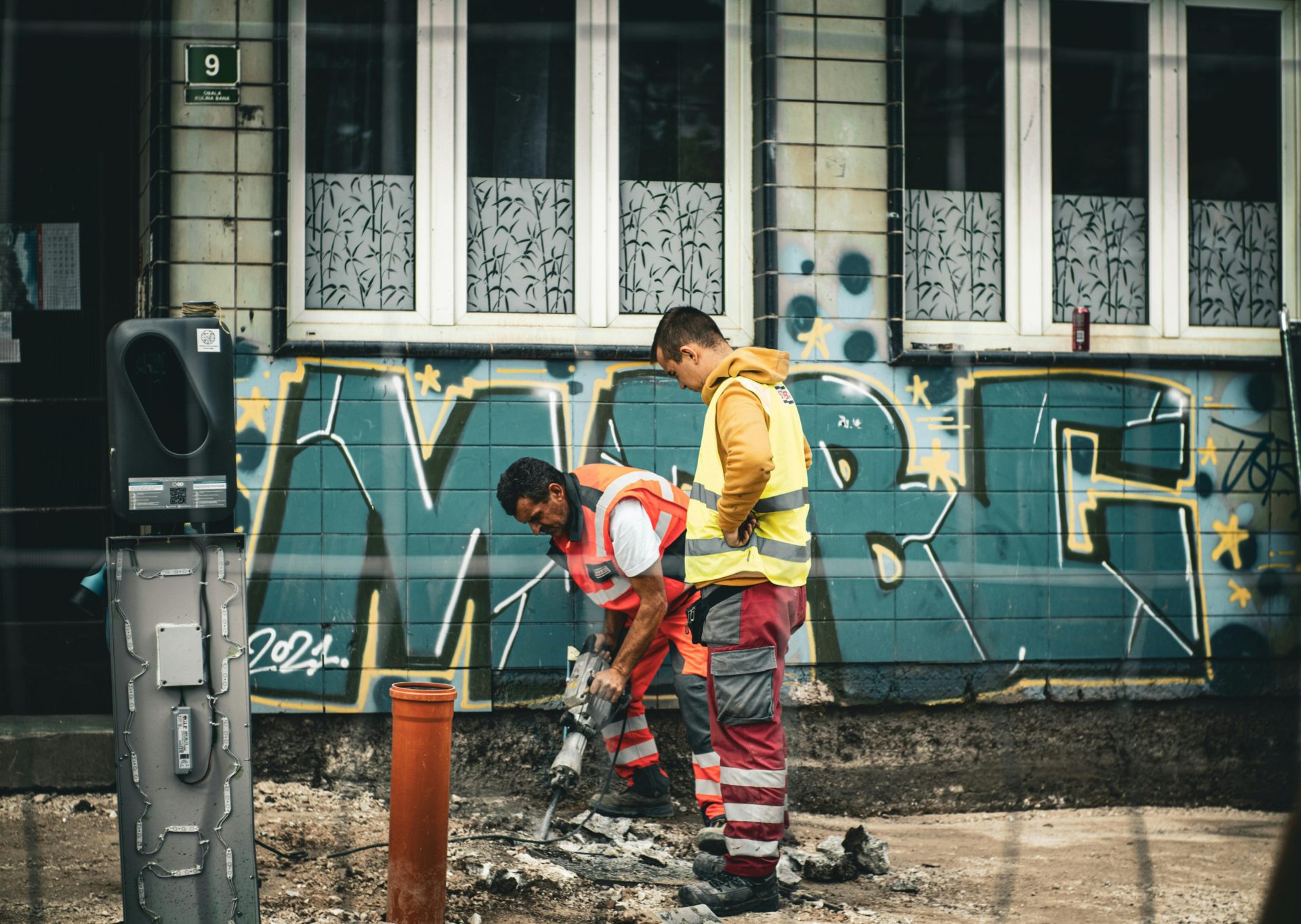
In Bosnia’s changing landscape, foreign workers are quietly fostering a newfound vibrancy in daily life. This phenomenon is but one indication of the multi-dimensional change affecting BiH as it moves forward as a post-conflict society.
Obtaining a migrant work visa is no easy task in Bosnia. With increasing government regulation – a side effect of EU accession motivations – and bureaucratic delays, it becomes an increasingly difficult process. Yet, companies continue to send out requests for foreign workers, often for various reasons, but with economic profit in mind. The Labor and Employment Agency of BiH handles these requests and issues work permits each year, as well as temporary residence permits. They are not directly connected, but often go hand-in-hand.
The Federal Ministry of Labor and Social Policy highlights the labor shortage in the country and the need to fill these gaps, either by hiring foreign workers or domestic citizens, in order to ensure economic output. However, due to a loophole in the country’s unemployment registration system, many citizens choose not to work so they can continue receiving healthcare and other social benefits, a solution that some citizens take advantage of when they work abroad without proper visas. Furthermore, due to laws surrounding foreign nationals and labor, priority must be given to citizens of BiH before turning to a foreigner with a work-permit application for employment.
In 2020, the Ministry of Civil Affairs started a conversation in hopes of changing the legal and policy framework that govern labor migration. Yet, to date, nothing has been implemented. So, the cycle of labor shortage continues, but each year, the only viable solution to these economic downfalls is migrant workers. They, in turn, become the extra backbone to support Bosnia’s growing economy.
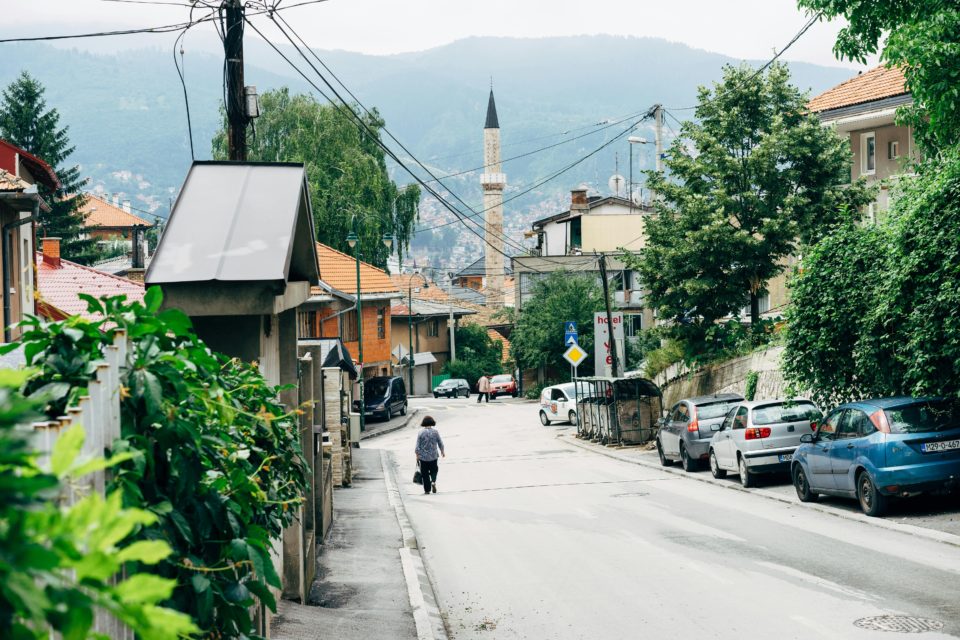
Businesses across Sarajevo have been taking advantage of these newfound ways to fill these gaps. A 2023 study by the International Organization for Migration (IOM) contacted 60 businesses across BiH: 45 in the Federation of BiH and 15 from Republika Srpska. Sixty-seven percent of respondents were open to hiring foreign workers, and eighty-three percent of those respondents in the tourism and service sector expressed an interest in hiring foreign workers to fill those gaps – and it seems to be working. Metropolis Café, a Sarajevo-based restaurant chain, has been taking advantage of this opportunity. First opened in 1998 following the end of the War, it continues to be a Sarajevo staple, with six locations across the city. Other Sarajevo establishments, like Hotel Europe and various construction firms, are experiencing a similar situation.
However, from a business perspective, most do prefer to hire domestic workers. They are often “more qualified” and do not require lengthy and expensive procedures to obtain a work permit. The IOM reports that nearly “sixty-five percent of survey respondents stated that they would require an employment subsidy from the government if they were to hire a migrant worker”. Across Bosnia and Herzegovina, this fact remains that many businesses hire foreign workers because they have to fill the labor gaps, but would do so more willingly if the government provided a financial incentive.
Additionally, the process is often restricted due to quotas set by the Council of Ministers of B&H, which means that only a certain number are allowed each year. Before offering a job to a foreign national, companies must also prove that no local candidates are available for the position, a process known as the labor market test. This is where issues can arise with preferential hiring, and structural issues relating to benefits and the unemployment registry. Employers also note that “requirements on medical examinations can often take several months, which is especially problematic for sectors relying on seasonal workers” (IOM, 2023).
Among the public, there is a general perception that this isn’t, or at least shouldn’t be a difficult choice for employers. Mija Handžić, a Sarajevo local, says that “job competency isn’t the same for all of us. If a migrant worker is more fit than a local, they should get the job.”

According to the 2020 Social Cohesion and Reconciliation (SCORE) Index, there are “high tolerance levels” toward foreign workers, meaning that a majority of citizens are open to interacting with foreign workers, and a majority are open to living in the same community. In Sarajevo Canton specifically, about sixty-nine percent of people expressed willingness to engage with migrants and foreign workers, indicating above-average acceptance.
Across Sarajevo, many migrant workers feel that the community is moving in the right direction. “It’s a change… people are welcoming to us,” says one Metropolis Café SCC Employee. Handžić also expressed similar sentiments: “I think it’s always refreshing to see new people and new diversity in the city.”
Overall, it can be said that the government of Bosnia and Herzegovina would benefit from facilitating the process of obtaining work permits and admitting foreign workers, both for employers and for potential employees. This is particularly important given that, with EU accession on the horizon, more and more people are coming to Bosnia and staying rather than using the country as a midway point. Therefore, it is important to recognize Bosnian’s context and limitations, as well as the opportunities foreign workers bring for Bosnia’s future economic and social development.