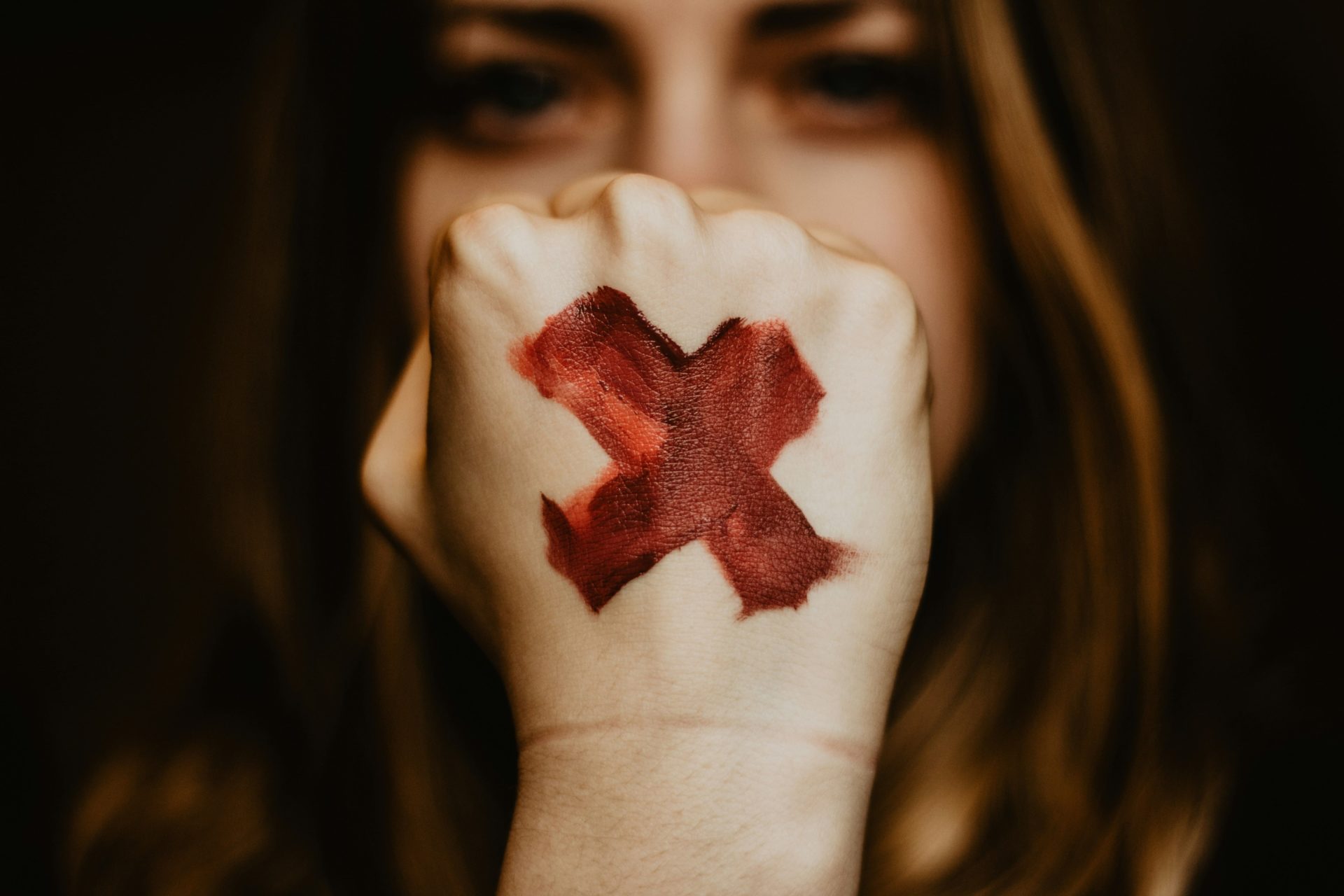
Alongside turbulent histories and complex peace agreements, Bosnia and Herzegovina and Northern Ireland share another similarity: the rising rates of violence against women and girls.
The red flags started to appear early on during the Covid-19 pandemic. Numerous countries around the world, Bosnia and Herzegovina and Northern Ireland included, detected an alarming rise in domestic violence. By April 2020, the drastic increase in violence was evident in the data, prompting United Nations Secretary-General António Guterres to issue a statement that, “we know lockdowns and quarantines are essential to suppressing COVID-19, but they can trap women with abusive partners… over the past weeks, as the economic and social pressures and fear have grown, we have seen a horrifying surge in domestic violence.”
Given that the first lockdown orders did not occur until March, this data marked a precipitous turn, putting women and girls in peril from both the virus and the stay-at-home orders. It would be easy to assume that the end of the pandemic and its associated lockdowns would see the rates of domestic violence fall; however, the opposite occurred. In the pandemic aftermath, the rates of domestic violence never fell to pre-Covid 19 levels.
Two countries highlighted in this article, Bosnia and Herzegovina (BiH) and Northern Ireland (NI) share several commonalities, including geographical location in Europe, 30-year anniversaries of peace agreements, issues surrounding life in a post-conflict society, and an unfortunate continuing rise in domestic violence and femicide.
In BiH, UNICEF reports that at least one woman has been murdered every month since 2024, with over 17,000 calls to SOS helplines in three years and nearly half of all women experiencing some form of gender-based violence from the age of 15. Northern Ireland reflects similar trends, with 28 women killed since 2020, making it one of the highest per capita femicide rates in Europe, with 87% of victims murdered by men known to them. An Ulster University study further found that 98% of women in Northern Ireland experience gender-based violence in their lifetime, while half of girls face violence before the age of 11.
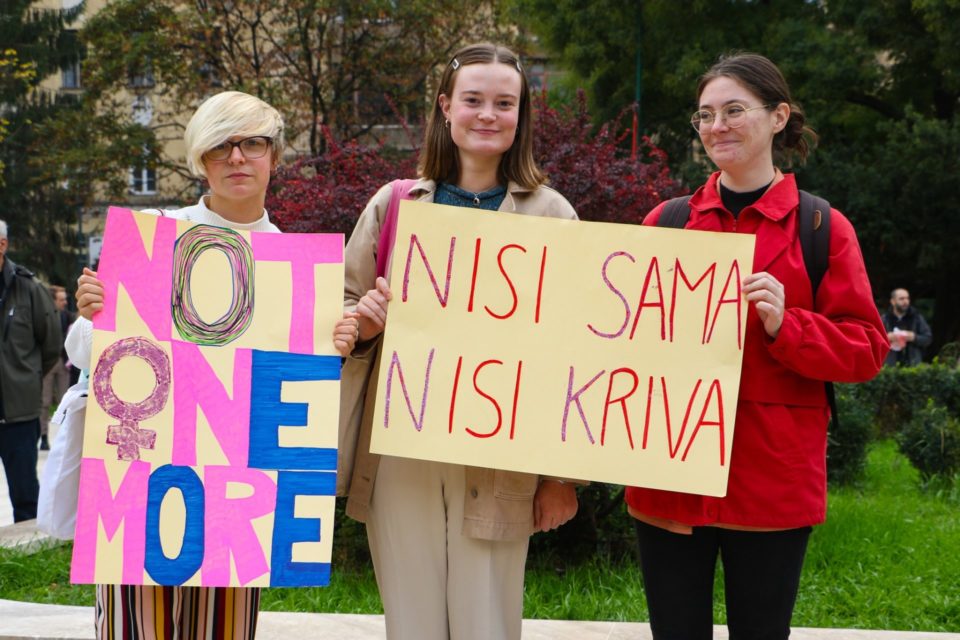
In their article for Georgetown Institute for Women, Peace and Security, Rashida Manjoo and Calleigh McRaith note that women are always most vulnerable in post-conflict contexts, with threats such as domestic violence, sex trafficking, and forced prostitution. It is evident that, while peace agreements can force an end to public violence, the peace does not always extend to the private sphere. In another article, Vicka Heidt (Georgetown University Global Irish Studies) notes that the UN and many academic studies find that “gender equality is the number one predictor of a state’s peacefulness, more so than its economic strength or level of democracy.”
According to Mersiha Zulčić at UN Women in BiH, the country’s entities have made efforts to strengthen legislation, but implementation is inconsistent, protection orders are delayed or not enforced, and sentencing is often lenient. The lack of coordination between the two entities – the Federation of BiH and Republika Srpska – and the absence of consistent standards undermines accountability. Zulčić also addresses the problem of underreporting, noting that 84% of victims never report to any authority. She states that “reasons include fear of retaliation, economic dependence, social stigma, and low trust in the justice system.” In Northern Ireland, underreporting is also a significant problem, with only 45% of the 18–24 age group stating that they would report violence to the authorities.
The 2023 Gradačac femicide in BiH, in which Nizama Hećimović’s ex-husband Instagram livestreamed her murder, in front of her daughter, resulted in an outpouring of anger, but little concrete action. A judge had denied Hećimović’s request for a restraining order. As is common in so many cases, domestic violence was previously reported to authorities, but police failed to act. The latest case of femicide that made its way into the public eye occurred on November 16, 2025 with the murder of Aldina Jahić, by her former partner, despite a previous girlfriend reporting incidents of violence to the police.
The 2022 murder of Alyson Nelson by her ex-partner prompted the Northern Ireland government to order and publish a report by the Domestic Homicide Review panel. In November 2025, the report stated that her ex-partner had previously been convicted of intimate partner violence and family violence, information Nelson was not aware of. In July 2025, the murder of Vanessa Whyte and her two children, by her ex-husband, prompted outrage from the family’s rural community as well as women throughout Northern Ireland.
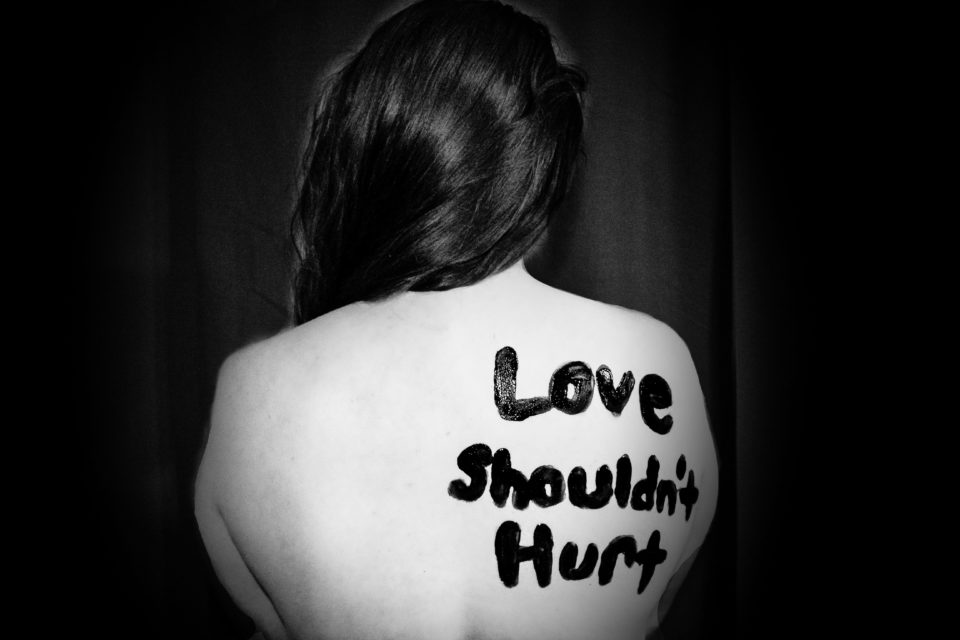
The question of how to address these horrifying crimes and the rising statistics requires identifying the root causes of the problems. Both BiH and Northern Ireland still exist within a post-conflict framework, and academics and experts agree this is a vital component of the continued increase in domestic violence. Zulčić states that “the legacy of wartime sexual violence, militarization, and collective trauma has contributed to normalization of certain forms of violence and distrust toward institutions”, adding that “patriarchal attitudes and deeply rooted gender stereotypes further contribute to Bosnian attitudes towards domestic violence.”
A similar view is shared by Heidt, noting that the research and index reports demonstrate that gender-based violence is clearly linked to armed violence. Queen’s University academics Doyle and McWilliams found that conservative and patriarchal social norms, traditional gender roles, poverty, access to weapons, and the normalization of violence contribute to the rates of domestic violence in Northern Ireland. Niall Gilmartin’s article, “Gendering the ‘Post-Conflict’ Narrative in Northern Ireland’s Peace Process”, makes the point that “Northern Irish society exhibits all the trademarks and insidious characteristics of a patriarchal society that has yet to undergo a genuine transformation in gender relations.”
November 2025 marked 25 years since the adoption of the United Nations General Assembly Resolution establishing the International Day for the Elimination of Violence Against Women. Ultimately, in the 30 years after the Dayton Peace Accords and the Good Friday Agreement, the experiences of Bosnia and Herzegovina and Northern Ireland show that ending war does not automatically end violence, particularly for women and girls in their own homes. Sustainable peace must go beyond ceasefires and agreements, placing gender equality, protection and accountability at the center of post-conflict recovery.