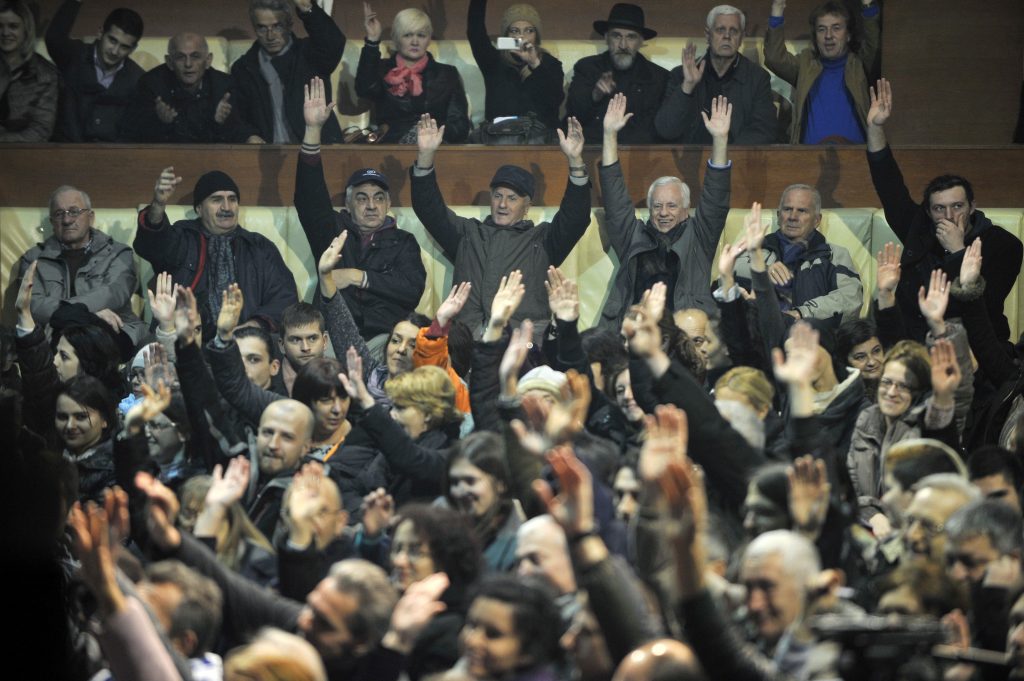
Bosnia’s Plenum: Considering the Rise and Decline of Bottom-up Democracy

width=”525″ height=”371″ frameborder=”0″ allowfullscreen=”allowfullscreen”>

George Rossetter is a former intern of the Post-Conflict Research Center in Sarajevo. George was a student of Economics and International Studies with the Open University in the UK.


Related posts

“It still feels like you are here”
The story could have started like this: I have one child, a son, the apple of my eye, my pride and joy. The story could also have started like this: we live our “happily ever after,” and our two kids are chasing their dreams. Life is nice, comfortable. He has a job and I take care of the kids and the house. We are happy. It even could have started like this: I have a mother and a sister. We are inseparable. We could chat over a cup of coffee for hours.
Keraterm and Trnopolje: Two Camps that Defined the War in Bosnia and Herzegovina
During the War in BiH, places of everyday life suddenly turned into epicenters of the most horrendous crimes imaginable. Schools and factories were transformed into campsites that were used to detain the civilian population and inflict collective trauma. The infamous camps in the Keraterm tile factory and the local school in Trnopolje offer insightful examples for analyzing the Bosnian Serb camp system during the war.

Leave a Reply

Your email address will not be published. Required fields are marked *


Winner of the Intercultural Achievement Recognition Award by the Austrian Federal Ministry for Europe, Integration and Foreign Affairs

Post-Conflict Research Center
Join our mailing list