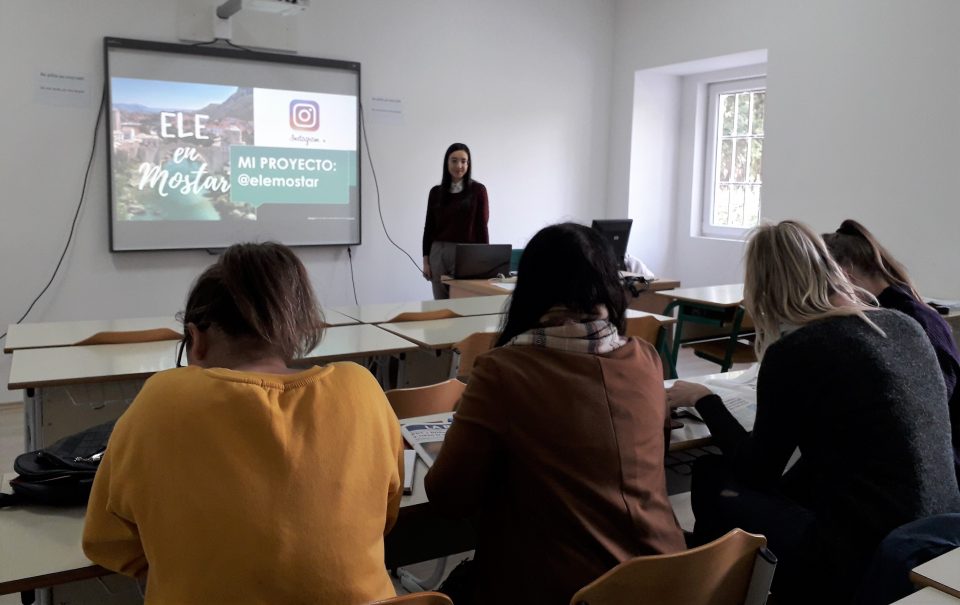
Project Ele Mostar was intended not only as a contribution to reconciliation in Mostar, but as an example of reconciliation to the whole country. The project was launched in 2019 with the idea to bring Bosniak and Croat university students at Dzemal Bijedic University and the University of Mostar closer together by showcasing Spanish culture through workshops, courses, and films. Projects like this are very important because they are often starting points for political discussions and problem-solving in BiH.
‘‘The idea is to bring the Spanish culture closer to the young people of Mostar and to present Spain, and the Spanish language, through their everyday activities.ˮ said professor Celia Jimenez, the project’s founder.
‘‘Being at two universities at the same time seemed like a huge challenge when it came to organizing group activities so I had to come up with a solution. The solution came in a way to organize the activities in one single room.ˮ
An illustration of the desire young people from both parts of the town have to hang out together and learn together is the recent ‘‘Setnja Za Mirˮ (Walk for Peace).
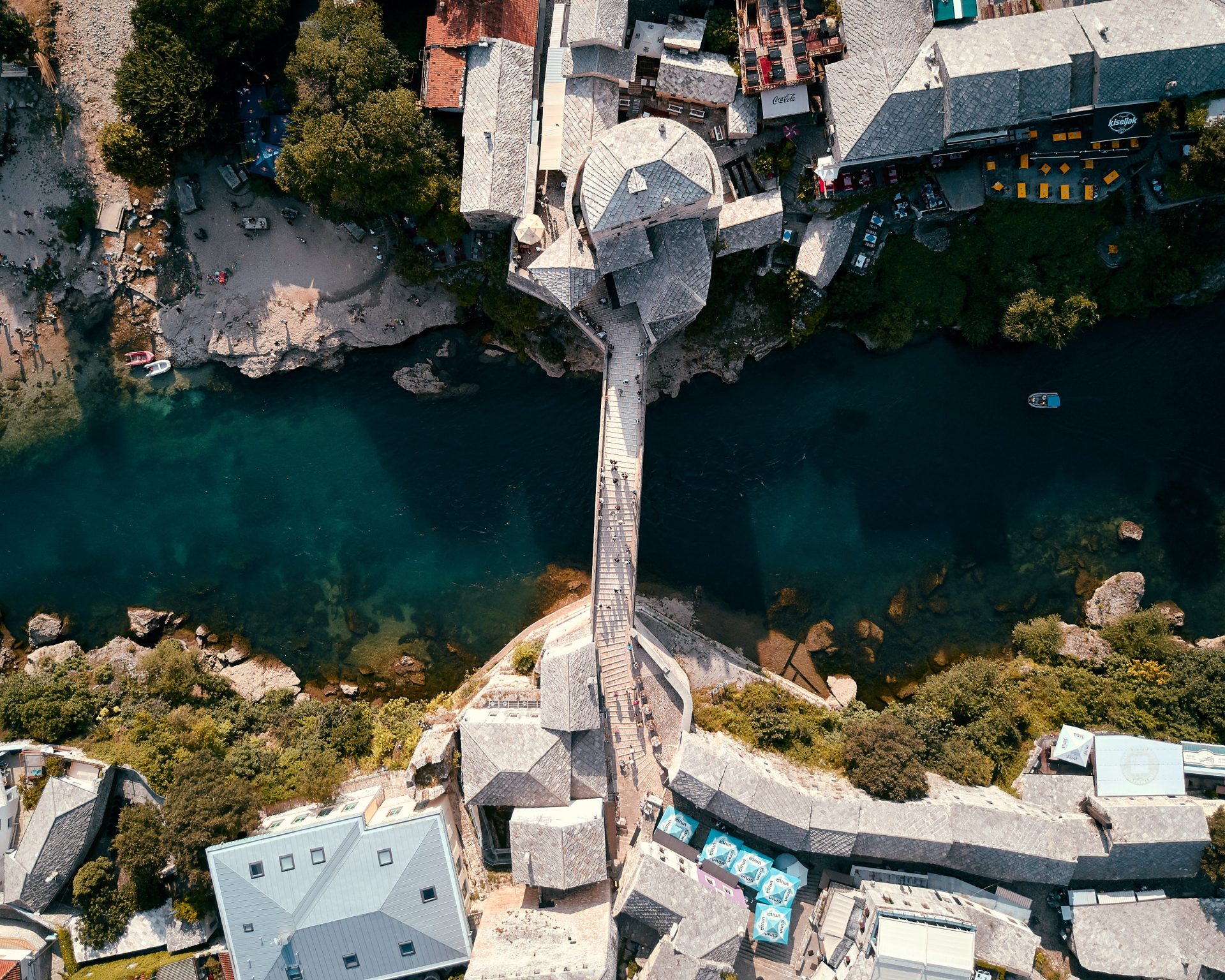
The walk was organized by the student unions of both universities, in cooperation with the International Peace Youth Group, a global youth organization based in Korea. ‘‘Setnja Za Mirˮ started in the Spanish Square and ended at the Old Bridge in Mostar, sending the message that coexistence is the solution for Bosnia and Herzegovina. It showed that the young people of Mostar are convinced that war can never be a route to peace.
According to Jimenez, Project Ele isn’t supported by the Herzegovina-Neretva Canton Government or the city of Mostar. Instead, she found help with funding and logistics at the Spanish Embassy. The students themselves are happy to contribute, and in so doing, show that they are united and connected despite the divisions that are imposed on them.
The nature of the project brings to mind a quote from Rabindranath Tagore, an Indian poet: ‘‘No people can save themselves by separating from others. Either we save ourselves together, or we fall together.ˮ
___________________________________________________________________________
Follow and support the work of Project Ele Mostar through their Instagram profile @elemostar.