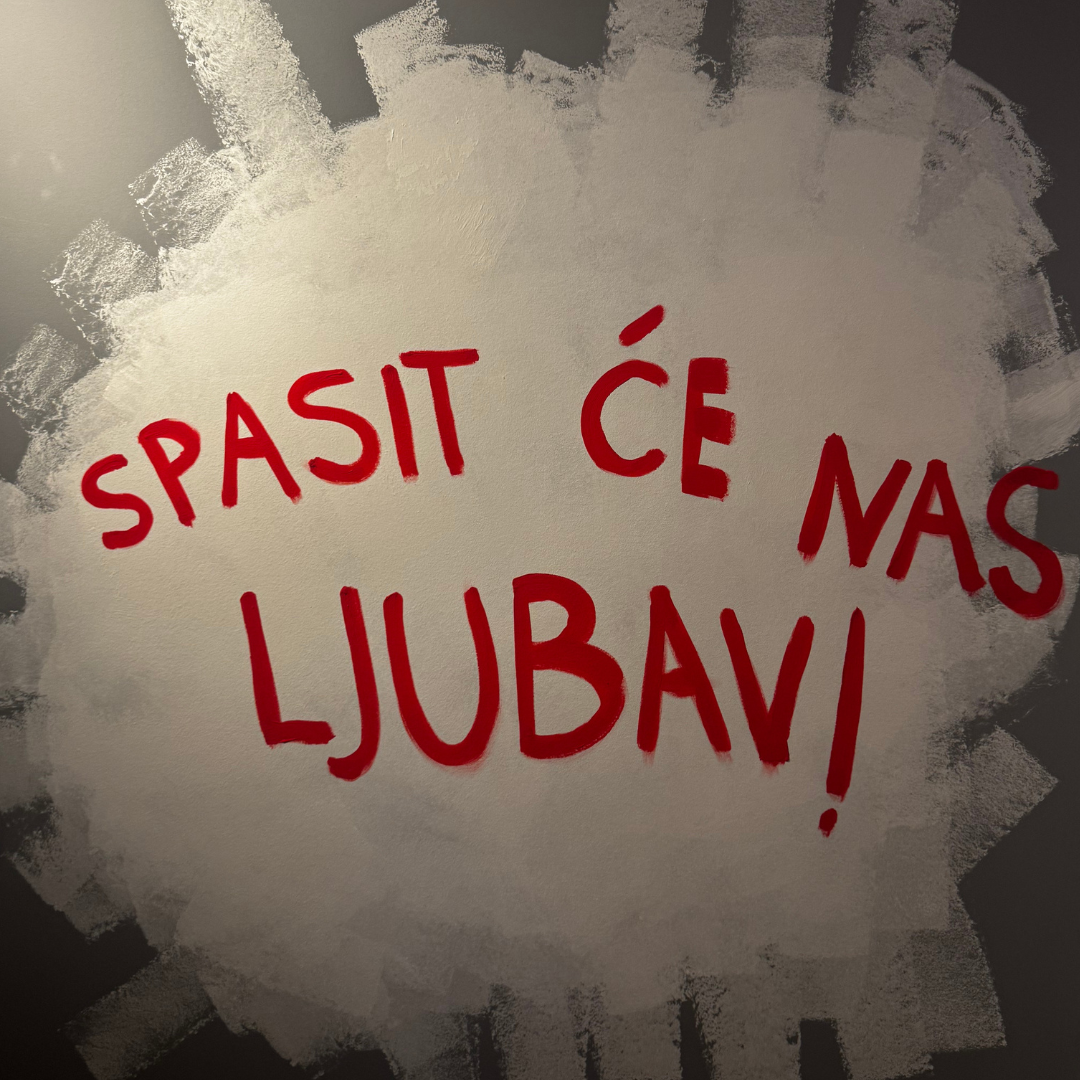
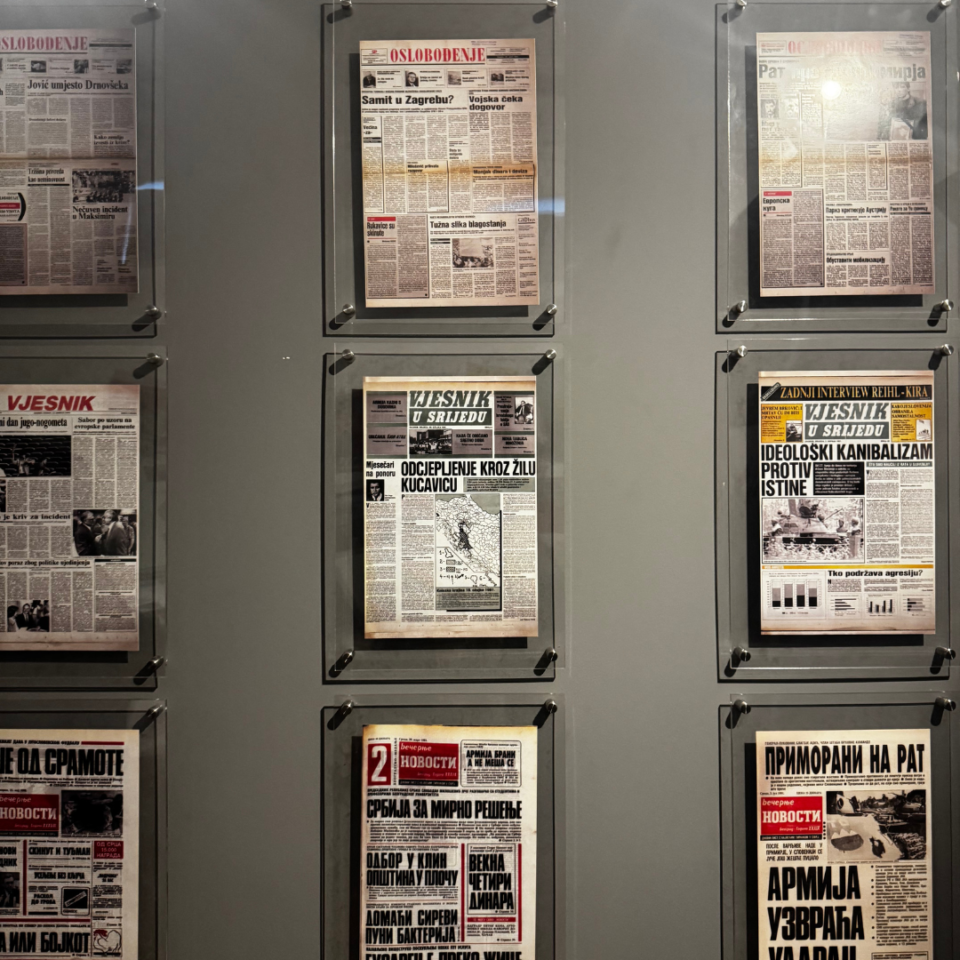
M90, a museum dedicated to the 1990s, has been opened in the center of Belgrade, near the famous Tuckwood Cinema and the Parliament.
For many, its presence in that part of the city is refreshing, given the various upheavals that have occurred there throughout history. The contents of the Museum confront us with the past, but also teach us about the courage, empathy, boundless love, and resistance that existed in the 1990s.
M90 brings together experts dedicated to introducing this decade to the general public as well as jointly confronting today’s political, social, and cultural challenges. “The dedication to illuminating a decade that still shapes our daily lives is for them a research and creative challenge that portrays personal and collective stories, providing a comprehensive view of this turbulent era,” the museum’s website states.
The museum is visited by people of all ages, but mostly by young people. Although its official opening was just last year – when I visited it with my friends – its main exhibition had previously toured Belgrade, Sarajevo, and Podgorica. In 2024, the M90 Initiative also organized an educational program to educate participants from the region about the project. Ema Glumac, a political science student at the University of Belgrade, participated in this program, and later spoke about the key insights she gained from the experience and the public reception.
Ema says that she did not talk much to others about what they specifically talked about at the Regional School. However, when she said that they should visit the Morinj camp (Montenegro) and explained why, Ema was asked if the School was ideologically colored because they were victims of crimes of Croatian nationality.
The Morinj camp – officially called the Center for the Reception of Prisoners from Croatia – is located in the town of the same name in the Montenegrin municipality of Kotor. According to the Croatian Youth Initiative for Human Rights, 292 prisoners passed through the camp between October 1991 and August 1992, mostly civilians from the Dubrovnik area. Several Yugoslav People’s Army (JNA) reserve members who presided over the camp were convicted of war crimes.
Ema believes that the general public already knows a lot about war crimes, but has not learned “in the right way, mainly because of the prevailing nationalist narratives that relativize war crimes.” She emphasizes that “people need to be aware of the difference between collective guilt and responsibility, so that they can face the fact that their side also committed war crimes. However, these two concepts are equated by political elites precisely to keep their narratives in force.”
Ema notes that the influence of “official” propaganda is still strong in the region. In addition, the collective trauma from World War II is visible in Serbia, which, unfortunately, continues to be manipulated to sow prejudice.
Love as Fierce Resistance
Anja Novaković, a graduate professor of Chinese language and literature, was particularly struck by the museum’s stories of love as an important form of resistance in the 1990s.
“The exhibition made me both happy and sad. That was a very difficult time for marriages and any kind of celebration, but people still didn’t stop being happy. Their lives and happiness didn’t stop because of what was happening around them, and many didn’t give up even under threat of death,” she explained.
Anja was especially touched by the photograph of Sarajevo newlyweds Sanela and Emir Klarić, because her parents were married under similar circumstances in the 1990s in Kosovo.
During the 1990s, Sarajevo was under siege, the longest of any capital city in modern history. Residents were subjected to daily shelling, sniping, and terror.
Luka Dmitrović, a political science student at the University of Belgrade, said that the story that moved him the most at M90 was that of Vladimir Živković, who defied orders and drove a tank from the Vukovar front to the Parliament in Belgrade.
“It was hard for me to imagine that in such an atmosphere, with the discipline of the people on the battlefield, there was someone among them who decided to show defiance and spite and to express that he did not want to participate in the war. He directed his anger where it was deserved, and that was at the officials and decision-makers,” said Luka, adding, “Vladimir Živković should be a reminder to warmongers that war can come to their doorstep, too.”
Saving Others
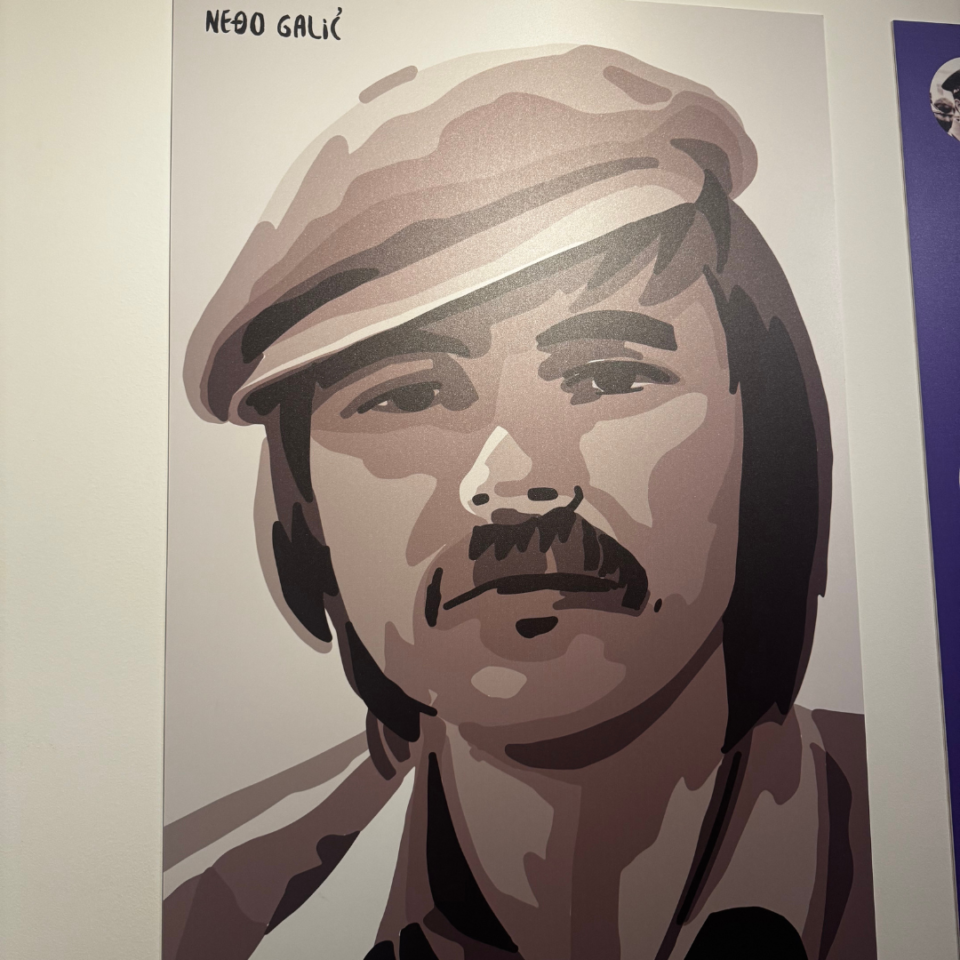
Another story of courage highlighted at the museum is that of Nedjeljko Galić, the so-called “Schindler of Ljubuški,” who forged invitations from abroad and numerous other documents to help Bosniaks escape from the Heliodrom Camp in Rodoč. Located at the site of a former JNA barracks south of Mostar, the camp operated from 1992 to 1994 under the control of the Croatian Defense Council (HVO). Several thousand prisoners of war and civilians—mostly Bosniaks but also Serbs—were detained there, where they were abused and forced to do manual labor. Some were killed or are still listed as missing.
For Luka, defiance, resistance, and empathy are the main themes of the M90 Museum.
These themes resonate with the Post-Conflict Research Center project “Ordinary Heroes,” which also tells the stories of those who struggled to save people who were perceived as “others” during the war and which I saw while participating in several of their programs in Bosnia.
These acts demonstrate special kind of courage, since many were punished or lost their lives for what they did. Among them is Goran Čengić from Sarajevo, one of the greatest handball players from the region, who lost his life while saving a neighbor.
The M90 Museum in the heart of Belgrade, at the site of great turmoil in the city’s history, is a source of hope that the events of the war and its atrocities will not be forgotten – nor will the acts of resistance, which may not have turned the tide of conflict but did save numerous lives. Most importantly, however, the victims and heroes of these tragedies are humanized rather than presented merely as statistics, which encourages visitors to think more deeply about war and suffering.