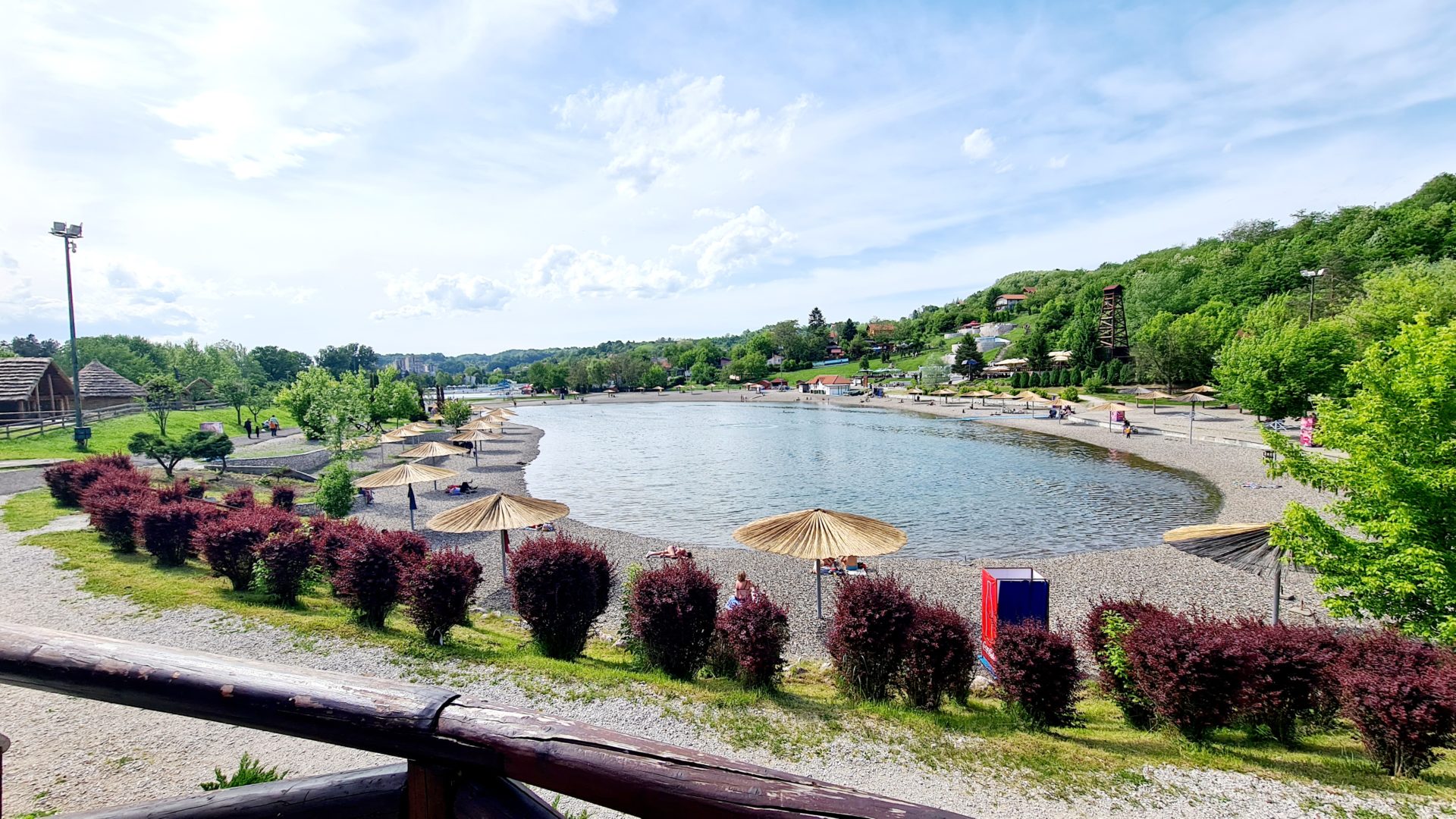
The history of the city of Tuzla, once a mining and industrial center, is deeply tied to salt.
Today, it stands proudly on the tourist map of Southeast Europe thanks to its prized Panonika Lakes complex. This unique destination combines health, culture, and entertainment, and has become a symbol of the vision and boldness to turn natural wealth into a public good accessible to all.
With the slogan “From a grain of salt to an abundance of health, comfort, and challenges,” Tuzla’s Panonika Lakes are the only salt lakes in Europe. With its natural beauty, clean waters, quality services, affordable amenities, and prime location, it is visited annually by more than half a million people from all over the world.
Majid Porobić, director of the Panonika Lakes complex, explained that the vision behind its inception, since 2003, has been to create a place of health, culture, and sports. Their greatest challenge was continuing the tradition of the Austro-Hungarian-era Tuzla salt spa, whose healing properties were renowned at the Vienna Court. However, the successful transformation of the mining center into a tourist destination was crowned in 2012 with the construction of a third lake.
Today, the complex consists of three lakes of different sizes and depths, as well as salt waterfalls that serve as an outdoor inhaler. The water in the lakes is constantly circulating and purified by modern sand filters, and its salinity value is equivalent to sea water. Special attention was paid to the third lake, which, in addition to crystal clear water, also offers adrenaline-inducing facilities such as water slides that attract young people and families from across the region.
“The key moment in its transformation from a local bath to a recognizable brand was the decision in 2008 to begin the construction of a second lake and salt waterfalls. With that decision, made by former mayor Jasmin Imamović and his associates, the space in the city center became a surreal destination with the healing properties of salt water. Today, Panonika is a brand that connects the past, present, and future of Tuzla,” said Porobić.
Cultural And Historical Dimensions of Tuzla
What sets the Panonika Lakes apart from ordinary water parks is their cultural and historical significance. Within the complex, visitors can visit the Archaeological Park, a Neolithic hut settlement that reconstructs the life of the first solarians in this area. Also, the Geological Exhibition Pannonica offers a fascinating glimpse into the past, when the ancient Pannonian Sea (Central Paratethys) dominated this area, leaving behind salt deposits that are now used for recreation.
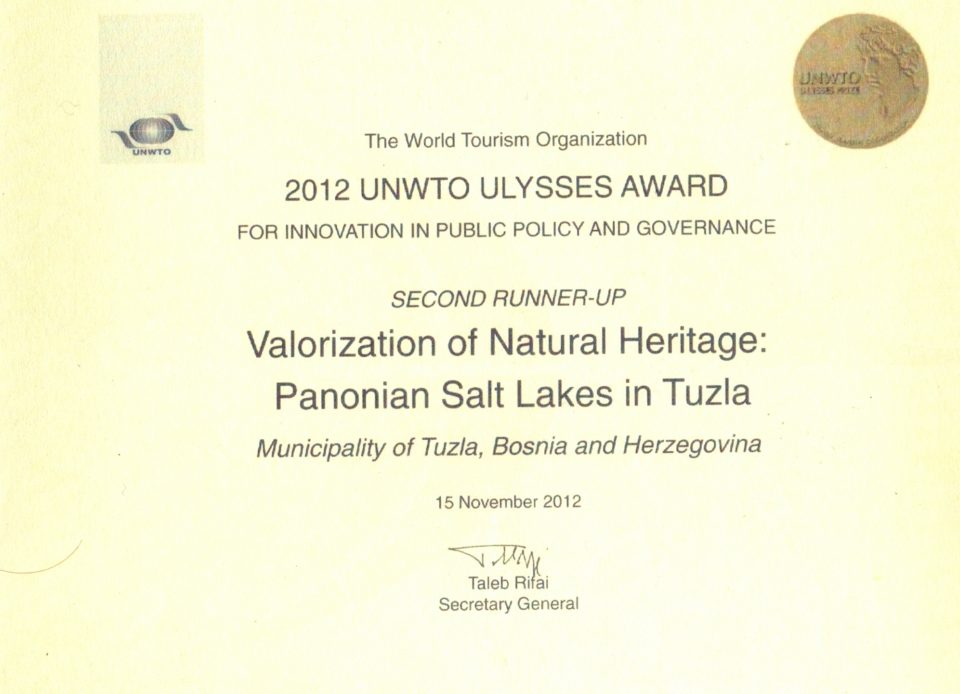
“With the remains of industrial heritage such as the large wooden tower for salt extraction, we wanted to tell guests the story of Tuzla’s continuity over thousands of years. Through the Sojenica Neolithic Settlement and the Geological Exhibition, visitors can explore the combination of coal and salt and the incredible past of the former sea. These facilities have become an indispensable part of the city’s tourist appeal,” explains director Porobić.
A Vison That Won’t Die
The impact of Panonika Lakes on the economy of Tuzla is immeasurable. Every summer, hundreds of thousands of visitors flood the city streets, which has encouraged the development of private accommodations, hospitality, and small businesses. While the city’s accommodation capacities were once lacking, hotel and apartment construction has significantly expanded, while seasonal employment provides important opportunities for the local youth to gain early work experience.
“The start of more serious tourism development in Tuzla are linked to the construction of the first salt lakes in the city center, and the continuation of the phased development of the lake complex was accompanied by the expansion of the construction sector for accommodation capacities and hospitality activities in the city of Tuzla,” said Porobić, emphasizing that synergy with citizens has enabled tourism to become a key branch of the local economy.
Plans for the future of the Panonika Lakes are ambitious and aimed at extending the tourist season. The focus is on constant modernization and adaptation to the needs of modern tourists, but also on maintaining the high standards of cleanliness and safety for which the lakes are known.
“The City of Tuzla, the Department of Urbanism, and JP Pannonica LLC plan to adapt the beaches and the filter plant as well as to build new facilities for children on the first large lake of the complex in 2026. The long-term plan is also to build a fourth salt lake with a roof, which would enable the use of the salt water facilities beyond the summer season,” concludes Porobić.
Today, the Pannonian lakes are not just a swimming place; they are the heart of Tuzla and proof that with a clear vision and hard work, the city can be a place where the past of the Pannonian Sea meets modern life and satisfied tourists.