During the inaugural Western Balkans Peace Forum, which took place in Podgorica, Montenegro, on March 3rd and 4th, international organizations, a united front of peace activists and young people highlighted the values of regional cooperation and youth engagement in building a better and safer society.
The Forum was organized by the Post-Conflict Research Center (PCRC) in partnership with Protection Approaches (UK) and the Center for Democracy and Human Rights (CEDEM), with the support of the Open Society Foundations Western Balkans and the European Union through the Global Initiative Against Impunity.
Through four panels, representatives of 25 non-governmental organizations from Bosnia and Herzegovina, Montenegro, Croatia, Serbia and Kosovo, peace activists, and representatives of international institutions discussed building sustainable peace in the Western Balkans, including a European and global perspective, the importance of regional cooperation and involving young people in order to overcome violence, hate speech, prejudice, confront the past and work to strengthen democracy.
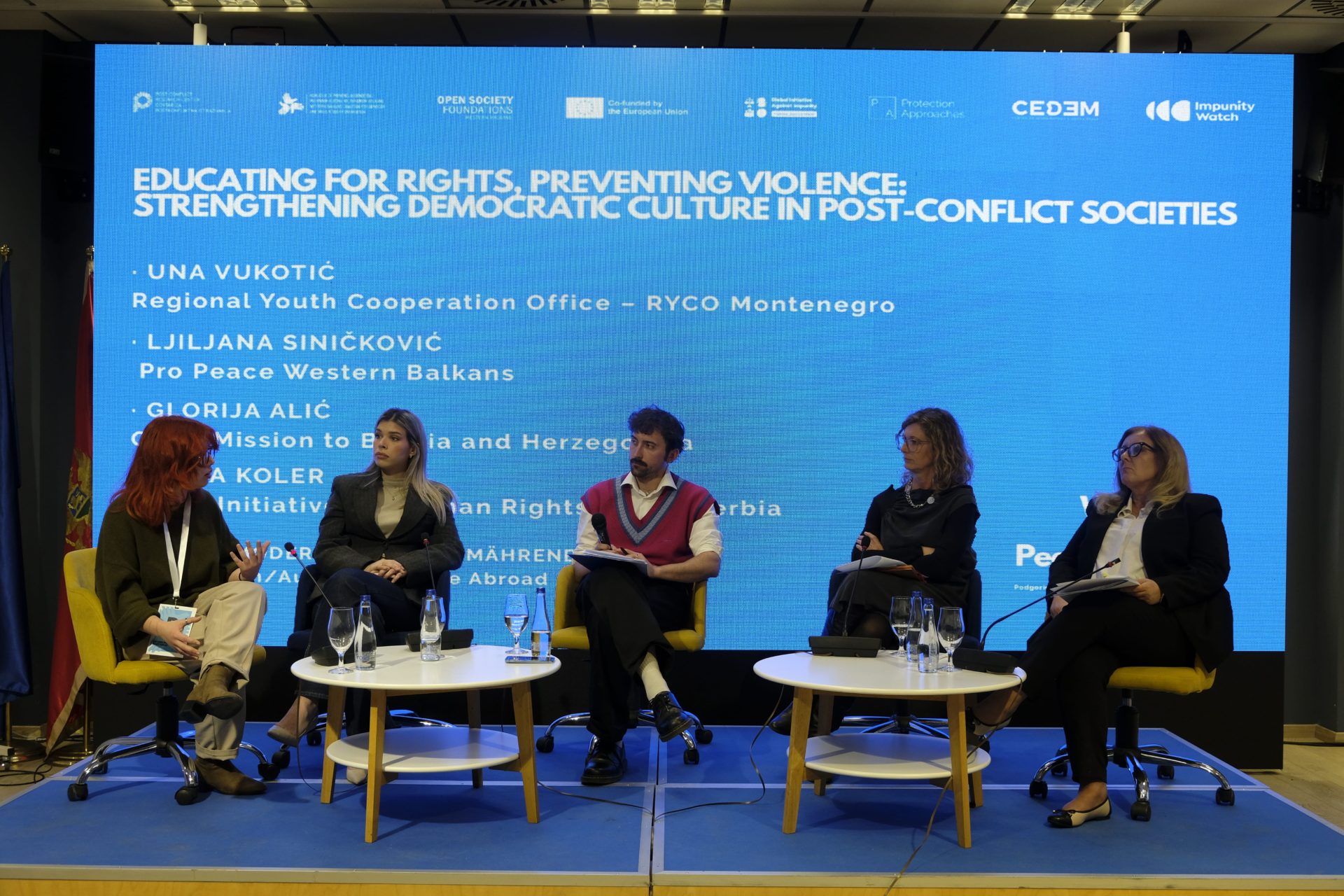
The second panel of the forum, “Educating for Rights, Preventing Violence: Strengthening Democratic Culture in Post-Conflict Societies,” featured Gloria Alić (National Program Officer at the OSCE Mission to Bosnia and Herzegovina), Ljiljana Siničković (Country Director for Bosnia and Herzegovina at Pro Peace), Una Vukotić (Local Program Officer at the Montenegro Office of the Regional Youth Cooperation Office; RYCO), and Dalia Koler (Programme Coordinator at the Serbian Office of the Youth Initiative for Human Rights; YIHR). The discussion was led by Felix Mährenbach, a 2026 spring intern at the Post-Conflict Research Centre (PCRC) and an Austrian journalist.
Although each panelist represented a different organization from a different Western Balkan state, they could all find broad common ground, “Peace building and dealing with the past are both subjects of the region”, “The shared issues of the Balkans cannot be solved alone nor locally”, “The burden of the past, as well as the possibility of the future, must be tackled through a collective effort. This can only be achieved by engaging with the youth — the next generation of peace builders, politicians, and Balkan citizens.”
A Common Denominator
Even thirty years after the OSCE Office was established in Sarajevo, Glorija Alić described how she still deals with divided communities on a daily basis, communities that are heavily burdened by the legacy of war.
Despite the perception that they may be conflict drivers, Alić emphasized the value of religious communities and religious leaders. She actually sees them as drivers of peace. The OSCE actively encourages religious leaders to engage in interreligious dialogue, which is particularly important for communities with religious minorities. Their perception of acceptance and inclusion in society is crucial for their integration, especially when it comes to messages of peace and tolerance from religious leaders coming together, said Alić.
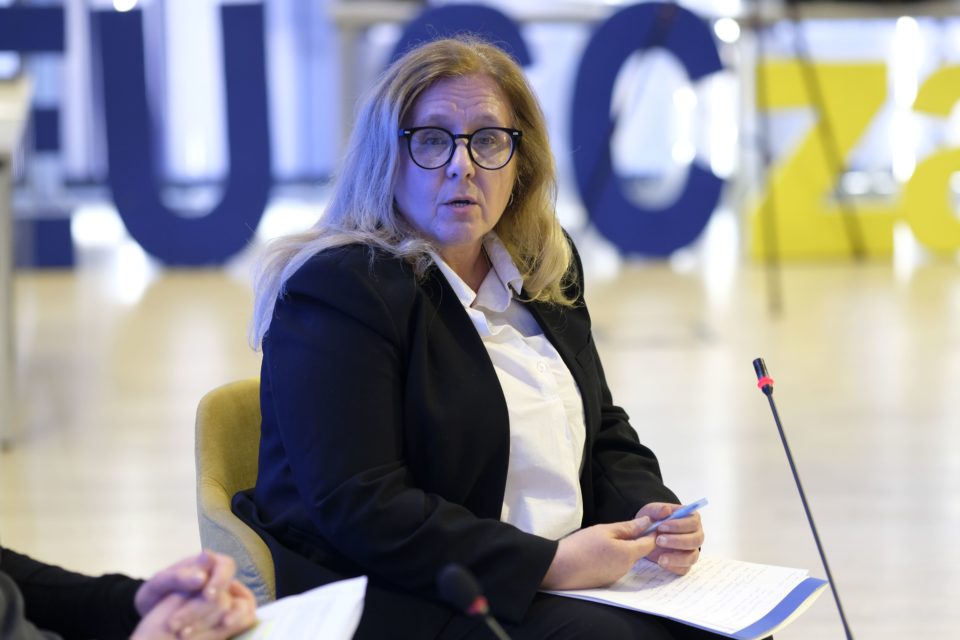
Lines of conflict pass not only along religious borders but also through regional ones. Ljiljana Siničković argued that the war in the 1990s was regional, and that sustained peace can only be achieved through regional cooperation. So far, however, there has been too little cooperation. Gatherings such as the Western Balkans Peace Forum are essential, in her opinion, to generate new ideas, share knowledge, and increase potential platforms for cooperation.
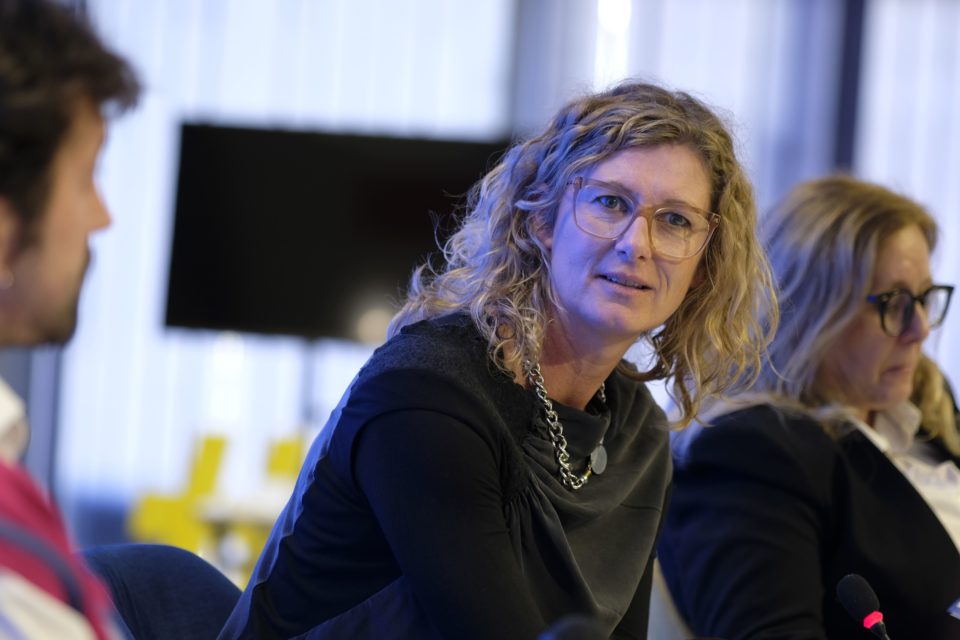
The intergovernmental organization RYCO presented a leading example of regional cooperation by working in different countries across the region. Local program officer Vukotić emphasized the importance of bringing young people together:
“At RYCO, we believe that the most effective way to combat conflict is to provide young people with the opportunity to form their own opinions based on their experiences. This enables young people who would otherwise not have the chance to travel across the region to interact with their peers.”
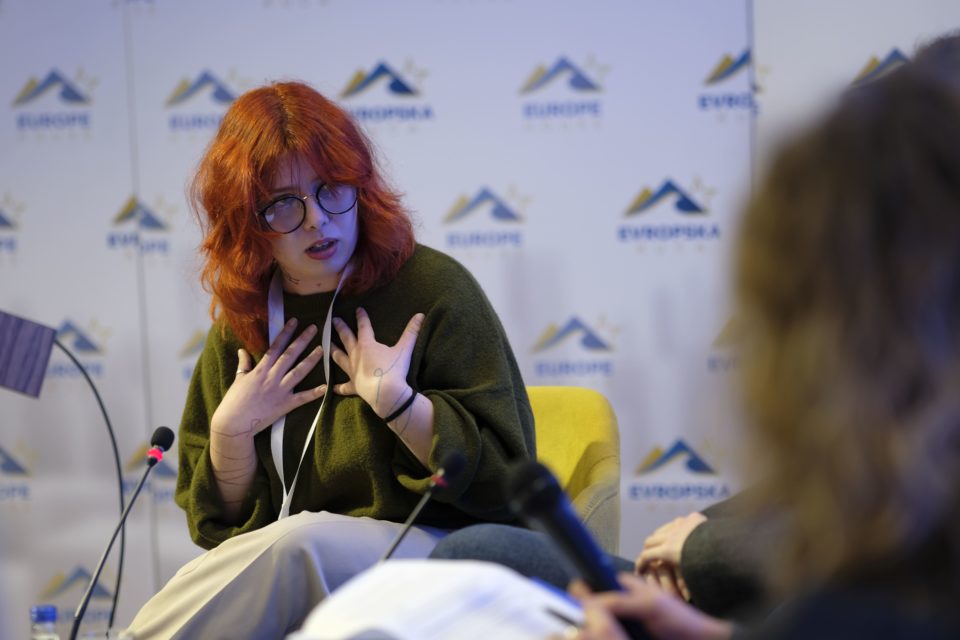
This helps to combat pre-existing stereotypes and prejudices embedded through the school system. It also allows them to simply interact as ordinary young people, sharing the same fears and ambitions and talking about common interests, forming actual bonds and breaking stereotypes about each other.
Reaching Young People
Dalia Koler from YIHR Serbia criticized the fact that every country in the region has its own truth, with each country leading its own narrative and misusing it for political propaganda to manipulate people. Furthermore, she believes that a lack of formal education is a major cause of conflict, as many people are uninformed about the past as well as the present. She believes that the solution lies in learning about the past and teaching the youth about it. Fortunately, she has noticed an increase in interest in recent years. “The youth must reflect on the past in order to create a new future,” Koler argues.
Koler takes pride in her generation, both nationally and regionally. Young people are becoming increasingly engaged to the extent that they realize they must reflect on the past. Her heart is with the young people of Sarajevo: “We are all fighting the same war.”
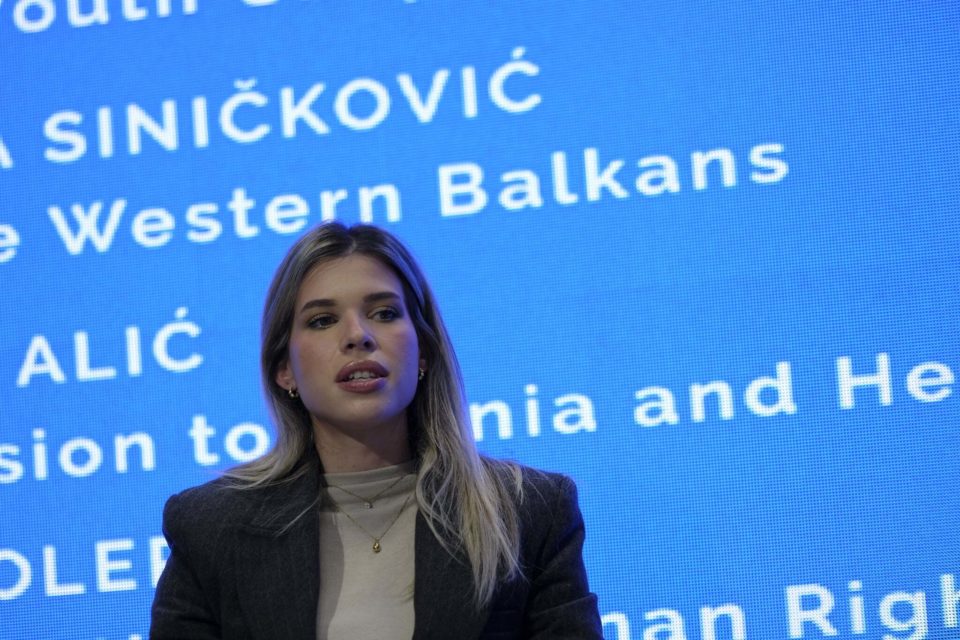
Siničković fully agreed and emphasized the need for an educational system that would increase media literacy among young people, strengthening their ability to think critically and form their own opinions.
In addition to the necessity of learning about the past based on judicially established facts in the education system, better networking and engagement of young people, the importance of regional cooperation and support was emphasized in order to build sustainable peace.
The Western Balkans Peace Forum featured three more panels: Memorialization as Prevention: Confronting the Past to Protect the Future, Victims at the Center: Advancing Survivor Rights in the Western Balkans, and Preventing Identity-Based Violence in the Western Balkans: Civil Society and International Responses. The report “Mapping Hate Speech in Montenegro”, written in cooperation between the Council of Europe and CEDEM, was presented, as well as the documentary film “Children of Sarajevo”, co-produced by the Post-Conflict Research Center and Pinch Media. The Peace Forum was opened by Ambassador Johann Sattler, Head of the European Union in Montenegro, and Velma Šarić, Founder and President of the Post-Conflict Research Center. Ambassador Sattler emphasized that peace is not self-sustaining and must be worked on every day.
Šarić highlighted that the Peace Forum was created as a platform for thinking, dialogue and connecting local realities with regional and international processes. “We created this forum because we believe that peace in the Western Balkans is directly connected to European security and the future of Europe.”