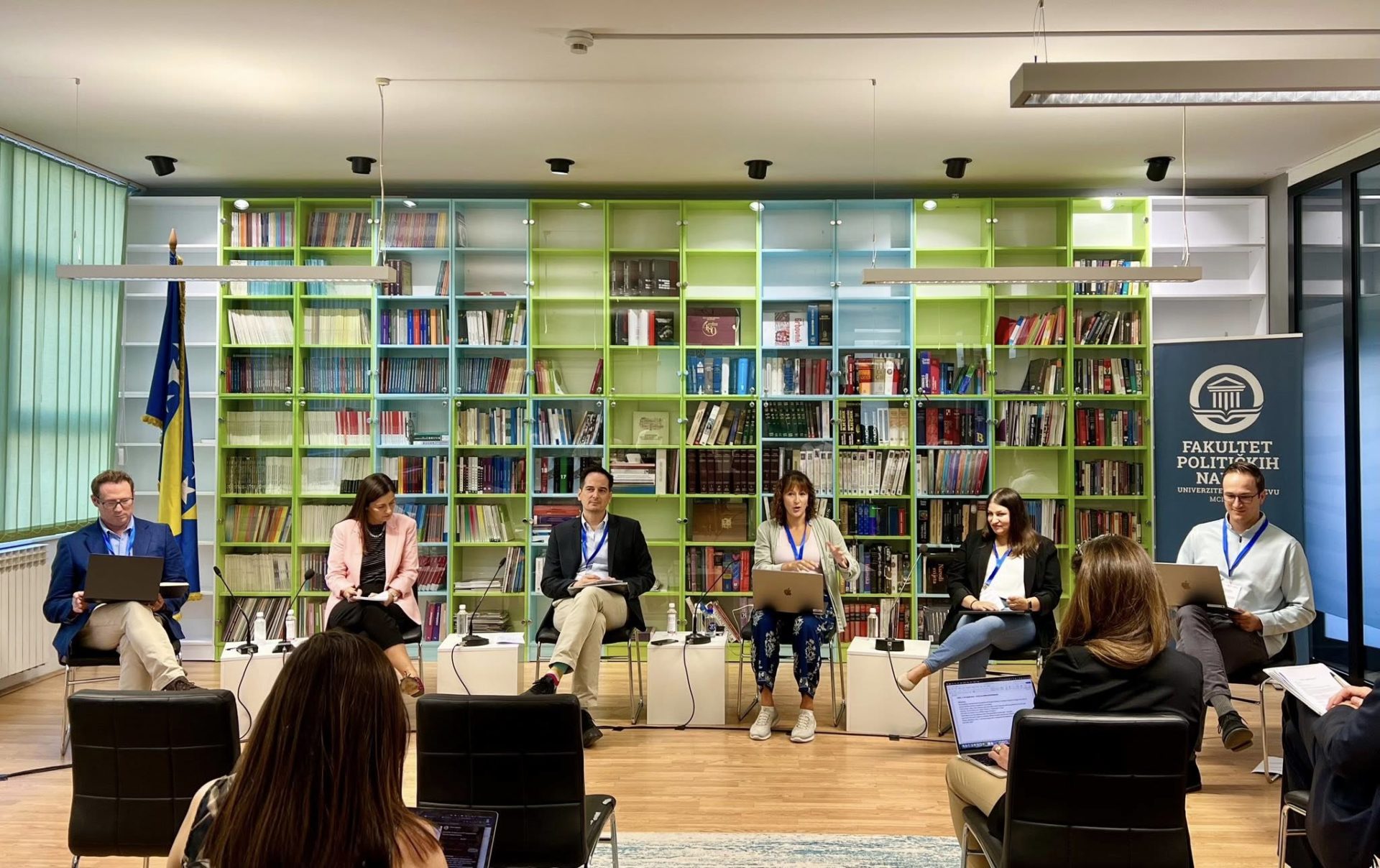
In September 2025, the University of Sarajevo’s Faculty of Political Science welcomed the third edition of the Global Scholars Network on Identity and Conflict (GSNIC) Annual Conference.
As GSNIC glided into Sarajevo, the local merged with the global. History and its real-time reckoning were the milieu. July 2025 commemorated the 30th anniversary of the Srebrenica genocide, and November 2025 marks the 30th anniversary of the Dayton Peace Agreement that ended the three-and-a-half-year war in Bosnia and Herzegovina (BiH). Despite the decades, for many in Sarajevo, 1995 could have been yesterday, with the 1,425-day siege on the city just broken. Indeed, with both advocates and detractors, peacebuilding remains an ongoing and controversial topic, and the stakes are high given that “dealing with the past” is directly stipulated by priority five of BiH’s EU accession plan.
The 2025 GSNIC Annual Conference drew upon the previous years’ meetings: the inaugural 2023 edition at Harvard University on inter-group relations and contact theory, and the 2024 Queen’s University Belfast-based program Leaders Making Peace: Incentives towards Post-Conflict Peacebuilding.
Over 25 of the world’s leading scholars, practitioners, and experts convened at the conference to collaboratively discuss the interrelationship between social norms, conflict, and peacebuilding. The event was organized by the Senator George J. Mitchell Institute for Global Peace, Security and Justice (Queen’s University Belfast), and the Weatherhead Research Cluster on Identity Politics at the Weatherhead Center for International Affairs (Harvard University), under the leadership of Professors Richard English and Melani Cammett and with the support of the Carnegie Corporation of New York.
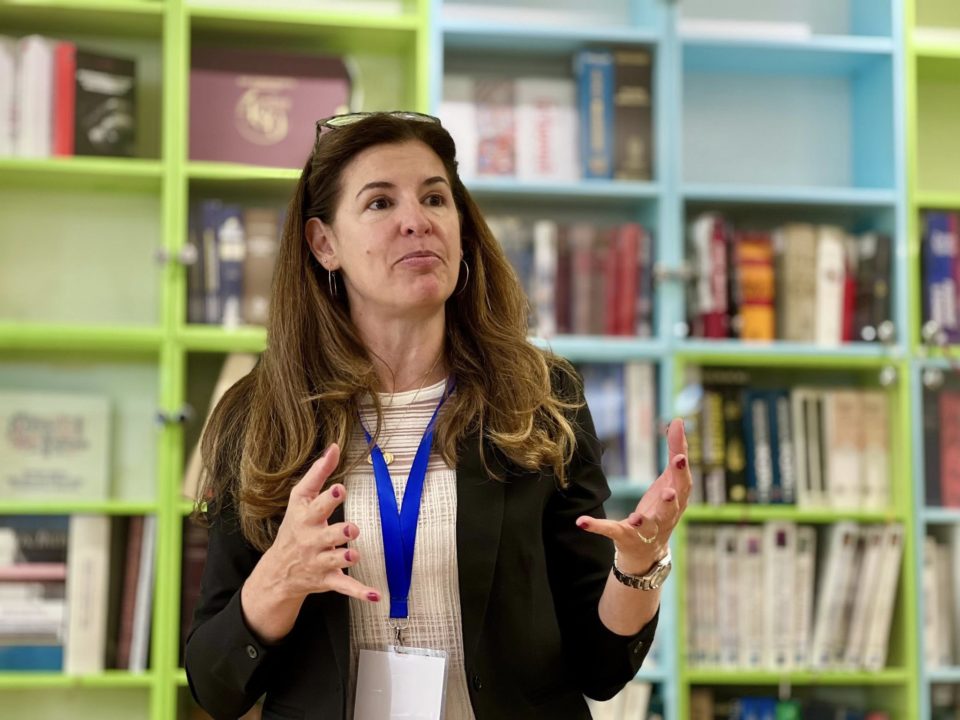
GSNIC’s arrival in BiH was no mere coincidence. Professor Cammett is writing a book on co-existence after inter-ethnic violence, drawing on research in BiH, Lebanon, and Northern Ireland. In this forthcoming comparative analysis, Cammett identifies popular perceptions of social norms and vested political interests as factors perpetuating tensions in post-conflict societies. She asserts that politicians capitalize on this enmity to consolidate power, and that this trend “is not specific to Bosnia and Herzegovina. I see it on all sides, including my own country, the United States, because we increasingly look like a place that needs help in resolving conflicts.”
In the near term, peacebuilding in Bosnia and Herzegovina will contend with challenges, from growing genocide denial as survivors grow fewer in number to “ethnic entrepreneurs” stoking the flames of collective victimhood for economic or electoral ends, with the 2026 national elections on the horizon. In the longer term, the challenges of meeting EU accession stipulations could lead to “performative peacebuilding,” wherein local actors and donors alike select for the appearance of progress in the form of transient, easily reportable projects, while foregoing sustained investments in collaborative peacebuilding platforms.
Thus, the GSNIC conference in Sarajevo came at an apropos moment. After four lively panel discussions, beneath the thicket of political science terminology, questions churned about the dynamics and dimensions of an institutionalized scholar-practitioner network: Who would set the agenda? How could this collaboration, stewarded by GSNIC, pragmatically serve both groups?
The Power of Language and Context
Throughout the 2025 GSNIC Annual Conference, experts and practitioners averred that, in post-conflict interventions, the context, language, and interlocutor matter. Many post-conflict examples across the panels revealed how these factors can determine the potential success of peacebuilding interventions ex ante—before the real, sustained process of reconciliation even begins.
In the conference’s first panel, “The micro-level: Improving intergroup norms in practice,” Stockholm University’s Sabina Cehajic-Clancy presented her recent study on the pre-war BiH society, which revealed how contextual contact can determine lasting individual-level behavior and attitudes towards post-conflict reconciliation decades later. Building on the theme of messaging and its impact, Sohad Murrar of the University of Illinois Chicago elucidated how the messaging behind norm interventions impacts their efficacy through a social marketing approach.
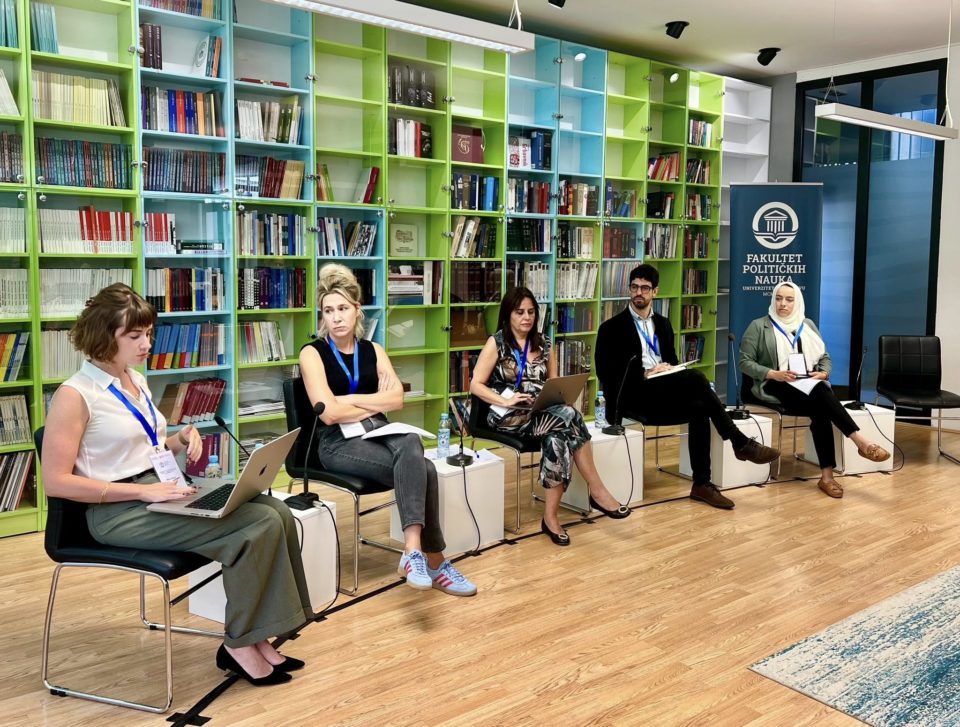
Similarly, in the second panel, “The meso-level: Elites as norm entrepreneurs?” King’s College’s Craig Larkin explored how memory practices in Belfast, Beirut, and Mosul highlighted the need for contextual understanding and precise language in designing collaborative peacebuilding interventions. Turning to the role of leadership, the University of Illinois Chicago’s Rebecca Littman discussed how different types of leaders can effectively shift norms in conflict and post-conflict environments by invoking various forms of authority.
For example, peacebuilders’ efficacy depends on their deft vertical maneuvering between grassroots community partners, political elites, and international donors. With the grassroots, peacebuilders must demonstrate awareness and sensitivity to local conditions and help “translate” national development programs to build communities’ long-term capacities, facilitate their “ownership” and decision-making in peacebuilding platforms, and procure necessary funds. Concurrently, peacebuilders must educate political elites and international partners about the local to ensure the process remains collaborative—with Bosnians not for Bosnians—while credibly signaling independence from these partners to avoid accusations of co-option. Ultimately, peacebuilders’ credibility rests also on their adaptability: to strategically use their backgrounds (religious or cultural), create coalitions through horizontal linkages, and leverage the authority of values like human rights protections or universal principles like inclusivity.
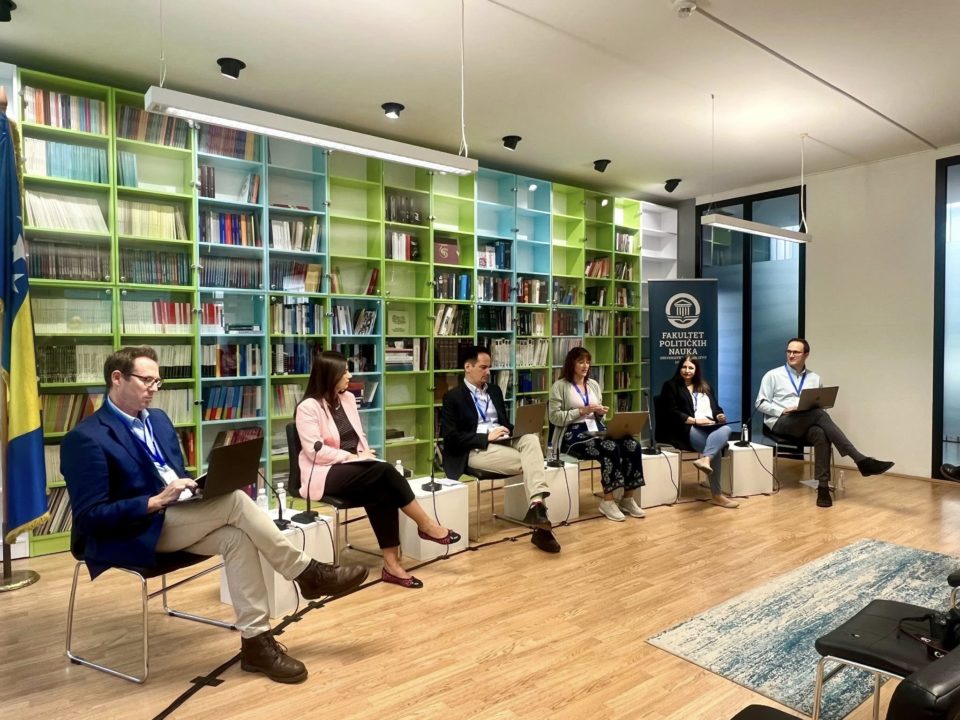
In the third panel, “The meso-level: Disrupting intergroup equilibria from the bottom up,” Pepi Pandiloski of Harvard’s Weatherhead Center for International Affairs examined the role of context in collective, cross-cutting identity formation, drawing upon a case study of multi-ethnic youth labor camps in 20th-century Yugoslavia. A policy memo by Beyond Conflict’s Timothy Phillips offered a critical practitioner perspective from his organization’s work in London, preparing communities for contact with out-groups to maximize the intervention’s resonance.
Finally, speaking on the fourth panel, “The macro-level: National and international actors,” Boston University’s Steven Rosenzweig described how the context of ethnic separation or mixing in divided societies like Kenya can shape political elites’ incentives for violent rhetoric.
The Politics of Victim Narratives
Narratives of victimhood, whether inclusive or exclusive, can open communities to reconciliation or harden identities along ethnic lines. In the first panel, Mina Cikara of Harvard University described how psychological biases, including “meta-perceptions,” guide beliefs about out-group intent and contribute to the formation of exclusive coalitions.
Invoking the meso-level, Denisa Sarajlic, Director of SKRIPTA and former BiH Deputy Minister of Civil Affairs, extrapolated insights from her research on the political shift of former Republika Srpska President Milorad Dodik toward the formation of “counter norms” to EU procedural principles (such as priority five mentioned above). Dodik’s narratives undergirding these counter norms concerned collective Bosnian Serb victimhood, opposition to “tolerance,” and delegitimizing Srebrenica genocide victims.
Building upon Professor Cikara and Dr. Sarajlic’s comments, in the third panel, Marko Kljajić of Harvard’s Weatherhead Center explained how exclusive victimhood sentiments, when shared by both groups in a post-conflict society, culminate in a “victimhood trap.” Kljajić’s research shows that the victimhood trap widens the gap between individual and collective attitudes, rendering reconciliation practices like mutual acknowledgment more “costly” and creating a “rational structure for denial” based on “pluralistic ignorance.”
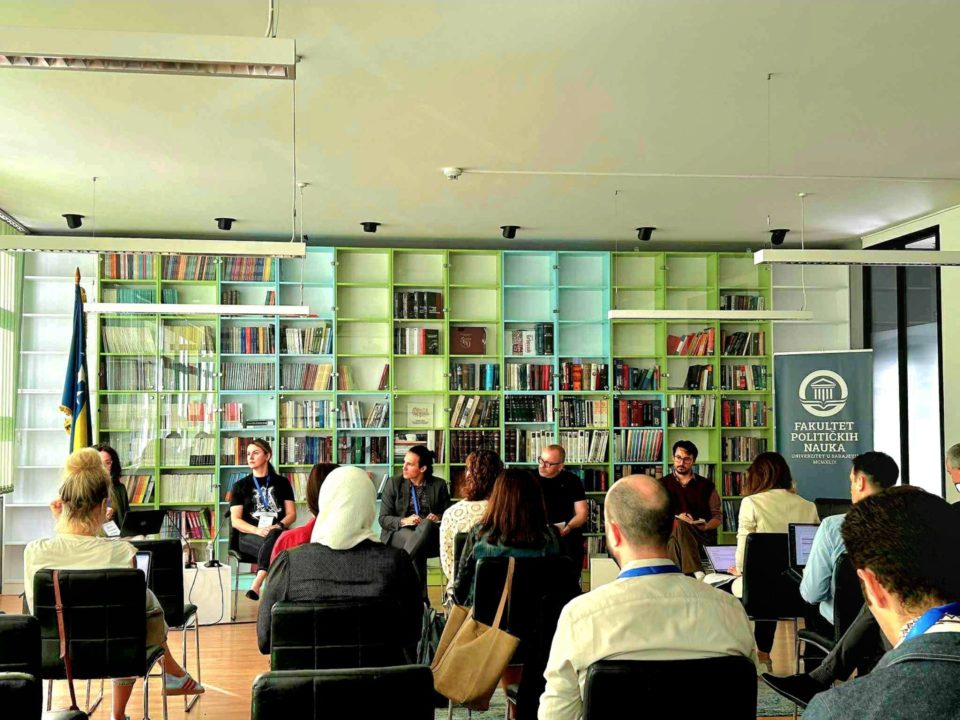
Professor Cammett echoed these findings, contending, “I don’t think [ordinary] people have a problem with each other. That’s the impression I get from everywhere, despite the established narrative that everyone looks at each other with distrust and hates each other after violence… They may not be marrying each other en masse, but I think people want to get along and that these [ordinary] people themselves are not the source of the problem.”
More broadly, Louise Mallinder of Queen’s University Belfast argued for a recalibration in the field of transitional justice regarding which truths are valorized in post-conflict societies under a guiding principle of narrative “proportionality.” She also noted peacebuilders’ constructive role in the collective process of finding common historical ground. Embodying this tenet, on the same panel, Velma Šarić, Founder and President of the Post-Conflict Research Center (PCRC), advanced a pragmatic practitioner outlook, focusing on successful narrative-based peacebuilding initiatives. She referenced the role of Bosnian genocide and sexual violence survivors in directly shaping global transitional justice through the Western Balkans Coalition for Genocide and Mass Atrocity Crimes Prevention and the educative value of global testimonies in promoting tolerance, reconciliation, and interethnic cooperation through PCRC’s Ordinary Heroes project.
Finally, offering a macro-level perspective, on the fourth panel, Laia Balcells of Georgetown University shared her findings from studies on how transitional justice museums and memorials commissioned by national and international actors—and the politicized removal of sites—shaped individual attitudes and victimhood narratives.
Economic Structures and Incentives in Post-Conflict Healing
Political economy as an overlooked engine of reconciliation also animated the conference discussion. For example, during the third panel, Richard English reflected on whether the liberal peacebuilding in-group was ceding broader societal legitimacy to populist conservatives and ethnic entrepreneurs by marginalizing the approach of meeting populations’ basic economic needs as a material benefit to create a sense of inclusion.
In turn, Professor Cammett depicted politicians’ economic motives for fomenting divisions as counterintuitive, stating, “society as a whole would have more productive growth… generate more revenue overall… [and] have more resources if you can promote a more inclusive and conciliatory environment.” Ultimately, Cammett held, “divisions are not good for business [or] general well-being.”
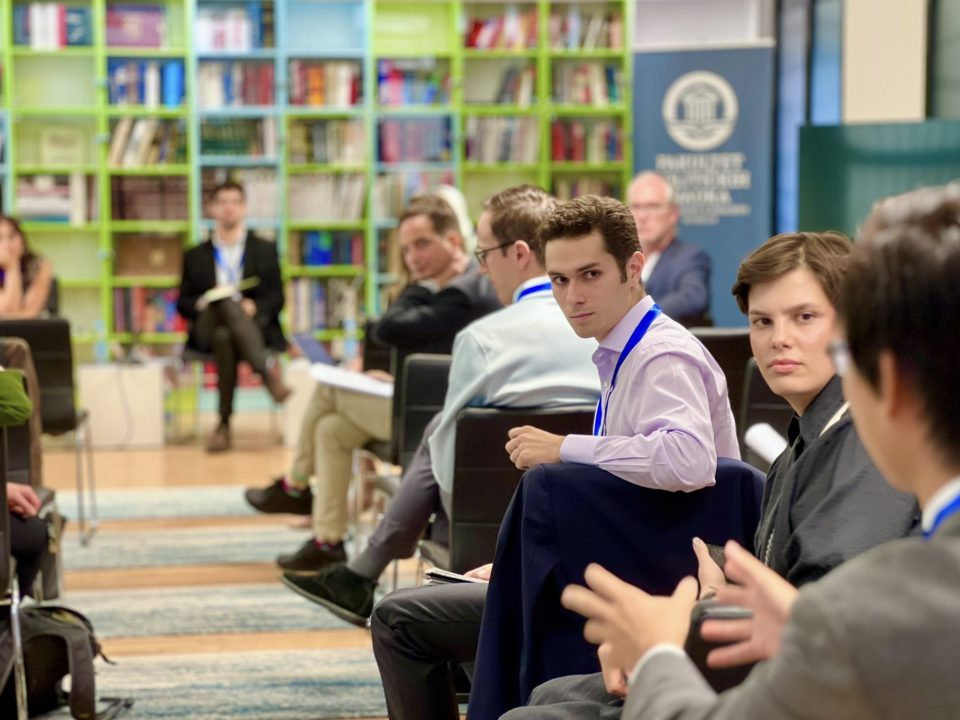
In the fourth panel, Guy Priver of Harvard Law School brought technical substance to the discussion, presenting research insights from inter-group cooperation on sewage systems in Cyprus to reveal how technical necessities can help “sell” collaboration as a “common good.” Priver also raised critical questions about the spillover effects of cross-cutting mutually beneficial engagements.
As a counterpoint, independent scholar Dzenana Šabić Hamidović drew on recent historical evidence from BiH to explain tensions between material and symbolic cooperation. According to Šabić Hamidović, BiH’s initial decade of post-war civil society-driven peacebuilding momentum was cut short partly by a shift in donor emphasis towards economic empowerment.
Making and Breaking Norms in a Post-Truth World
A final theme throughout the conference was norm formation and disintegration in the “post-truth” era. In the first panel, Vincente Valentim of IE University discussed how preference falsification causes many individuals to follow norms they disagree with. Professor Valentim cited the dramatic rise of far-right behavior in the West as an example of a sudden change in the “fragile” norms of toleration and inclusion. This was attributed to misperceptions of others’ attitudes, which, when violated, did not result in consequences for citizens or electoral penalties for political elites. Indeed, many GSNIC Conference participants, such as Professor Mallinder, affirmed that the post-truth era has coincided with the erosion of norms of international law, making local peacebuilding work much more difficult.
Conversely, on the second panel, Gothenburg University’s Kristen Kao delineated how similarities in norms about abstract concepts such as “justice” across diverse communities indicate openings for norm formation despite efforts of “spoilers” (like ethnic entrepreneurs) to propagandize out-groups, as described by Dr. Sarajlic. Finally, David Romney of Brigham Young University’s comparative research in Israel and Malaysia analyzed how citizens respond to negative norms spread by political elites, and simultaneously, how elites can be forced to jettison norms that lose popular support.
Building on the Sarajevo Conference
With GSNIC’s status as an Annual Conference, one would be remiss not to look to the future. In 2026, GSNIC plans to tackle the origins and designs of institutions. Doha, Qatar, has been raised as a potential setting for this fourth meeting. Just as GSNIC 2025 carried the legacy of the first convocations at Harvard and Queen’s University Belfast, GSNIC 2026 will undoubtedly owe its direction and salience to the peacebuilding experiment and defiant coexistence in Sarajevo and Bosnia and Herzegovina.