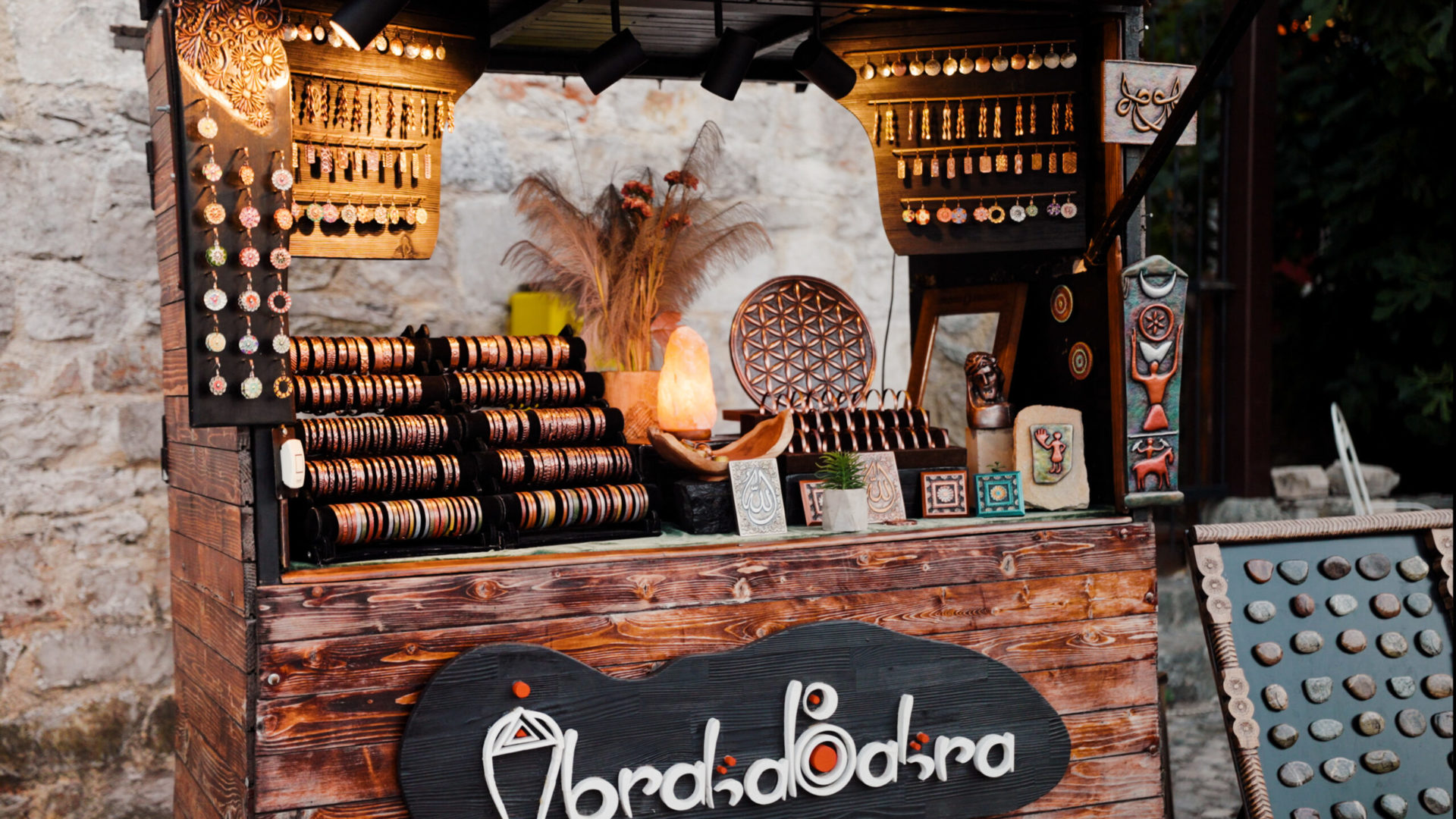
The sound of a hammer striking copper in the Old Town of Mostar is not just a craft rhythm, but an echo of centuries-old tradition, intangible heritage, and the identity of the city—a city that is under UNESCO protection.
That sound is becoming quieter, says one craftsman, because local authorities have forbidden him from setting up a small stand of handmade crafts. While authorities claim that such a stand violates the visual identity of Mostar, a counterargument contends that prohibiting the stand is contrary to UNESCO guidelines and endangers what should be preserved in the protected area of the Old Bridge.
Denis Muhamed Drljević is the owner of the AbrakaBakra Copper Art studio in Tabhana, where he has been making copper items for years using traditional blacksmithing techniques. His work is not industrial production, nor is it a commercial souvenir without provenance. He crafts each item directly in front of passers-by, in a space that has been reserved for craftsmen for centuries.
However, the City of Mostar rejected his request to occupy public space for a small handicraft stand, at the location where he had been since 2017. The reason given was “endangering the visual identity of the Old Town.” Drljević and some experts consider this decision arbitrary and contrary to the spirit of UNESCO protection.
Twenty years ago, the Old Bridge and the old city center of Mostar were added to the UNESCO List of World Cultural Heritage Sites. A key aspect of UNESCO protection is living heritage—a combination of material and immaterial, space and people, architecture and way of life.
Authentic Life, Not Open-Air Museums
Intangible heritage includes traditional crafts, including metalwork, tailoring, and woodcarving, among others, which have shaped the identity of Mostar for centuries.
Documents from UNESCO and ICOMOS show that the historic core “must not be an open-air museum, but a space in which authentic life continues.” Guided by these documents, Drljević and experts question how a copper stand with handmade items threatens the city’s visual identity, while, for example, air conditioners, PVC windows, and inauthentic advertisements are acceptable in a protected zone.
Drljević believes that regulations in the Old Town are applied selectively, and that permits are regularly granted to entities that have nothing to do with Mostar, tradition, or crafts.
According to him, shops are full of industrial souvenirs of foreign origin, often mass-produced in countries like China and Turkey. Meanwhile, local craftsmen are left facing administrative obstacles.
Asked about the difference between authentic crafts and commercial products for tourists, the Mostar’s Stari Grad Agency says the difference is “huge,” and that the fact that you can watch items being crafted live is what makes traditional crafts so appealing.
The Stari Grad Agency was founded in 2005 with the aim of protecting the cultural, historical, and natural heritage of Mostar, as well as implementing the management plan and preserving the Old Bridge area as a world heritage site.
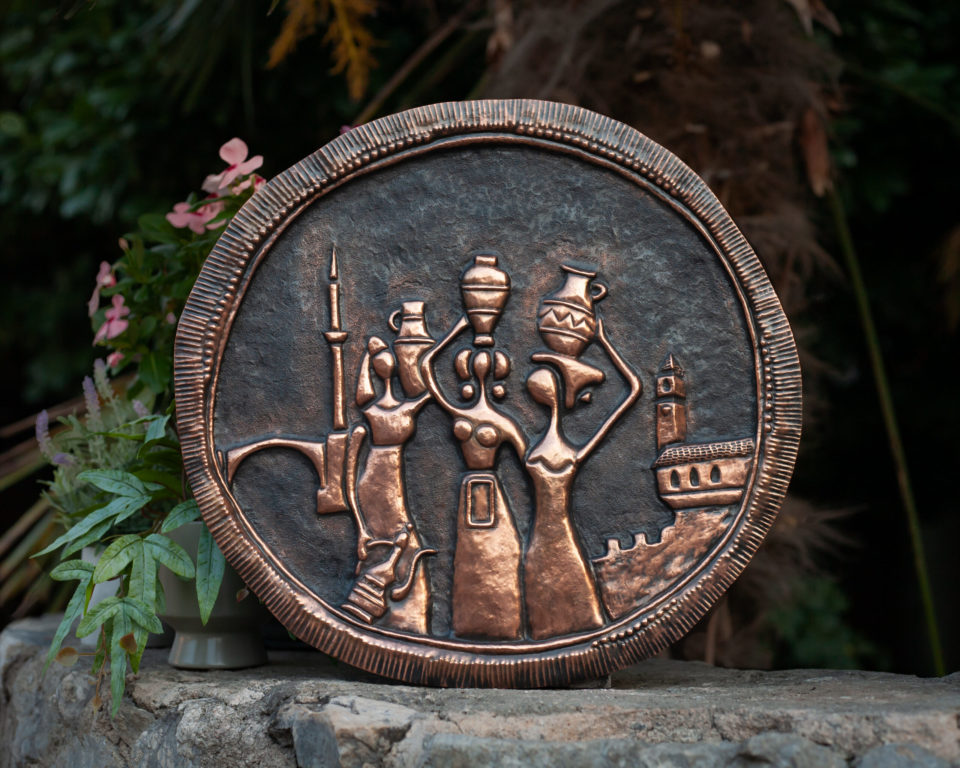
As they stated, craft workshops fit into the visual identity of the Old Town and are an inseparable part of it. However, they add that there have been cases where city services have rejected the agency’s opinion.
Craft as a Moral and Social Statement
The agency said that while the Program for Occupying Public Areas in the Old Town (2012), the Decision on the Temporary Communal Order (2018), the decision of the Commission for the Preservation of National Monuments (2019) exist, the problem is not in these regulations but in their interpretation.
Differences in the interpretation of existing acts has also lead, as Drljević concluded, to unequal treatment, ignoring complaints and discouraging those who try to work by the rules. In appealing the decision to ban the stand, Drljević complained about the procedures and deadlines but did not receive a response.
For Drljević, a craft is not just a job—it is a moral and social statement: “Being a craftsman means earning an honest living, creating with your own hands, and remaining independent of political and criminal structures.”
If the trend of suppressing crafts continues, more people will lose out, including tourists looking for an authentic experience. In the short term, commercial content and cheaper souvenirs will benefit, while in the long term, Mostar may lose its traditional crafts, that is, what makes it unique.
The Stari Grad Agency also states that old crafts are threatened by commercial trades, and that specific protection mechanisms, incentives, and clear differences between craftsmen and ordinary shops are needed.
“We need to make a distinction between craftsmen and artisans,” says Drljević, a claim that perhaps best encapsulates the essence of Mostar’s problems today.
A craft can be anything; a craft is an identity. If Mostar wants to remain a city rather than a set piece, it must, according to Drljević, start listening to those who are still creating it with their own hands. Otherwise, the sound of hammers in the Old Town will become just a memory, and the meaning of UNESCO protection will be lost.