Cartoons and illustrations are a form of artistic expression that combines humor, cultural critique, and imagery to convey messages.
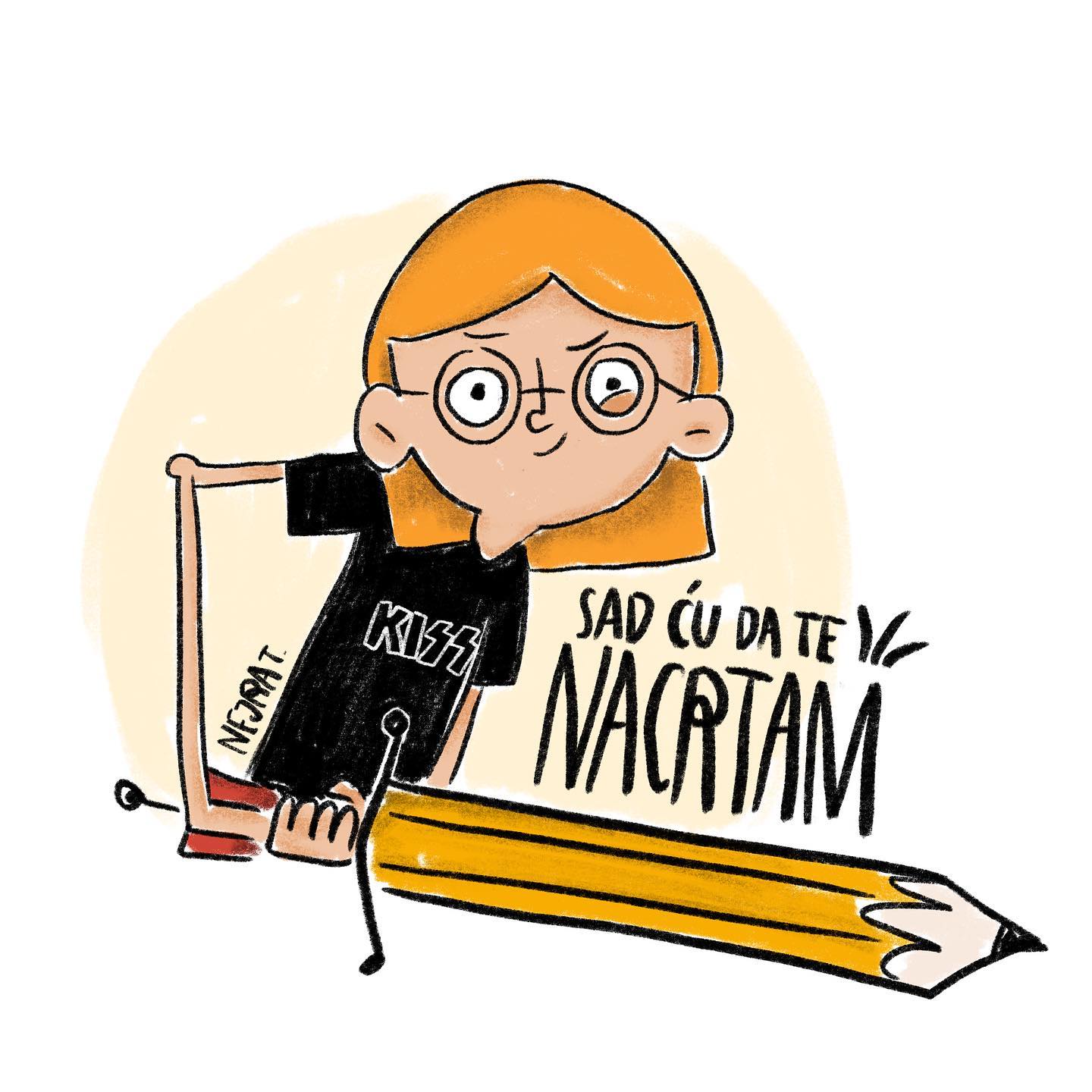
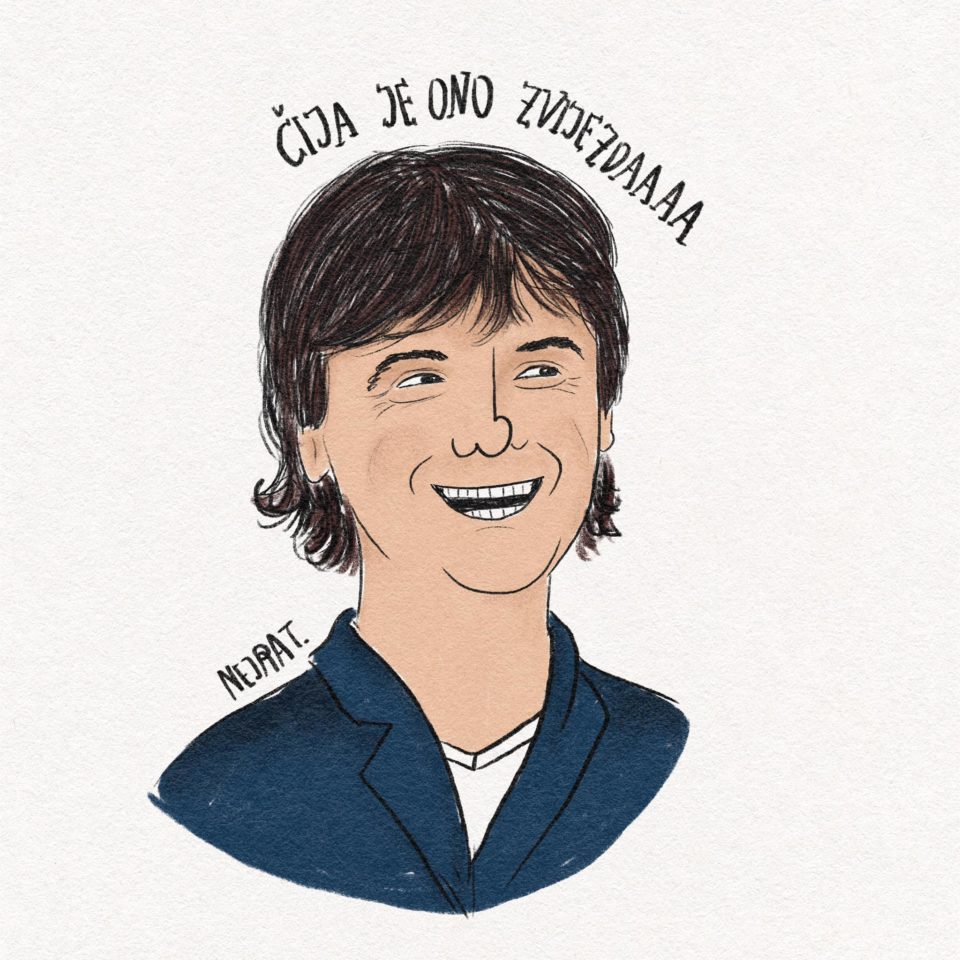
Professor Nejra Turčinović has returned to this artform, drawing illustrations mostly for children, some of which ended up on the foreign market. Her love for drawing dates back to her youth, and her style has become recognizable as she has illustrated more than twenty children’s books.
As a child, Turčinović read as many illustrated books as she could get her hands on. Her favorites were the Bambi and Vjeverica Library picture books, which she still collects today. “I believe that we should give children as many illustrations as possible, including new, hand-drawn ones that give them a different perspective on fairy tales or stories and thus also might encourage them to draw and achieve success,” said Turčinović.
Silly Illustrations with a Message
Turčinović has a master’s degree in Civil Engineering, and she works as a high school teacher and college assistant, while avidly pursuing her hobbies and collections. She collects illustrations, but her greatest joy is drawing her own, in sketchbooks and on paper and cardboard. In addition to illustrating children’s picture books, she also makes small, illustrated greeting cards. “These are mostly humorous illustrations that contain subtle connections with certain messages,” Turčinović explained.
The cards she makes can be bought at the Buybook bookstore and from her personally. She also does custom illustrations in her “cartoonish style.”
“I would definitely recommend that people avoid focusing on just one thing. The situation in the country is not a fairy tale and requires navigating several different battlefields. Definitely don’t give up on your dreams and try not to let yourself ever get bored, because I believe that if a person gets bored, then everything is pointless,” said Turčinović.
During her schooling, her pursuit of drawing was less serious. However, after attending a meet-up with the well-known artists Sabina and Zdravko Cvjetković, she saw the potential for illustrations and that “there is material for great things.” This experience awakened her dormant passion for drawing and, she says, “it wasn’t difficult to return to my old love.”
“Now I draw every day, literally. As a high school teacher and university assistant, drawing is how I let off steam. It’s an escape from reality, meditation, and therapy. It’s my own world, where I can be alone and experience catharsis and nirvana—where I get ideas and find solutions to personal questions and dilemmas,” Turčinović said.
The focus of her work is children’s illustration. So far, she has illustrated more than twenty children’s books for both domestic and foreign markets.
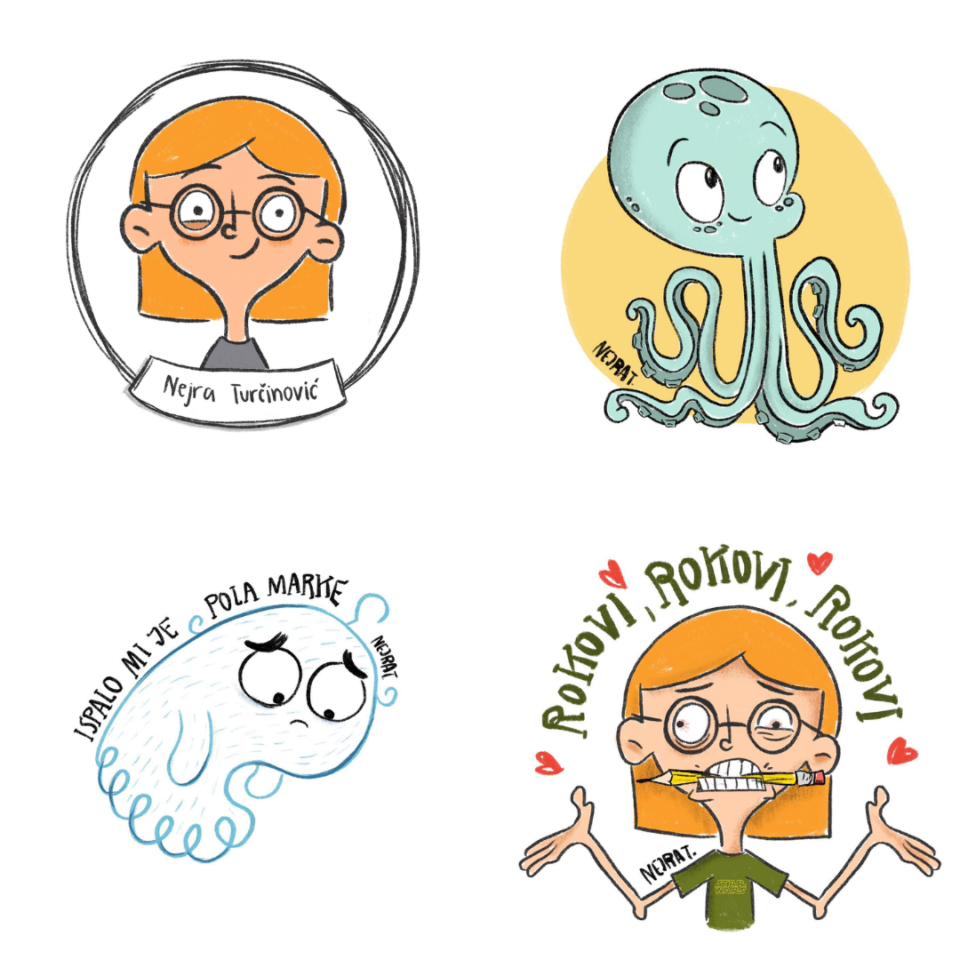
“It’s my dream, and I’ve already become slightly well-known for my style. This, I can claim, is the desire and goal of every illustrator and cartoonist: to be recognized for what they’ve created,” says Turčinović.
Caricature and Illustration
The first caricatures appeared in sixteenth-century Italy and soon became popular in France and Great Britain. They were often included in print media, where they served as a means of political expression, satire, and entertainment. Through distorted portraits and humorous scenes, cartoonists were able to comment on political leaders, authorities, and social norms. At that time, cartoonists were often at risk of persecution for their controversial drawings.
An older form of art is illustrations, which are used to tell visual stories in books, articles, advertisements, and other media. They play a key role in enriching texts, and help us to better understand the characters, events, and settings of stories. In children’s books, illustrations are often the main storytellers, creating a connection between the text and young readers.
Illustrations are also used in many other media, such as comics, graphic novels, and advertisements. They can create an emotional connection with the audience, help convey complex information, and enrich the visual experience.