In Bosnia and Herzegovina, diversity is still not widely recognized as a strength.
Instead, it is often a basis for stereotyping, discrimination, and social exclusion. The Roma community, in particular, suffers the consequences, which has led to the project “On the Wheels of Tolerance.” A guidebook has also been created for understanding and implementing a preventive-intervention model to combat ethnic prejudice and the social alienation of the Roma community, especially through educational activities.
“On the Wheels of Tolerance” was implemented by the University of Banja Luka Philosophy Faculty and Branko Ćopić Elementary School in Prnjavor, with the support of the City of Prnjavor. The project aims to improve the status of young Roma within the educational system and achieve a level of social inclusion that will bolster the retention of Roma students in classrooms.
The Roma are the largest ethnic minority in Bosnia and Herzegovina, and according to many indicators, they are also the poorest, most marginalized, and most vulnerable. Jovana Šuman-Šušak, a masters student of psychology and the coordinator of “On the Wheels of Tolerance,” explains that they wanted to identify the most influential factors in the unfavorable socio-economic position of the Roma community.
“Generally speaking, the unfavorable socio-economic position and the marginalization of the Roma is largely the result of deep-rooted social problems,” explained Šuman-Šušak, emphasizing low levels of education as well as systemic poverty, discrimination, and exclusion as the main factors.
She explained that social exclusion means that a certain group does not have access to basic opportunities and services, and, in the case of the Roma community, this is exacerbated by stereotypes and limited contact with the general population.
“However, the biggest cause of exclusion is discriminatory attitudes and widespread stereotypes,” emphasized Šuman-Šušak.
Asked whether there is enough discussion about exclusion, she replied: “Given the situation in our country and the significant social alienation of the Roma, I would say that too little is said and not enough is done to improve the position of members of this marginalized group.”
While acknowledging the efforts of individuals, non-governmental organizations, and government institutions, she emphasizes the absence of a comprehensive, integrative approach encompassing education, social protection, and health. Šuman-Šušak highlights Prnjavor as an example of one of the few local communities that has recognized the importance of this topic and directly supported the project.
Alarming Trends in Education
Referring to reports by UNICEF and the Ministry for Human Rights and Refugees of Bosnia and Herzegovina, Šuman-Šušak noted that in most Central and Eastern European countries, only 20% of Roma children complete primary school, compared to over 90% of children in general. Roma who do enroll in school, according to the 2022 UNICEF report, often drop out due to racism and discrimination, as well as low-levels of prior knowledge and insufficient preparation for regular schooling.
A 2013 study by the Ministry for Human Rights and Refugees of Bosnia and Herzegovina placed the primary school enrollment rate for Roma children in the country at 46.9% percent, which is a third less than the general population. According to available data, only 40% of Roma who enroll in school ultimately graduate.
“One of the most common reasons for not attending school is the belief among Roma youth that they would not feel comfortable at school. In the school environment, the experience of discrimination is one of the main factors that leads to dropping out, and it is most often manifested through verbal and physical peer violence and social alienation—for example, other students’ refusal to share benches with Roma,” said Šuman-Šušak.
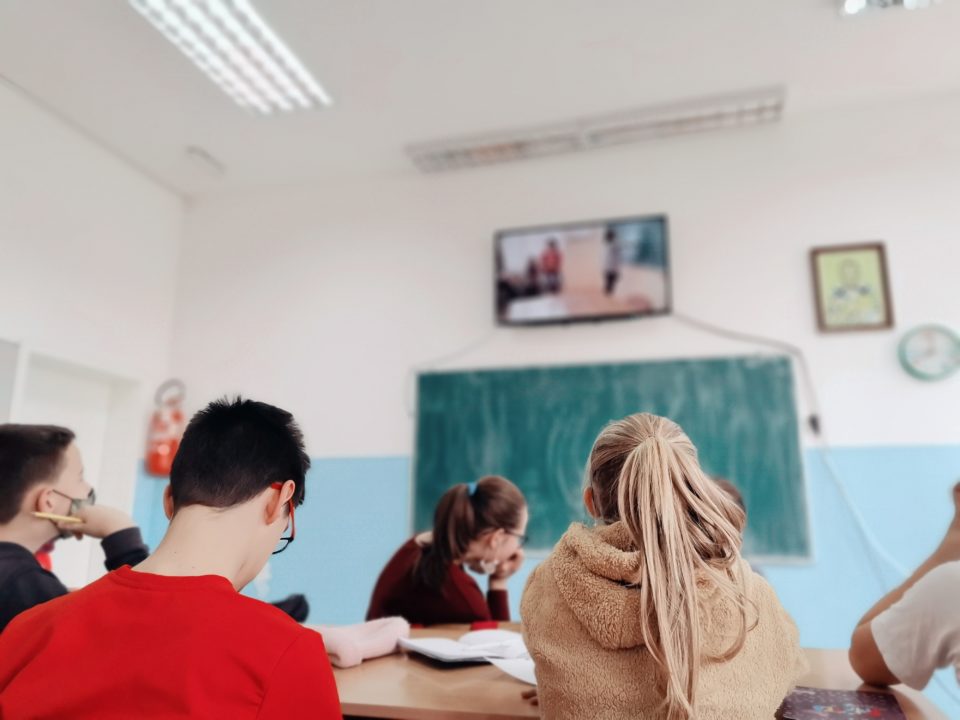
She added that the causes of exclusion include inadequate educational policies, segregation, poverty, low awareness of the importance of education, peer violence, language barriers, and different customs.
A Practical Guide to Reduce Roma Exclusion
Nevertheless, solutions exist, such as those outlined in the three modules of the “On the Wheels of Tolerance” handbook. The first module is based on educational-psychological workshops, which help students understand the concepts of discrimination and prejudice.
“We didn’t offer students ready-made definitions, but encouraged them to think critically and draw conclusions,” explained Šuman-Šušak.
The second module relies on parasocial contact through media-mediated stories about Roma. The third module is focused on direct inter-ethnic contact based on common goals, cooperation, and familiarity in order to reduce social distance and build trust.
“The handbook is not just a collection of theoretical knowledge—it’s also a practical guide that can serve teachers, psychologists, educators, and other experts who work with members of marginalized groups to improve social inclusion,” said Šuman-Šušak.
The handbook offers concrete examples of workshops and good practices for all three modules, providing readers with tools and guidance for implementing such activities in their communities.