Very often, women in rural areas are said to be the pillar of tradition and family values. The real picture is much more complex.
They face many obstacles, including limited access to education, infrastructure, health services, and economic opportunities, and their labor is often invisible. Nevertheless, through associations, informal gatherings, initiatives, and small entrepreneurial ventures, rural women in Bosnia and Herzegovina have formed important social movements that contribute to their growing reputation as not only keepers of the past but also creators of the future.
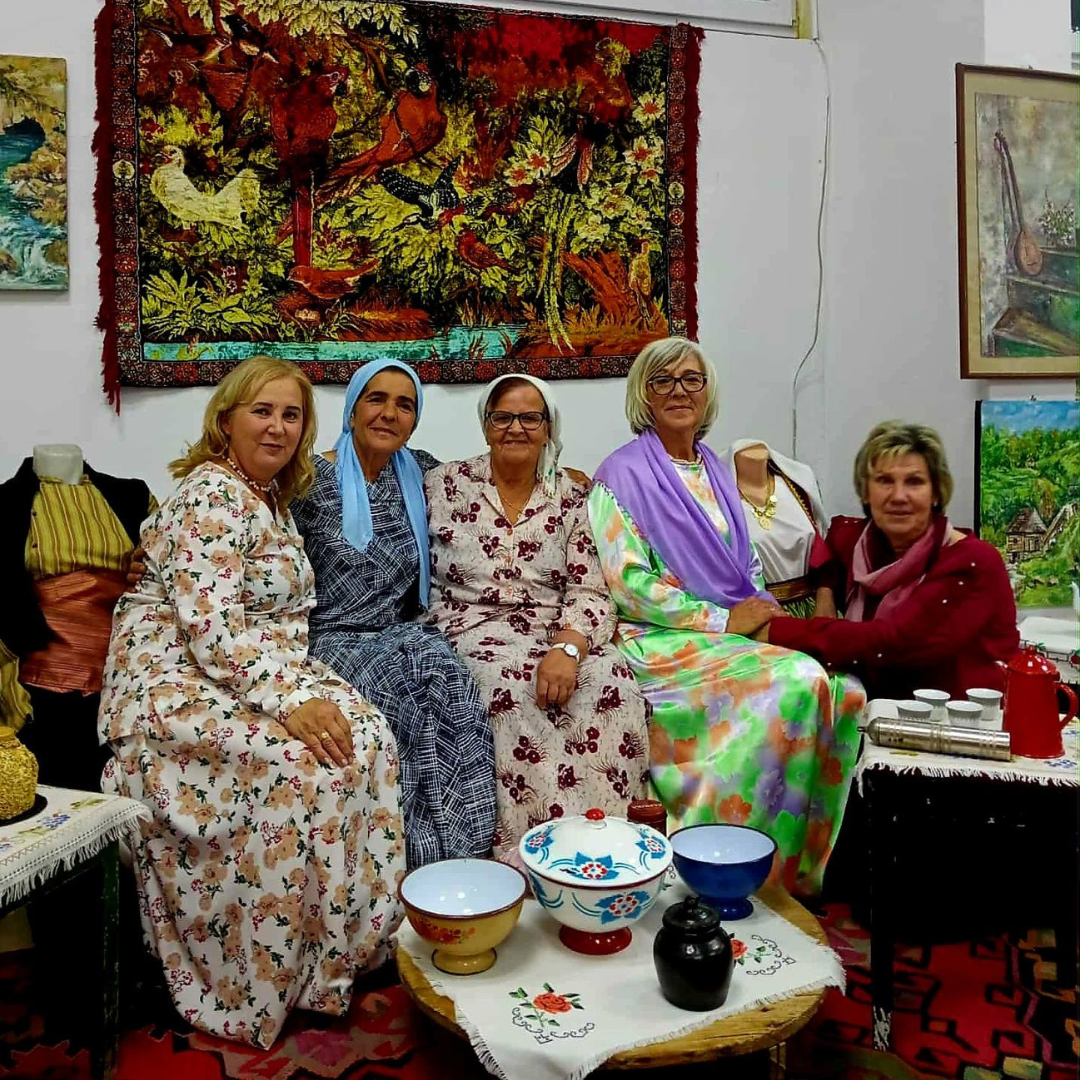
One example is the women from Klopča near Zenica who, since 2023, have been gathering in the Stijene Association. According to the association’s president, Zijada Čolak, they have 35 members, 15 of whom are highly active. “The diversity of characters and generations requires patience but also creates a rich community,” said Čolak.
Their first projects were related to women’s and children’s health, and soon their activities expanded to include workshops on knitting, decoupage, silk work, pottery, and other handicrafts. Promoting traditional cuisine is their trademark, which earned them their first revenue to invest in supplies. “Every casserole dish and spoon that we have today, we earned ourselves,” says Čolak.
They have also organized three sports tournaments, which have attracted considerable interest. “No one expected women to start a sporting event,” said Čolak. Additionally, Čolak and the daughter of one Stijene member organize children’s craft workshops, and participants’ works are sold at fairs.
They cooperate with other organizations and receive support from individual donors and local governments. They will soon start a sewing program, for which they need to acquire a sewing machine from a partner organization.
Čolak also initiated a unique catering program. “We proved that we could, but we weren’t ready. We will be soon. We work a lot with traditional cuisine and we constantly get offers,” she explained.
She explained that Stijene has become a space not only for socializing but also for empowering women and children.
Starting Point: Women’s Engagement
Professor Amila Ždralović, a sociologist and gender studies expert, says that women in all societies have traditionally been assigned the role of guardians of customs, home, and cultural heritage. In rural areas, she explains, these roles are enforced more strongly due to patriarchal norms and expectations that still govern women’s daily lives.
“Women in rural communities often live in multi-generational families, under strong pressure from traditional roles. When they try to start their own business, their immediate environment is often the first obstacle. They’re often told that it’s ‘not for them,’ especially when they encounter their first business difficulties,” she explains.
On the other hand, Čolak sees in this tradition an opportunity for women’s involvement – not as an imposed obligation, but as a starting point for empowerment.
“We started with knitting workshops, but we have women who sew very well. If we had a machine, we would have started earlier […] The Evangelical Church and the association Glas za život promised us a machine, and we hope that this will soon start a new phase of our activities,” said Čolak.
This supports the findings of Professor Ždralović that traditionally “female” skills – while sometimes serving as an extension of patriarchal norms in rural contexts – can become instruments of association, economic empowerment, and escape from isolation for women.
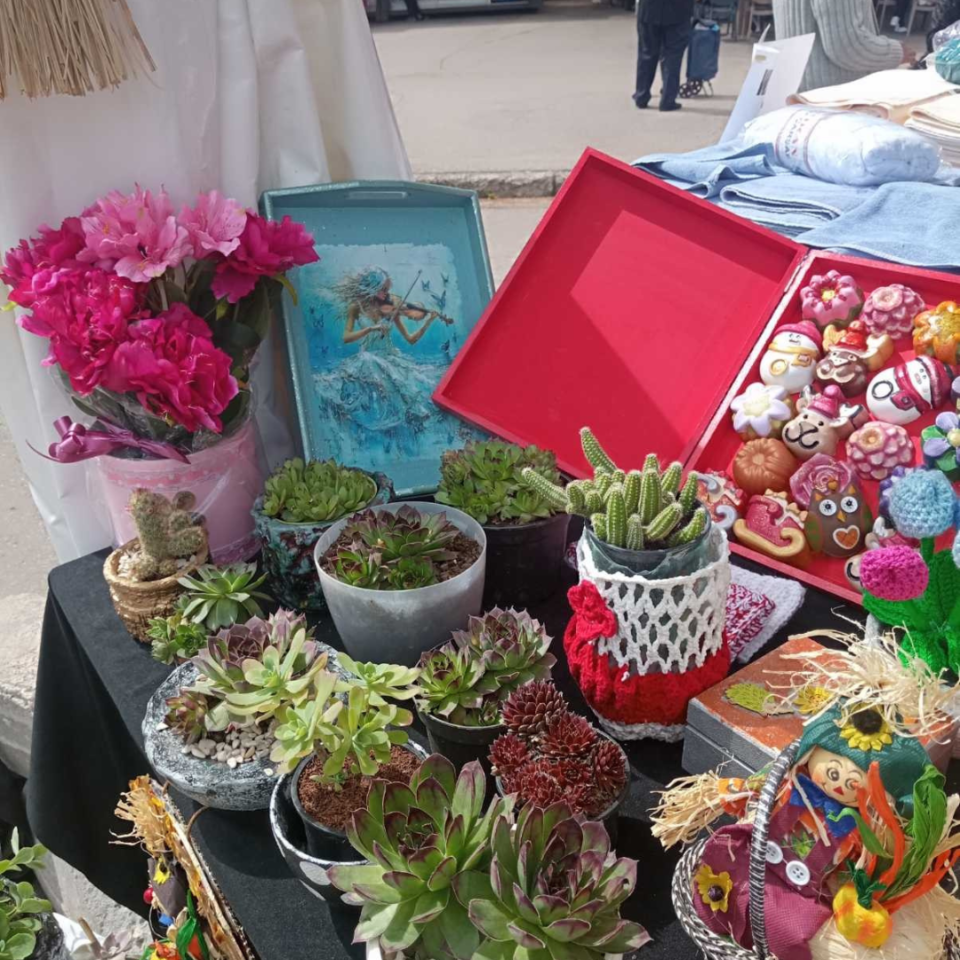
This is at the heart of Stijene’s work. Through workshops of decoupage, knitting, and other decorative crafts, women not only learn new skills but also build self-confidence, a sense of belonging, and solidarity.
“We have a workshop with children, we do decoupage, we make different decorative items that we later sell at fairs. The local community also often helps us. The Fedi store has donated material to us several times, which enabled us to work better and stronger,” said Čolak.
Professor Ždralović explains the importance of such initiatives: “At first it seemed to me that gatherings such as sewing courses maintain patriarchal lines. But after fieldwork, I saw how important these meetings are. For many women, it is the first step of leaving the house, getting involved in social life, recognizing common problems, and starting activities that eventually become a serious form of social engagement.
She adds that for this reason, even informal gatherings can be a starting point for later formally registered associations, campaigns, bazaars, humanitarian initiatives, and other activities that increase the visibility of women in the community.
Change is Possible
According to Ždralović, women in rural areas are a vulnerable group, as recognized in the Law on Gender Equality of Bosnia and Herzegovina. The biggest problems they face are insufficient health services, poor infrastructure and public transport, limited access to education, undervalued work, and exclusion from the decision-making process.
Although they encounter obstacles every day, the women of the Stijene Association show that it is possible to create micro-changes that eventually grow into a wider social transformation. Čolak explains that their desire is to start a small business, and one day expand into the catering sector.
“We’ve already shown that we can do it. We’ve cooked at various events and received offers from other associations. We’re still waiting for the right moment, but our goal is big and we believe we’ll succeed,” said Čolak.
They also find inspiration in other women’s groups. “On a study trip to the Jablanica area, we saw how women develop businesses processing fruits and vegetables, how they received big projects. It seemed impossible to us, but I believe that one day we can achieve it,” added Čolak.
Professor Ždralović considers such examples as evidence that women’s associations have the potential to change local communities from the inside, and that rural areas, despite challenges, can become places of innovation, solidarity, and economic empowerment.
When asked how the contributions of women in rural communities can be better recognized and valued, Professor Ždralović says that the answer lies in education: “I really believe that the biggest changes can be achieved through the education system – through sociology, sociology of law and critical education that recognizes social inequalities and opens up space for emancipation.”
At the same time, the practical work of associations like Stijene shows that change also comes from below – from small, everyday, often invisible activities that represent the foundations of the community.
Combining academic insights with the experiences of women on the ground, a clear message emerges: women in rural communities are not keepers of the past, but active creators of the future.