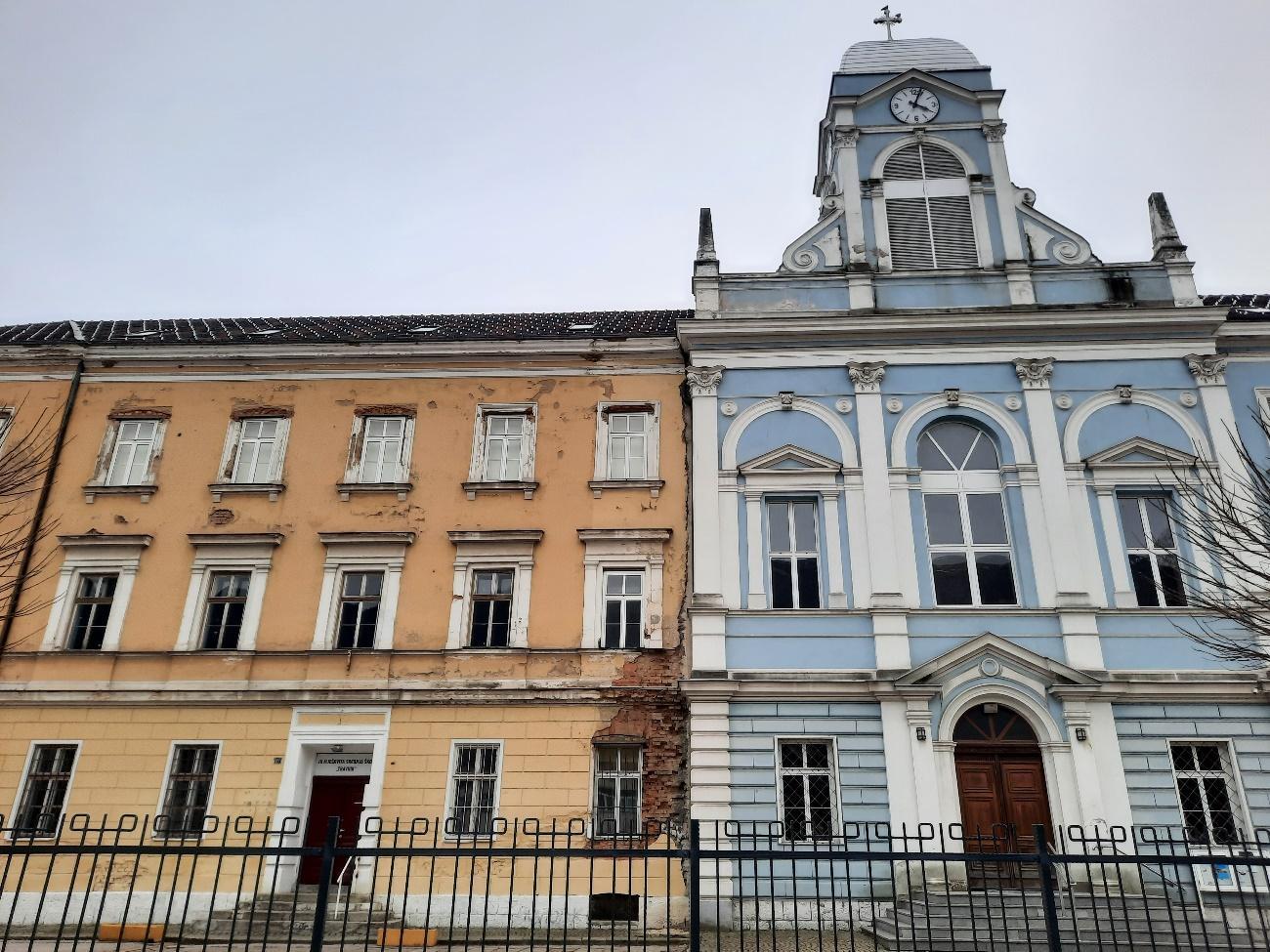
In the same city, in one building, children in Bosnia and Herzegovina (BiH) often learn different curricula that creates a divided vision of reality.
They enter the school through different doors, sit in different classrooms, use different textbooks and adopt different narratives about the past – even though they share the same playground, the same air, and the same future. The practice of “two schools under one roof,” persists despite being characterized as a form of institutional segregation in reports by numerous organizations and court rulings.
The system was established in the context of post-war reconstruction and the return of displaced populations to ethnically divided areas, where education was perceived as a potential flashpoint for conflict. The idea was that children of different ethnic groups would attend classes in the same building but follow different curricula in order to avoid conflicts. However, how long such a system should last was never specified, and the temporary solution had no exit strategy. Instead of integration, a model of physical separation was chosen, presented as a short-term stabilization measure.
Today, after more than two decades, this practice still exists in dozens of schools, primarily in the Central Bosnia, Herzegovina-Neretva, and Zenica-Doboj Cantons. According to OSCE data, this is the most visible example of discrimination in education in BiH and directly contradicts domestic legislation and international human rights standards.
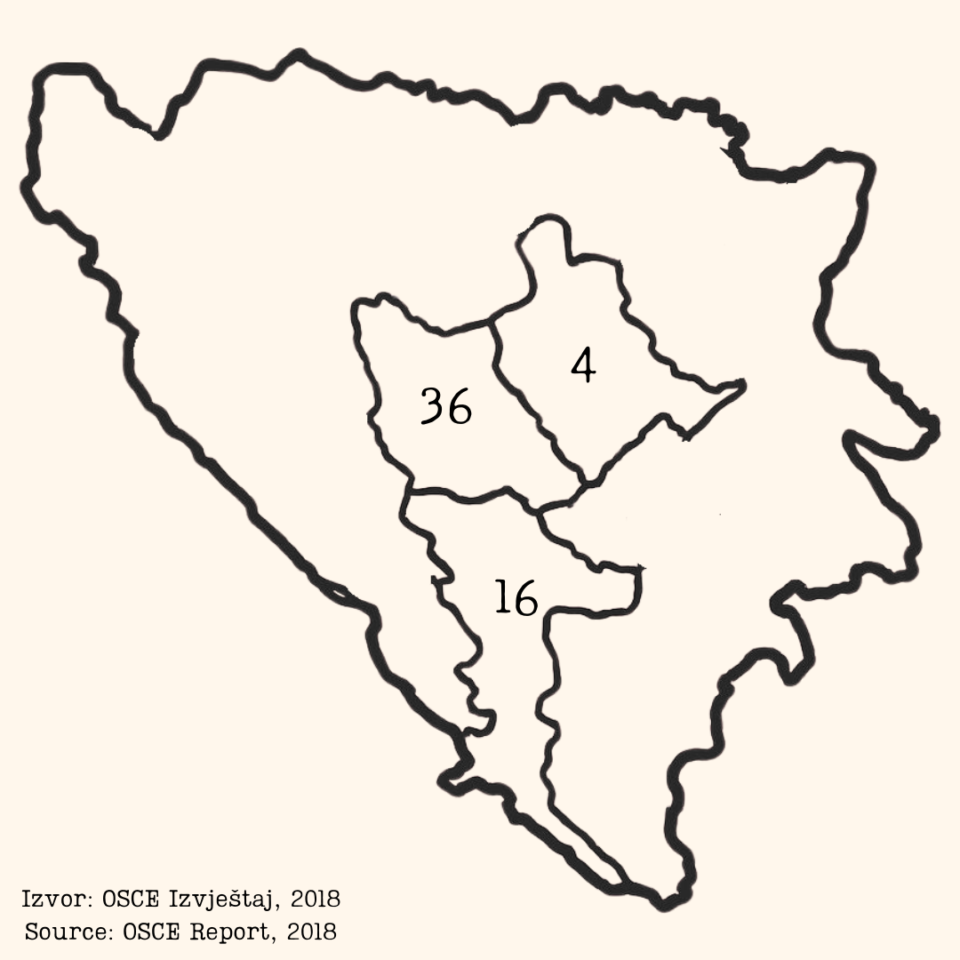
Along with discrimination, this practice has been characterized in reports by the OSCE Mission to BiH, expert analyses and individual court rulings as a form of institutional ethnic segregation in education. Segregation in education is not limited to the physical separation of students. It also encompasses the content of what children are taught through different textbooks, curricula, and interpretations of key historical events.
In this way, the educational system ceases to be a space for the development of critical thinking and becomes an instrument for the reproduction of collective narratives. Children learn not to question but rather to accept predetermined truths, according to a UNICEF analysis of inequalities in BiH schools. Instead of pluralism, this system fosters a parallel truth; instead of dialogue, it encourages silence.
A 2022 survey by Radio Free Europe titled “On Vacations Together, In Classes Apart” documents situations in which students share the same yards and corridors but are systematically separated when classes begin. As the article points out, this educational environment illustrates the deep institutional divisions in schools.
Parallel Worlds
One of the most severe yet often overlooked consequences of this system is on children’s social and emotional development. Without shared projects, teamwork, and daily collaboration, young people grow up in parallel social worlds. Research by Black Lives Matter at School, which analyzes the long-term effects of segregation in schools, shows that this division limits children’s opportunities to develop key social skills, including empathy, cooperation, and the ability to understand diversity. Children who grow up in such conditions rarely have the opportunity to meet people outside their ethnic or social group, which increases the risk of reinforcing prejudice and reducing social sensitivity.
In this system, identity is not built through personal experiences and direct interactions but through inherited social divisions and collective narratives. Children do not learn to question or understand “others” as people but come to know them exclusively through social and political constructs. This combination of institutional segregation and limited social opportunities confirms how the education system can be an instrument for reproducing divisions rather than a space for the development of critical thinking and interpersonal understanding.
Youth Voices to Overcome Divisions
The young people who grow up within this system often articulate its absurdity most clearly. Adin Šehić, a 16-year-old from the Central Bosnia Canton, did not experience ‘two schools under one roof’ firsthand, but knows peers from nearby municipalities who did. He describes this system as a burden of the past that is being imposed on new generations that do not ascribe to these divisions themselves. He warns that the problem is not walls or buildings but invisible barriers that are systematically maintained.
Similar experiences are reported in Mostar. Sumeja Topalli, a 15-year-old student at Stara Gimnazija, a school where classes are taught according to two separate curricula, points out that the division is deeply rooted in everyday scholastic life. “We have a Bosnian and Croatian curriculum, the classes are divided, most of the teachers are different. We are only together in the computer science class, where children from both school programs mix,” says Sumeja.
Although she admits that the existence of two programs allows students to choose their language of instruction, she believes that this system has serious consequences. She sees the strict separation of workshops, fieldtrips, and extracurricular classes as particularly problematic. “Personally, I don’t like that all the activities are divided. I think that connections among young people are very important and that this is one of the ways to reduce the divisions in the city that have persisted for a long time,” she emphasizes.
Sumeja rejects common prejudices and insists that students from both teaching programs socialize, respect one another, and share common experiences outside of formal classroom settings. In her opinion, schools that operate under two programs have a special responsibility to actively encourage joint workshops and fieldtrips as spaces for getting to know each other and building friendships. “I believe that we live in a divided city, but I think that schools should work to encourage respect and friendship, regardless of nationality or religion,” she concludes.
She shares Adin’s assessment of the essence of the problem: children are not the bearers of divisions; they are the generation that is looking for an opportunity to overcome them.
Despite the system’s deeply entrenched nature, examples of resistance prove that change is possible. In 2016, plans were made in Jajce to further institutionalize segregation through the establishment of a new, ethnically divided school. Instead of passively accepting it, students organized, spoke out publicly, and refused to take part in this educational model.
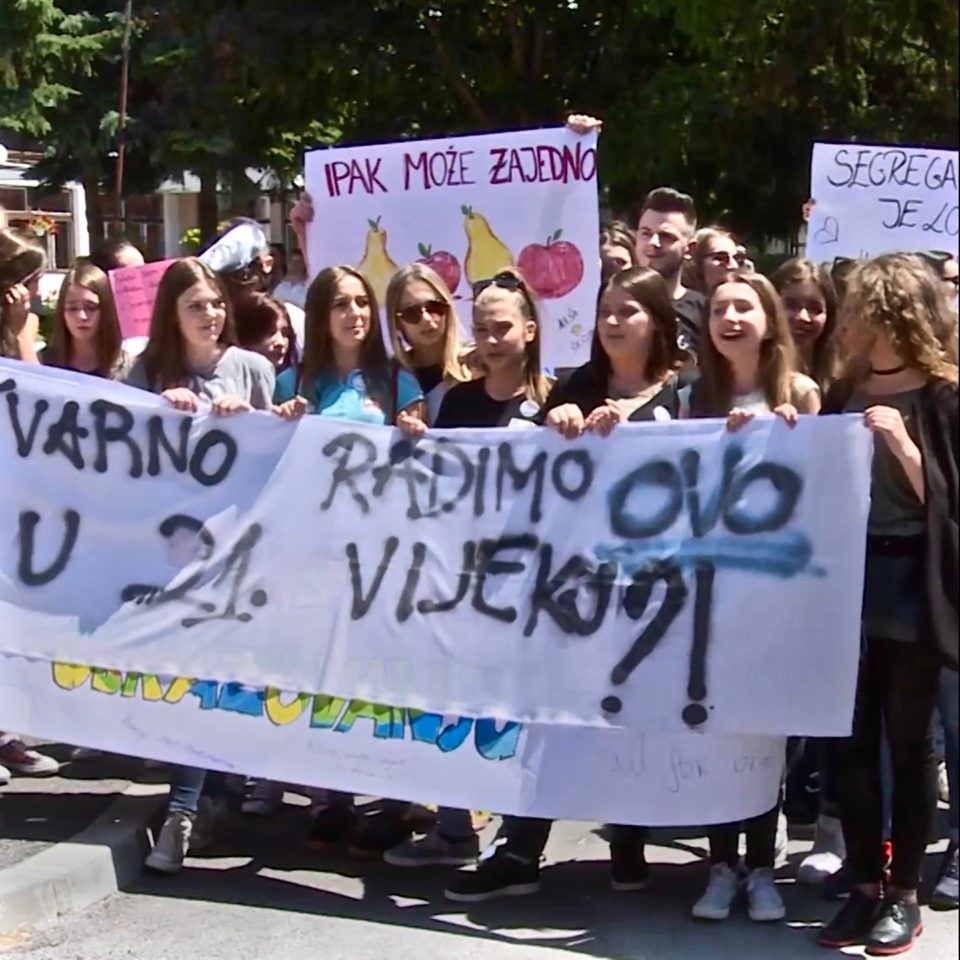
Their protests attracted local and international attention, and the plan was eventually withdrawn. Jajce became a rare but powerful example of how young people, when given the space, can be active agents of social change.
A Problem Recognized But Tolerated
International organizations such as the OSCE, the European Union, UNICEF, and UNESCO have been warning for years about the harmful effects of ethnic segregation in education in BiH. Domestic courts, including the Constitutional Court of the Federation of BiH, have repeatedly ruled that the practice of “two schools under one roof” is discriminatory.
However, implementation of these rulings remains minimal. The reasons lie in political fragmentation, a complex administrative structure, and a lack of political will. Discrimination is formally recognized but essentially tolerated.
In contrast to the segregationist model, educational institutions such as the United World Colleges (UWC) offer a completely different vision of education. UWC is an international movement of schools founded in 1962 with the aim of bringing together students from different ethnic, national, and socioeconomic backgrounds and promoting peace, tolerance, and international friendship through shared learning, cooperation, and understanding.
UWC Mostar was founded in 2006 and is the only college in the Balkans, or in a post-conflict society, with the explicit mission of contributing to peacebuilding and unity in the local community through education. It brings together students from all over the world, as well as from all ethnic and religious groups in BiH, who live, study, and work together on projects in local communities, demonstrating through practice how education can be an instrument of connection, not division.
“Two Schools Under One Roof” shows that segregation is not just an educational issue but a deeply political and moral problem. However, if BiH wants a society that transmits knowledge, solidarity, and empathy rather than trauma, change must start in schools. Abolishing this system requires political courage but also trust in young people who have already shown that they are ready to build a different future. The question is no longer whether segregation is harmful, but rather how much we are willing to allow young generations to sacrifice before finally acknowledging it.