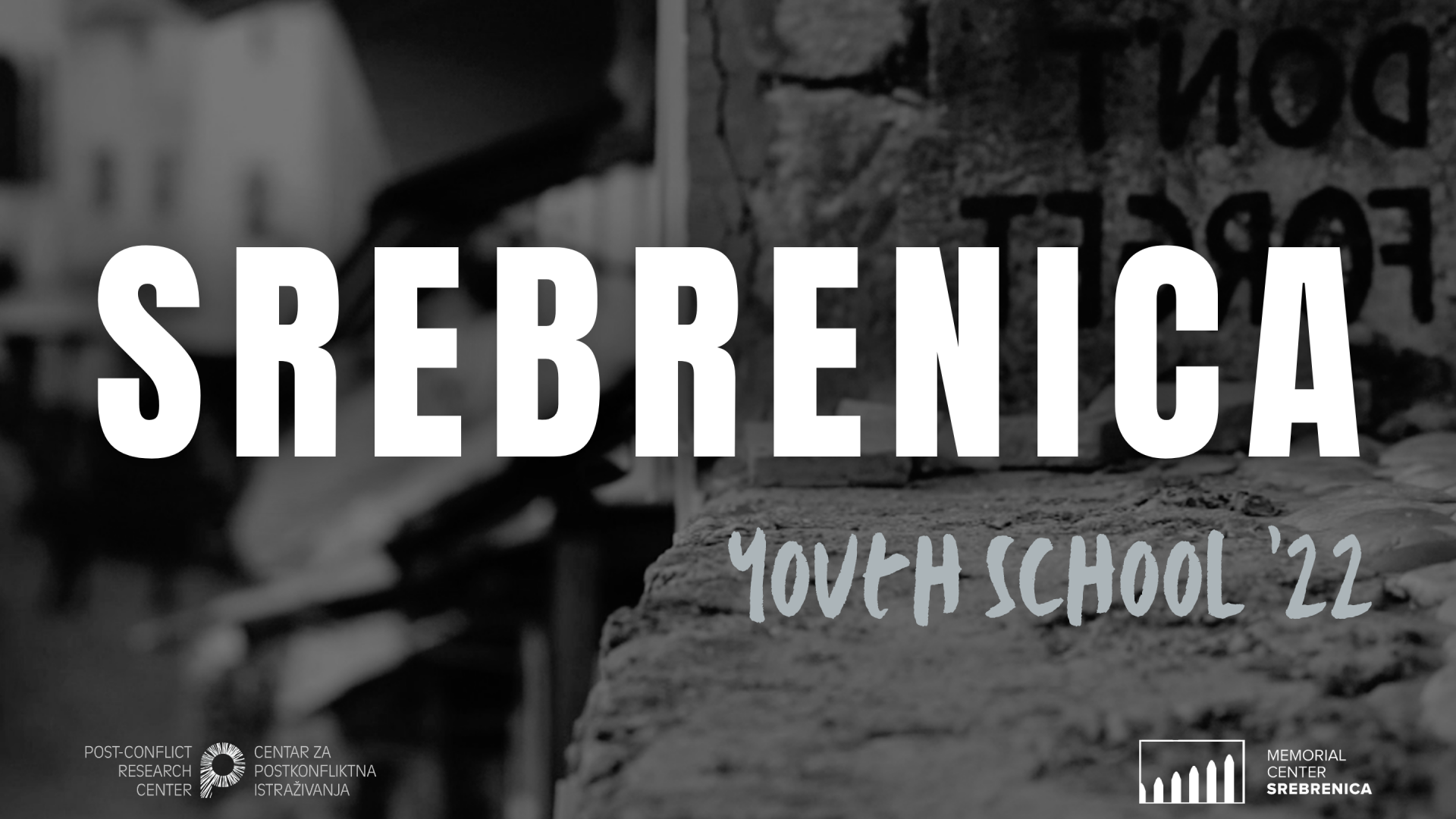
This July, as part of the program marking the 27th anniversary of the Srebrenica genocide, in cooperation with the Srebrenica Memorial Center, the Post-Conflict Research Center (PCRC) is organizing the third edition of the Srebrenica Youth School in Srebrenica (Bosnia and Herzegovina).
The school will bring together 50 young people from the Western Balkans, Europe, and the world to learn from regional and global experts about transitional justice, memorialization and historical narrative building, human rights, and prevention of genocide and mass atrocities during an eight-day program (July 5 – 13).
The school will include a series of lectures and panel sessions aimed at presenting innovative approaches and techniques, and best practices for working on issues of genocide and mass atrocity prevention, transitional justice, and human rights. During the first two editions of the school, speakers and lecturers included Emir Suljagić, Sabina Čehajić-Clancy, Matthew Holliday, Denis Džidić, Marijana Toma, Nick Teunissen, Aida Šehović, Paul Lowe, Mehnaz Afridi, as well as representatives of OSCE Mission to BiH, United Nations in BiH, TRIAL International in BiH, Balkan Investigative Reporting Network, Regional Youth Cooperation Office (RYCO), Youth Initiative for Human Rights, and many others.
The school is designed for 50 students and researchers from all over the world (aged between 18 and 30) who have an interest in the areas of transitional justice, memorialization, and mass atrocity prevention. The working language of the school is English. The costs of accommodation, transportation (from BiH and the Western Balkans region), food, and materials for selected participants will be covered by the organizers.
Selected participants are expected to fully attend the program. If you are interested in participating, fill out the form you can find here and send it to [email protected]. The deadline for applying is June 17, 2022.