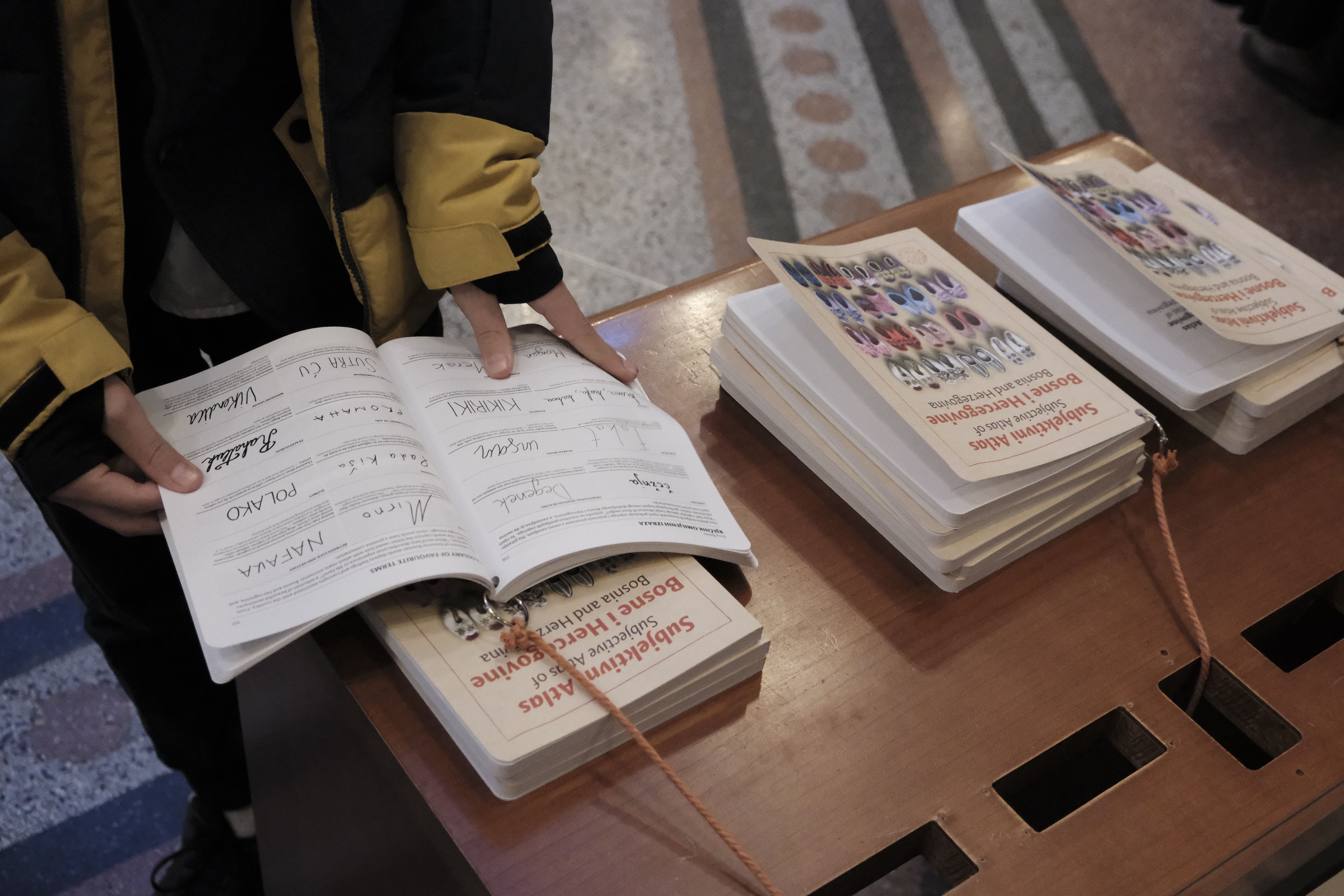
On the 30th anniversary of the signing of the Dayton Peace Agreement, the Subjective Atlas of Bosnia and Herzegovina was presented at the Sarajevo City Hall, with an accompanying exhibition of works by local youth focusing on how they see, feel, and experience their country.
The exhibition will also be displayed at the Preporod Gallery in Stari Grad Municipality from December 8 to 13, 2025.
The Subjective Atlas of Bosnia and Herzegovina was created through a joint initiative between the Brussels-based organization Subjective Editions, the Post-Conflict Research Center, and Professor James Riding from the United Kingdom’s Newcastle University. The Sarajevo event was organized in cooperation with the City of Sarajevo and the Sarajevo Information Centre on the International Criminal Tribunal for the former Yugoslavia (ICTY), with the support of Public Enterprise Sarajevo and Frtutma Kids.
In his remarks, Sarajevo Mayor Samir Avdić said that the City Hall is once again becoming a symbol of community, dialogue, and joint reflection. “We are proud that Sarajevo has the honor of hosting young authors whose works show the power of creativity and hope for the future of Bosnia and Herzegovina. Their drawings, maps, and photographs remind us that peace is not only the absence of conflict, but also a space that we must constantly build anew,” Avdić said.
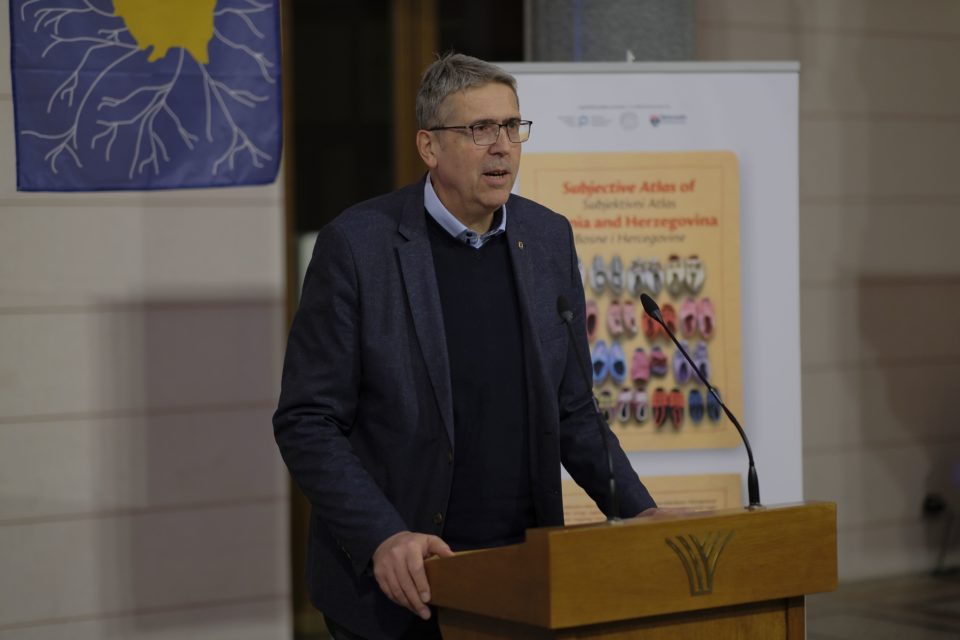
He likened the Subjective Atlas to a Bosnian carpet, skillfully interwoven with threads of tradition and the stories of Bosnia and Herzegovina. Avdić hailed the 88 young contributing authors, who, with the power of imagination and critical thinking, left their personal marks on the exhibition.
“Let’s support the young people who give us the most precious thing on canvas, which are maps of a free world without violence, war, and prejudice,” said Avdić.
Velma Šarić, founder and president of the Post-Conflict Research Center, thanked those present for coming together to celebrate 30 years of peace in Bosnia and Herzegovina.
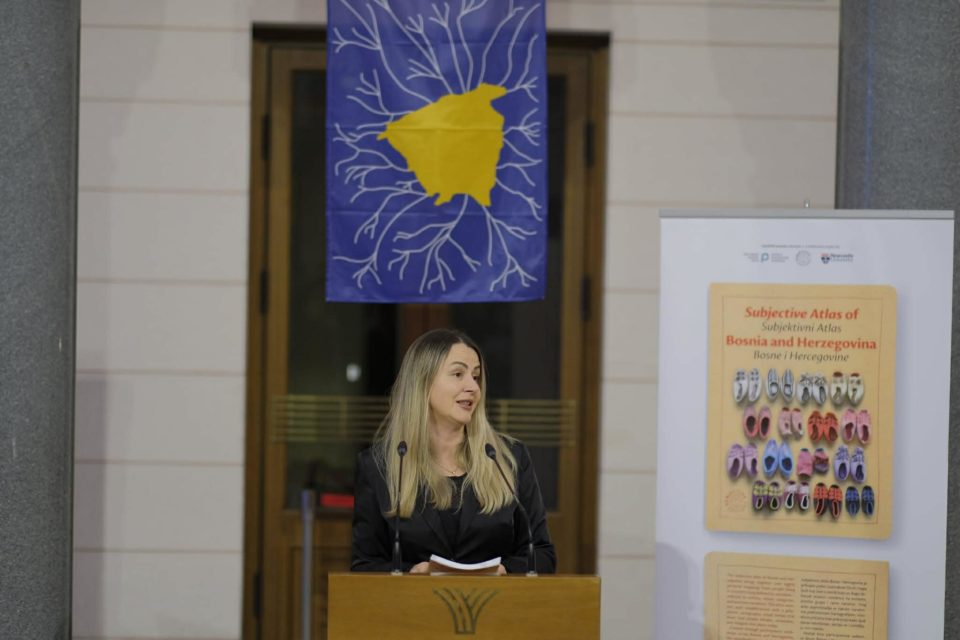
“Our country has incredible people, nature, and various riches that we rarely talk about. The goal of the Atlas is to show Bosnia and Herzegovina through different eyes, from the perspective of young people,” said Šarić.
She emphasized that the Atlas represents the image of peace and the Dayton legacy through the eyes of young people.
Annelys De Vet, the founder and editor-in-chief of Atlas, explained that over the course of two years, they collected more than 80 personal maps from residents of Bosnia and Herzegovina—a country that, she noted “has been defined by others for too long.”
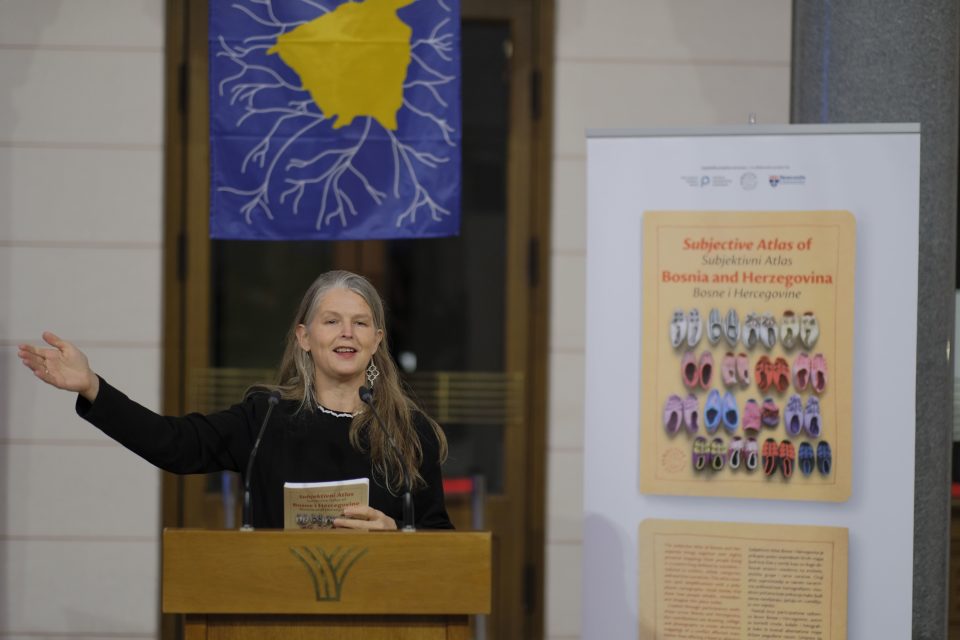
“They [the authors] presented their country through the knitted socks of their grandmas, through local remedies made from onions, brandy, and various plants, through flowers, homemade juices, alternative flags,” said De Vet.
Over seven dozen young people from Bosnia and Herzegovina and the diaspora who had previously attended workshops in Srebrenica, Sarajevo, and Vitez participated in the creation of the Subjective Atlas.
For the geographer James Riding, who initiated the project, the Atlas is a story about not only the inclusion of the entire country but also about the real problems its citizens face, which are presented on the maps, enabling audiences to experience Bosnia and Herzegovina in a personal way.
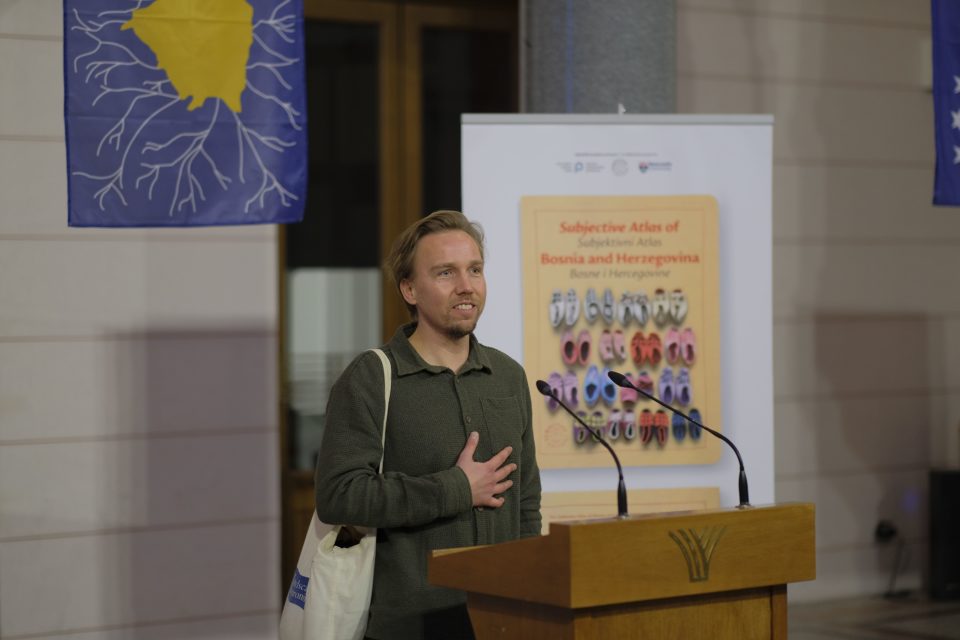
One of the authors of the Atlas is Adna Jeleč, a student from Sarajevo. She believes that the Subjective Atlas was needed for the country, which is too often shown to the world through statistics, numbers, definitions, and facts. The lived experience of Bosnia and Herzegovina is equally important, and as she notes, “The Subjective Atlas is made up of our subjective views.”
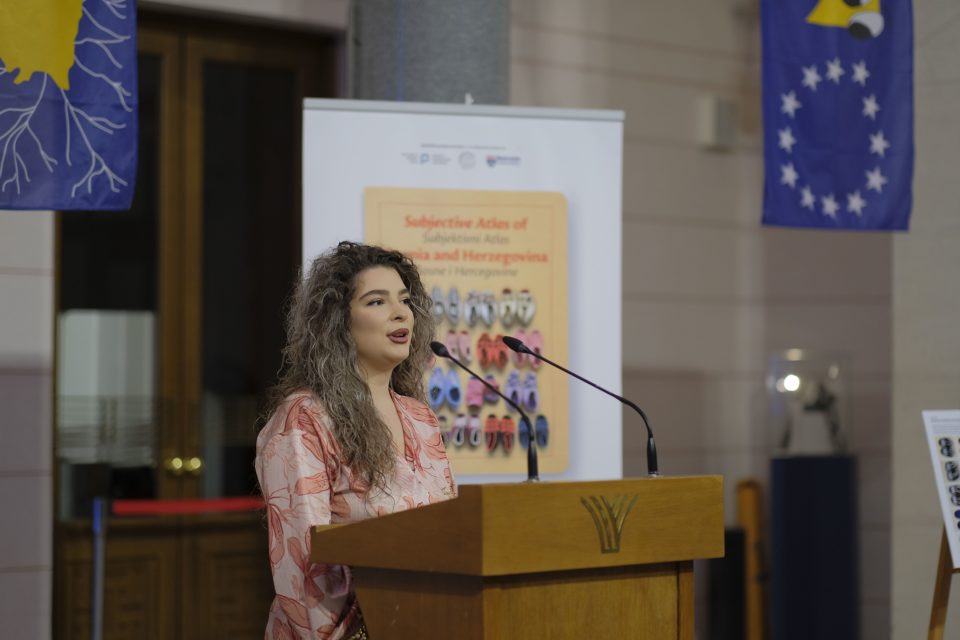
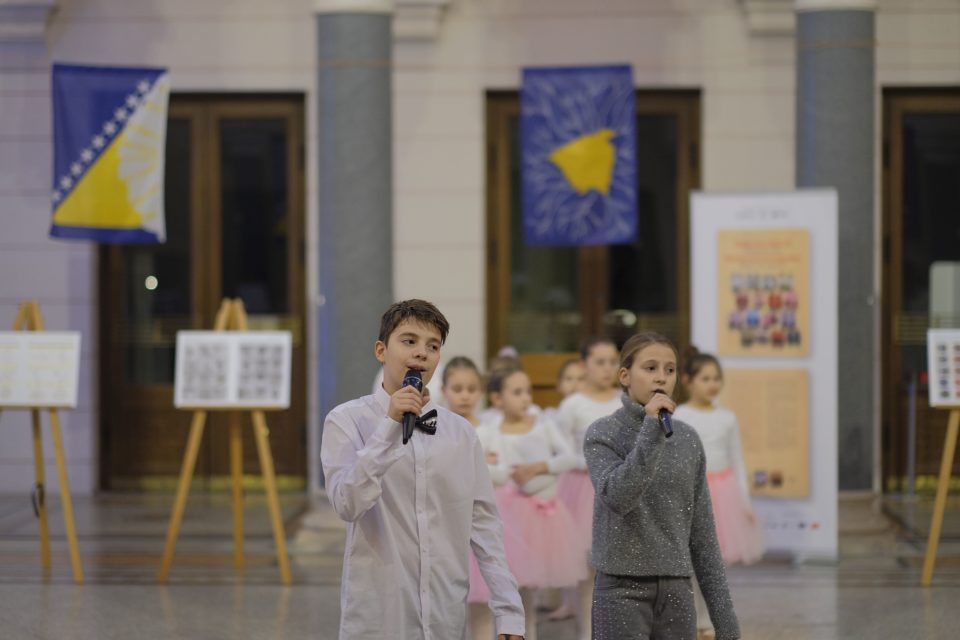
The presentation of the Atlas and the accompanying exhibitions were complemented by ballet and music, with young artists from the Frtutma Kids association performing the songs “Sarajevo Grad,” “Pamtim još,” “Ostajte ovdje.”
Mirela Čengić, founder and president of Frtutma Kids, said that young people always experience changes most acutely, and it is our duty to support them because they create the melody of the future that belongs to everyone.
After the City Hall, the Subjective Atlas exhibition will be on display for five days from 11 am to 6 pm at the Preporod Gallery on Maršala Tita 54 in the Stari Grad municipality of Sarajevo. Admission is free.