Despite the divisions, war narratives and burdens of the 1990s, young people in the region are finding ways to build bridges and create common spaces to build a better society.
This was a conclusion drawn at the international conference “Dayton Legacies: 30 Years of Peace,” held in early December 2025 in Vitez.
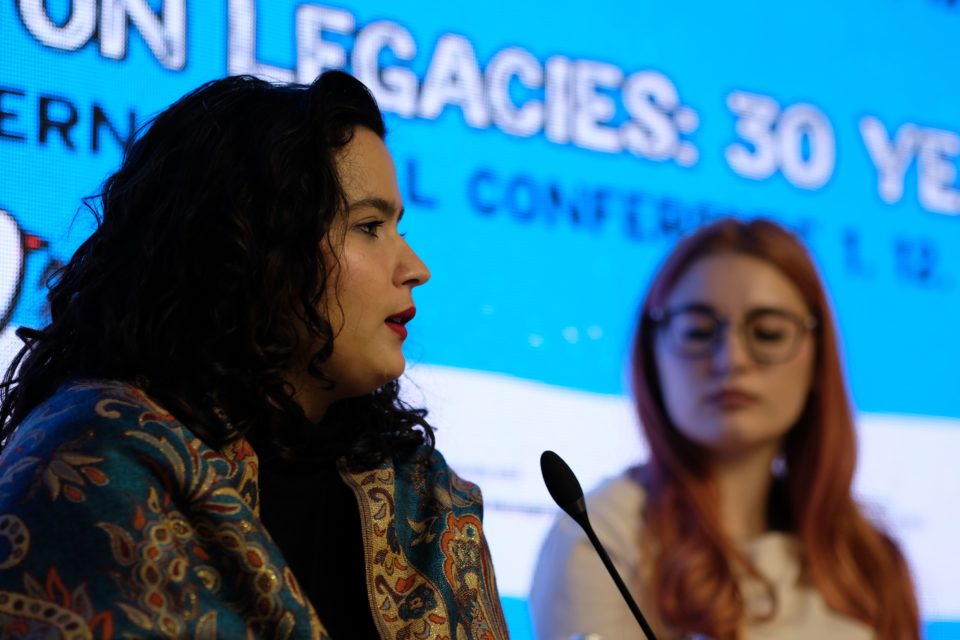
At the panel “Youth in Action: Regional Activism Despite Divisions,” young activists from Bosnia and Herzegovina, Serbia, and Croatia explored the issues of transgenerational trauma, identity, responsibility, and the role of young people in building a more inclusive society.
Born years after the wars in Bosnia and Herzegovina and across the region, young people continue to live with the traumas of the past. According to research presented by Sarajevo activist Tara Michelle Gliha, war trauma is passed down to younger generations and often manifests in stress, anxiety, fatigue, headaches, and other symptoms. “We carry the burden of history even though we haven’t personally experienced it,” said Tara.
She also spoke about the pressure to remain loyal to the ethnic narratives espoused by families, which her findings indicate to create deep internal conflict. She also emphasized the need to distinguish between intergenerational and transgenerational trauma.

“Intergenerational trauma is transmitted directly from parent to child through emotional patterns and narratives. Transgenerational trauma, on the other hand, goes beyond a direct relationship and manifests in the wider community, shaping the way young people perceive the past and the present. Due to the violent history of the Balkans, these two concepts often overlap and combine in the everyday lives of young people,” said Tara.
According to her, the most important task is to ensure transgenerational trauma is recognized and adequately treated by educational and social institutions, so that young people can develop resilience and strength rather than being oppressed by the past. “There are methods and programs through schools and other initiatives that allow young people to understand and overcome this trauma, to draw strength from it rather than a sense of burden,” she explained.
Regional Differences, Common Challenges
Iris Knežević, an activist with the Youth Initiative for Human Rights in Zagreb, stressed that dealing with the past in Croatia has almost come to a standstill: “Institutions are not doing enough, and dialogue is reduced to initiatives by the non-governmental sector. With joining the European Union, the pressure for political responsibility for war crimes has ended.”
Young people have the power to influence the narratives in their communities, but they are also exposed to growing radicalization efforts, according to Melina Mikić Božanić, an associate at the University of Belgrade Faculty of Political Sciences.
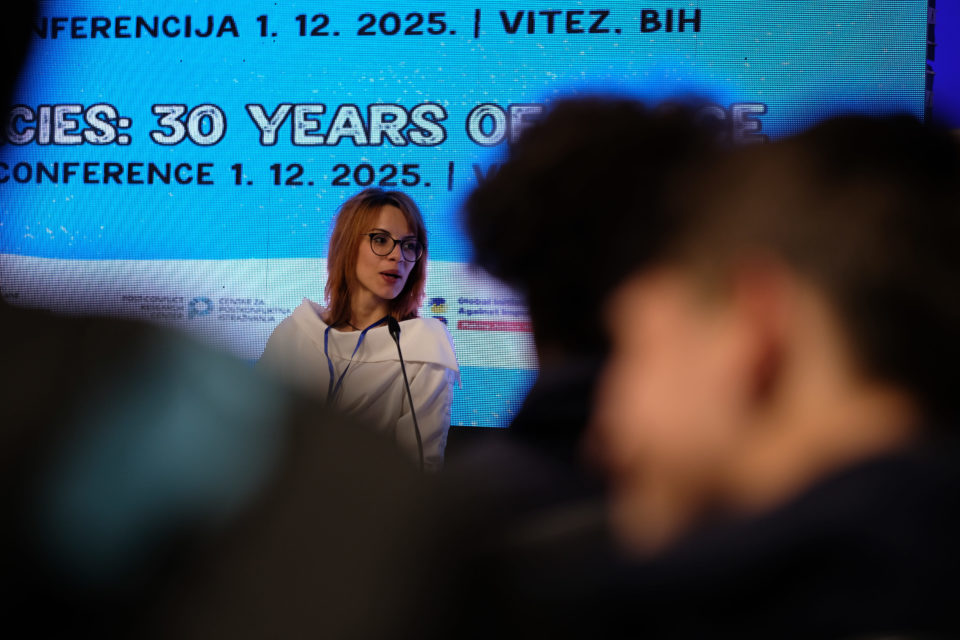
“It’s important to distinguish positive social change from extremist narratives that are presented as ‘patriotism.’ Young people have to understand the past, but also feel responsible for it,” Melina said.
She reflected that while some relationships between individuals of different ethnic and religious backgrounds are developing, narratives persist that radicalize young people in a destructive direction. She emphasized the importance of recognizing the difference between positive changes in interpersonal relationships, which are a basic need for coexistence, and narratives that introduce young people to extreme attitudes.
“It’s crucial that young people not only understand the past, but also feel obligations towards it, especially when it comes to the events of the 1990s,” Melina said.
Activist Selmir Smajić from Lukavac views activism as a necessity for many young people because “If we remain passive, we stagnate. Young people must stand up and get going, because it’s their actions that change local communities and society.”
He believes that activism often stops after college because young people enter a stage where they are struggling to make a living. For this reason, he calls for the creation of a support system to enable young people’s long-term social engagement.
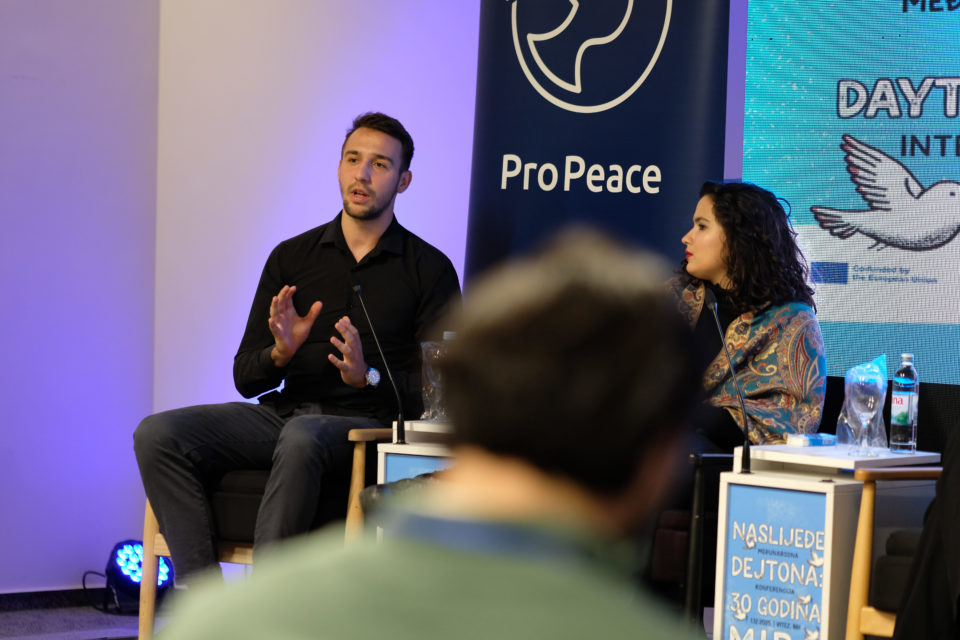
“When young people become educated citizens and have to think about their survival, they move away from volunteerism. This is a systemic problem. We need to work on keeping young people engaged in activism and volunteerism after college, because they have the best understanding of how society should function and how to shape the future. The activism of young, educated citizens is key to creating a strong and inclusive society,” said Selmir.
Inspiring Personal Engagement
Adem Ajdin, an Ilijaš High School student who participated in the conference, noted that the panel discussion on youth activism left a special impression on him because they talked about what they had achieved in their local communities and beyond, which encouraged him to get more involved and never stop being socially engaged.
He also referred to the opening address by Almir Agić, a young Roma who uses poetry to fight prejudice against his community, which is the largest minority group in Bosnia and Herzegovina. “I am very proud of Almir because his texts are really emotional and inspiring, and they show part of the harsh reality of our society and relations with minorities,” said Adem.
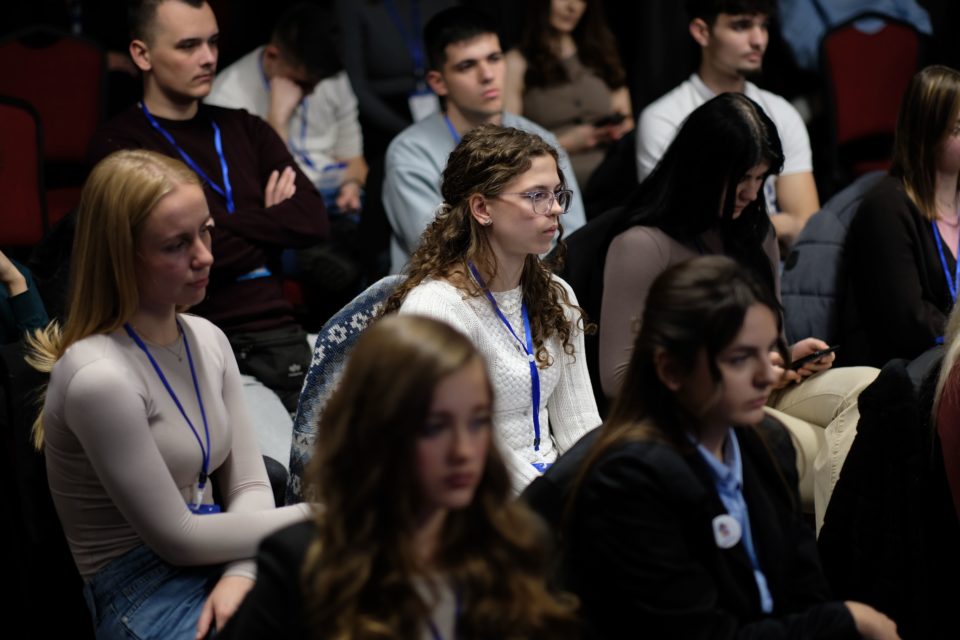
Asja Tursunović, a conference participant from Tuzla, emphasized that she was pleased with the focus on young people, education, and open dialogue in order to achieve positive changes together. The overall message, she added, was that peace starts with each of us.
“Dayton Legacies: 30 Years of Peace” was held on December 1, 2025, in Vitez, organized by the Post-Conflict Research Center with support from the OSCE Mission to Bosnia and Herzegovina and the organization Pro Peace, and financial backing from the European Union. In addition to young people and representatives of international organizations, the conference was attended by representatives of non-governmental organizations, domestic institutions, and the academic community.