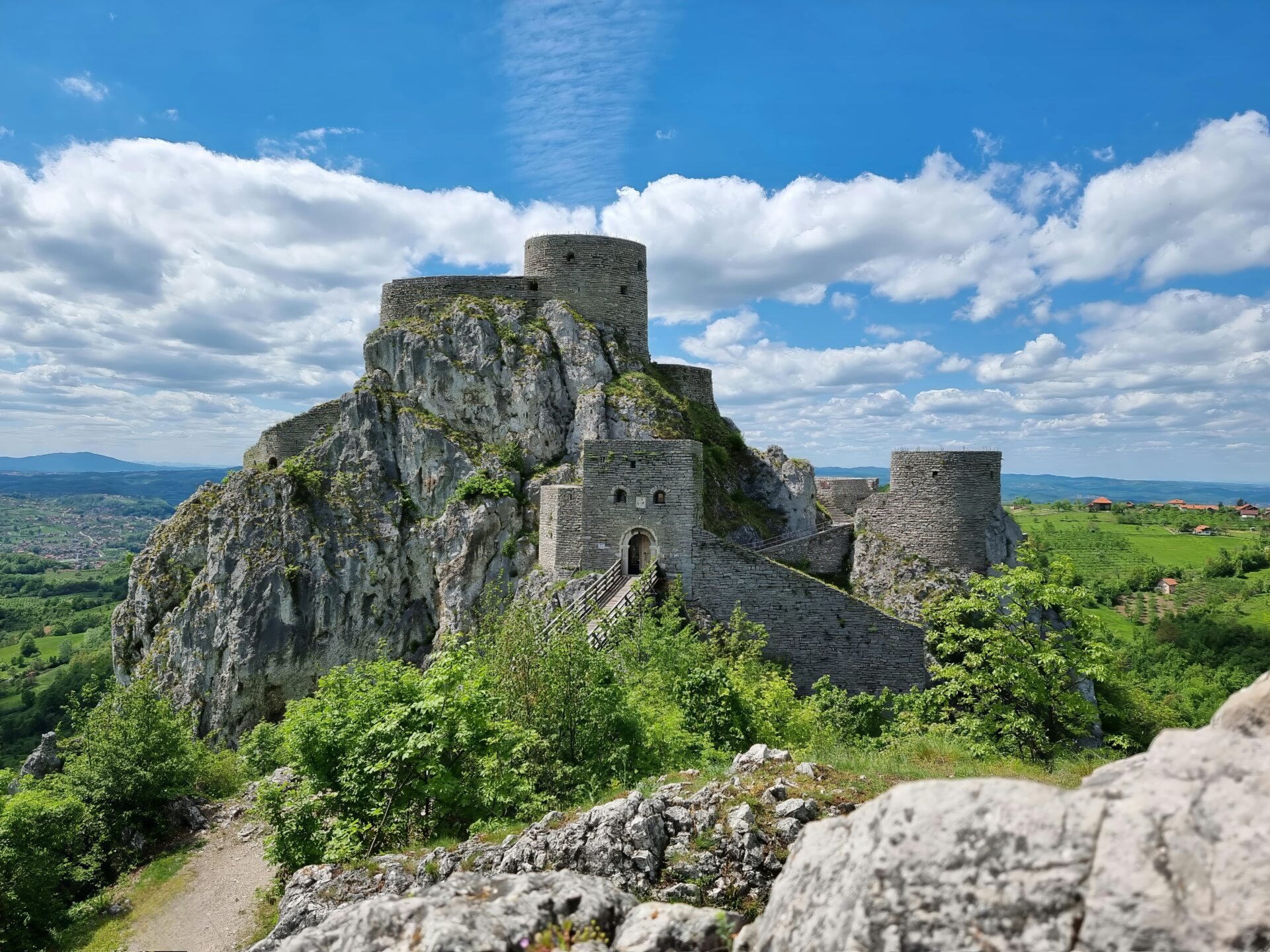
Srebrenik, a town rich in medieval history and crowned by its magnificent Royal Fortress, has become renowned for many things far beyond the borders of Bosnia and Herzegovina.
Its uniqueness is reflected in the number of young musical artists who proudly represent their city, connecting peoples and cities while simultaneously contributing to the recognition of Srebrenik and its development. Mirza Selimović, Ajdin Osmanović, and Elmir Buljubašić say that with the support of family, hard work, and dreams that came true, they managed to reach the big stages even though they come from a small town where music is not just a hobby, but a way of expression.
Mirza Selimović (b. 1990) is a singer from Srebrenik, who is conquering the music scene more and more every year. His concerts have sold out to the last seat several times in the same venue, and his songs are recognizable throughout the region. When asked why he thought so many musical talents came from Srebrenik, he replied that he believed the reason lay in its tradition of sevdah and feeling for music.
“I inherited my talent from my mother. We always sang in our house; music was an integral part of every celebration, but also of everyday life. My father and mother had a great influence on my musical direction and on how I perceive music today,” said Mirza.

Talent, effort, and commitment are behind every success. These values are exactly what adorn the young artists of Srebrenik who work to improve every day and understand that success doesn’t come overnight. This is true of Ajdin Osmanović (b. 2011), a young artist and musical talent who wins hearts in Srebrenik and beyond.
He started his career very young. “Music came to me naturally, but through work I realized how important it is to develop talent and to be patient. I think that talent develops most through work. My teacher plays a big role in my development, guiding me and teaching me how to use my voice properly,” says Ajdin.
“Success does not necessarily begin on the streets of Sarajevo or Belgrade“
What is Srebrenik’s secret that makes it so rich in musical artists? Singer Elmir Buljubašić (b. 1997) said that throughout history, they have had many quality singers who gained their knowledge from excellent musicians, and that’s how talent was passed on to younger generations. “I myself was a student of the late Hasanović Nermin Manko, who mentored many quality singers and musicians,” said Elmir.
In the digital age, geography no longer determines destiny, Mirza points out, saying that it is important to show young people that the path to success can start from their room or the local cultural center, and not necessarily from the streets of Sarajevo or Belgrade. “Srebrenik is proof that quality cannot be hidden, no matter where you come from,” Mirza asserted.
In communities like Srebrenik, where opportunities for success and progress are less common, every achieved goal carries greater value than elsewhere. “Success in this town has the power to inspire others, to show that limits are not determined by geography but are overcome through hard work and dedication,” Mirza said.
Elmir also acknowledges out that it is more difficult to succeed when coming from a smaller town, citing several reasons including the lack of strong local media outlets that can promote young artists and weak or nonexistent local promotion and concert opportunities. Because of this, he adds, in most cases it’s necessary to leave small towns and seek success in larger cities.
“Music as a bridge between people“
Ajdin explains that, together with his teacher, he’s had the opportunity to spread the name of Srebrenik to different cities and countries. He particularly loves seeing people and places connected through music, which is how the towns of Srebrenik and Kriva Palanka in Macedonia became sister cities.
“It’s a nice feeling to know that music can be a bridge between people,” says Ajdin, who, through performances and social media, receives support from many cities in Bosnia and Herzegovina, Serbia, and Croatia, as well as the diaspora.
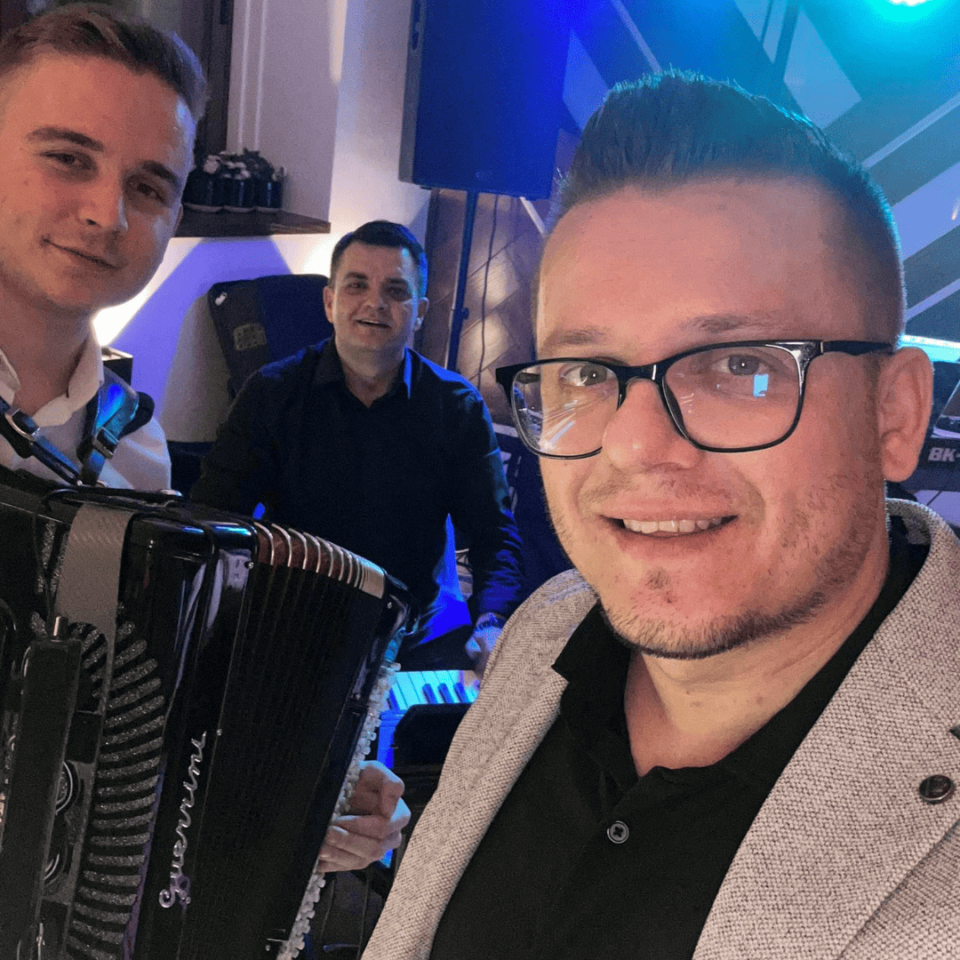
Elmir also promotes his city at performances, including humanitarian concerts, cultural and artistic performances, weddings, parties, and other festivities throughout Bosnia and Herzegovina and Europe.
Promoting Srebrenik and connecting people indirectly contributes to the Srebrenik’s development and creates new opportunities for young people. Investing in young people is investing in the future, as they are the bearers of development and progress in the community. The support of the City of Srebrenik and the community is also notable.
“There is that specific spirit of togetherness, tradition, and sevdah. Srebrenik has a soul that can be felt in the air. The culture of music is deeply rooted here: people here don’t just listen to music with their ears—they experience it. The support that the city provides to its talents creates energy that pushes you forward even when you doubt yourself,” says Mirza.
Emir adds: “Unfortunately, although very popular for its music and singers, there is still no adequate attitude and support regarding the protection of artists in our city.”
In addition to the support they receive from their families and community, support also comes from school. “Collaboration with my teacher is very important for me. He teaches me not only singing, but also discipline, responsibility, and patience. He teaches me how to remain a good person and stay down to earth, regardless of successes,” Ajdin points out.
Of course, the city has room to further improve its support for young talent, and Mirza singles out several suggestions: investing in infrastructure and education, creating a summer music camp in Gradina where young people could learn from professionals, and financial support for recording the first songs because those first steps are both the most difficult and the most expensive.
Mirza tells young people to believe in themselves and not give up: “There will be obstacles, there will be doubts, but if you love music sincerely, it will always show. Work, discipline, and patience are just as important as talent.”
Ajdin, whose voice is still changing as he gets older, says that he wants to continue learning and developing his voice, and in the future, he would like to record original songs and perform his music outside the region. With all that, he adds that the most important thing for him is to stay honest with music and himself.

“If my voice can connect people from different cities and countries, then I know that music has meaning,” Ajdin remarked.
Elmir tells his young colleagues to practice a lot with good teachers: “A quality foundation from the very beginning is certainly the path to success. With a lot of work and patience, success is guaranteed.”
The common message of all the interviewees is that regardless of the obstacles that appear on the path to success, it is hard work that leads to personal development and progress. “Persistence, perseverance in what we want and faith in ourselves are the keys to making dreams come true,” say the more experienced talents from Srebrenik.