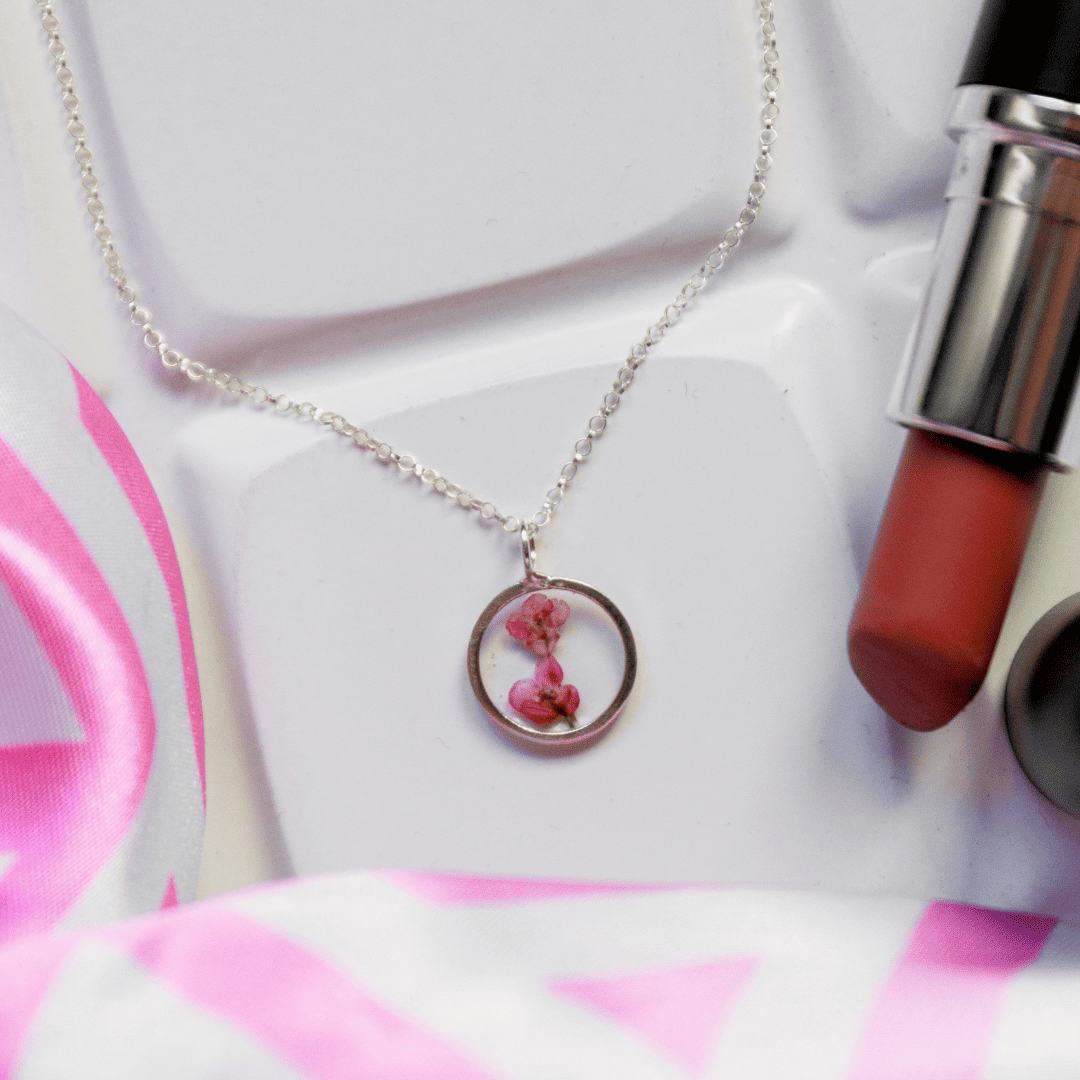
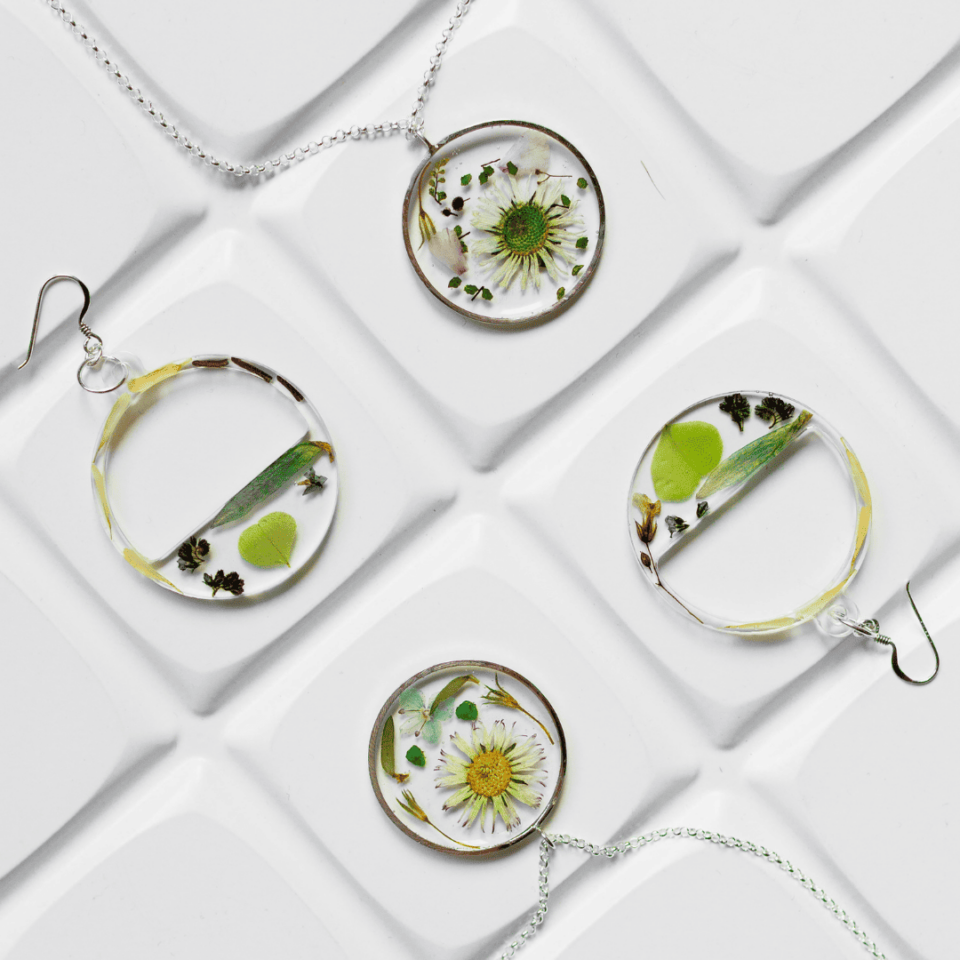
The young artist Nina Mučibabić Tinjak makes jewelry from plants and resin.
She finds inspiration and material on the slopes and fields around Mostar. Each piece of unique jewelry carries a part of a real space and moment, a plant found on a walk, a leaf with unexpected patterns, a special color, or unique shape. She herself says that she creates “small plant stories in crystal resin.”
She doesn’t remember exactly when she decided to start making jewelry. Its beginnings go back to childhood, when play-dough and imagination were her first tools of expression. Even in elementary school, she made small figurines, animals or people, shaping and mixing colors by herself for hours. “In those moments, I always had a wonderful focus and peace, and I returned to that feeling again and again,” she says.
Her first “serious” material for making jewelry was polymer clay, from which she made rings and pendants, but during high school she discovered crystal resin, which allows her to incorporate plants. This is how the Ni.nakit brand was gradually born.
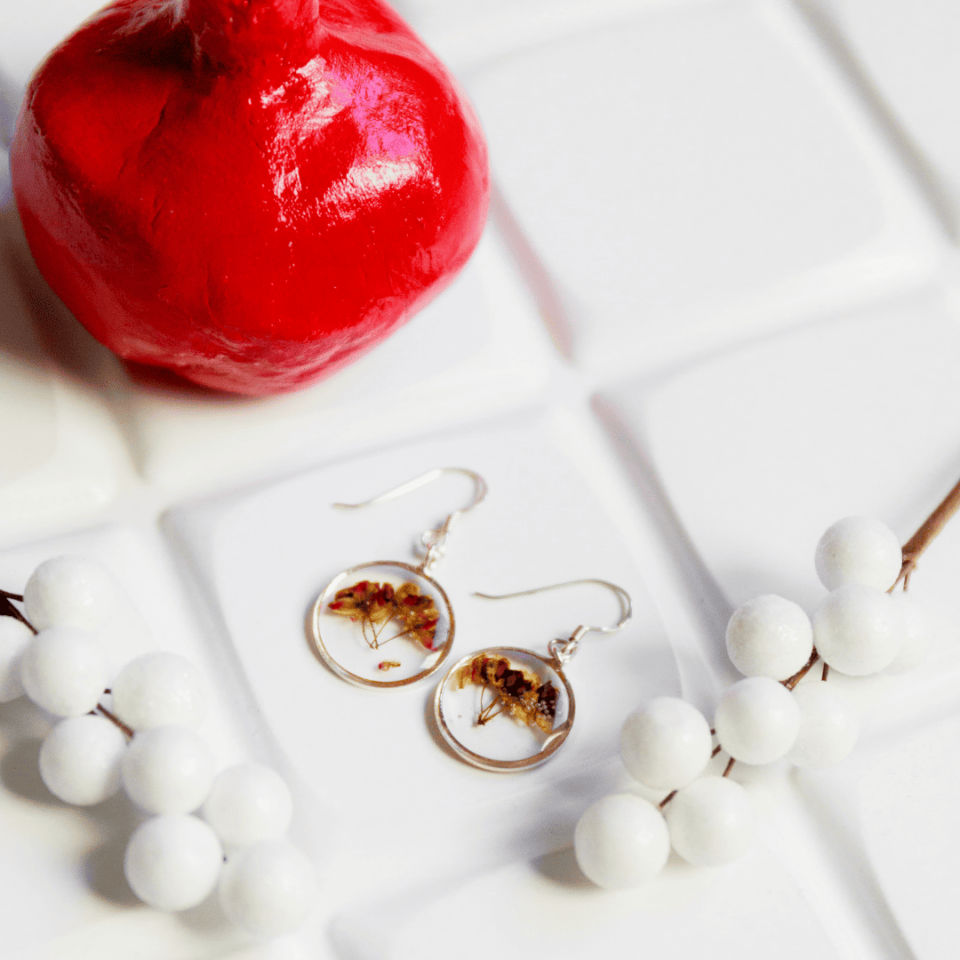
All of her jewelry is made by hand in a small corner workshop, where unique and limited pieces are created. This approach is in stark contrast to industrial production and mass consumption, without large sets of identical products.
The creative process, as she points out, begins outside the workshop, with a walk in nature.
“I bend down next to tree stumps to find small mushrooms and moss, collect leaves, and look for small flowers, which I later dry at home for days and weeks,” said Nina, adding that she brings the smallest possible plants or parts of them from nature because the molds for crystal resin are also small.
Working with natural materials requires great precision. The time for placing plants inside the mold is limited, and after an hour and a half, the resin starts to harden, so ideas must be adapted in the moment. After drying the plants for 24 hours, Nina adds new layer of resin, which she again allows to dry. Finally, the jewelry is polished and silver or gilding is added.
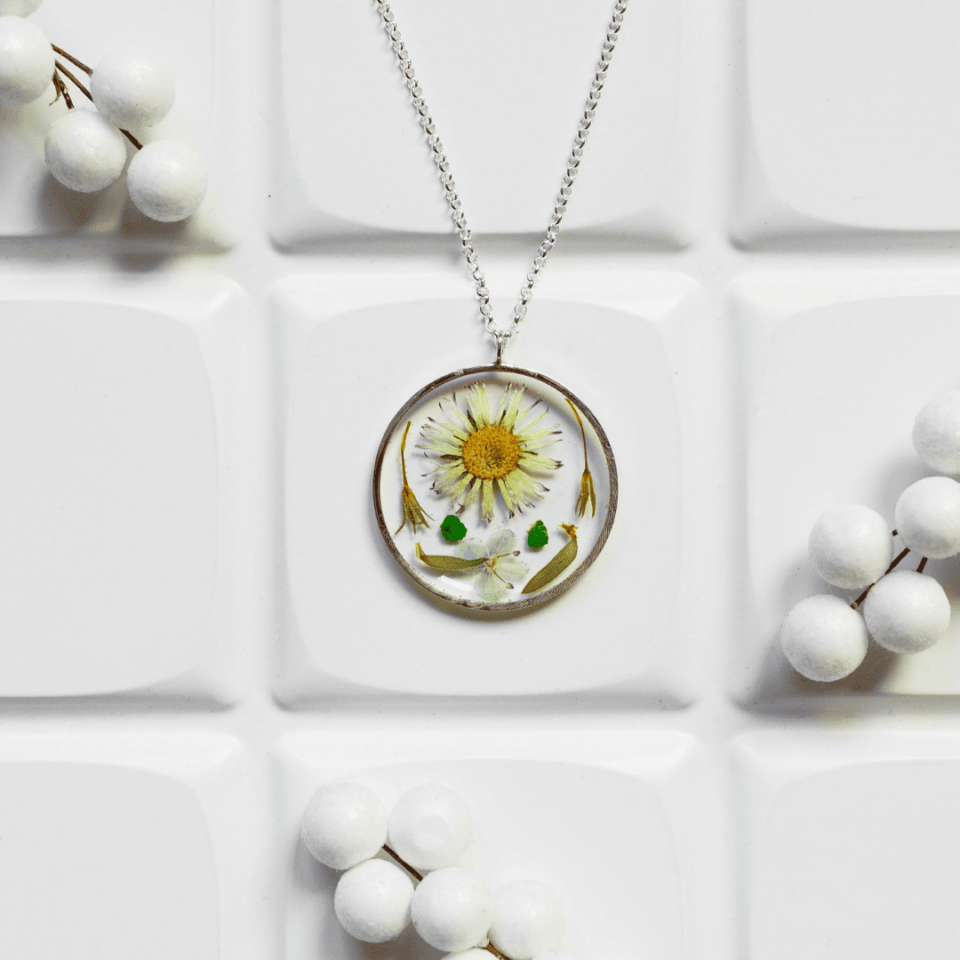
She explains that the most technically demanding pieces are those that use several types of plants because they require layering and patience. “Each new layer of resin means another day of waiting. It’s during these breaks between stages that I feel my own impatience the most, but also excitement for what is yet to be created. In addition, the occasional drilling of holes with a small drill is quite a demanding part of the process, especially when the molds I use don’t have slots in them,” said Nina.
Through experience, she has learned the importance of plants being completely dried beforehand, because even the smallest mistake can leave white spots, and sometimes the plants change color.
She has come to embrace this unpredictability, as well as the different reactions of the resin due to changes in room temperature, and she is well-versed in this imperfection.
“I learned everything about jewelry on my own, from my own experiments,” she said, adding that the entire process requires a steady hand, precision, orderliness, and imagination.
Her main challenges are finding quality materials and community support, which is essential for the survival of an independent business.
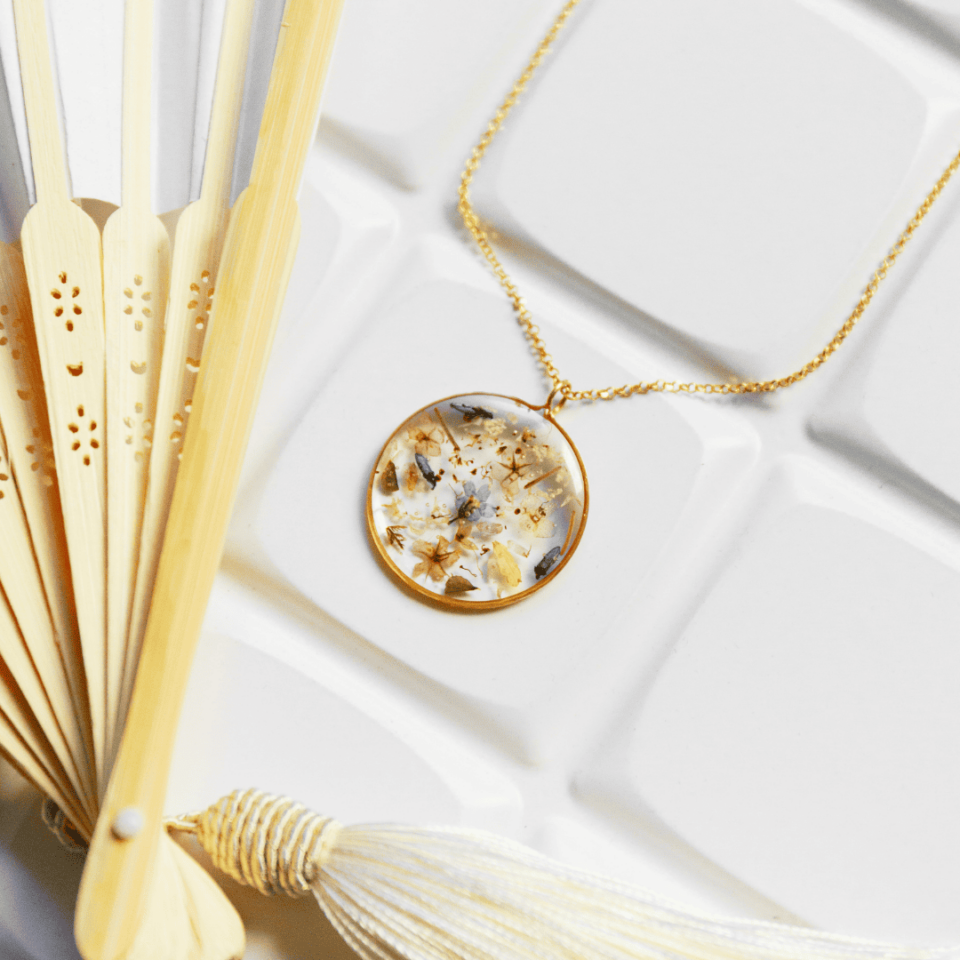
In Bugojno, she had support from jewelry designer Azra Hozić, in Sarajevo from artist Omar Krasnić, and today in Mostar from painter Vedrana Božić. She speaks particularly emotionally about her collaboration with Krasnić, who has passed away, adding that he exhibited her jewelry in his shop in Baščaršija and together they created the Omnia collection, combining metal and plants in resin.
Nina says that she tries to respect the environment as well, by picking plants in small quantities or using petals or already fallen leaves. In the resin, she often embeds old pieces of jewelry, paper, fabric, or plants with sentimental value, from wedding bouquets or books where they have been kept for years.
“Additional durability is ensured by the silver and gilding that I use in my work. Also, jewelry with natural elements has a time-neutral aesthetic and is not subject to trends. Its emotional value reduces the likelihood of it being thrown away because each piece carries a story about nature with a careful attention to materials and memories,” she pointed out.
Her most sought after pieces are those with roses and clovers, symbolizing love, tenderness, elegance, and happiness. Her “forest jewelry,” made with mushrooms and mosses, is also increasingly popular, evoking a certain mix of curiosity and originality. She maintains balance between self-expression and customer desires through her ideas and thematic collections, each of which has its own story and space for personal recognition for everyone who wears it.
Ni. Nakit has several collections including Flower Fairy Tales, Spice of Life, Forest Idyll, Fruit Collections, and Tea Adventures. There is also the option to place special orders, for example, with certain herbs, scraps of paper, or other sentimental elements. Nina considers this personal dimension an important part of her work.
Through her creations, she sends a simple but powerful message, reminding people of their belonging to nature. At the same time, her pieces preserve memories of relationships and people.
“I want these pieces to be small reminders of closeness, of relationships that are worth nurturing and maintaining. Just as we take care of plants, we should also take care of the relationships that shape us,” concludes Nina.