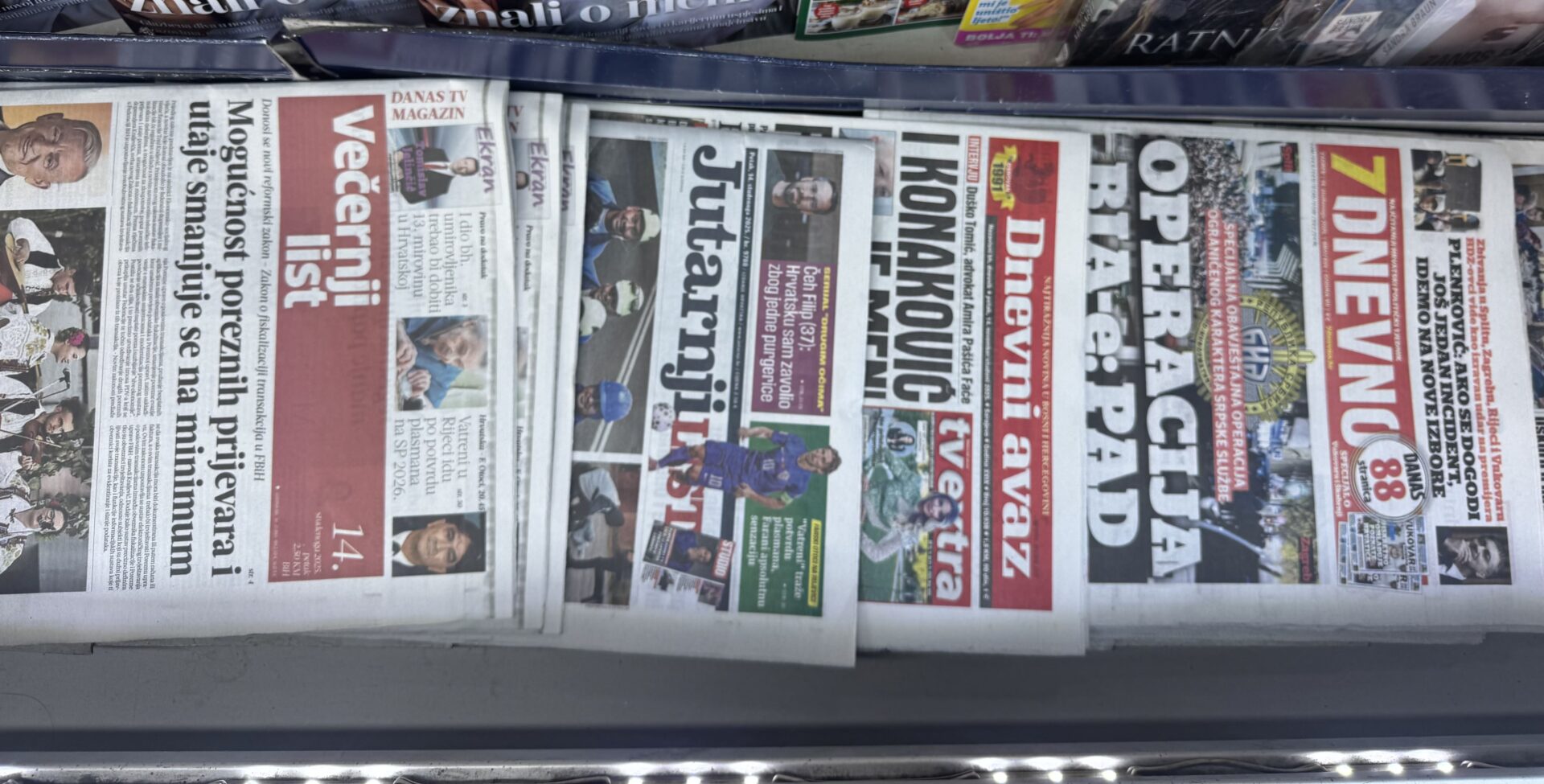
As Bosnia and Herzegovina (BiH) continues to suffer from political turmoil and corruption, journalists must stay committed to facts, objectivity, and integrity.
Media manipulation in BiH is a tried and true tactic that has been used to stir dangerous misinformation across the country. As BiH prepares for another election year and seems to consistently remain on the precipice of destabilization, journalists have perhaps one of the most important roles in distributing vital information to citizens. However, the problem is that trust in the media is at an all-time low in BiH. Citizens have several media outlets at their disposal, but only a handful of those that are trustworthy.
The State of Journalism in BiH
Štefica Galić, former editor of Tacno.net and an individual who saved thousands of lives during the Bosnian War, paints a grim picture of journalism and media in BiH:
“We saw how media was turned into a weapon during the war, and many journalists into dealers of hate. Unfortunately, today we are witnessing the same thing – hate speech, radicalism, fake news, and propaganda.”
In the book Narratives. Experiences from Southeast Europe and Beyond, a chapter written by Leila Bičakčić titled “The Role of Media in Shaping Images” demonstrates how media issues from three decades ago continue to plague BiH. In fact, even greater challenges now arise from legislative discrepancies between the country’s two entities. In Republika Srpska, the government has tried to consistently “suppress independent journalism” while the Federation struggles with “political interference and financial instability.” This directly leads to self-censorship, which, as Bičakčić explains, is the result of a media environment in which journalists fear potential repercussions, including violence. As such, their work is limited and their voices suppressed.
This has resulted in a proliferation of unreliable journalists and media sources. As Melani Isović, an activist and trained Balkan Diskurs correspondent from Banja Luka states, “It’s important for readers to know that in Bosnia and Herzegovina, there are 488 informative online portals of which only 40% are focused on transparency,” a statistic confirmed by a recent UNESCO report.
All of this also minimizes space for other important topics in the media, which impedes social progress. For instance, Isović has written extensively on matters that are either ignored or remain taboo.
“They are practically unspoken, which shows that our society is not prepared to accept inclusivity as a value. However, that doesn’t lessen the importance of raising such questions. On the contrary, every spoken story, every step forward, and every noted injustice moves the border of silence, and in that persistence lies the hope that society, however slowly, will change for the better,” she reflects.
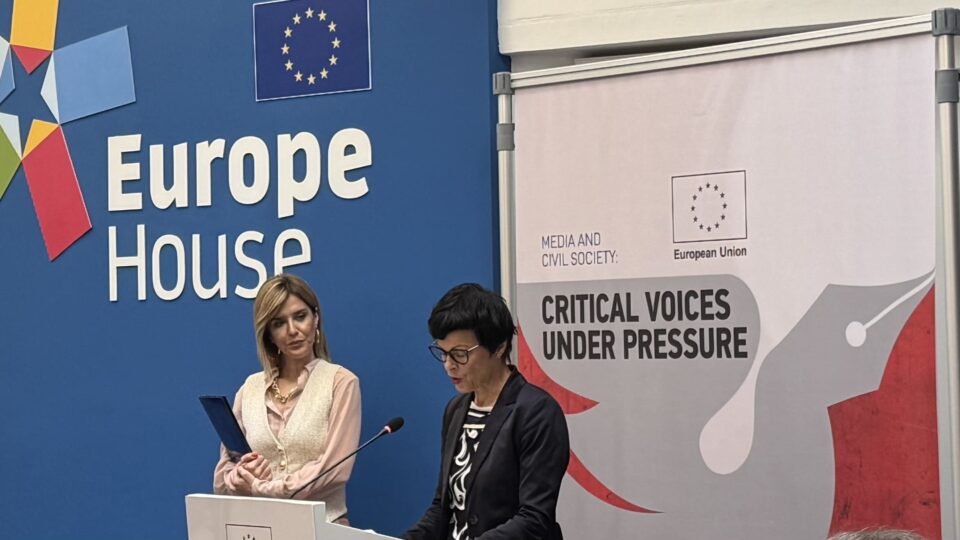
The issue of media manipulation is exacerbated by recent developments in the information space whereby “anyone can be a journalist today.” In an era where exorbitant amounts of information are available at the touch of a finger, it’s difficult to discern what is true and who can be trusted. Furthermore, given that younger generations are more likely to access and engage with news digitally, journalists are struggling to get their stories to the forefront. Rather than read an article from an experienced and trusted journalist, many are quick to absorb unverifiable information they see on platforms like TikTok, Instagram, and Facebook. As Marta Kos, European Commissioner for Enlargement, stated at the conference “Media and Civil Society: Critical Voices Under Pressure” in Sarajevo in September 2025, “We are confronted with social media that prioritizes the outrageous over the thoughtful.”
Isović further explains that “in an era of artificial intelligence and fake news, readers are in an unenviable position, especially considering the pervasive media illiteracy in the region and the fact that our people love and want to engage with and read conspiracy theories… and even disinformation to some extent because it entertains them.”
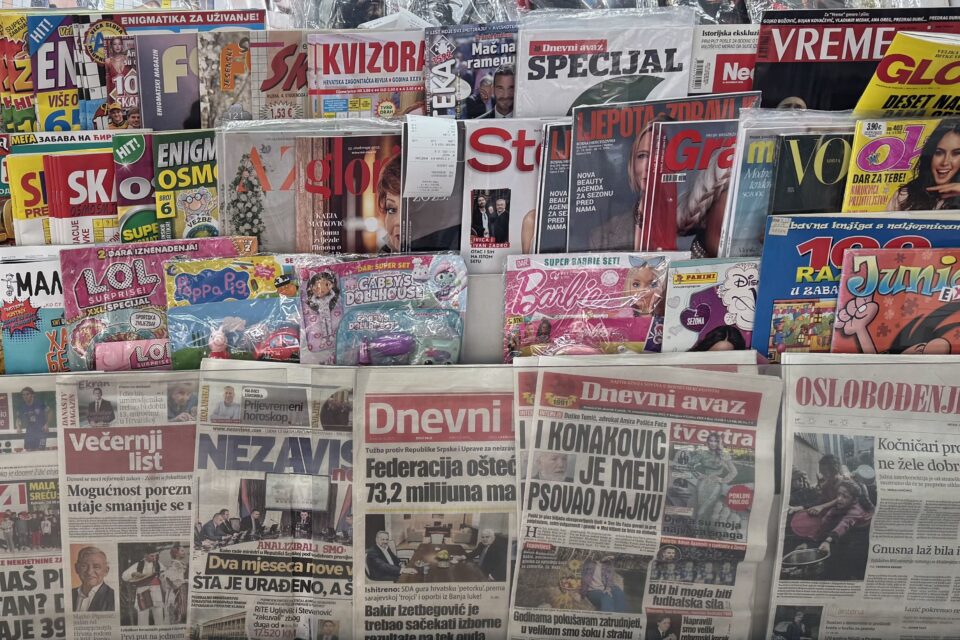
However, BiH citizens are no strangers to the fact that various sources of media are untrustworthy. Galić emphasizes that the public is not naive and that they are well-aware of misinformation within the media. However, even the most informed citizen can fall into the trap of a well-written article. It doesn’t always have to include lies or blatantly obvious bias – it can simply be a matter of selective information.
These are all reasons why journalists must be held responsible for telling the whole truth. Doing so enables them to maintain any trust they may gain among the region’s citizens–which is vital when asking them to make the effort to recognize and exclusively consume reliable media sources.
Recognizing Media Manipulation
It is important for both journalists and media consumers to know that a key part of recognizing the difference between reliable and manipulated information is knowing where it has come from. As Galić emphasizes, “The source of information is crucial. If a story cannot be confirmed through multiple independent and verifiable sources, we did not publish it. There were investigations we abandoned because we could not confirm all elements with solid evidence.”
Furthermore, readers must also practice personal responsibility with their media consumption for this to be successful. In this, Isović stresses mindful practices such as considering the backgrounds of news portals and journalists, and evaluating how information is presented:
“Those who wish can recognize credible news by checking whether the portal has an impressum and who is listed in the impressum, whether the author is signed, whether the media consistently follows professional standards of journalism. Readers should also think about why certain media present information in a certain way and what is the intention of those texts, see how the other texts are interconnected. For example: if you see that one portal praises one political party too much and their members while spitting on other political options, it is clear to you what kind of media it is.”
She also warns against following any journalists or media portals whose work appears to have a more gossipy or tabloid-like quality.
“These types of media outlets shouldn’t be given any credence because this directly affects the quality of public space and the credibility of information that we share,” Isović notes.
Going Forward
So long as Euro-Atlantic integration remains a priority for BiH, reforming the media environment is imperative. As emphasized in Bičakčić’s chapter, media freedom is vital in BiH’s progress towards the European Union. Fortunately, it is a priority that the EU has pledged to support, especially through its allocation of funds dedicated to strengthening civil society, media, human rights, and democracy in BiH.
To achieve progress on media issues, other outlets could utilize the ethical principle that is behind Galić’s own news portal: independence. This could include the same acts of rejecting marketing and political pressures, refusing advertisements, financing work through other avenues like projects and book sales, and ensuring any work is transparent and verified several times.
Ultimately, the message from Galić and Isović to both journalists and media consumers is this: stay committed to facts and integrity.
“My advice to journalists is simple: hold firmly to ethical and professional standards, resist all political and commercial pressures, and speak the truth even when it is difficult. This is both a moral and professional duty — and those who cannot uphold it should not do this job”, Galić explained.