The war in Bosnia and Herzegovina left consequences that cannot be repaired.
It took tens of thousands of lives, separated families, destroyed cities, and left people with wounds that have not healed even after more than thirty years. In that war, there were criminals, but also heroes—individuals who, despite everything, held on to their humanity.
The heroes of the Bosnian war demonstrated great moral stature, leaving a legacy for which they are remembered today. This includes Dušanka “Dušica” Vujasić, a doctor whose decision to remain in a besieged city intertwined the destinies of people from Goražde, Belgrade, and Vojvodina in ways none of them had foreseen.
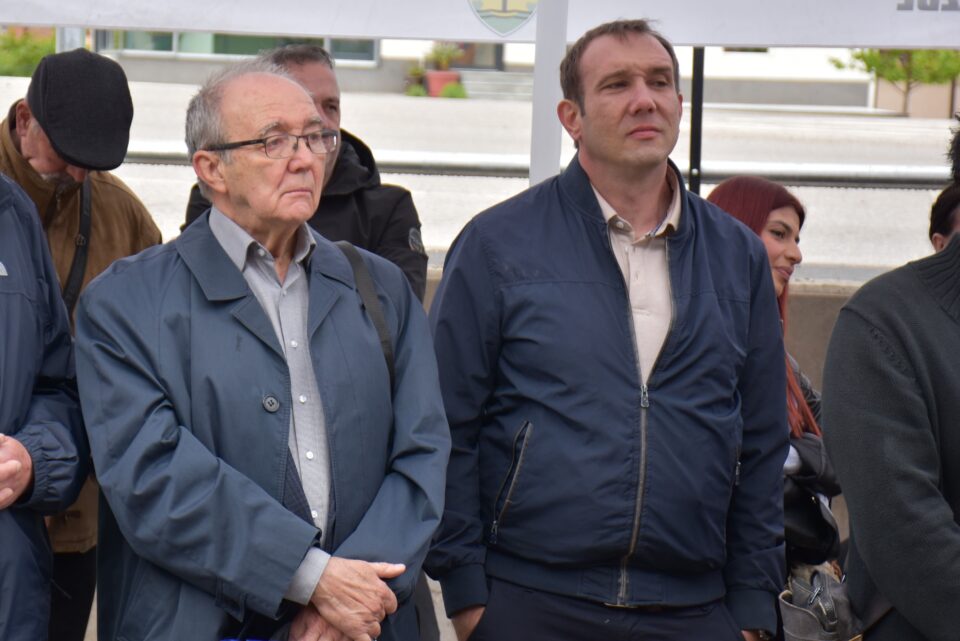
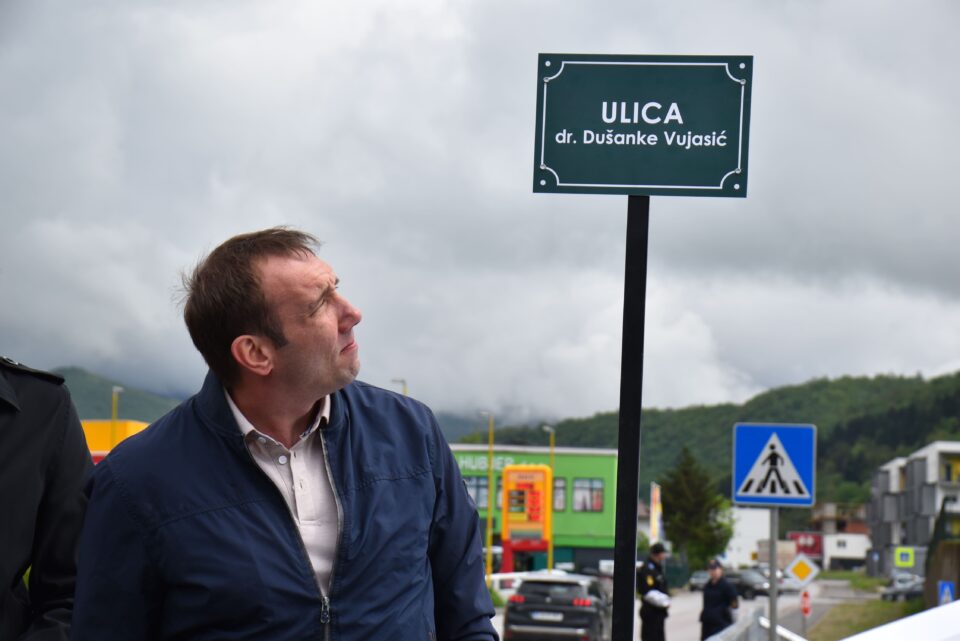
Dr. Dušanka, from Belgrade, remained with the residents of besieged Goražde throughout the darkest years of the war. Today, a street has been named after her in this city, where she worked and ultimately lost her life. A plaque bearing her name was unveiled on the anniversary of her death, attended by her husband, Zvonko, and her son, Slobodan. They traveled from Croatia and Serbia to a city that, even after more than thirty years, does not feel foreign to them.
Born in Belgrade in 1957, Dušanka arrived in Goražde a few years before the war to work as a dentist at the local health center. Her husband Zvonko, an engineer, was employed by a construction firm, and it was in Goražde that their son Slobodan was born. Today, her name appears on a memorial plaque at the entrance to the Cantonal Hospital, listed alongside other healthcare workers who were killed while performing their duties during the war from 1992 to 1995.
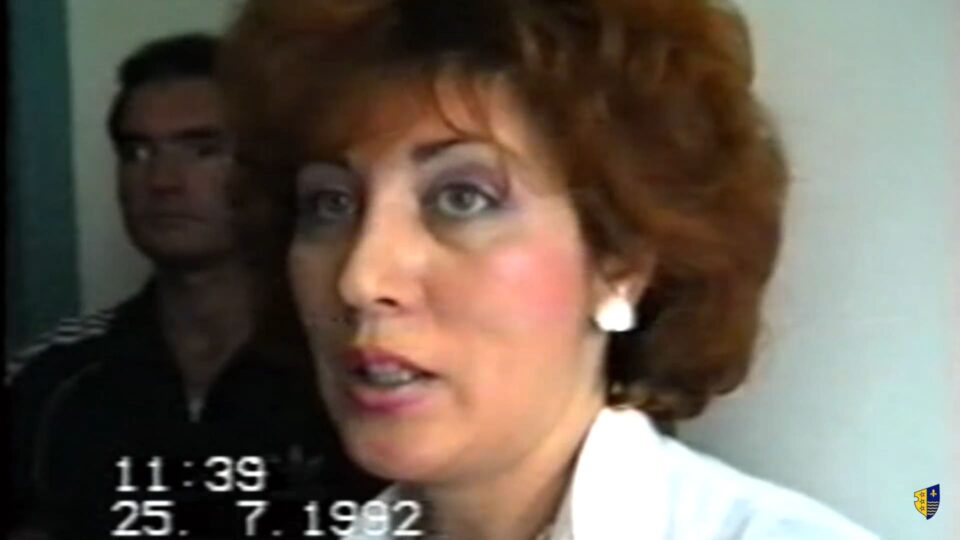
She had the chance to leave Goražde, which had been under siege since May 4, 1992, yet she decided to stay and work in the wartime hospital. In preserved footage from July 25, 1992, she explains why:
“I will stay with them—there were many opportunities for me to leave this city, and I still have the chance to do so, but I want to be with them. I would like to survive this war, return to Belgrade, to Serbia, and tell the truth there. And by telling the truth, I mean telling the truth to my parents.”
In the same footage, she also speaks about her name.
“I don’t care about my name or my nationality, and I don’t want to be ashamed of my name. I can tell you that I’m very uncomfortable when a colleague calls me by my name, because I hear it more than ever before. It hurts my ears, and it’s very difficult. I don’t disavow my people or nationality, and anyone who disavows their own people has an ugly soul. But now in this situation, in this environment, I’m going through everything that these people are going through, and I share it with them,” she said.
As a dentist, she also assisted with surgical procedures, at a time when operations and amputations were performed without anesthetics. Working alongside her was Meho Ćano, an ambulance driver who appears in the documentary film Heroes of the Battle for the Wounded (Heroji bitke za ranjenike) by Aleksandar Reljić.
“I don’t think there was a better woman in the Health Center at that time—as a person, as a comrade. She went along for my sake, I mean, she accompanied me. In the beginning, we worked nonstop. There were about 35 of us in total, including the doctors,” Ćano recalls in the film.
Abduselam Sijerčić Pelam, commander of the 31st Drina Strike Brigade of the Army of the Republic of Bosnia and Herzegovina, also speaks in the film.
“She was a person who radiated a beauty, a kindness. She had a kind word for everyone and was a smiling and cheerful person. Even in those difficult times, I think her colleagues at the hospital realized how much she supported them by her example,” Sijerčić said.
Dr. Dušanka was killed when the hospital was shelled on April 27, 1993, together with her dentistry colleague, Dr. Hasan Imamović. She was six months pregnant at the time of her death. She did not die immediately, but the doctors were unable to save her or the child.
The Letter and Parents in Belgrade
Her son Slobodan, affectionately called Boban, was seven and a half years old when the war broke out. Dušanka’s father, Drago, suffered a stroke on the eve of the war, and the family traveled to Belgrade. When it was clear that Drago would recover, Dušanka and Zvonko returned to Goražde, and Slobodan was left with his grandparents. In the aforementioned documentary, Slobodan remembers that moment,
“When they left me there, they thought it would be for maybe a month, because at the time, people were saying there wouldn’t be a war. What war? No one suspected it would last four years,” Slobodan recounted.
In the film, Dušanka’s father, Drago Dimić, recalls what his daughter told him before the beginning of the siege, while the telephone lines were still working.
“She said, ‘Ćako’—that’s what she used to call me—’talk to me. Keep talking to me while the line is open; once the line cuts off, we won’t be able to speak again.’ And that’s exactly what happened,” he recounted.
A month before she was killed, Dušanka sent a letter to her parents and her son through UNPROFOR.
“Mom and Dad, I love you very much. Be glad that you aren’t here. It is terrible here—so hard. Your friends who stayed in the building are hauling water canisters; they’ve lost weight, they’re pale, [the kids] aren’t growing and don’t go to school. Hang in there, my darling boy—surely this will pass, and we will be together again, just like in the old days,” the letter read.
Slobodan grew up in Belgrade but spent his summer holidays in Goražde until 2001, when his father moved to Rijeka. He met people who told him stories about his mother, who he describes as a woman of strong character.
“She was stubborn and defiant. She was always well-groomed, nicely dressed, and wore makeup. She would even take the same route to work as she had before the war—even though everyone else avoided it because it was dangerous due to snipers,” Slobodan recounts.
He also recalls meeting a woman in Goražde whom Dušanka had encouraged to have a child during the war. The woman told him that whenever she looks at her daughter, she thinks of his mother.
“And when you hear things like that, you realize how wonderful it is that someone who came before you had such an impact on people—someone known throughout Goražde, someone held in such high regard by everyone. It serves as an inspiration in life, making you think ‘maybe I’m like that, too,” says Slobodan.
Notably, he does not talk about his mother’s decision to stay as a sacrifice.
“I don’t look at her life as victimhood. I see it as the life of a woman who had her own integrity and who went beyond the story of politics,” he says.
The Street as a Human Debt
The initiative to name the street after Dušanka came from Dženis Ćulov, the chairman of the Goražde City Council, and was supported by all the local councilors. At the unveiling of the plaque, he stressed that the act was not political.
“At a time when people were divided, when many left, when fear was stronger than hope, she stayed. Not because she had to, but because she believed. She believed in her calling, she believed in people, she believed in Goražde. As a doctor, she could choose safety, as a human being, she chose responsibility. And that is what makes this story even greater than every spoken word. She stayed with her patients when it was most difficult; she worked when the conditions were almost impossible; she helped when all help meant life; and in the end she gave the most that a person can give,” said Ćulov.
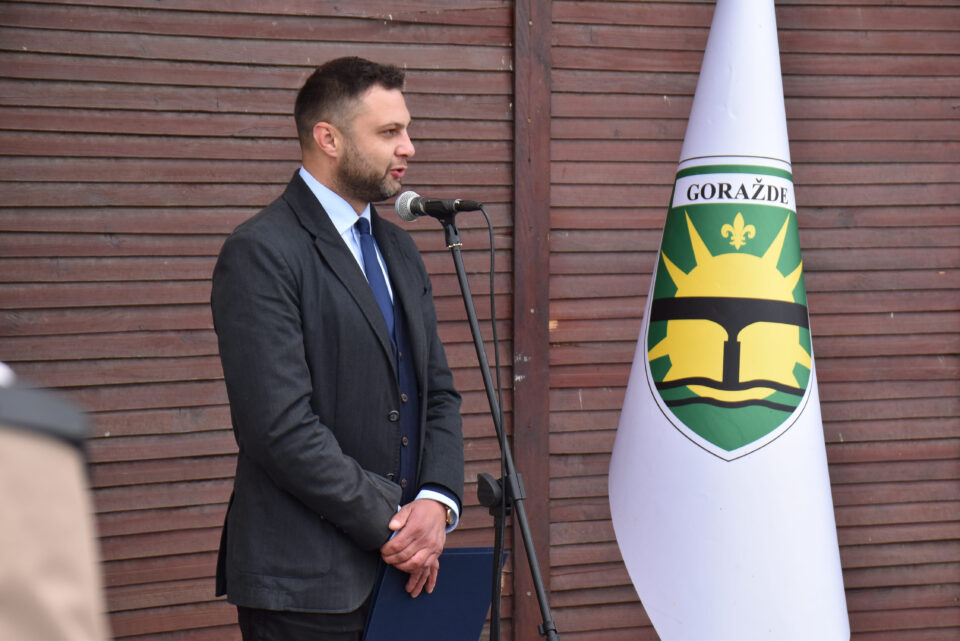
He also emphasized that Dušanka is the first woman to have a street in Goražde named after her since the signing of the Dayton Agreement.
“That’s why this street is not just a name, it’s a reminder that courage has no nation, that kindness has no borders, and that the greatest people are often those who don’t ask to be remembered. As the initiator of this decision, I can say that this was not a political act, this was a human debt—a debt to a woman who chose to be part of this city when it was most difficult and who thus forever became a part of its history,” said Ćulov.
He pointed out that the story of Dr. Dušanka should be told to new generations, as an example of humanity and decency, so that they remember and understand their history and the people who wrote it.
Slobodan Vujasić did not hide his mixed feelings at the unveiling of the plaque.
“I am very proud that a street has been named after my mother. I wish, however, that she hadn’t been given a street—because that would mean she wouldn’t have had to become an example of the senselessness of this war,” said Slobodan.
He added that he was glad the trend of streets bearing only male names had been broken, though he admitted to having mixed feelings, given that his mother had been a subject of debate for years:
“I am happy [about the street] for the sake of my children, as they never got to meet their grandmother. I don’t have many memories of her myself, since I was very young when she died. As for how I feel—well, ever since she passed away, my entire life has been marked by ongoing discussions about her: Dušica, a Serbian woman, Bosnia, the war, the question of whether she was a ‘hero’ or not—the talk was constant. So, when I heard she was going to have a street named after her, I had mixed feelings. On one hand, it’s a wonderful gesture; on the other, it stirs up old issues—though these are issues that shouldn’t be forgotten. In a way, she embodies a narrative rooted in the absurdity of war. Ultimately, it was a game played by powerful figures and politicians, while ordinary people—who were just trying to deal with their daily lives—ended up suffering and, in many cases, losing their lives. Perhaps she has become a symbol of that, and for that reason, I am proud of her.”
Asked how he feels when he comes to Goražde, he answered simply: “When I come here, it’s like I’m back home.”
Her husband Zvonko thanked the city of Goražde and its citizens, and recalled his life before the war:
“Things happen in wars; many brave people die; many save others. I think it’s one and the same act in that sense, and it’s something that’s positive. It gives people a sense of morality. It shows that, in my view, at least, not everyone is the same, and Dušica’s kindness was part of that. She showed herself that she can be a person she believed in being, the kind of person she wanted to be, and she had a friend here. Goražde also brings back memories for us. People lived together and so on. It’s simply an episode that’s behind us, but the future is here again. And, naturally, Goražde has this proud tradition of being an open city, a tradition that will continue, and that makes me particularly happy. I was here during that entire pre-war period, too, and everyone had a good time, or at least that is how it seems to me,” said Zvonko.
He described his wife as determined and open.
“She was determined, brave. She said what she thought; she didn’t get into situations where she’d say one thing and think another. She was realistic, and that intention showed how much she fundamentally loved people. I think a lot can be said about everything that she was, what kind of character she had—she was just like her parents. So, I think that her parents could be proud of her,” said Zvonko.
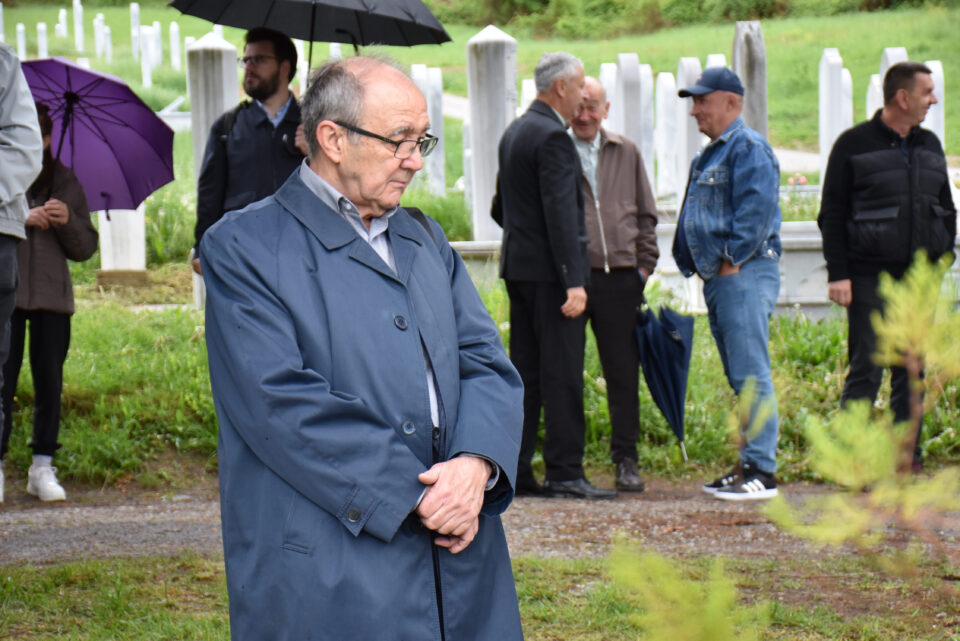
He also recalled their life together and their arrival in Goražde before the war.
“We had everything in our lives, a lot of harmony, life, normalcy. We came from Belgrade, a big city, to a small town, but it didn’t hinder us. We could live our lives, and she had a lot of friends there, especially at the Health Center. She was great in that sense. It’s not that it’s something pretentious now, but it’s simply the way it was. She knew how to use her skills, how to perform at work and with friends,” said Zvonko.
A Film Ten Years in the Making
Dr. Dušanka’s story was first documented by director Aleksandar Reljić as part of the Living Together [Živjeti zajedno] project, a series about people who resisted nationalist hysteria, when he presented the documentary film Heroes of the Battle for the Wounded.
His new film The Doctor [Doktorica] premiered at this year’s Sarajevo Film Festival, in the “Dealing with the Past” program.
“The film The Doctor is actually a kind of director’s cut, as it would be called. It’s an intervention I’ve wanted to make for at least a decade now, because when I made the first film about Goražde and Dr. Vujasić—among other protagonists—it was a television format that was somewhat drier and more informative. It has its value, and all of that is fine. However, while working on that film, I realized that the story of the doctor was actually a story of its own and that it truly deserved a different kind of attention from me,” Reljić says.
The decision by the people of Goražde to name one of the town’s streets after her prompted him to return to the project.
“That served as a trigger for me to revisit the material, create a new film, and express my own feelings regarding her character and her legacy. Essentially, it provides a much clearer picture of both her personality and her sacrifice—or at least, that was what I aimed to achieve,” explains Reljić.
He says that the audience’s reaction in Sarajevo was powerful. He hopes the film will be shown throughout the region, and he is particularly looking forward to the screening in Goražde.
“There were many tears, and a genuine understanding of the film’s core essence. Above all, the film speaks to humanity and humanism as universal values—dissolving the boundaries that divide people, leaving only one fundamental distinction: whether someone is good or bad. This is an example of profound goodness, an ethical benchmark embodied by the figure of Dr. Dušica Vujasić,” Reljić explains.
Reljić says that the subject of the war and the breakup of Yugoslavia had preoccupied him since his teenage years. He explains that he was completely fixated on the topic, seeking out like-minded individuals in his own environment—people who would validate his personal convictions regarding the war and the collapse of Yugoslavia.
“Especially when the war in Bosnia began, it was a very, very painful situation for me. At that time, I couldn’t focus on anything other than following the unfolding events. From a distance—from afar, so to speak—I identified with what was happening to you, and to the people living through that war, under shellfire and under siege. For me, any instance where people resisted that nationalist hysteria in any way at all was like a lifeline to a drowning person,” Reljić recalls.
That’s how he learned about Dr. Dušanka and Pero Dacić, the “heroes” of his first film about Goražde. To Reljić, they are fascinating figures whose story needed to be captured on film to bring it into the spotlight.
“I was following the trail of a story—a story that turned out to be completely contrary to prevailing beliefs. I felt, however, that I would find the true thread of this narrative in Goražde, rather than in the place where the events were said to have occurred. Upon arriving in Goražde, I realized I had reached a dead end; yet, while there, I heard about these two individuals. That led me to make the film Heroes of the Battle for the Wounded—framing Goražde as a ‘city of heroes’ and highlighting these two people who did everything in their power to save the wounded. At the same time, it draws a parallel to the historical ‘Battle for the Wounded,’ also known as the Battle of the Neretva,” Reljić explains.
There are plans to screen The Doctor in Goražde—the place where, according to Reljić, it is needed most—to revisit the story of Dušanka and her sacrifices with the local residents. As for the Serbian premiere, Reljić will have to wait a while, even though the initial plan was to screen it at the Slobodna Zona festival.
“We will see what happens with the festival—and with festivals in Serbia in general—because the current situation here is unprecedented: the cultural sector has been completely decimated, and events and manifestations of all kinds have either been canceled, postponed, or left without any budget whatsoever. It’s essentially a whole new dimension to the story. Nevertheless, I am confident that the reception from audiences in Serbia will be positive in every respect,” he says.
According to Reljić, the film will go through a festival run to increase its visibility and significance, followed by distribution to television networks.
Kind Eyes and a Warm Smile
Dušanka is also remembered by Azra Herenda, who was her friend even before the war. They met in Goražde, where Azra was working in a department store at the time. Dušanka, she says, used to come there, and the friendship developed quickly.
“As she was very kind and like that, a woman with style, with a conversation, we became friends very quickly. So, I used to go to their doctor’s office very often for coffee and to talk. It was a great friendship for a long time,” Azra recalled.
She also remembers an event from 1989, when she broke a tooth before New Year’s, and Dušanka fixed it for her.
“She said, ‘if Asim Uhota,’ who was my cousin, ‘will come to work on Saturday, I’ll make it for you.’ She really did it, because we were to celebrate New Year in the Drina hotel the next day, on Sunday. She did it as only she knew how. She was so wonderful, with gentle hands and a wonderful soul,” said Azra.
The friendship continued, and they spent time together even when Azra no longer needed her help as a dentist.
“We were close for such a long time. We would have coffee together, go out, and talk about all sorts of things. She was a wonderful person. I’m sorry she didn’t get to experience the kind of life she still wanted and had imagined for herself. Whenever I see her face, she comes alive inside me. She was simply such a gentle and wonderful person,” Azra recalls.
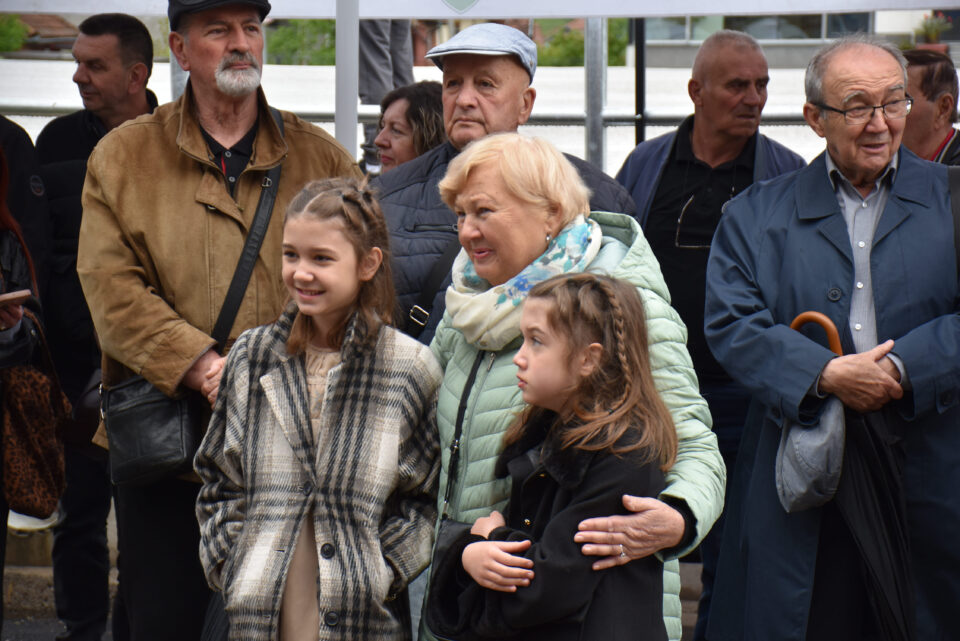
Azra remembers their conversations as something quite ordinary. Their children were young at the time, and Dušanka had only one son, Slobodan.
“They were mostly women’s conversations, nothing special. Fashion. There was no politics back then. We were always spending time together, talking about where we would travel, where we would go for walks, and where we would go out. Those were mostly the kinds of conversations we had back then. Nicer topics from a nicer time, a time that will never come again,” she reflects.
She says that three years before the war, there were no discernible divisions among people and never any talk of war.
“It was never mentioned. No one ever said ‘there will be a war.’ You couldn’t sense it. At least we didn’t, because we didn’t want to, because we didn’t differentiate between people—there were only people who were good or who were bad,” says Azra.
The war separated them. Azra left Goražde on April 16, 1992, on her birthday, thinking she was leaving for a short time.
“Unfortunately, I wasn’t in Goražde. I left Goražde already on April 16, meaning to be gone for 15 days, and remained in exile for 6 years. That’s how it was, such a thorny road, and that’s already for a novel,” said Azra.
She remembers Dušanka by her smile and eyes, by the warmth that emanated from her as soon as she spoke.
“Well, her eyes and her smile—she had such a smile, and such eyes. And when she spoke, it was as if honey flowed from her. That’s simply how she was. It’s no coincidence that her name was Dušica,” said Azra, comparing her friend’s beauty and elegance to that of the character Silvana Armenulić in the film Toma, portrayed by actress Tamara Dragičević.
Azra remains in contact with Dušanka’s family to this day, though not frequently. Dušanka is survived by grandchildren whom she never got to meet, but Azra believes they will know who their grandmother was.
“Unfortunately, they were left behind, but they will remember; surely, they will be told stories about her. They will remember—they have someone to remember and someone to talk about. These are nothing but lovely, positive stories,” concluded Azra.
To Stay Where She Worked
Dušanka’s parents, Drago and Ljubica Dimić, are no longer alive. Their urns are in Goražde, alongside their daughter. In the film Heroes of the Battle for the Wounded, Drago explained why he did not have her remains moved to Serbia:
“Where Dušica worked, where she died, and where she was laid to rest—let her bones rest there. No one in Goražde will disturb her peace there where she lies.”
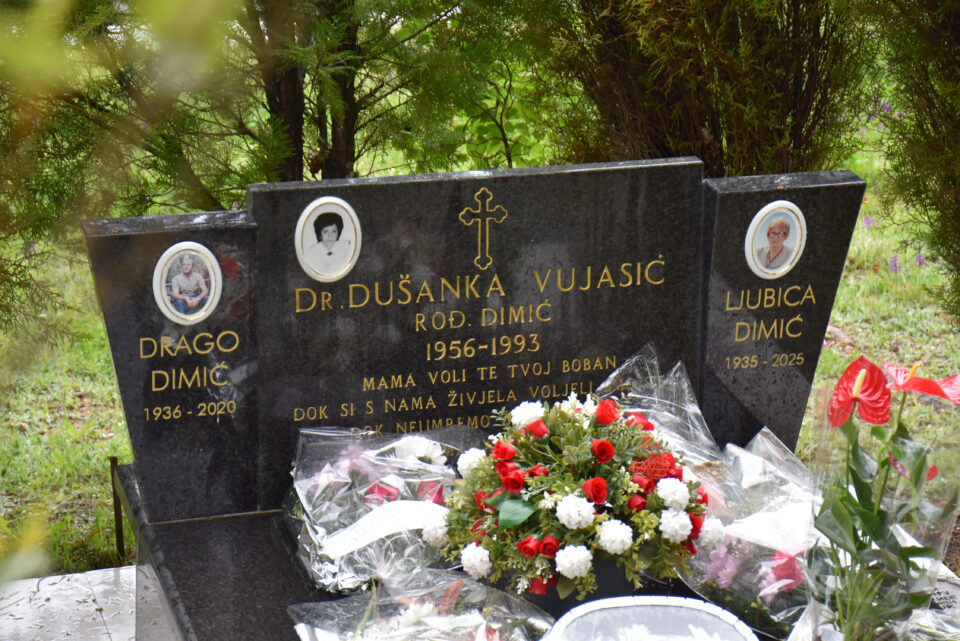
Ljubica then spoke about the people among whom her daughter rests.
“When someone here says to me, ‘how could you allow Dušica to stay there among them?’ [I say] Among whom? They are wonderful people, and when I go there, I feel so accepted, as if I lived with them all along,” said Ljubica.
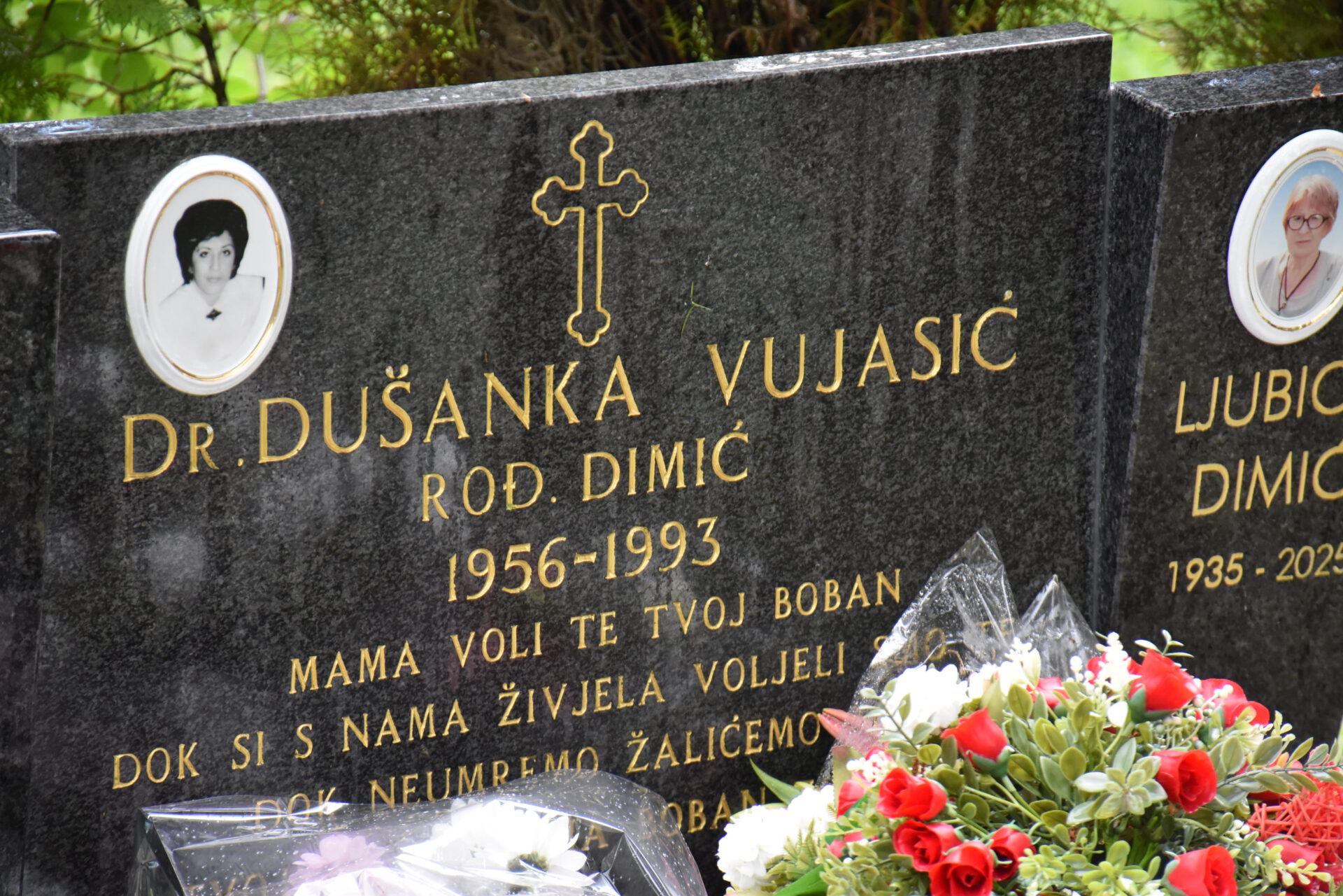
Today, Dušanka Vujasić’s legacy can be found in several places in Goražde. Her grave is in the city cemetery, next to the urns of her parents, who decided to stay with their daughter in the place where she worked. Her name is on the plaque at the entrance to the hospital where she died, and now also on one of the town’s streets. Dušanka’s husband, son, and granddaughters still come to Goražde and are always welcome there.
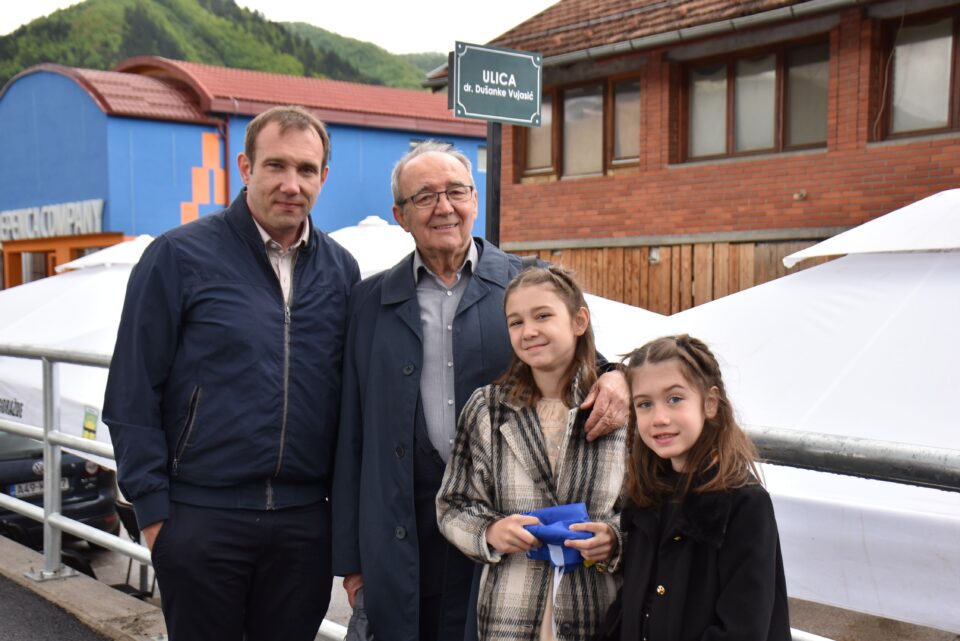
Slobodan says that when he visits, he feels like he’s back home. Dušanka’s story also lives on in the memory of the people of Goražde who knew her, while the films about her will continue to reach new generations, teaching them about the war and reminding them to remember the people who chose to stay and save their lives.