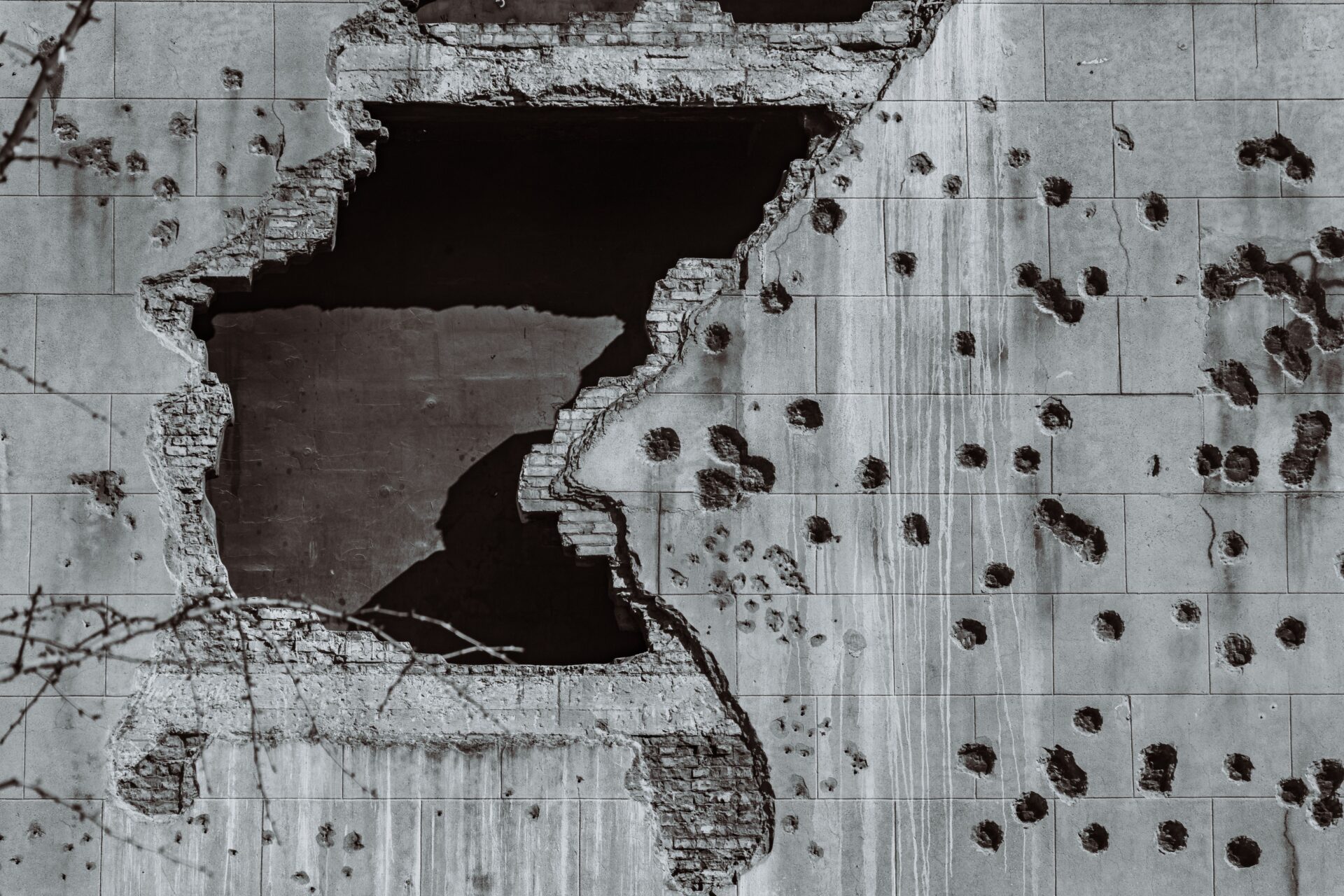
Not one sniper who participated in the Siege of Sarajevo has ever been prosecuted. Three decades later, four European governments, including Bosnia and Herzegovina, are investigating an allegation that some of the snipers were not even soldiers, but foreign nationals who paid to take part in the so-called “Sarajevo Safari.”
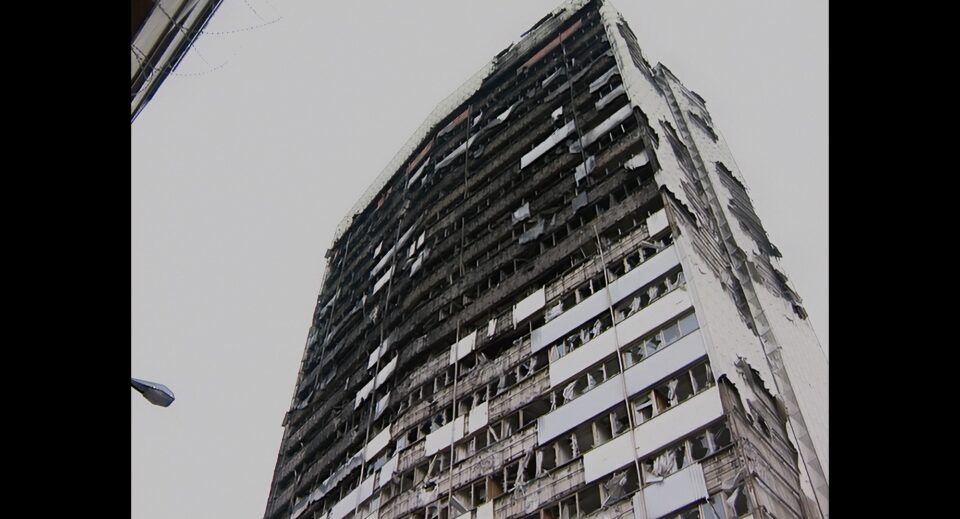
The Siege of Sarajevo from 1992 to 1995 was the longest siege of a capital city in the history of modern warfare. The Bosnian Serb Army’s campaign of sniping and shelling attacks left residents in a constant state of terror. The physical blockade of the city also forced civilians to rely on improvisation and international aid to survive starvation and freezing winters.
The International Criminal Tribunal for the Former Yugoslavia (ICTY) convicted Stanislav Galić and Dragomir Milošević for commanding the field operations of the siege, as well as Radovan Karadžić and Ratko Mladić for conceiving and ordering the campaign. Alex Whiting, a former attorney in the trial against former president of Serbia and FR Yugoslavia Slobodan Milošević, explains that the tribunal’s purpose was to prosecute those most responsible for war crimes rather than lower-level perpetrators.
According to Whiting, there may be challenges at the domestic level to determining the identity of the sniper in each case, and “the prosecutors would have to prove that the sniper knew that he was shooting at a civilian target or that he acted recklessly when identifying the target.”
The state prosecutor’s office told Balkan Transitional Justice that it has ongoing investigations but refused to explain why it has failed to file a single indictment.
A local expert in peacebuilding, Amra Pandžo, who lived through the siege, remarks, “I cannot try to heal one part of Bosnia’s body if we don’t cut [off] and punish the part which is toxic…and there are a lot of them who are still free, and they are walking on the street, and that’s horrifying.”
It is within this context that the Sarajevo Safari allegations emerged. These allegations originated from the ICTY testimony of former US Marine John Jordan, who led a group of international volunteer firefighters during the siege. He described seeing individuals being handled around sniper positions who were unfamiliar with the territory and carrying weapons that looked like they ought to be used for hunting boar in the Black Forest.
Sarajevo Safari is the name given to an alleged monstrous form of “war tourism” during the Siege of Sarajevo, in which wealthy foreigners allegedly paid large sums of money to shoot and kill innocent civilians in the besieged city with sniper rifles from occupied positions.
This phenomenon includes several shocking details. According to testimonies and investigations, these “war tourists” were allegedly brought in an organized manner from Belgrade by helicopter or by car to Serb positions on the hills above Sarajevo. There are allegations of the existence of a killing price list, with rates varying according to the victim’s gender and age, while the highest prices were allegedly paid if the sniper hit a child.
Azem Heljić, Assistant Director of Museum Operations at Bosnian Memorial Museums, states that what Jordan called the “tourist shooters” were referred to by residents as “weekenders” or “weekend Chetniks,” and their activities were not limited to Sarajevo.
In 2022, Slovenian filmmaker Miran Zupanič released a documentary, “Sarajevo Safari,” which brought renewed attention to the allegations. In 2025, Leo Danczak, producer of The Human Hunters of Sarajevo, collaborated with Al Jazeera on this true-crime report, drawing substantial listenership outside Eastern Europe.
The allegation has not gone uncontested. British forces who served in Sarajevo told the BBC they had never heard of the concept, with one dismissing it outright as an “urban myth.” Veljko Lazić, the president of a war victims’ association in Republika Srpska, when interviewed by Balkan Insight, called the safari “an absolute and heinous lie.”
As Heljić notes, “the allegations have provoked a strong public reaction because they raise the possibility that people were not targets exclusively within the framework of military strategy, but also the subject of a monstrous practice of turning human suffering into a form of sadistic entertainment.”
While Heljić speaks to the public reaction the allegations have provoked, Pandžo’s account suggests that for survivors, the phenomenon was not unfamiliar. “We didn’t need to be told that some people enjoy that game,” she says. She shares a memory of running across an intersection and seeing a journalist pointing his camera at her, waiting for the moment when a sniper would shoot her.
Director Zupanič says he anticipated polarized reactions, but he hoped that “public discourse would unearth new facts, thereby validating the phenomenon and shedding light on it from novel perspectives. Broadly speaking, this materialized.”
To date, Bosnia and Herzegovina, Belgium, Italy, and Austria have launched formal investigations into the claims. On June 3rd, 2026, Sabina Ćudić, President of Naša Stranka and Bosnia and Herzegovina’s delegate to the Parliamentary Assembly of the Council of Europe, secured support from thirteen countries for a Council of Europe inquiry into the “Safari” case.
The investigations have prompted mixed reactions, ranging from cautious optimism to wariness.
Zupanič’s takeaway from the international momentum is that “the ultimate direction of these probes will depend largely on whether prosecutors from the participating states establish a Joint Investigation Team (JIT) within the framework of EUROJUST.”
The Italian investigation offers the most concrete picture of where that momentum currently stands. On June 18th, 2026, Reuters reported that on the Italian side, Milan prosecutors have placed five individuals under investigation, but the prosecutors only had circumstantial evidence.
Among those watching the Italian investigation closely is Leo Danczak, who has continued to track the story since his coverage. He expresses his qualms about the evidence Italian journalist Ezio Gavazzeni brought to the Prosecutor’s Office because “his story is now changing.” A small number of people involved in the Safari became busloads and then over 300.
“There are now stories of a special airport that was made near Sarajevo in the hills to transport these people…there is no evidence of an airport near Sarajevo, or this private airstrip,” Danczak further notes.
Whiting, however, argues that the narrative’s instability does not necessarily foreclose prosecution. He points to features of the Safari that could, paradoxically, make it more provable than the individual sniper cases that resulted in no indictments.
Despite the investigations’ current impasse, Whiting thinks that the Safari cases, if true, might be easier to prove because the activity would be known to a large number of people who are potential witnesses; any evidence of foreign perpetrators would be noteworthy, as these people would presumably have no other reason to be around Sarajevo; and the shocking nature of the alleged conduct could lead to more cooperative witnesses.
“We, as filmmakers, have exhausted every avenue demanded by our human and professional ethics; henceforth, the impetus shifts entirely to state authorities and the political leadership,” Zupanič reflects.
Where the investigations lead remains to be seen, but the question of how the Safari is remembered—in courtrooms, in museums, and in public memory—is one that survivors and institutions in Sarajevo are already navigating.
Heljić explains that upon the establishment of relevant facts, documents, and testimonies associated with the “Sarajevo Safari,” may become the subject of museum interpretation and presentation, along with existing exhibitions, to fulfill the mission of preserving and making historical material accessible.
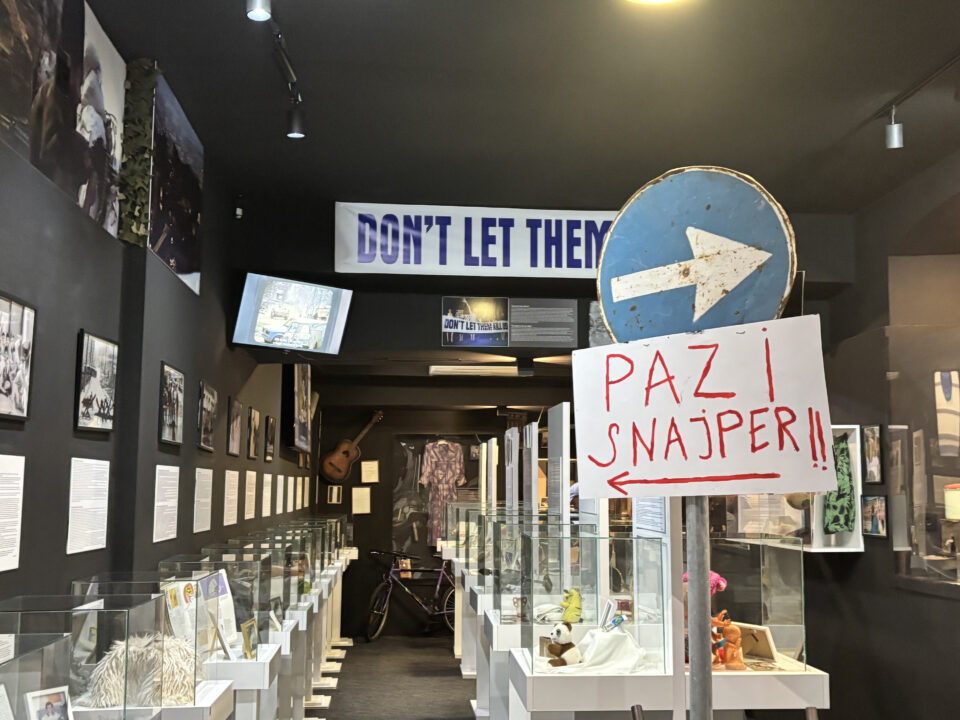
For Danczak, the question of what the Safari displaces in the process of being told is as important as the question of whether it happened at all.
He cautions against “ignoring those very real war crimes and papering over them to chase this better story, or to chase a different, more exciting story…The risk of this story is that it obfuscates and obscures genuine, real, actual evidence of war crimes.”
Pandžo extends that concern further, beyond the Safari allegations and into the conditions that made the siege possible.
She names the greater danger as the structures of violence in the modern world and how people become ignorant of and apathetic to violence. She mentions Miljenko Jergović, a Bosnian author living in Croatia, to emphasize that during the war, Bosnians were the killers and the killed, and only through rediscovering the people’s interconnectivity can wounds be healed.
Thirty years since the end of the siege, the Sarajevo Safari remains unverified, the investigations unresolved, and the sniper campaign’s foot soldiers unprosecuted. The past years have produced progress in the form of cases, institutional inquiries, and a widening international conversation about what happened in the hills above Sarajevo. Whether that progress leads to accountability or simply to a more visible archive of unanswered questions remains, for now, unknown.