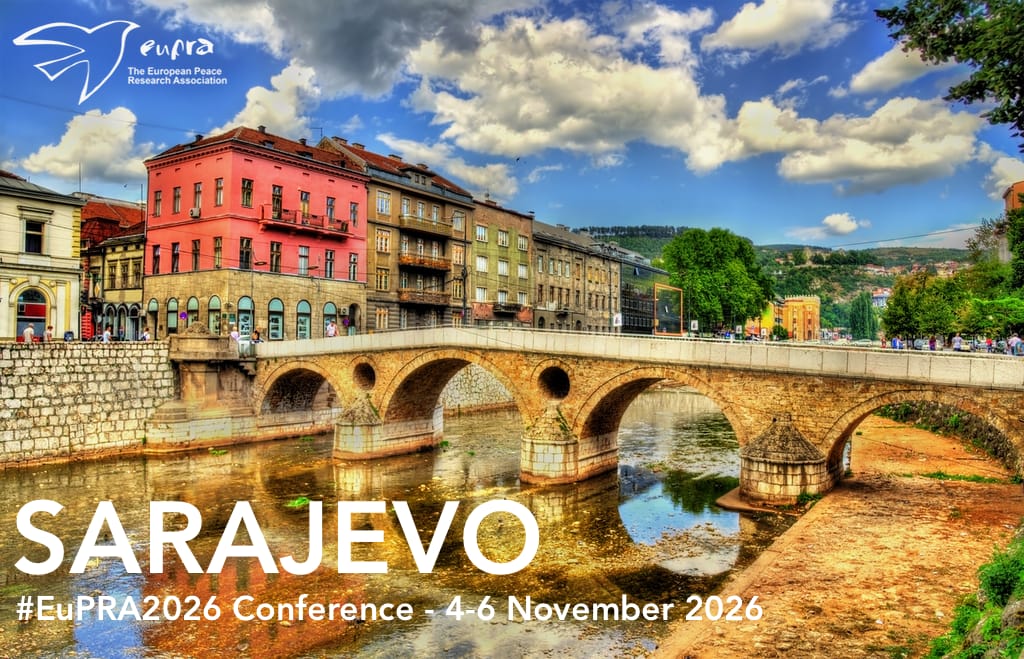
From 4 to 6 November, Sarajevo hosts the 14th conference of the European Peace Research Association (EuPRA).
Organised in partnership with the Post-Conflict Research Center (PCRC), it aims to create a space where multiple narratives are discussed, and peace is practiced as a collective effort to rebuild the world. Those who contribute and participate will have an opportunity to exchange knowledge and experience on the intersectional approaches to post-conflict resolution and relational co-habitation.
The European Peace Research Association (EuPRA) holds a conference every two years with the goal of addressing pressing topics in peace research. In the aim of achieving their mission of advancing interdisciplinary research into causes of war and conditions of peace, they organise symposiums across Europe, and their last conference found them in Pisa, Italy (2024) discussing utopias of peace.
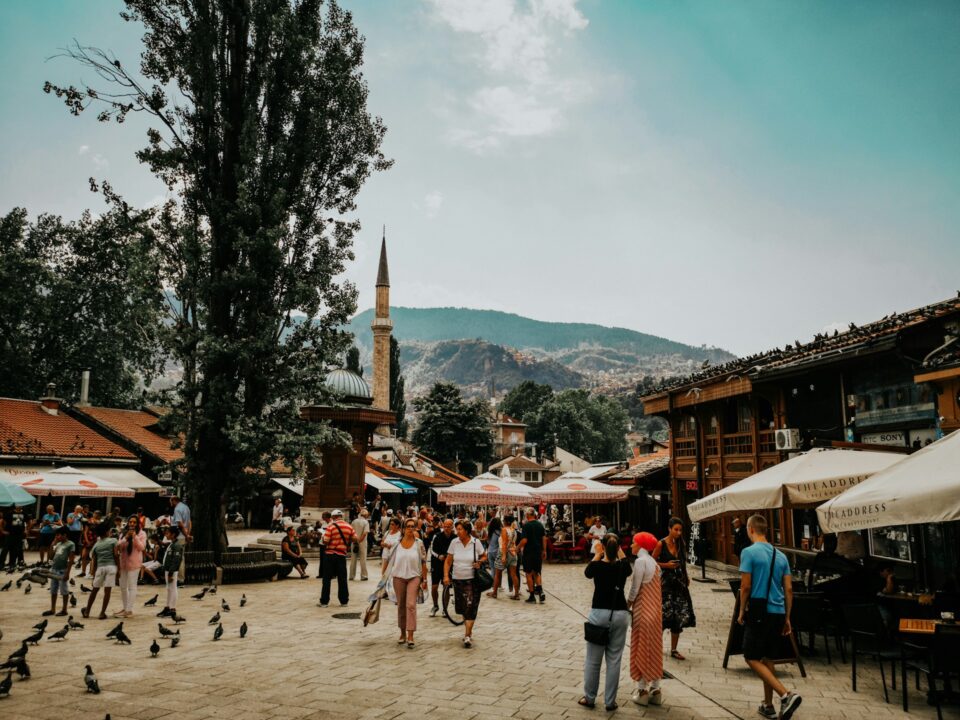
This year, the EuPRA is collaborating with PCRC, a non-profit, women-led organisation dedicated to fostering a culture of peace in Bosnia and Herzegovina. The conference is expected in Sarajevo, 4th to 6th November and is being hosted in Hotel Europe, located in the old city centre. This year’s conference tasks itself with reforming peace research through reimagining approaches and methodologies in working with a post-conflict population and environment. This means addressing possible alternative ways of living together that base themselves fundamentally on accountability and social justice.
The 2026 EuPRA Conference hopes to invite critical, decolonial, feminist, Indigenous, diasporic, and all other forms of intersectionality in answering the question of how to live in the aftermath of violence as well as how to rebuild.
The three keynote speakers approach peace from very different angles. Micheline Mwendike, a Congolese activist and co-founder of the nonviolent citizen movement Lutte pour le Changement, is recognised for her commitment to human rights and social justice in the DRC and writes extensively on the origins of nonviolent resistance. Slađana Lazić, a scholar, educator and co-founder of the YugoslaWomen+ Collective, is an assistant professor at the University of Innsbruck, where her research looks at gender, feminist and decolonial approaches to peace, especially in the post-Yugoslav region. Frank Möller, Senior Research Fellow at the Tampere Peace Research Institute in Finland, works on visual peace research and how art can visualise peace, using ambiguity to show that the unshown speaks as much as the shown.
The programme spans 17 sessions, alongside panel discussions and workshops. EuPRA invites contributions from those both excluded from or new to academic spaces, highlighting the importance of current researchers. Among the selected presentations are “How Serbian Students Unexpectedly Contributed to Reconciliation,” by Ilma Kitivojević of the University of Arts in Belgrade; the panel “Remembering Peace Otherwise: Memory, Repair, and Lived Practices of Peace,” led by Dilara Özel of Middle East Technical University and Samira Hasanzade of the University of Glasgow; and Sara Arias Saiz of the Arqus European University Alliance, presenting “Shared Gender Trauma: Militarized Masculinity and the Perpetuation of Gendered Violence.”
The programme also features research directly engaging with Bosnia and Herzegovina’s post-war context. Amy Kokalari of the College of Europe will present “Who’s the Real Martyr? From Competitive Victimhood to Political Mistrust in Bosnia and Herzegovina,” while Alenka Verbole from Schiller International University will explore “Building Future: Peacebuilding Education for Young BiH Leaders”.
For Ilaria Tucci and Cäcilie Jensen from EuPRA’s Board, Bosnia and Herzegovina is an important historical and contemporary site for discussing accountability, responsibility and action in a time of overlapping crises, from genocide and climate emergencies to rising authoritarianism. It is both a place marked by war and genocide and one with powerful reconciliation measures and a history of peaceful coexistence, which makes it a fitting reminder to learn from past and present practices in order to reimagine a peaceful future. The choice also reflects a wish for balance: earlier conferences were held in Northern, Central and Southern Europe, and the board wanted to bring the conference to the Balkans and reach colleagues working in the region.
They underscore that multiple social identities are not a burden but a talent, an opportunity, something that should be celebrated. Additionally, for the 2026 EuPRA conference, they were for the first time able to provide around 20 travel grants for conference participants prioritizing lower income members, students, people from minority backgrounds and people arriving from conflict areas, emphasising their support for thus far underrepresented colleagues and enabling people from different areas which might be new in the field, to meet and build connections.
Velma Šarić, from PCRC shared that co-hosting EuPRA 2026 in Sarajevo is a chance to bring the international peace research community to the place where this peace work happens. Bosnia and Herzegovina is often treated as a case study in peace research so hosting an event such as this, allows for a shift in that relationship, opening the chance for local knowledge and the experience of working in a post-conflict society to inform the field directly.
“For our team, this is a rare opportunity to connect Bosnian practitioners, young people and partners with researchers, activists and artists from across Europe and beyond,” said Šarić.
Lastly, the three sessions with keynote speakers (Mwendike, Lazić, and Möller) will be open to local audience and all those interested in attending can email [email protected].