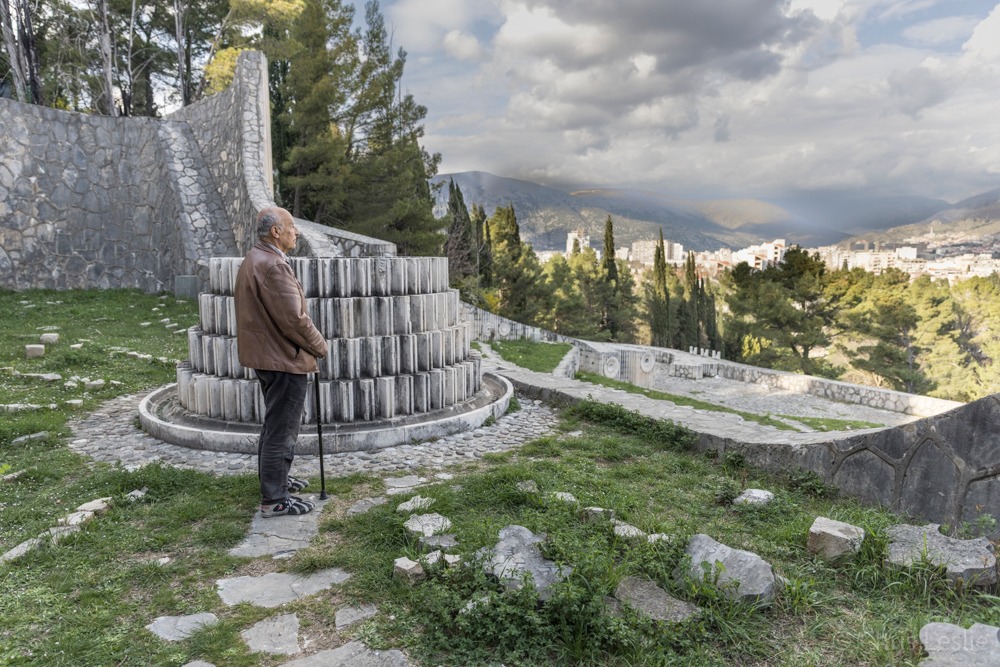
In the silence of mountain landscapes and abandoned parks across Bosnia and Herzegovina, monumental concrete forms and abstract sculptures stand as enduring witnesses to one of the most significant periods in European history — the fight against fascism.
After the Second World War, the anti-fascist fight became the central foundation of the identity of socialist Yugoslavia. Through memorials, museums, films and the educational system, an effort was made to build a common culture of memory that would overcome the national divisions created during the war. Memorial architecture had an important political and social function – to remind of the victim, but also to promote the idea of community and collective responsibility towards the future.
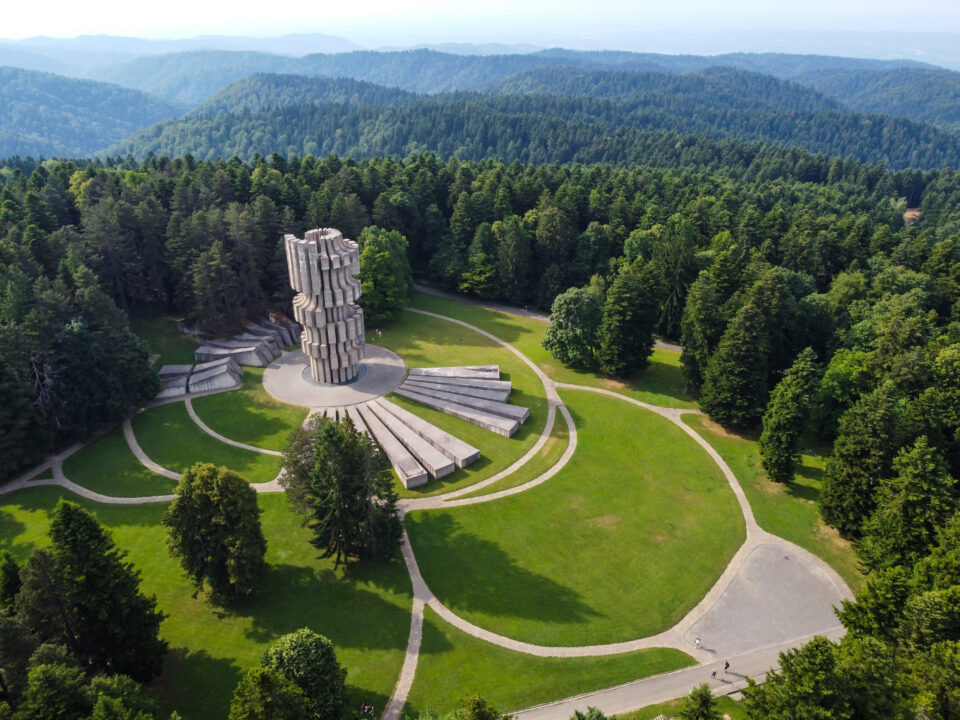
Memorials like Kozara National Park, Tjentište Valley of Heroes, Partisan Memorial Cemetery Mostar and Vraca Memorial Park are not only architectural works, they are materialized memories of collective resistance, sacrifice and the idea of togetherness that once transcended ethnic and national divisions.
All of them are the works of excellent local sculptors and architects, such as Dušan Džamonja, Vojin Bakić, Bogdan Bogdanović, Ivan Sabolić, Svetislav Ličina, Gradimir Medaković, Miodrag Živković, Jovan Grabulovski, Janez Lenassi, Petar Krstić, and many others.
Created mainly during the period of the Socialist Federal Republic of Yugoslavia, their memorials formed the basis of the official politics of memory, which sought to form a common identity based on anti-fascism through art and public space. Their aesthetics, futuristic, abstract and symbolic, were consciously devoid of national characteristics in order to emphasize the universality of fight and suffering.
In addition, Yugoslav memorials often rejected literal depictions of soldiers and war scenes. Instead of heroic figuration, they used abstract forms, organic geometry and symbolic landscapes meant to evoke emotion, not propagandistic identification. This is precisely why today they attract the attention of art historians, architects and photographers around the world.
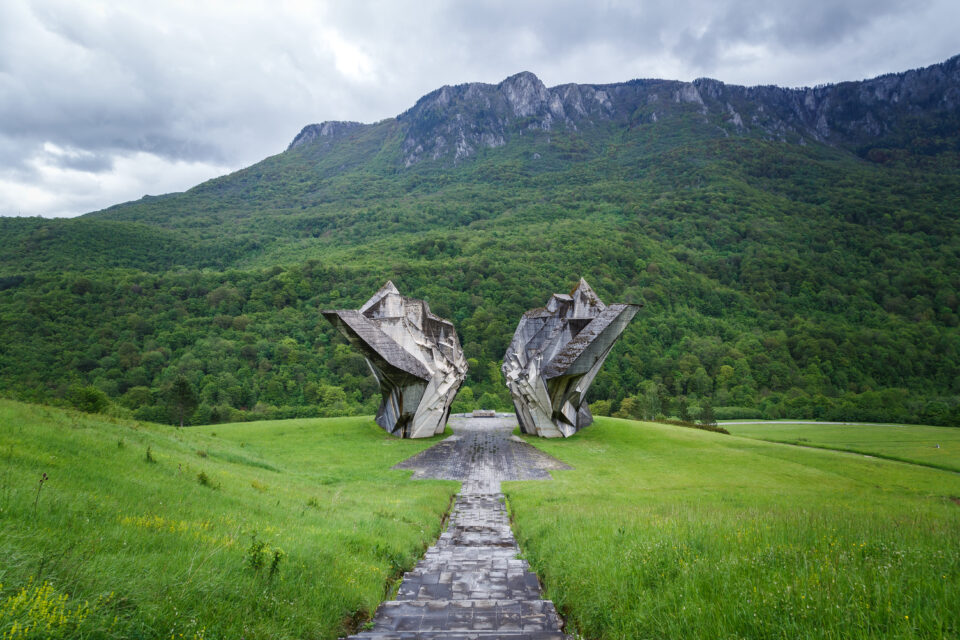
Many of these memorials were built at the sites of mass casualties of civilians and partisan fighters during the Second World War. The Memorial to the Revolution on Kozara near Prijedor is a symbol of resistance during the great German-Ustasha offensive in 1942, the “Battle of Sutjeska” Memorial on Tjentište commemorates one of the bloodiest battles of the National Liberation Struggle, while the Vraca Memorial Park in Sarajevo and the Partisan Cemetery in Mostar represent spaces of collective memory of anti-fascist resistance in the urban areas of Bosnia and Herzegovina.
However, decades after the fall of Yugoslavia and the wars of the 1990s in the Western Balkans, these spaces of memory find themselves between oblivion, politicization and physical decay. Many of them are devastated, left to vandalism or institutional negligence. A particularly striking example is the Partisan Cemetery in Mostar, which has been repeatedly targeted for destruction, despite its exceptional architectural and historical value.
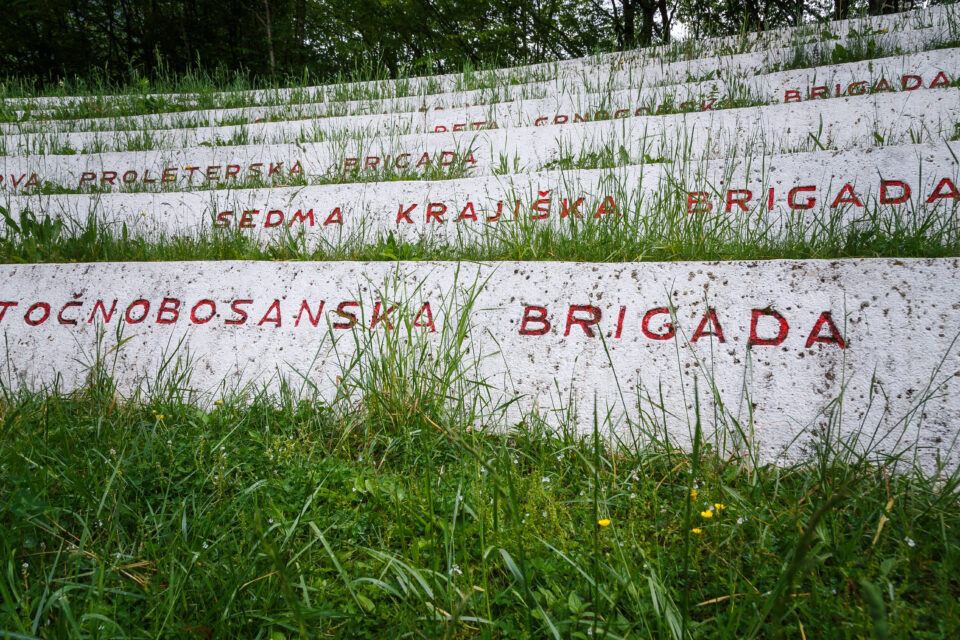
After the wars of the nineties, the attitude towards the anti-fascist heritage became extremely fragmented. In different parts of Bosnia and Herzegovina, memorials are often reinterpreted through new national narratives, while some memorials are completely neglected because they do not correspond to dominant identity politics. As a result, the memorial spaces lost their former function as common places of memory.
In a society where the past is still the subject of political struggles, the state of these memorials becomes a mirror of the relationship to history, but also to the future.
Timeless Memorials Devoid of Political and Ideological Characteristics
The preservation of anti-fascist memorials for Jasmin Imamović, a member of the House of Representatives of the Parliamentary Assembly of Bosnia and Herzegovina (Social Democratic Party (SDP)) is not only a local but a matter of European heritage. The symbolism of these spaces, as he emphasizes, is directly related to the values inherited by the European Union, which celebrates its day on May 9, the Day of Victory over Fascism. That is precisely why, as he added, anti-fascism represents a fundamental civilizational value that transcends national borders.
Victory Day over fascism in the European context represents not only the end of the Second World War, but also the symbolic beginning of the modern idea of European cooperation, harmony and peace. In this sense, as explained by Imamović, the preservation of anti-fascist memorials in Bosnia and Herzegovina can also be seen as part of a wider European culture of memory, which seeks to warn of the consequences of extremism, nationalism and totalitarian ideologies.
He attaches particular importance to the work of the famous architect Bogdan Bogdanović, former mayor of Belgrade, whose memorials, in his words, are “timeless and devoid of political and ideological characteristics.” He adds that his architecture does not speak the language of ideology, but of universal humanism, relying on deep cultural layers, including the symbolism of medieval stećak tombstones.
Imamović also emphasized the importance of specific localities, such as the Partisan Memorial Cemetery in Mostar, Garavice near Bihać, and Smrike near Novi Travnik, as key points not only of cultural, but also of social harmonization. As he says, Bosnia and Herzegovina is the supporting pillar of the Balkans; when there is harmony here, there is harmony in the region as well.
Organized by representative Imamović in the Parliamentary Assembly of Bosnia and Herzegovina (BiH), a conference entitled “The Unique and Universal Values of Bogdan Bogdanović’s Works in BiH and the Responsibility for Their Protection in the Country and the World” was held on May 11, 2026. Opening the conference, Imamović said that it was dedicated to the revitalization, ensuring permanent protection, and nomination of Bogdan Bogdanović’s works for inscription on the UNESCO World Heritage List.
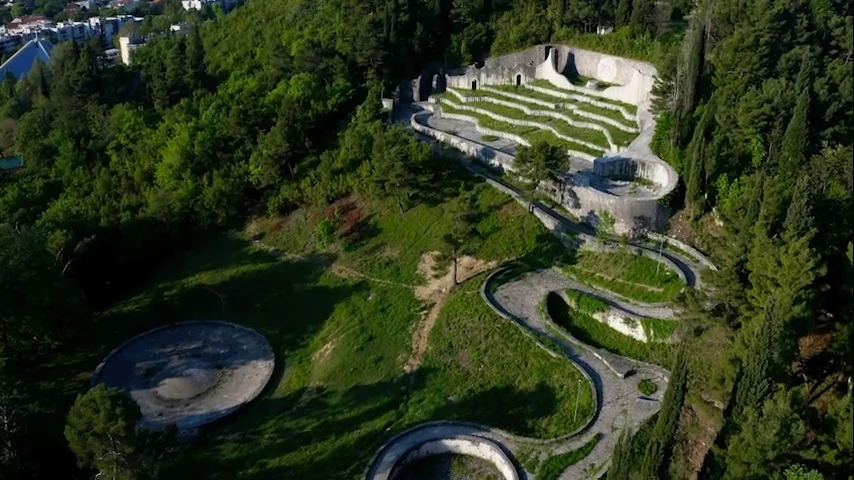
Imamović pointed out the fact that the initiative, which he submitted together with representative Saša Magazinović (SDP) to launch the procedure for the serial nomination of the works of architect Bogdan Bogdanović in BiH for inscription on the UNESCO World Heritage List, namely the Partisan Memorial Cemetery in Mostar, the Garavice Memorial Park in Bihać, and the Necropolis of the Victims of Fascism Smrike in Novi Travnik, with the recommendation to invite other countries of the former Yugoslavia in which works by this author are located to join as well, received an overwhelming majority in the House of Representatives of the Parliamentary Assembly of BiH.
“We are positively shocked. All parties voted in favor. Out of 42 deputies, only one was against,” said Imamović, assessing that such support shows the existence of a strong political and social will to preserve the anti-fascist heritage.
Memorial and Architectural Value of Garavice
The significance of such localities is also discussed by Dr. sc. Dino Dupanović, director of the Una-Sana Canton Museum. He explains that the Garavice Memorial Area represents one of the most important places of culture of memorialization in Bosnia and Herzegovina, both because of the historical context of mass crimes against the Serbian, Jewish and Roma population during the Second World War, and because of its exceptional memorial-architectural value.
He continues that the fact that the author of the complex is Bogdan Bogdanović further confirms its artistic and cultural importance, because Garavice is not only a place of suffering, but also one of the key works of modern memorial architecture in the region.
Although the memorial area has been declared a national monument of BiH, Dupanović warns that institutional care is still not at a satisfactory level. He adds that the formal protection is not accompanied by continuous investments in restoration and maintenance, which is why some parts of the complex are exposed to deterioration and devastation.
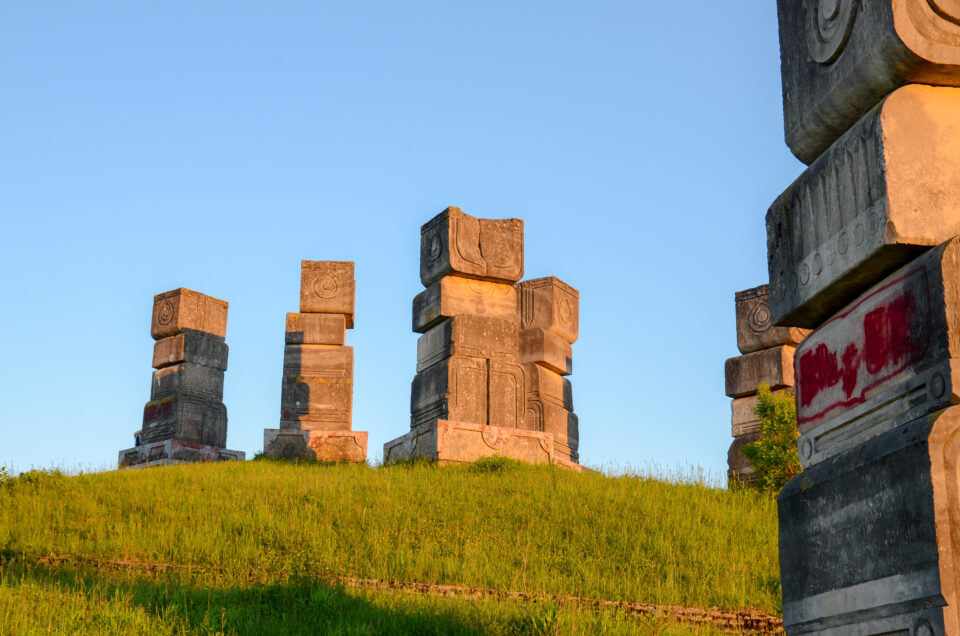
At the same time, he points out that Garavice have not been completely neglected — in the academic and cultural sense, there is continuous interest through scientific papers, museum exhibitions, and educational programs that address the culture of remembrance and the significance of this locality.
He emphasizes that Garavice do not represent an isolated case, but rather part of a broader problem concerning the relationship toward memorial heritage in Bosnia and Herzegovina, where a large number of monuments from the period of the anti-fascist struggle exist between formal protection and actual neglect, due to the lack of strategy, finances, and complex political relations toward the heritage of the socialist period.
Despite this, he considers especially important the fact that the complex survived the 1992–1995 war, which further increases the moral and institutional obligation for its protection and restoration. In his opinion, Garavice should occupy a far more important place in the cultural policies and educational strategies of BiH, as a space that simultaneously preserves historical memory and develops a culture of remembrance.
Between Memory and Revisionism
In his analysis of the contemporary attitude towards these monuments, Vjeran Pavlaković, professor of cultural studies at the University of Rijeka, points to the complex “afterlives” fate of anti-fascist memorials.
Pavlaković says that these spaces function simultaneously as places of memory and places of oblivion. Although many memorials were destroyed or transformed to fit the new, nationalized narratives in the post-Yugoslav states, they still have significance for local communities and organizations that nurture the anti-fascist tradition.
In some parts of the region, history has been erased and replaced by new interpretations, while in other areas the memorials have been reinterpreted through ethno-national frameworks. In Bosnia and Herzegovina, this contrast is particularly pronounced: while there is a strong culture of memory, many localities remain neglected or exposed to vandalism.
Such a situation leads to the creation of a complex “memoryscape”, in which the legacy of the Second World War is increasingly intertwined with narratives about the wars of the nineties and revisionist narratives.
Aesthetics, Globalization and Loss of Context
One of the key paradoxes is the fact that Yugoslav memorials are globally popular today due to their futuristic aesthetics, often completely separated from their historical context.
Pavlaković believes that this “aestheticization” has a double effect. On the one hand, it contributes to the preservation of memorials through international visibility and interest. On the other hand, there is a risk of depoliticization and loss of their original anti-fascist meaning.
“While I see the validity in some of the arguments that criticize the “globalization” of the monuments, I also think that bringing them into the international conversation helps preserve them”, said Pavlaković, warning of the need to preserve their original meaning: “They shouldn’t be completely cut off from their original purpose in creating revolutionary and antifascist memory.“
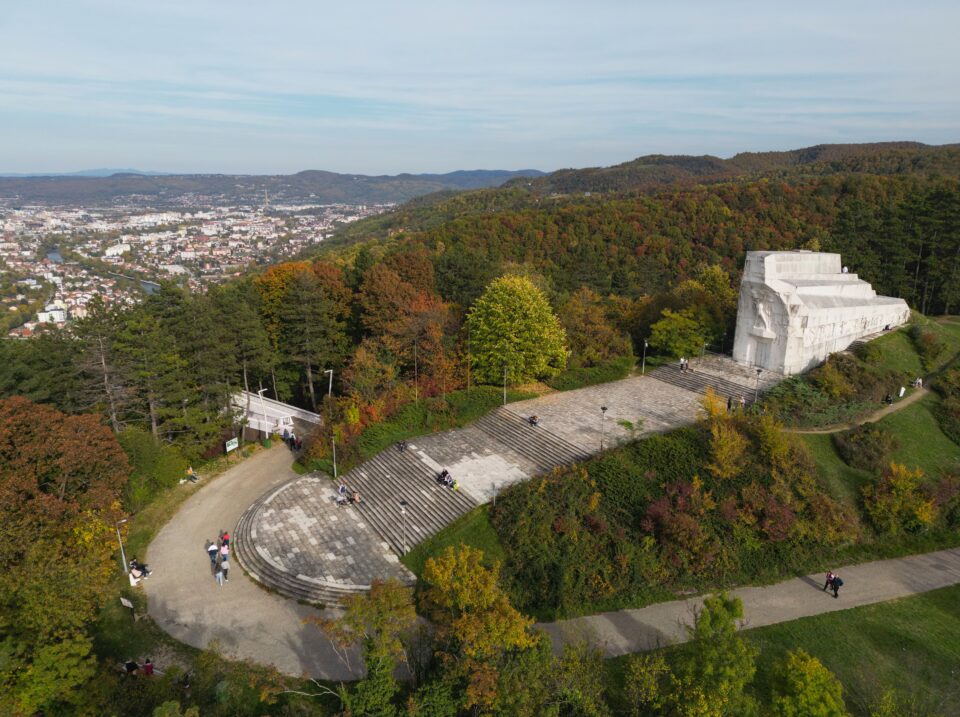
The transformation of the meaning of these memorials is not unusual, all memorials throughout history change the way they are interpreted, but, as Pavlaković says, it is crucial that along with the tourist and artistic potential, educational programs are also developed that preserve their historical essence.
Architecture as a Mirror of Society
Architect Senada Demirović, president of the organization Urban kuća IDEAA, additionally opens the question of the relationship of contemporary society to the anti-fascist heritage.
Speaking about the work of Bogdan Bogdanović, she points out that abstraction in his architecture enabled universality, space for personal interpretation and emotional experience. In this sense, he emphasizes: “Abstract modernism in anti-fascist monuments is actually an attempt to get out of the narrow framework of ideology and speak in a universal language. Abstraction does not impose a single meaning, it opens up space for personal interpretation, emotion and experience.”
However, as she adds, the modern observer often does not have the context that would allow him to understand these layers of meaning.
She places special focus on the Partisan Memorial Cemetery in Mostar, where the gap between the architectural idea and today’s social reality is clearly visible. Once conceived as a space of togetherness, today it reflects deep social divisions.
“The memorial is not just a relic of the past, it is a mirror of the present,” Demirović emphasized.
As an architect, she says that she sees an extremely sophisticated dialogue with the terrain, topography and light. “It is a space that is not only shaped, but has ‘grown’ from the landscape. As a citizen, I feel uneasy because a space that was conceived as a common space, today reflects divisions,” said Demirović.
According to her, our attitude towards the Partisan Memorial Cemetery in Mostar says more about us than about the time in which it was created.
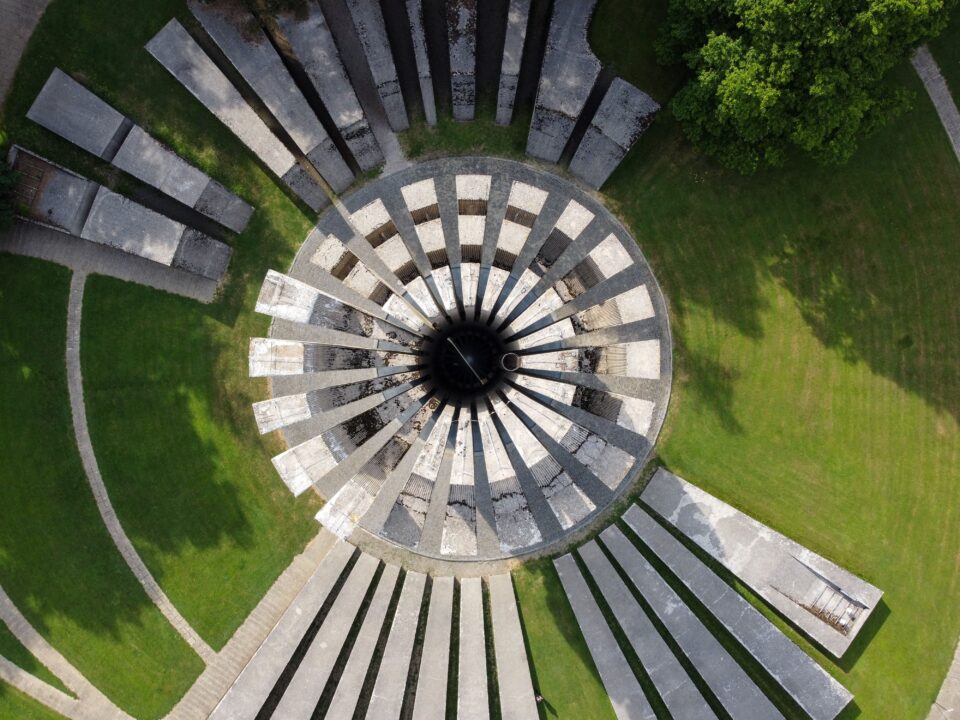
The partisan memorial cemetery in Mostar was designed as a “city of the dead”. Bogdanović designed it like a symbolic Mediterranean city with stone terraces, streets and passages that go down the hillside. Each stone slab represents an individual life, while the entire complex symbolizes collective memory and togetherness.
Responsibility and the future of memory
Both Imamović and Pavlaković agree that the preservation of these memorials requires a broader, regional and international approach. Anti-fascism, as a universal value, can represent the basis for cooperation and dialogue in the region.
The importance of education, critical thinking and transnational cooperation is especially emphasized, especially among young people who are exposed to contemporary challenges such as disinformation, revisionism and the influence of digital media.
In this context, digital initiatives, mapping, archiving and virtual reconstruction of monuments, can play an important role. However, as Pavlaković warns, digital documentation cannot be a substitute for physical restoration, but its complement.
On the other hand, Demirović concludes that architecture possesses a certain resilience despite political and social changes: “Architecture can survive physically, but the question is whether it can survive as meaning.” However, she adds: “Spaces remain, layers remain, and there is always the possibility of rereading them.” It is in this ability to reinterpret that she sees potential for the future – but also society’s responsibility to recognize it.
Memorials as a Test of Modern Society
When asked how to interpret the message of anti-fascist memorials in a society that is still dealing with the past, the Association of Anti-Fascists and Fighters of the National Liberation War (UABNOR) Mostar points out that their meaning is no longer unambiguous.
Sead Đulić, president of the Alliance of Anti-Fascists and Fighters of the National Liberation War in Bosnia and Herzegovina (SABNOR BiH), said that memroials such as the Kozara Memorial Complex and the Tjentište Valley of Heroes were created as symbols of collective resistance to fascism and the idea of unity that transcended ethnic and national divisions. “Their original message was universal, the fight against the evil that threatens humanity,” said Đulić.
Today, however, in a society marked by the consequences of the wars of the 1990s and fragmented narratives of the past, these monuments are taking on a more complex role. “They are no longer just symbols of victory, but also a test of our ability to acknowledge a multilayered history,” he emphasizes. Their message, he adds, can be interpreted as a call for the re-establishment of a common ethical minimum; values such as freedom, solidarity, and resistance to violence should not be the subject of political negotiations.
Speaking about the possibility of anti-fascist heritage becoming a common point of values, Đulić states that in its essence it has such potential. “It is not the ideology of one nation, but a civilizational stance against totalitarianism, racism, and exclusivity,” he said. Nevertheless, he warns that the problem arises when anti-fascism is reinterpreted through narrow national frameworks or reduced to an ideological relic. “It is necessary to free it (anti-fascism) from political instrumentalization and return it to its universal principles,” Đulić stated.
When it comes to memorial culture, Đulić emphasizes that it can play a key role in processes of reconciliation, but also in deepening divisions. “It can be a bridge, but also a wall,” he warns. According to him, an inclusive approach, which acknowledges all the victims and the complexity of the past, opens up space for empathy and building trust. In contrast, selective memory reinforces parallel truths and prevents dialogue.
A special problem, as he stated, is the state of numerous memorial sites, including the Partisan Memorial Cemetery in Mostar and the Vraca Memorial Park. Their neglect, he says, is not just a matter of lack of resources but a symptom of a deeper problem – the absence of consensus about what our past means. In such a context, devastated memorials become symbols of oblivion, but also of society’s discomfort with its own history.
Speaking about young people, Đulić points out that these monuments should not only be places of historical education, but also moral landmarks. “Their message is that freedom is never given, but chosen, and that ideologies of hatred always have concrete consequences,” he says, adding that they can serve as a warning as well as an inspiration.
Restoration and activation of memorial spaces, as Đulić believes, represent a key opportunity for their new social role. Through education, art and public dialogue, these spaces can become places of meeting and critical reflection. “Their greatest value today is not in giving ready-made answers, but in asking important questions,” said Đulić.
Anti-fascism as a Contemporary Political Principle
Igor Stojanović, Vice President of the Federation of Bosnia and Herzegovina, emphasizes that anti-fascism does not represent exclusively a historical category, but rather “a living, everyday principle” and the basic democratic framework of contemporary society.
“For me, anti-fascism is not a museum exhibit nor just a story from 1945. Today, when we have policies based on counting blood cells, anti-fascism is the only true answer,” said Stojanović, stressing that anti-fascism represents a barrier against nationalism and divisions in society.
According to him, the anti-fascist heritage is the foundation of the modern identity of Bosnia and Herzegovina and is directly connected to the principles of State Anti-Fascist Council for the National Liberation of Bosnia and Herzegovina (ZAVNOBiH). “If we renounce the principle of ‘both Serbian, and Croatian, and Muslim,’ we lose the state,” he warns, emphasizing that the contemporary struggle against fascism is carried out through institutions, schools, and public space.
Speaking about the state of memorial heritage, Stojanović singles out the Vraca Memorial Park in Sarajevo, evaluating it as a “mirror of social defeat”.
“For me, Vraca is a mirror of our defeat as a society. It’s not just a stone, it’s a memorial to people who gave their lives so that we could be free today,” said Stojanović.
The attitude towards such memorials, as he said, is often contradictory, because at the same time anti-fascism is declaratively inherited, while in practice they are allowed to decay. “When I see hateful graffiti on partisan cemeteries or in Vraca, it tells me that fascism has not died, it has only changed its clothes,” says Stojanović.
As key steps in protecting the anti-fascist heritage, he points out the need for a systemic approach by the state, the ban on glorifying collaborationist policies in public space, and the reform of the education system.
“There cannot be a street named after anyone who collaborated with fascists. As long as we have such street names, our story about anti-fascism is hypocritical,” Stojanović stated.
He adds that the care for memorials such as the Partisan Memorial Cemetery in Mostar or the complex at Vraca must be a state obligation, and not left to local politics. “That must be a strategic interest of the state,” Stojanović emphasized, highlighting that anti-fascism must remain a common framework for all peoples in Bosnia and Herzegovina. “Bosnia will be as much of a country as there is anti-fascism within it. Without that foundation, we are just three people constantly in conflict. I do not accept that,” Stojanović asserted.
Between memory and oblivion, art and politics, the local and the global, these memorials continue to exist as silent but powerful testimonies of a time and an idea. Their future, however, does not depend solely on their material restoration, but on society’s willingness to once again recognize the values they represent – solidarity, resistance, and togetherness, because the way we relate to these places speaks not only about history, but about the kind of society we want to become.
This article was created within the project “Generation Memory”, which is carried out by the Post-Conflict Research Center (PCRC), with the aim of developing inclusive, local peace-building practices and a culture of memory that encourage work on understanding, empathy and critical reflection among young people. The project is financed by UK International Development and is implemented in partnership with the British Council.