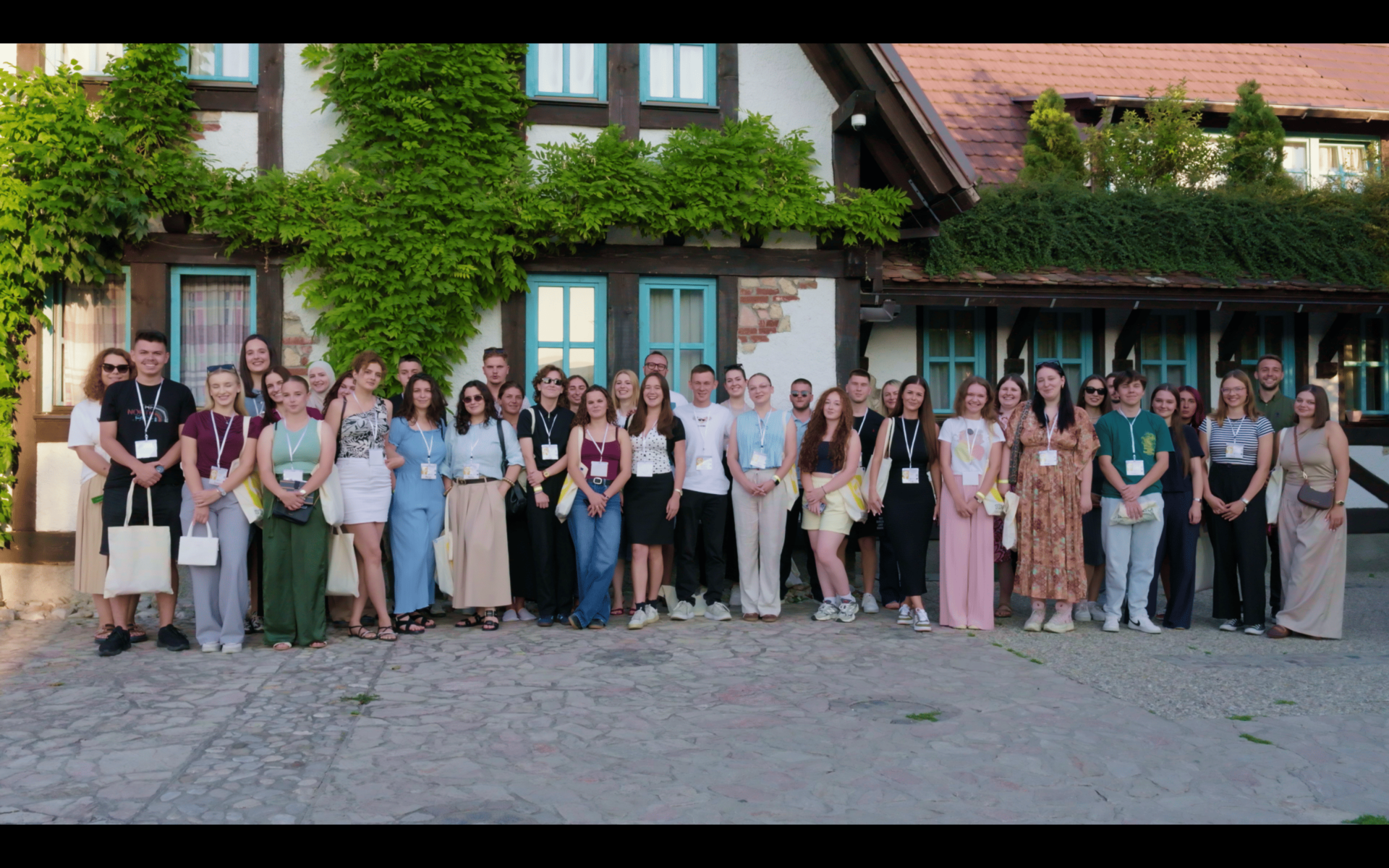
The fourth Youth Academy “State of Peace,” organized by the European Union in Bosnia and Herzegovina in cooperation with the Post-Conflict Research Center, opened this weekend in Vitez, bringing together over 45 young people from BiH, Croatia, Serbia, and Montenegro for a two-week peacebuilding program.
Following opening remarks and icebreaker activities, participants embarked on a program that will take them through numerous towns in Bosnia and Herzegovina, paying tribute at sites of memory and reflecting on what a more peaceful and stable future might look like for the Western Balkans.
The Academy also offers participants a chance to build friendships with peers from neighboring countries, while developing understanding, empathy, and awareness of the importance of reconciliation for the region’s future.
Critical Thinking as a Foundation for Reconciliation
Critical thinking, as our participants heard, requires both objectivity and a genuine inquiry into truth. “Objectivity means freeing ourselves from a subjective standpoint, viewing the subject from multiple perspectives, and allowing different opinions to be heard,” said Đuldina Kurtović, a professor from Sarajevo, who addressed participants during the opening days.
Kurtović emphasized that the search for truth means freeing oneself from prejudice and stereotypes – particularly those inherited from figures of authority. This, she noted, is especially relevant when interpreting the past in post-conflict societies.
Furthermore, she stressed the central role of education in shaping how younger generations relate to the past. “Where education systems are dominated by the idea that ‘only our truth is true,’ we cannot expect future generations to live democratically, to practice tolerance, or to focus on progress and creativity,” Kurtović said, adding that education policy must uphold objectivity, encourage critical inquiry, support diversity, and remain firmly committed to human rights.

Sofija Todorović, Director of the Youth Initiative for Human Rights Serbia and one of the upcoming lecturers of the Academy, echoed this message, describing programs like the Academy as “small nurseries of peace” – especially vital given the limited investment regional governments make in fostering understanding and exchange among young people. She pointed to lingering political tensions, entrenched prejudice, and unresolved war trauma within families as ongoing obstacles.
“The role of young people is just as important in addressing the difficult past as it is in any other issue, because the future belongs to them,” Todorović said. “It isn’t fair to place the full weight of the past on the shoulders of young people, who bear almost no responsibility for it. But the future is theirs to shape – and for that, they need support and encouragement.”
In Their Own Words
For many participants, the Academy is both a personal and collective journey. Jovana from Serbia who came across the program by chance, said she was especially moved early on by visits to sites of as well as personal testimonies shared between fellow participants. “I believe fear is not an option,” she said. “If we let fear guide us, we won’t experience much in life – it’s important not to let it hold us back from taking part in programs like this one.”
Nađa from Montenegro recalled a personal experience that shaped her interest in the topic: as a teenager, her first relationship was with someone of a different faith, and she faced pressure and prejudice from those around her. That experience, she said, motivated her to get involved in reconciliation work. Her message to young people who hesitate to take part: “Step outside your comfort zone and question the stereotypes you might hold. Try to imagine how you would feel if your own family had lived through what the victims of war experienced.”
Manuel from Croatia, returning for a second year after attending the Academy in 2023, said his continued involvement stems from a deeper interest in dealing with the past and transitional justice, including work related to the legacy of the Second World War. A film screening from last year’s Academy, he said, reminded him that before facing the past objectively, “we first need to allow ourselves to experience it emotionally – because empathy is the foundation of real understanding.” His message to peers across the region is: to be voices for peace amid rising nationalism, and to see, above all, a fellow human being in others.
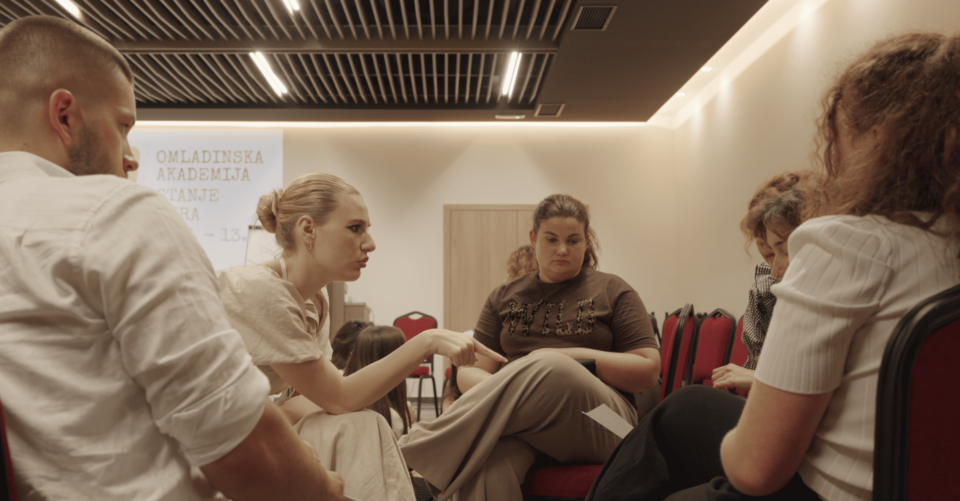
Ivan from Bosnia and Herzegovina, said he came to the Academy hoping to meet open-minded young people who believe a better future for Bosnia and Herzegovina should be built at home, not sought abroad. A lecture on historical events in the area of Vitez left a strong impression on him – not because it carried resentment, but because speakers who had lived through difficult experiences expressed, instead, a sincere hope that such tragedies never happen again. To peers who may feel hesitant or hold prejudices, his advice is simple: “That ice will have to break sooner or later – better to take the first step consciously than to be forced into it by circumstance.”
Over the coming two weeks, the “State of Peace” Academy will take participants to Sarajevo, East Sarajevo, Tuzla, Brčko, Bijeljina, Travnik, and Vitez. Along the way, they will meet with representatives of international and non-governmental organizations, visit museums, memorials, and sites of remembrance, and engage with experts on dealing with the past from the region.