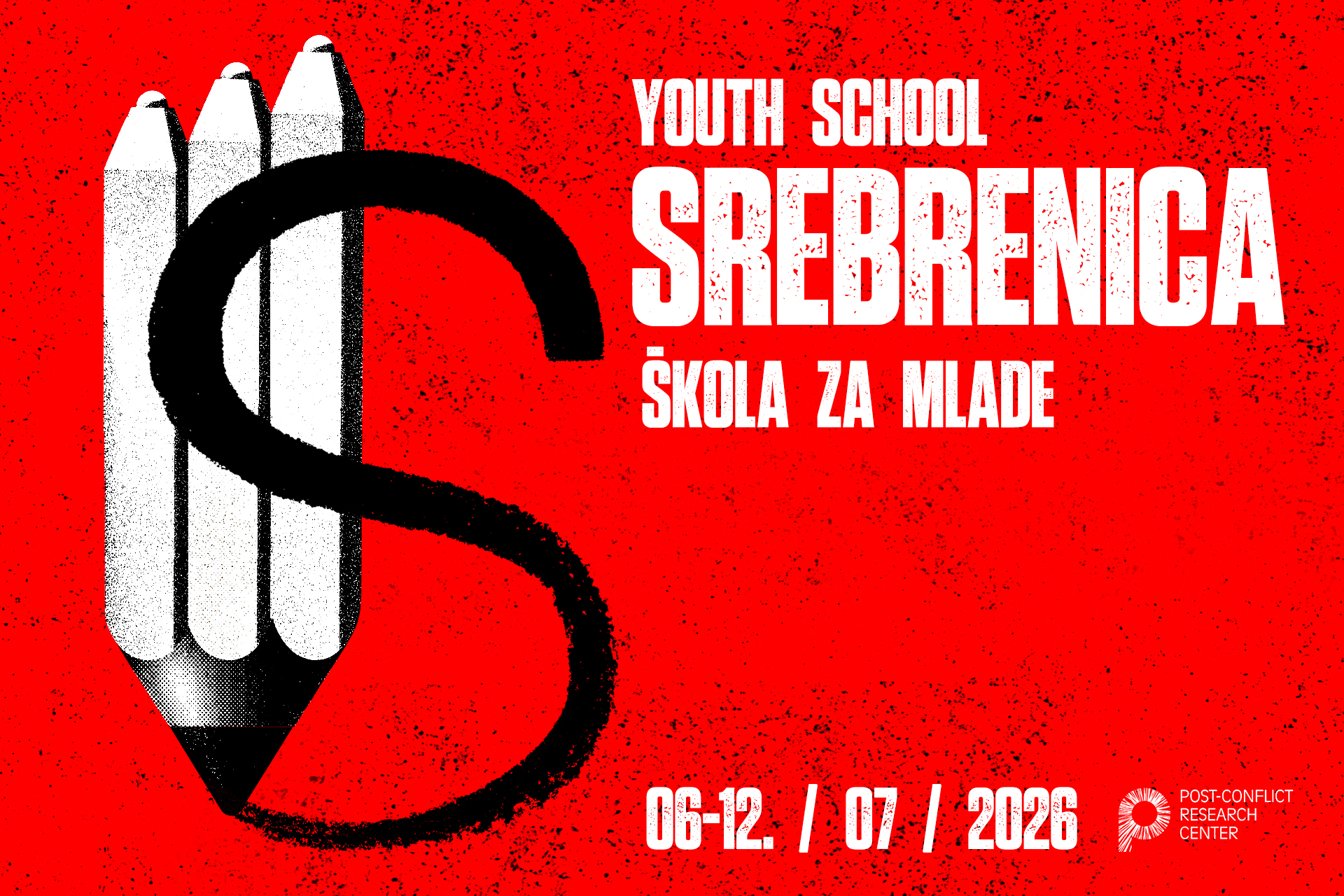
On the occasion of the 31st anniversary of the Srebrenica genocide, the Post-Conflict Research Center is proud to announce the 7th edition of the Srebrenica Youth School.
This week-long educational program will bring together youth from Bosnia and Herzegovina, the Western Balkans, and around the world, offering a unique opportunity to engage with the themes of transitional justice, human rights, genocide prevention, and memorialization.
What to Expect:
- Locations: Sarajevo, Tuzla & Srebrenica
- Dates: 6 – 12 July 2026
- Lectures by leading experts in the fields of transitional justice, peacebuilding, and memory politics.
- Field visits to Tuzla and Srebrenica, as well as to international and local organizations working on the search for missing persons, social cohesion, and dealing with the past.
- Attendance at the commemoration and funeral prayer on July 11 at the Srebrenica Memorial Center.
- Insight into the lives of people after the genocide through meetings with survivors and local communities.
Costs & Eligibility:
- Eligibility: Open to youth aged 18–30 with a working knowledge of the English language
- Fully funded for participants from Bosnia and Herzegovina and the Western Balkans (Serbia, Croatia, Montenegro, North Macedonia, Kosovo, Albania).
- International participants are responsible for their own travel and a 300 EUR participation fee, which covers local transportation, meals, and accommodation.
- Full attendance is required for the duration of the program. Applications will be reviewed on a first-come, first-served basis until the maximum number of participants is reached.
Application Deadline: June 12, 2026 (23.59 hrs)
Submit the completed application form to: [email protected].
Find out more about last year’s program in the video below.