From poems that arise from personal struggles to verses that question patriarchy, religion, society, and coming of age, young writers from Bosnia and Herzegovina (BiH) show that poetry is not a relic of the past, but a space where important battles are still fought.
There are things that everyday language struggles to express: a fear we don’t want to admit, an injustice we have almost grown accustomed to, a love we cannot explain, a memory that refuses to fade, or a question to which we have no answer. Sometimes, we only recognize them when someone else turns them into verse.
Perhaps this is precisely why poetry, despite changes in the way we read and consume content, still finds its way to readers. It does not have to offer a solution, explain everything that troubles us, or convince us that tomorrow will be better. It is enough for it to give something a name, make us pause, or allow us to recognize our own experience in someone else’s words.
The poetry of young writers in BiH does not speak with a single voice. Family memories, mental health, women’s experiences, religious faith, love, social injustice, and questions of belonging all find their place within it. Its authors do not necessarily write about the same things or in the same way, but they are united by the need to transform their own experiences into something that transcends them.
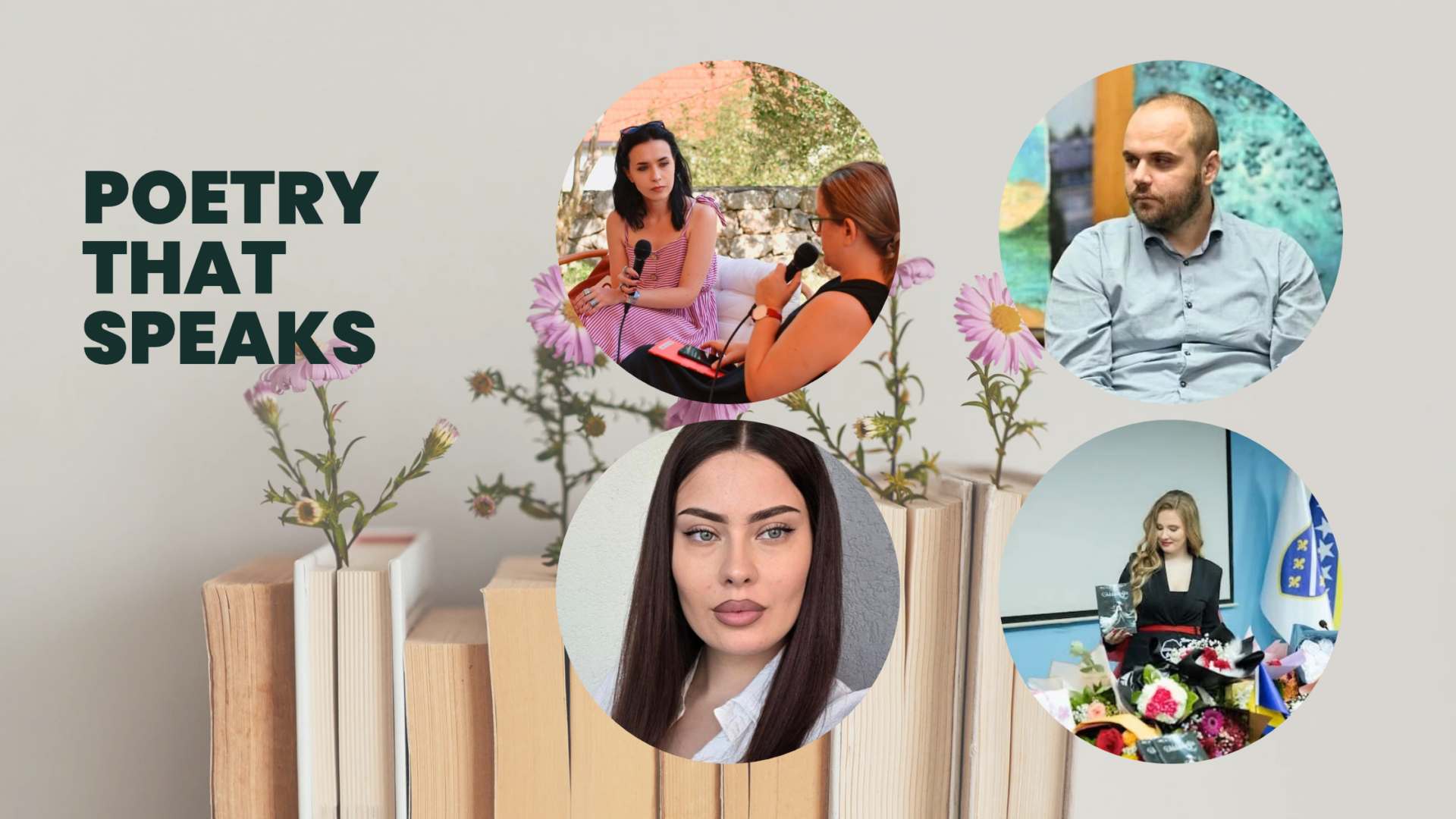
This is evidenced by conversations with four poets of different styles and experiences: Edin Rikal, an award-winning poet who connects intimate themes with broader social issues; Ermina Ribić, author of the collection “Eyes of Rebellion;” Lana Kamberović, who already published her first two collections as a teenager; and Elma Škaljić, who is preparing to publish her first book of poetry after carrying the words of Abdulah Sidran as personal encouragement for almost ten years.
Their stories show the diverse motives and inspirations behind poetry. Some poets write to survive their own silence, some to speak on behalf of those whose voices go unheard, and some simply to preserve the traces of their upbringing.
Personal Experience as Shared Story
For Edin Rikalo, poetry begins in personal experience, but it does not end there. The author of the collections Buke i tišine (Noises and Silences) and Pjesme uz čaj od valerijane (Poems with Valerian Tea)—who holds a master’s degree in comparative literature and information sciences—describes his writing as confessional and as a form of “stream-of-consciousness” poetry. His poems often emerge spontaneously, born from a specific moment, and subsequently find their way to readers who recognize their own fears, memories, and experiences within them.
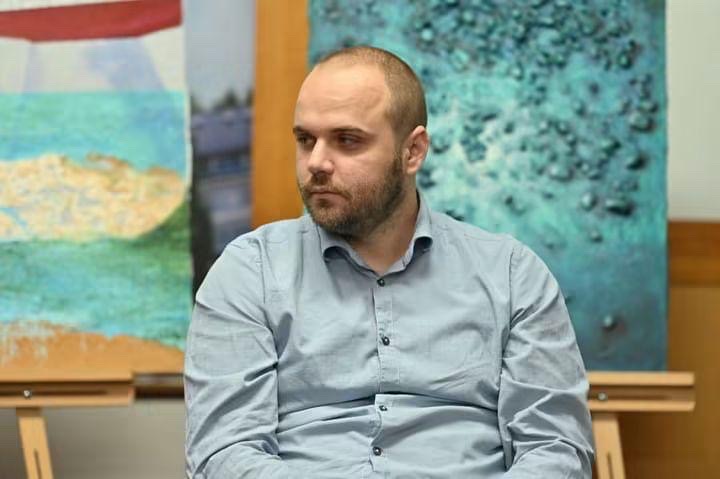
“When such poetry, which is extremely personal, reaches the reader, it should nevertheless contain something universal that allows the reader to better understand themselves and the surrounding world,” explains Ricalo.
This universality is not found by giving up concrete experience. On the contrary, it opens up space for a wider understanding through it. Writing about the death of his grandmother, he leaves the possibility for readers to recognize their own losses in his lines. When he describes the moment in which the father takes the poetic subject to a psychiatric examination, he also opens up the question of society’s attitude towards mental health.
His collection “Valerian Tea Poems” specifically deals with experiences of depression, anxiety, fear, isolation, and panic attacks. Rikalo believes that it is important to speak openly about these experiences precisely because they are often accompanied by stigma.
“For me, as a poet, that is not the case. I would even say it’s a duty—through my own experience—to show, depict, and offer encouragement to all those struggling with such illness,” states Rikalo.
He mentions that readers have reached out to him, expressing gratitude that he writes about these topics without concealment or embellishment. In their reactions, he sees the potential for literature to achieve something not always possible through public discourse: to show someone who feels isolated that their experience is not unknown to others.
It is also significant that Rikalo does not approach difficult subjects solely with a serious tone. Humor is an integral part of his poetics, as well as a focus of his academic interest. In his master’s thesis, he explored the role of humor in poetry about the Siege of Sarajevo—specifically, how laughter can serve as a means to break free from fear and psychological pressure.
“Yes, sometimes it is impossible to describe such states and events using a serious tone; and at other times, it is simply better, more effective—and, if I may say so, more beautiful,” he says.
One example he cites is particularly poignant: in one of his poems, a mother who has lost five sons is asked how she would punish their killers. Her response is that she would give them a wall clock. This image contains no explicit description of a punishment; instead, there is the silence of a house, the passage of time, and the ticking of the clock—a sound that becomes a reminder of absence. In this way, Rikalo demonstrates that humor, irony, and seemingly simple imagery do not diminish the gravity of a tragedy. Sometimes, what remains unsaid is far more powerful than a direct description.
His poetry extends beyond personal and familial experience. Across his collections and manuscripts, he explores themes such as war, genocide, cultural heritage, stećci (medieval tombstones), contemporary knowledge, and social contradictions. In his more recent work, as he explains, he focuses increasingly on the current period of transition in BiH.
This also reflects his perspective on the position of a poet in his own country. Paradoxically, he views the hardships of life and creative work in BiH as a privilege that enables him to raise questions that might otherwise remain invisible under different circumstances.
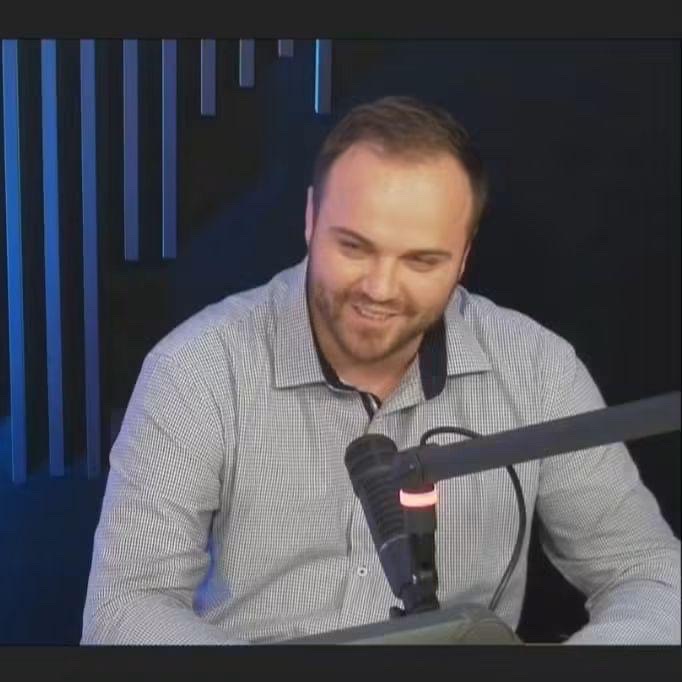
However, this does not mean he overlooks the challenges local authors face. Rikalo believes that publishing houses in BiH should implement specific programs for young and emerging writers. He cites the Serbian publishing house Besani as an example—a publisher whose competition saw his collections Od kamenja do stakla (From Stone to Glass) and Zvao sam se Edin (My Name Was Edin) receive awards. He also had an earlier opportunity to publish his work, when his first collection was selected through a competition organized by the Foundation for Publishing.
While recognition is important to him, he no longer views it as the primary benchmark for his work. He is more interested in the opportunity to write, publish, and explore topics he deems significant.
His perspective on social media also diverges from the common warnings that such platforms inevitably impoverish literature. He notes that his first collection was, in fact, shaped from poems he had previously shared on Facebook. He views social media as a useful starting point—a space where an author can present their work and gauge audience reactions without having to cater to them.
Rikalo’s example demonstrates that contemporary poetry need not choose between the intimate and the socially engaged, the serious and the humorous, or the printed book and the digital realm. It can navigate across all these domains, provided it does not lose its own distinct voice.
Rebellion Begins When Women Speak Out
While Edin transforms personal experience into a space for dialogue about mental health and society, Ermina Ribić uses poetry to address experiences that are frequently present in the everyday lives of women yet rarely recognized as part of a broader social issue.
Born in Sarajevo in 1996, she holds a master’s degree in Comparative Literature from the Faculty of Philosophy at the University of Sarajevo. In 2024, she received the Mak Dizdar Award for her feminist poetry manuscript, Oči pobune (Eyes of Rebellion). Her work has appeared in various literary journals and online portals, and her creative output bridges the gap between literature and feminist theory and criticism.
When discussing her inspiration, Ribić does not necessarily draw from her own personal experience. Sometimes, all it takes is a woman she observes in daily life, a fleeting encounter, or a detail that might seem insignificant to others.
“Sometimes it’s enough for me to see a woman, a girl in a gloomy everyday life and get inspiration from that encounter. Even though we are complete strangers to each other, I try to extract something completely feminine from the smallest details,” she explains.
In her poetry, the female experience is not only a topic but also a way of observing the world. Ribić openly says that she considers her poetry feminist, because her private experience and academic education are constantly intertwined in her writing.
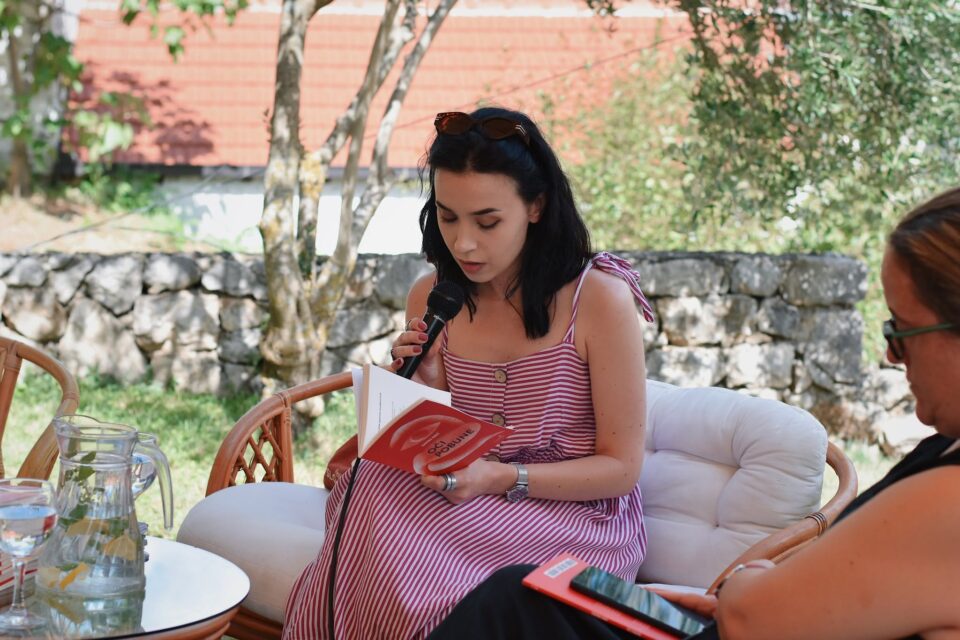
For her, rebellion is not necessarily a dramatic act or a grand political gesture. It begins by reflecting on the position of women, their bodies, imposed roles, and experiences that society often tries to make invisible.
“I think that even thinking about women and femininity today is a kind of rebellion, let alone writing about how physical and sometimes uncomfortable it is to be a woman.”
This is why the title Eyes of Rebellion goes beyond the meaning of a single poem. It becomes a common framework for texts that observe women in a society that simultaneously imposes expectations on them and limits their space to reject them.
Ribić does not think that it is enough just to point out the injustice. It is important, she says, that women recognize the similarities of their experiences, talk about them, and support each other. She also sees such association as a form of rebellion.
Her criticism does not stop at gender roles. She perceives everyday life in BiH as an inexhaustible source of poetic material, especially when it comes to patriarchy and social contradictions. Regarding her own poetry, she says that some readers find it difficult and harsh, which, in her view, is understandable given the society from which she draws inspiration.
Notably, she does not see literature as a space in which the author is obliged to offer the reader comfort. A poem can be unpleasant, critical, and demanding. Its value should not only be measured by how much the reader likes it, but also by how much it makes them reconsider previously accepted norms.
She extends this attitude to the position of young authors in Bosnia and Herzegovina.
“The situation of young poets is such that opportunities are not equal, nor are there enough chances,” says Ribić, pointing to the limited visibility of new authors in bookstores and the literary scene.
She believes that young people support each other, but that older generations and existing literary circles are less open to newcomers. Her criticism is not that every young author deserves publication, but that more opportunities are needed for different voices to be heard.
This is particularly important in an environment where the success of a young author is often seen as an exception rather than the result of a system that continuously nurtures new generations. Ribić is also skeptical that social media has, by itself, solved the problem of access to literature. Short formats, she believes, struggle to convey the complexity of poetry, especially when readers are expected to understand a poem in a matter of seconds.
Still, she does not believe that young people necessarily read less. In bookstores, she notices young people reaching for both classic and genre literature, and she also mentions book clubs where people gather to discuss the works they have read. Reliable assessments of reading habits, she adds, require research and statistics.
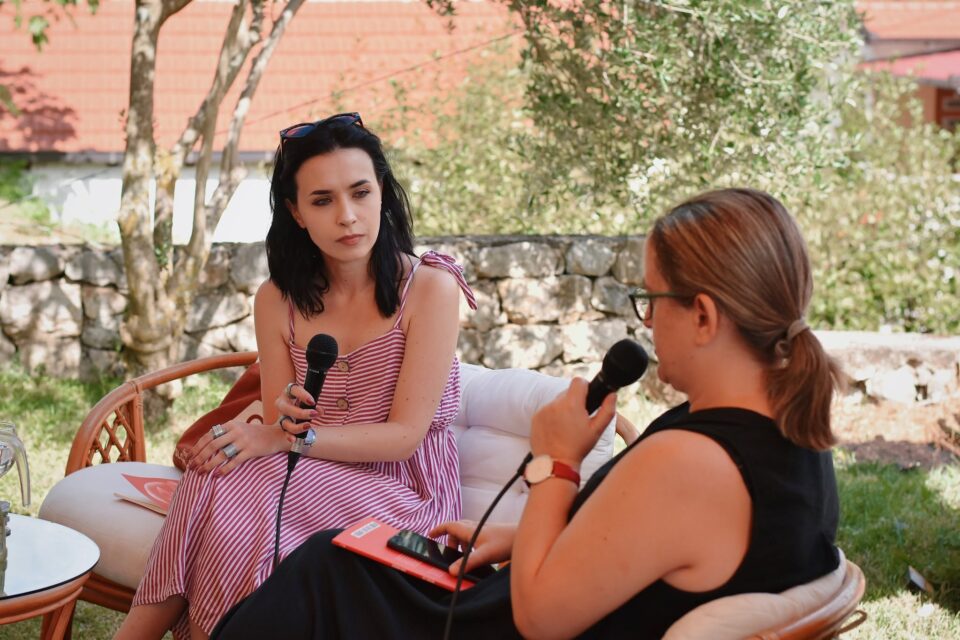
She also sees a problem with stereotypes of poetry that limit it to love verses, sentimentality, and emotional description. She would like readers to discover its complexity and understand that a poem’s life does not end with the first reading.
“Poetry is not always lovey, sentimental, and descriptive,” she reminds.
This is also one reason why her work is interesting in the context of contemporary literature: poetry here is not an escape from society, but a way to look at it from a different angle.
Ribić recently completed a new collection, which she sent to a competition. In it, she plays with traditional and modern fairy tales, re-examining famous stories like Little Red Riding Hood, Snow White, and Aladdin through gender roles and social order. If “Eyes of Rebellion” represents her authorial identity so far, the new manuscript hints at her continuing inquiry into how stories shape our expectations of women, men, and society.
An Author Finding Her Own Voice
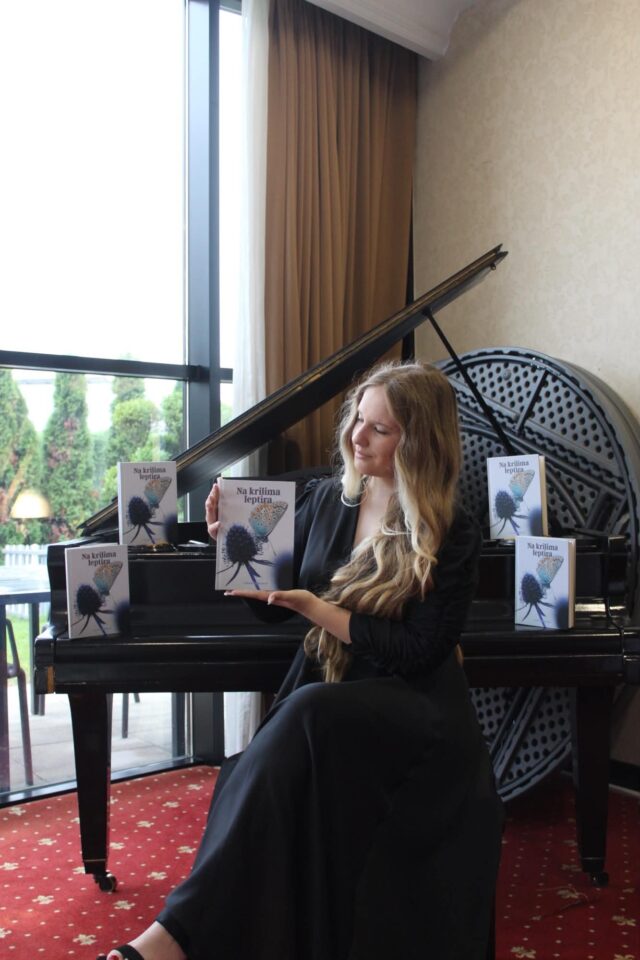
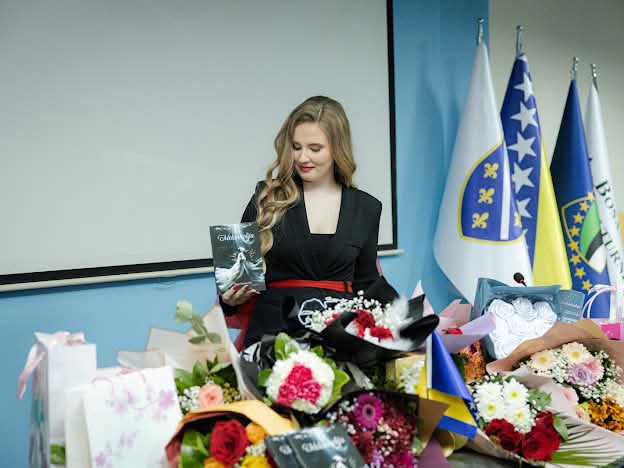
Lana was born in 2006 in Tuzla, and she started writing her first poems in primary school. Her first collection On the wings of a butterfly was published in 2023, and she received the Nafa Bukvić award for her literary debut. The second collection, Melancholia, was presented in 2025 in the Bosnian Cultural Center of Tuzla Canton. Her poem Tomorrow was shortlisted for the event Poetry of the Year in Bosnia and Herzegovina – 2024.
The two collections record different stages of growing up.
“My love for writing has existed since early childhood, so the collection On the wings of butterflies is a record of my growing up and development as a writer,” says Kamberović.
In the first collection, she preserved her first verses, wanting to leave a written trace of her creative beginnings. In the second, as she explains, she found a different way of expressing emotions and became more open to her own thoughts and experiences. According to her, Melancholia is much more than a continuation of the journey started with the first book: “It’s a reflection of me.”
Kamberović notes that she wrote about serious topics when she was still just a girl. She recalls the poem Sutra kad me ne bude, which she wrote before her sixteenth birthday.
“Imagine a girl, a girl of not quite sixteen, who writes a poem called Tomorrow when I’m not here, when at that age, you might be expected to write about butterflies, flowers, and other carefree themes,” she says.
An important part of her story is hidden in this difference between expectations and actual experience. Youth is often seen as a time of carelessness, as if serious emotions and questions belong to a later stage of life. Kamberović shows that young people may need to write about difficult feelings long before they are expected to even understand them.
However, her poetry is not limited to personal experiences. Love, she says, remains the main driver of her writing, but she also finds inspiration in other people’s emotions.
“I think a poem doesn’t always have to come from something we’ve experienced personally for the emotion in it to be real,” she explains.
This is perhaps the most interesting part of her understanding of writing. A poem can be autobiographical, but it can also be imagined, built out of empathy or out of a desire to explore a different course of events. What makes it convincing is not necessarily the fact that everything really happened, but the truth of the emotion it conveys.
In addition to writing, Kamberović is involved in acting, music, and drawing, and she doesn’t see studies and art as opposing worlds.
“For me, art is a ticket to escape reality, especially when everything in this ‘real’ world is too much for me,” she says.
Writing, she explains, nourishes her soul and recharges her batteries, much like other artistic pursuits. Her studies provide her with routine and structure, while art grants her the freedom to express herself without constraints. Her versatility, therefore, is not merely a collection of diverse interests, but a way to strike a balance between daily obligations and an inner need to create.
When discussing young people and reading, Kamberović rejects the simplistic claim that her generation no longer reads. She knows young people who read, discuss books, and recommend new titles to one another. At the same time, she notes that poetry is frequently encountered in the form of short quotes and verses on social media.
She believes that platforms like Instagram and TikTok have transformed how young people access literature, yet they should not automatically be viewed as obstacles to reading. Instead, they can serve as a gateway to a book, an author, or a poem that one might otherwise struggle to discover.
This openness shows in the way she talks about her own success. She perceives awards, publications, and promotions as confirmation that her work finds its way to people, but also as a certain responsibility to continue creating.
When she remembers the girl who started writing her first poems, the most important thing for her today is that she didn’t give up despite her fear and insecurity: “I would like to tell her that I am very proud of her because she dared to write and didn’t let anyone stand in her way.”
However, she doesn’t want readers to know only Lana who exists between the covers of her books. She would also like them to see a person who can talk about literature for hours, looks for a new book for the shelf, makes lists of titles she wants to read, and looks forward to ordinary moments.
This detail reminds us that the author is not just a collection of her poems. Behind the literary identity remains a young person who is still discovering herself, her interests, and her place in the world.
A Book Cover a Decade in the Making
For Elma Škaljić, the path to her first poetry collection began with a sentence she heard almost ten years ago. At the time, she was a student at the Third Gymnasium, organizing a poetry evening featuring Abdulah Sidran. She read him her poem “Darkness,” and he told her, “Verses like these should have a cover of their own.”
Škaljić didn’t take this praise as permission to immediately declare herself a poet. On the contrary, she continued writing for years without rushing to turn her poems into a book. “Perhaps I needed that time to understand that publishing is not the same as writing. A poem can emerge from an impulse; a book requires responsibility—to language, to the reader, and ultimately to the name you put on the cover,” she explains.
Her first collection is therefore more than a compilation of texts written at different times. Over time, the poems began to speak to one another, connect, and acquire new meanings. Only when she recognized that sense of wholeness did she feel the time had come to bring them together.
“And perhaps this book is, among other things, my very belated response to Sidran: here, the poems have finally got their cover.”
In her relationship with Sidran, the idea of simplicity is particularly important. She does not mean simplifying thought, but rather precision of language — the ability to approach big questions without unnecessary embellishment. “Above all, I learned from Sidran how linguistically simple great literature can be,” Škaljić notes.
Her writing nevertheless has its own sensibility, shaped by spirituality and Sufi symbolism. She sees her connection with Sidran not as a need to follow his style, but as an inner obligation to take seriously the possibility that someone recognized in her verses.
Škaljić approaches inspiration not primarily through an event, but through what the event leaves behind in a person. Sometimes it’s a sentence that someone said and forgot, and she carries it for months. Sometimes a facial expression, injustice, love, shame before God, or a question about man’s responsibility.
Titles such as Mazlum, The Third World Disaster, Prayer to the Lord and Shame before the Lord appear in her collection. They already hint that her poetic space does not stop at intimate relationships, but includes faith, human weakness, injustice, and transience.
“For me, poetry probably begins exactly where ordinary speech becomes insufficient,” she explains.

For her, a poem holds the privilege of expressing something while still preserving a sense of mystery. It is not required to fully explain every emotion, nor to offer the reader a single, definitive interpretation for every line. She considers this very space—between what is spoken and what remains unsaid—to be one of the most compelling dimensions of language.
It is also noteworthy that Škaljić does not view scientific and artistic pursuits as opposites. Her professional and academic interests encompass management, technology, research, and artificial intelligence; she sees an analytical mindset as a complement to poetry, rather than an obstacle.
“In science, I attempt to reduce complexity to a model. In poetry, I seek to demonstrate how, ultimately, any model of a human being is insufficient.”
While scientific work demands definitions, hypotheses, methodology, and the substantiation of conclusions, poetry offers her space for questions that need not have a definitive answer.
It is particularly interesting that her professional interest in technology has not distanced her from humanistic concerns. On the contrary, she believes it has made those things that are difficult to measure—conscience, longing, faith, fear, love, and meaning—seem even more significant.
“We can build a system that processes billions of parameters, yet still fail to answer a very ancient human question: what does it mean to be a good person?”
This is perhaps the clearest description of the space where her two worlds converge.
Regarding the situation faced by young authors, Škaljić argues that the problem lies not in a lack of young people who write, but in a lack of spaces where their writing can mature. While social media has made publishing easier, she does not equate visibility with literary merit.
In her view, young authors need editors, literary journals, criticism, opportunities to meet established writers, and an education system that does not reduce literature to memorizing biographies and literary movements.
“Young people have not lost their need for poetry. They just often no longer call it by that name,” she says.
This perspective does not mean that poetry should be adapted so that every poem is immediately understandable and easy to consume. On the contrary, Škaljić believes that doing so would underestimate young readers. Poetry should be brought closer to them through experiences they recognize: love, loneliness, identity, fear, injustice, and the search for meaning.
Her first collection is a step toward readers, but also a moment in which she will leave her own words open to interpretations she cannot control.
“I would be happy if someone found even a single poem they could return to when, one day, they lacked the words to express what they feel,” she says.
She does not want to predetermine what the reader should take away with them after the last page. However, she would like to close the book a little more self-aware.
“Not necessarily sadder. Not necessarily happier. Just a little more self-aware.”
Four Voices, One Question: Does Poetry Still Have Space?
Taken together, these perspectives make clear that contemporary poetry in BiH is not confined to a single generation, a single theme, or a single style.
Edin Rikalo writes about personal struggles, mental health, historical memory, and social contradictions, employing humor to address what is difficult to articulate. Through the lens of the female experience, Ermina Ribić interrogates social norms and unequal opportunities. Across two collections, Lana Kamberović chronicles her own maturation, demonstrating that profound emotions do not wait for adulthood. Elma Škaljić—nearly a decade after Sidran’s remarks—is in the process of publishing her first collection, seeking to preserve the complexity of the human being as they navigate the interplay between reason, faith, and emotion.
Their differences demonstrate that it is not possible to reduce poetry to a few well-known motifs or to the stereotype that poets write only about love, sadness, and unrequited feelings.
At the same time, these conversations raise the issue of support for literary creativity. Rikalo talks about the need for publishing programs that would make it easier for young authors to get published. Ribić points to unequal opportunities and closed literary circles. Škaljić is looking for more serious editorial and educational spaces, while Kamberović shows with her experience how much support, recognition, and the possibility of presenting her own work can mean to an author who is just beginning to forge their own path.
In this context, social media is neither a complete solution nor necessarily a threat. It allows poetry to reach audiences quickly, but cannot by itself replace literary criticism, editing, reading, and discussion. Visibility can be a start, but not the only measure of value.
Perhaps that is why it is important not only to ask whether young people read poetry, but what kind of poetry we offer them, where they can find it, and whether they have the opportunity to talk about it outside the classroom and algorithmic content.
Poetry will not change all the social circumstances in which it is created. It will not single-handedly eliminate patriarchy, solve the stigma associated with mental health, or create better conditions for book publishing. But it can name what is glossed over, raise an avoided question, and offer a language to someone who has not yet found it.
This is its value, but also the reason why it needs space.
In the end, perhaps what these authors have in common is the refusal to let the experience end in silence. Whether they’re writing about a woman who goes through injustice every day, a little girl who wasn’t afraid to write down serious thoughts, a man trying to understand his own anguish, or a reader searching for words for questions of faith and meaning, their poetry invites us to pause and listen.
And sometimes that is the first step towards change.