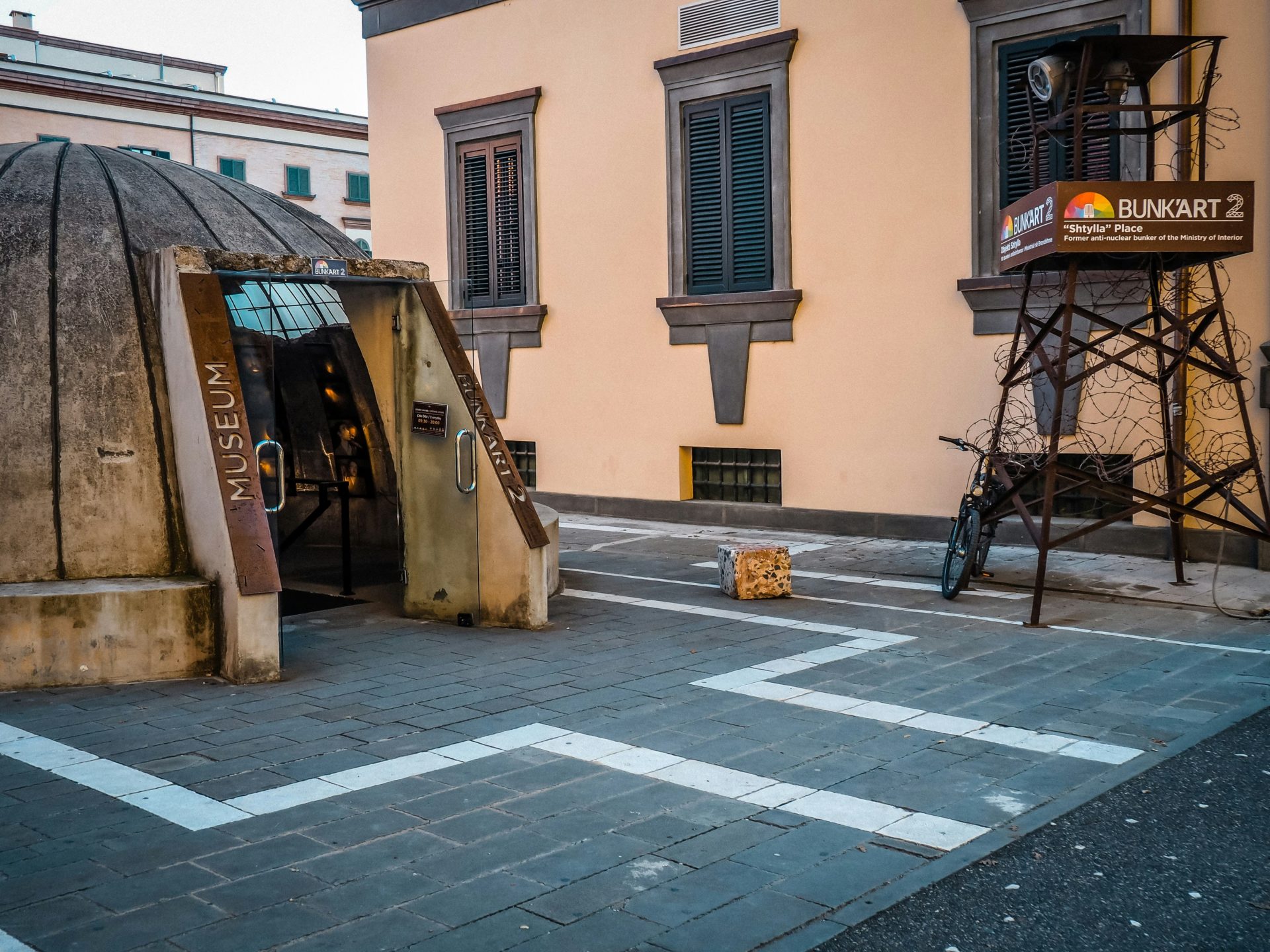
Bunk’Art Museums 1 and 2, located inside two atomic bunkers commissioned by Albania’s former communist dictator Enver Hoxha, aim to educate visitors on Albania’s 20th-century history and the victims of the totalitarian regime.
This year marks the 10th anniversary of the opening of Bunk’Art 2, the second of two museums established by Italian Journalist Carlo Bollino, which has redefined how Albanians confront their communist past. These museums, the second opened two years after the debut of Bunk’Art 1, have become popular historical and cultural landmarks among tourists and locals alike due not only to their exhibits but also their locations in atomic bunkers commissioned by former Communist dictator Enver Hoxha. Together, these museums offer different yet equally important insights into Albania’s past under his harsh rule, and, to some, even serve as important tools in the fight to confront this painful and difficult legacy.
Reception and Debates
Since their openings, Bunk’Art 1 and 2 have sparked a range of reactions, prompting ongoing debate about their value and effectiveness as educational tools. In 2015, protests erupted over the construction of an artificial dome that would mark the entrance of the not-yet-completed Bunk’Art 2. As the vast majority of the bunkers were built completely underground, the purpose of the artificial dome was to create a visual entrance for visitors. Soon, however, protests organized by Albanian opposition parties resulted in damage to the dome, when protestors hit and set fire to it, leaving numerous cracks in its facade.
In addition to physical protests, some have spoken out against institutions like Bunk’Art, stating that repurposing the bunkers is not an attempt to confront the past but rather to whitewash Albania’s Stalinist history. The museum’s founder and artistic director, Carlo Bollino, said that the accusations leveled at Bunk’Art originate from a “small minority that wished to hide the history of communism, and who indeed accused me and my museums of attempting to stay rooted in the past.” Bollino refutes such claims, arguing that “cultivating memory is essential to prevent history’s horrors from being repeated.”
Even academics have weighed in on the debate, utilizing theoretical frameworks to understand why some reject Bunk’Art and, more broadly, the use of bunkers as educational tools and cultural landmarks. According to some frameworks, these bunkers represent ‘difficult and undesirable heritage’ that divides public opinion and is not easily ignored due its association with an unwanted or difficult past. These sentiments, which are still prevalent amongst some in Albania, may be attributed to transformations in the physical landscape that occurred after the fall of the regime. Monuments and military buildings were defaced, vandalized, and removed from public settings, preventing an open and society-wide discussion about the traumas of the recent past. Evidently, this has made the confrontation process difficult. For some Albanians, remembering experiences endured under the regime may be too painful to initiate a healing process, and for others, as Bollino contends, it may simply be their wish to bury the country’s communist history altogether.
In this regard, Albania suffers from a near-complete lack of memory politics, making institutions such as Bunk’Art of paramount importance to intellectuals, activists, and the children and grandchildren of those who lived under Hoxha’s communist regime. Bollino believes that for many, Bunk’Art has functioned as a successful educational tool that has helped new generations understand Albania’s past. He further explained that the subject of Albania’s history is “taught rarely and poorly” in schools, and since communism is still a taboo subject for the Albanians who lived through it, the museums help those who did not experience this era the chance to engage with their history.
Albania’s Communist History
Enver Hoxha first came to power in 1941 and ruled Albania until his death in 1985. As a result of his hardline Stalinist communist beliefs, Albania suffered political and economic isolation throughout this period. In 1947, he severed relations with Yugoslavia, believing they had strayed from the true path of socialism. In 1961, Albania and the USSR split over Hoxha’s dislike of Nikita Khrushchev, Stalin’s successor, who was inclined towards communist reform. Albania then briefly aligned with communist China, but this relationship soon ended, leaving Albania completely isolated.
Hoxha was famously paranoid, believing that Albania was at risk of invasion from neighboring countries like Greece and Yugoslavia and other states. From the 1960s to the 1980s, at the height of his communist rule, Hoxha and his government embarked on an ambitious building program of approximately 173,000 concrete anti-atomic bunkers, which were intended to house every Albanian family in case of invasion. Hoxha sank billions into this program, bringing the country to the brink of starvation and poverty even as he pursued a policy of economic self-reliance. For the entirety of Hoxha’s dictatorship, the country lived in constant fear of foreign invasion and internal surveillance.
Bunk’Art: Origins, Exhibitions, and Preservation Challenges
Following the collapse of the communist regime in 1991, land privatization reform resulted in less available land and higher building costs, which drove the population to repurpose the bunkers to suit their growing needs. Since then, the population has used bunkers for a variety of purposes, including as tattoo studios, nightclubs, and restaurants. However, the Bunk’Art museums represent perhaps the most daring repurposing of bunkers. Although Bollino is an Italian journalist, he has lived in Albania since 1993 and has Albanian citizenship. He understands that this does not legitimize his opening of museums, but he believes that “a sensitive history like that of the dictatorship can be better told by a somewhat ‘outside’ witness who did not experience it personally.” On the origins of Bunk’Art, Bollino noted that the idea was inspired by a newspaper column on the history of communism in Albania in a publication he started in 1993. The column “shared with the public for the first time the archives which had been kept a secret until then,” and was extremely innovative and successful at the time. Therefore, for Bollino, Bunk’Art 1 and 2 are not entirely new endeavors but are rather a natural continuation of the historical account that began twenty years ago.
Bunk’Art 1 opened in 2014 as a video museum exhibition inside the personal bunker of Enver Hoxha. Today, the museum contains two exhibitions. The first is a historical exhibition comprising five areas that explore Albania’s history from the early to mid-20th century. The second exhibition is focused on Hoxha’s rooms, including his office, bedroom, and bathroom.
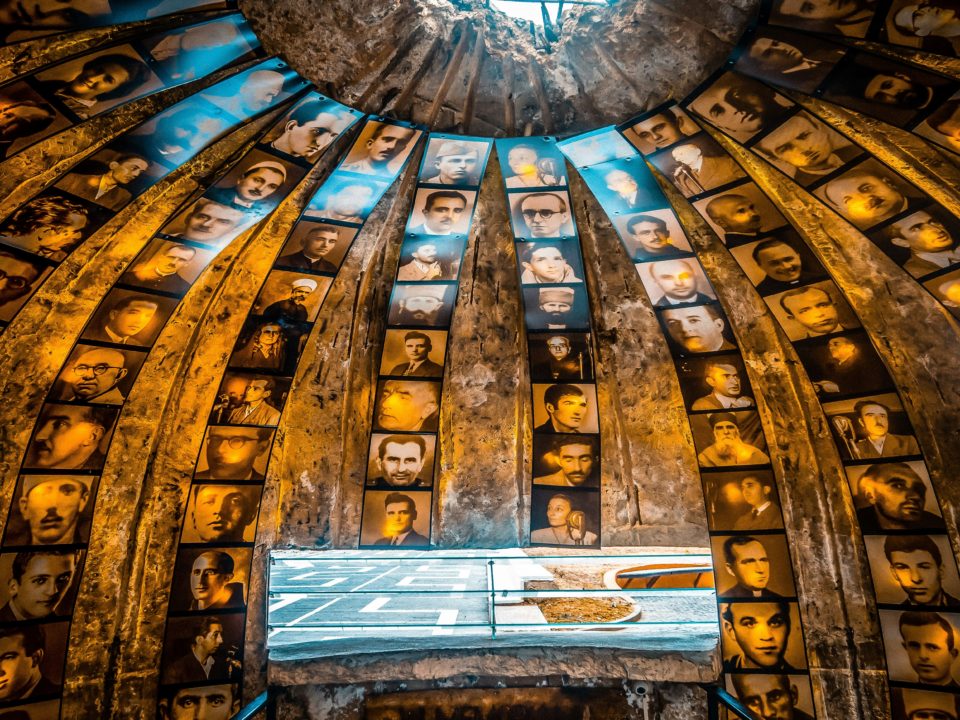
Bunk’Art 2, opened in November 2026, is located in the center of Tirana and was previously only accessible through a tunnel from the Ministry of Interior Affairs. Originally codenamed Objekti Shtylla, the atomic bunker’s construction was ordered by Hoxha and then-Prime Minister Mehmet Shehu, who both died before its completion. Bunk’Art 2 is primarily focused on the victims of Albania’s communist regime and their perpetrators, the Sigurimi. (The Sigurimi was the state’s secret police, who were largely concerned with the surveillance of the Albanian population. They controlled the population and groomed civilians to spy on their friends and family, who would obey out of fear of persecution.)
The most difficult preservation challenge the museums have faced is the erosion of materials in the bunker under exposure to high humidity. This has required daily maintenance by staff; however, Bollino emphasized that the large number of daily visitors to the museum makes these efforts worthwhile. He revealed that in an effort to enrich visitors’ experiences, the museums will release audio guides with additional content. As of now, no new Bunk’Art museums are planned, but Bollino described Bunk’Art as a “museum in progress” and hinted that he is currently working on new ideas for exploring Albania’s past to fill up the rooms currently empty in the existing museums.
Despite violent protests, accusations of whitewashing Albanian history, and simple rejection, Bunk’Art has nevertheless been celebrated by civilians, activists, and academics alike as a new opportunity to work through decades of suppressed trauma. By transforming these once-feared sites, associated with isolation and atrocity, into places of remembrance and education, the museums offer Albania a path towards reckoning with its past while providing an opportunity to foster a deeper understanding of its collective history.