Bosnia and Herzegovina (BiH) confronts a growing digital divide, as a segment of its population struggles with to understand the basics of the digital space.
It remains to be seen whether a strategy or plan can be developed to help bridge this gap and solve one of the key problems facing society. Amid these challenges, however, the capital city of Sarajevo is becoming an increasingly popular destination for so-called digital nomads.
The digital divide is often defined as a lag in technological advancement, but this definition neglects the broader social implications that are crucial to understanding this phenomenon. The broader context of the digital divide should include not only the absence or inaccessibility of particular technologies but also the means for interpreting the content these technologies provide once accessible. In BiH, this problem is multi-layered due to the continuous transition that the society has been going through for the last 30 years.
“I think the essence is in how we interpret the information we access through digital channels. The essence is whether we understand the broader context, who our sources of information are, whether there has been manipulation, or whether there has been algorithmic amplification of the content. At the same time, how we create the information is also important,” notes Sanel Huskić, senior research analyst at the University of Sarajevo Political Sciences Institute for Social Research.
Given that BiH has long lagged behind European Union standards on this issue, this new form of marginalization has taken hold among the country’s younger generations. This is especially apparent in the realm of digital literacy, which is lacking at both the theoretical and practical levels.
Privacy Protection and Digital Identity Management
“Some young people simply don’t have the skills to apply for scholarships and jobs, write a good CV, use e-government, distinguish reliable sources from manipulative ones, or especially to protect their privacy and manage their digital identity. Some people don’t have access to quality information and don’t know how to use channels that enable participation,” explains Huskić.
All of these factors put BiH in an unenviable position, because the technological expertise that other countries foster does not exist here. Unfortunately, many knowledgeable individuals decide to seek their fortunes in Western countries with long-established and effective systems. This is just one of the reasons for the brain drain that is crippling BiH and, compounded by the challenging and complicated political environment, driving negative statistics.
Policy reform with a focus on combating the digital divide would include, first of all, a development plan for all segments of BiH society.
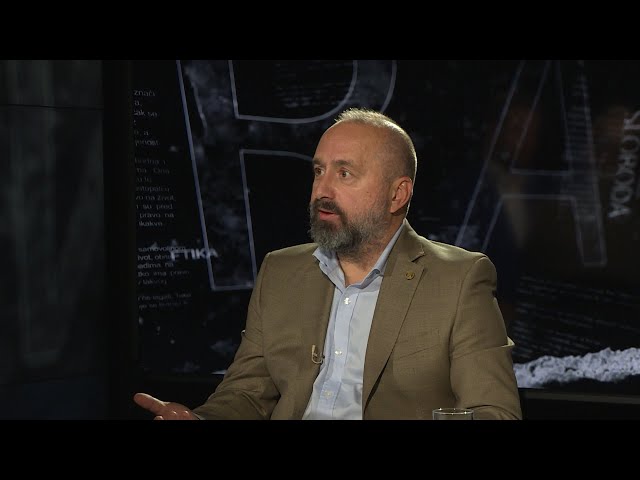
“The backbone of our policies must be to integrate media and information literacy into all education systems as a cross-curricular ability, not as an isolated subject. This means practical learning in all subjects and grades, continuous teacher training, connecting schools with local communities, and developing the skills of critical thinking, source-checking, identifying digital risks, and a basic understanding of how algorithms affect what we see,” says Huskić.
Digital Inclusion is Not a Short-Term Project
To date, digital literacy in BiH has remained in the hands of non-governmental organizations, who cannot make a major difference without the help of state institutions.
“The government has to coordinate the entire system. They are the only ones that can provide education, funding, standards, public institutions, and long-term sustainability. The problem is that digital inclusion is too often treated as a short-term project in our country, and not as a public policy that requires stable budgets and clear goals that last much longer than the cycle of a single three or five year project,” concludes Huskić.
There is an ironic contrast between the local population in BiH and the foreign visitors whose jobs allow them to work remotely. These so-called “digital nomads” are increasingly frequent guests in the country’s capital. This irony is reflected in the difference between digital coworking spaces, where digital nomads create online projects for clients from all over the world, and the facilities for Bosnian students, who are often forced to use outdated government portals.
On the one hand, the country is becoming increasingly attractive to digital nomads due to global mobility, while on the other hand, it is facing a digital divide.
Irena Jusufović was born in Banja Luka but raised in New Zealand and Australia. She has lived and worked in several different countries, and in recent years, she has been in the hospitality sector, running her own hotel. She has extensive experience in organizing “coworking retreats”.
“A coworking retreat is somewhere between a business trip and a traditional vacation. People still work, but the structure, environment, and group are designed to reduce noise and pressure, allowing people to think more clearly about their pace, priorities, and life direction – all while enjoying the culture and country they are visiting,” explains Irena.

She expects the digital nomad scene to grow in Sarajevo. While she hasn’t encountered very many digital nomads so far, she believes they will soon find a place in the country in increasing numbers.
“Given my origin, Bosnia has a special place in my heart, so I’m naturally drawn to the unique events that are organized there. While I haven’t fully integrated into the scene, I believe that it will grow. I originally wanted to open a co-living space in Sarajevo or the surrounding area. I think that Bosnia is undervalued and, considering that it’s outside the Schengen Zone and EU rules, I believe that in the coming years it will attract a growing number of digital nomads and those who work remotely,” Irena points out.
In her opinion, Sarajevo and BiH have their shortcomings, but she also believes that this area is generally undervalued.
“Sarajevo might not yet have the infrastructure or visibility of established digital nomad hubs, but that’s part of its charm. There’s room for organic growth, without over-commercializing the experience, which I believe will become increasingly important over time,” concludes Irena.
BiH is currently in the midst of a gap between what is and what could be. The complex social transformations taking place today cannot be seen in isolation from the technological changes yet to come. With committed effort, Sarajevo, as a capital city, can easily become a digital hub for the entire Balkans. The bigger challenge is overcoming the digital divide, but this is crucial in building a better Bosnia and Herzegovina.