For the young people gathered across Bosnia and Herzegovina (BiH) this week for the fourth “State of Peace” Youth Academy, the European Union is not an abstract policy framework, it’s a lived, daily question.
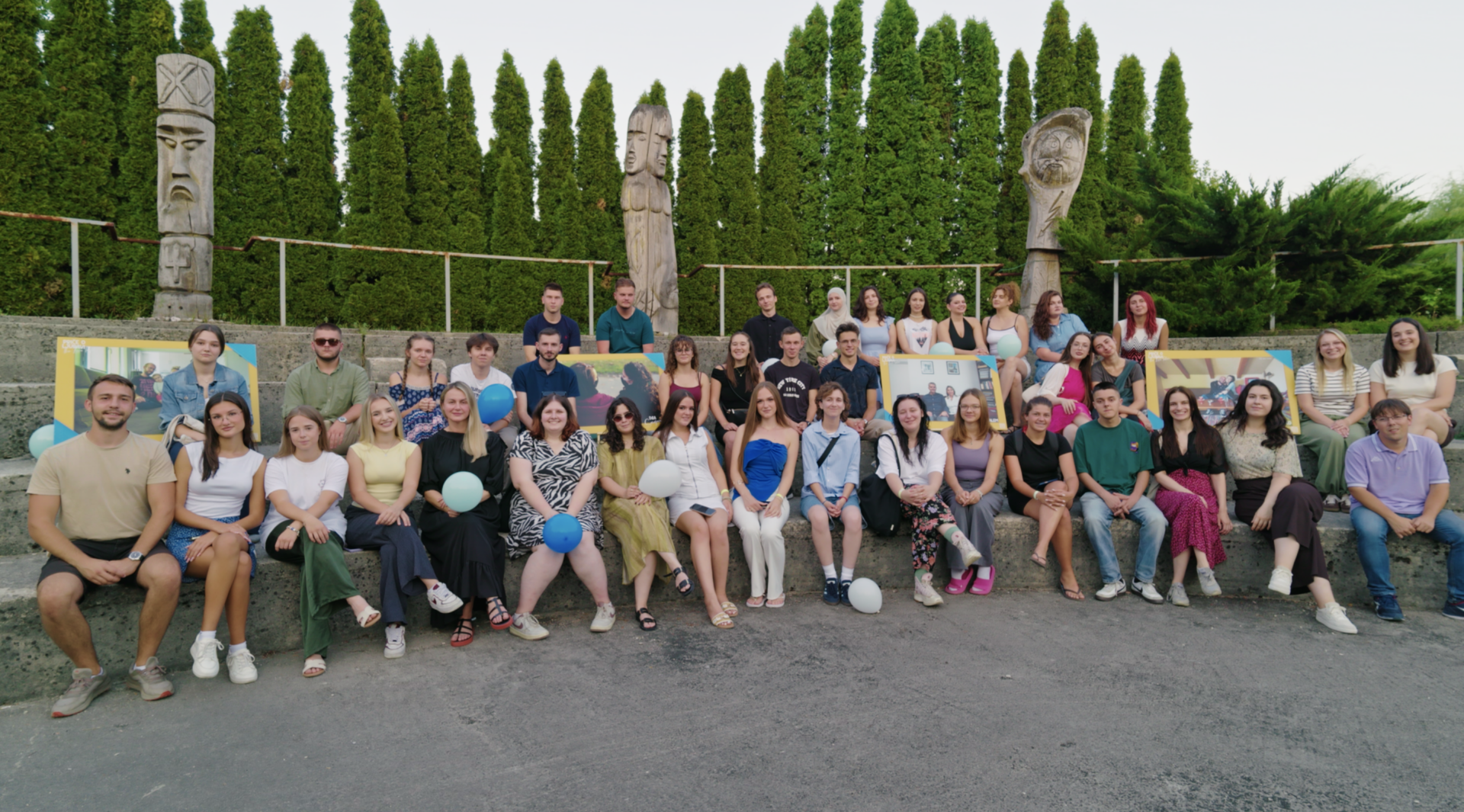
Organized by the European Union in Bosnia and Herzegovina in cooperation with the Post-Conflict Research Center, this year’s program brought over 45 participants from Bosnia and Herzegovina, Croatia, Serbia, and Montenegro face to face with the institutions, people, and debates that will shape the region’s path within the EU, from countries already inside the Union to those in the process of joining.
The Academy’s EU-focused day opened at Europe House in Sarajevo, where Adebayo Babajide, Deputy Head of the EU Delegation to BiH, welcomed participants before a series of sessions exploring what EU integration actually means on the ground: a briefing from EUFOR on its peacekeeping mandate in the country, a conversation on democratization and the rule of law with Jasmin Hasić, and a discussion on inclusion in sport with Denis Agović, the first professional athlete with a disability to play in senior FIBA-sanctioned basketball.
Together, the sessions gave participants a picture of the EU not just as a distant institution, but as an active presence already shaping security, governance, and inclusion in the region.
Inside the EU, but still developing
Nikolina, from Croatia, a country that has now been an EU member for over a decade, offered a perspective her regional peers rarely hear directly: what membership actually feels like once the novelty wears off.
She started high school the year Croatia joined the EU, and remembers what it opened up for her personally: Erasmus exchanges, study opportunities, chances she might not otherwise have had. But she doesn’t think that translated into a strong sense of European identity among young Croatians today. “I think young people take all of it for granted now,” she said, while focusing mostly on freedom of movement and protected travellers rights.
Nikolina traces that gap partly to a lack of understanding: many young people, she said, simply don’t know much about what the EU does, and sometimes expect more from it than it can deliver.
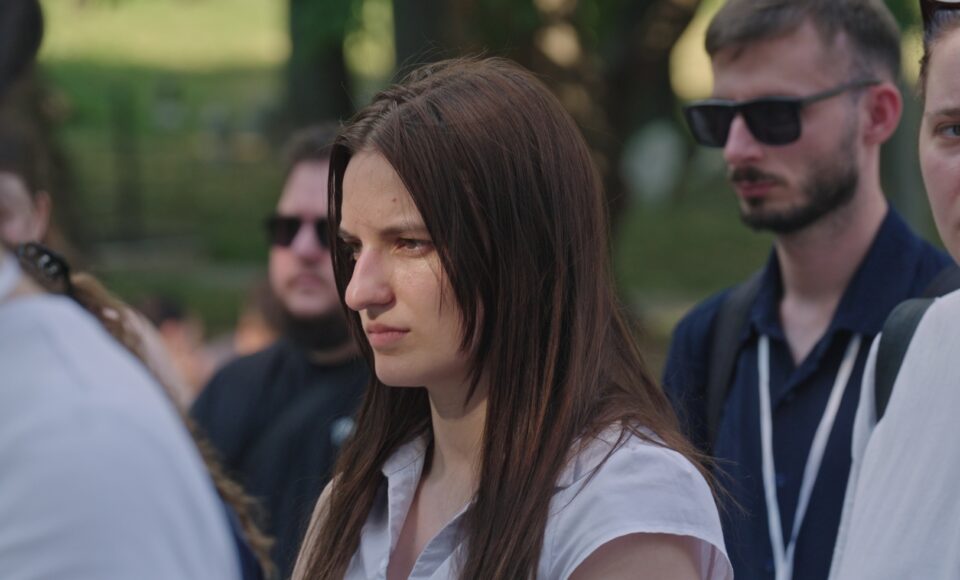
Asked what the EU could do to support peace and stability in the region, Nikolina, who works in the civil sector,was direct: funding. Programs like the Academy, she said, matter precisely because they replace abstract classroom history with real encounters. “It’s one thing to learn about this in school, in history class. It’s another thing entirely to come here, go to a memorial, and hear directly from people who lived through it. I think that’s one of the best ways to spread a message of peace.”
“The Greatest Ideal of Unity”
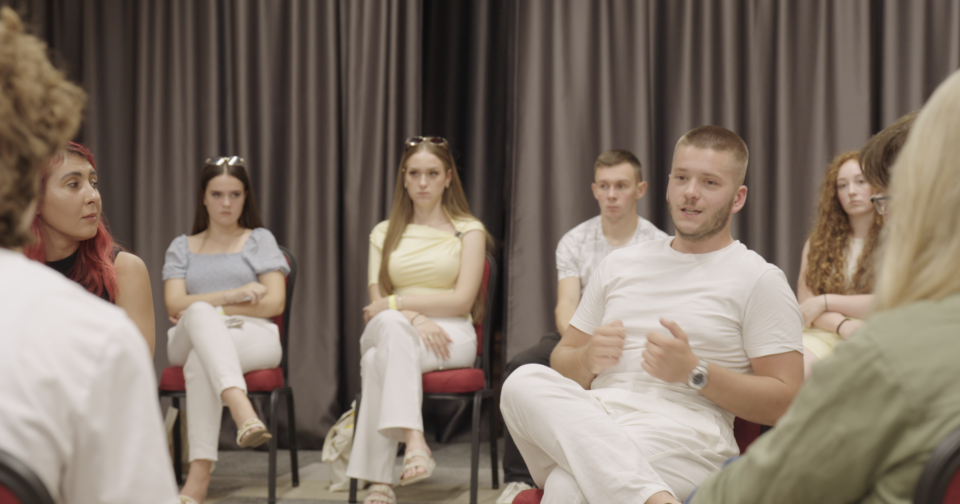
For Armin, a participant from Bosnia and Herzegovina, the idea of the EU crystallized in an unexpected moment, watching a street vendor near Travnik sell Bosnian, Croatian, and EU flags side by side. “That, to me, is maybe the greatest ideal of unity in Europe and the world, after the United Nations,” he said. For a country that continues to hold together multiple ethnic identities, religions, and ways of life within one shared mentality, he believes EU membership would mean something more than economic benefit, it would mean finally becoming a legitimate member of the European family.
But Armin was equally clear about the obstacles. Unlike EU member states that had decades of stability to build dialogue and meet European standards, Bosnia and Herzegovina lost that time to war and the turmoil of the 1990s. “We don’t have the chance to put our progress on the same scale as those countries,” he said, arguing that the EU may need to approach Bosnia and Herzegovina with more specificity, rather than applying a one-size-fits-all standard.
He also had a message for his peers: young people, he said, need to spend less time defined only by the region’s history of war, and more time defining their own goals.
Progress, but not yet enough
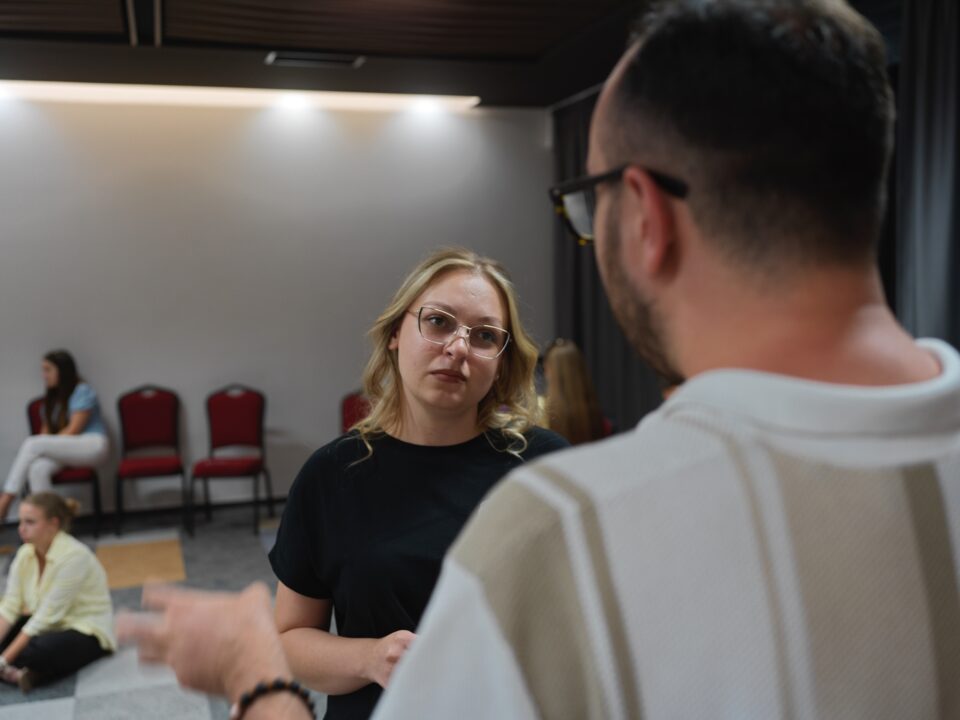
Leontina, from Montenegro, currently among the furthest along in EU accession negotiations in the region, described a generation with divided opinions. Many young Montenegrins support EU membership, associating it with better education, job opportunities, easier mobility, and a higher standard of living. Others, she said, have grown sceptical after years of a negotiation process that can feel slow-moving.
Leontina argued the EU could do more by investing directly in young people, education, and regional cooperation, pointing to programs that bring youth from different countries together as tools for breaking down prejudice and building trust. “Peace isn’t built only through political agreements,” she said, “but through the everyday cooperation of people.” She also called for stronger EU support for rule-of-law reforms and anti-corruption efforts, alongside greater investment in youth employment, mental health, and opportunities that would let young people build their futures at home rather than abroad.
Building a positive mindset
Asja, from Bosnia and Herzegovina, framed EU accession as more than a technical process, but as a way of resolving dilemmas that are themselves a legacy of the post-conflict society she grew up in.
On this note, Asja also pointed to the EU’s own history: many current member states carry the legacy of the Holocaust and devastating wars, yet through legal frameworks, cooperation, and exchange between citizens, those countries have moved toward rehabilitation and reconciliation. She believes Bosnia and Herzegovina’s young people need the same tools, education that builds proactivity and courage, and the confidence to speak up when they notice problems in their own communities, whether among local politicians or neighbours.
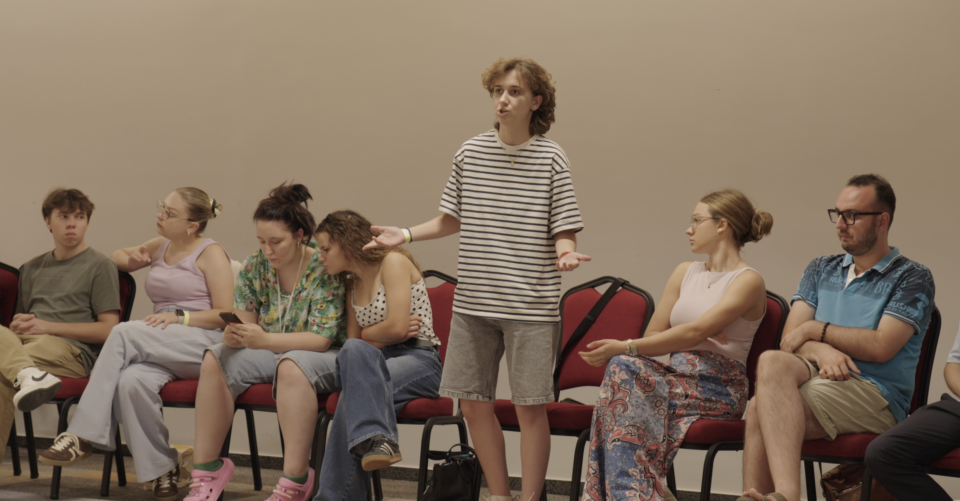
Above all, Asja called for a shift away from pessimism. Instead, she argued, young people need to actively participate in EU-funded projects, in education, in dialogue, rather than letting the idea of Europe remain something distant and undiscussed. “We already have candidate status. We’ve met some priorities, and there are others we haven’t yet, but I believe those are achievable, with a bit of effort, in a short time. We just need to avoid our own barriers: talk to each other, show courage. What we’re doing here these past few days within the Academy is exactly that kind of first step.”
As the Academy continues toward Tuzla, Brčko and Bijeljina, these same questions on what does the EU enlargement actually mean, and what will it take to get there will keep following its participants from one memorial, one lecture, and one conversation to the next.