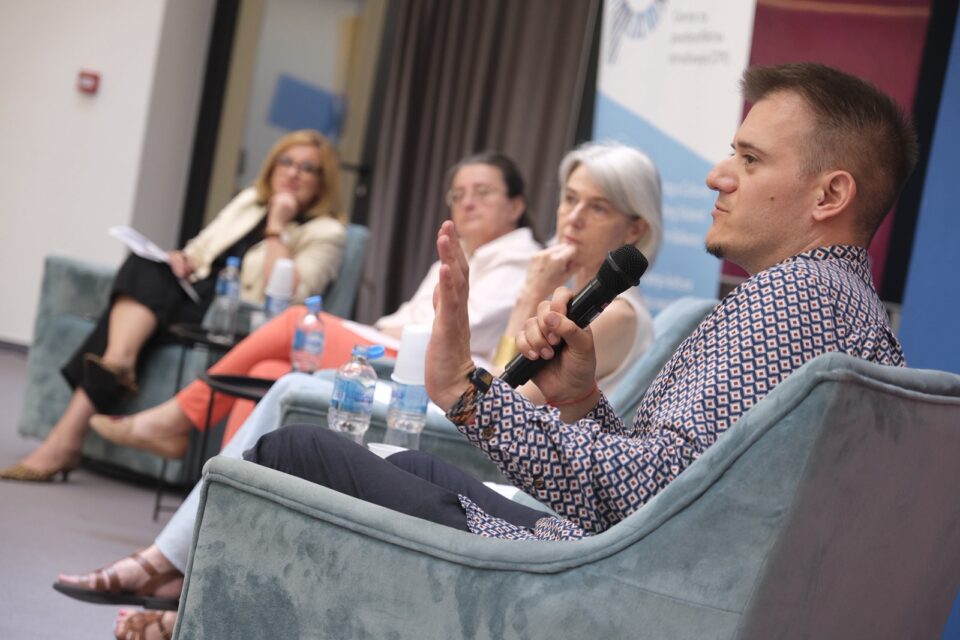
On July 7th, the Srebrenica Youth School convened a panel discussion titled “Building Accountability: International Responses to the Legacy of Srebrenica.”
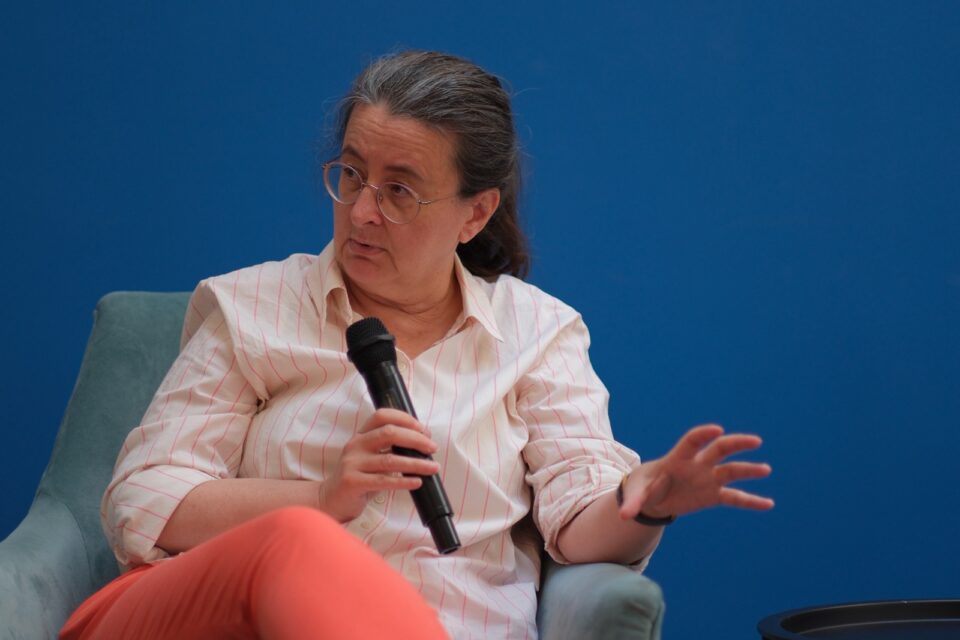
Klaudia Kuljuh from TRIAL International, Agnès Picod, head of the Office of the United Nations High Commissioner for Human Rights in BiH, and Borislav Buljić of the International Commission on Missing Persons (ICMP) in BiH presented the work of their respected organization in dealing with the lasting legacy of the genocide in Srebrenica. Afterward, the floor opened to audience questions, with the overarching question being Why does remembering Srebrenica matter?
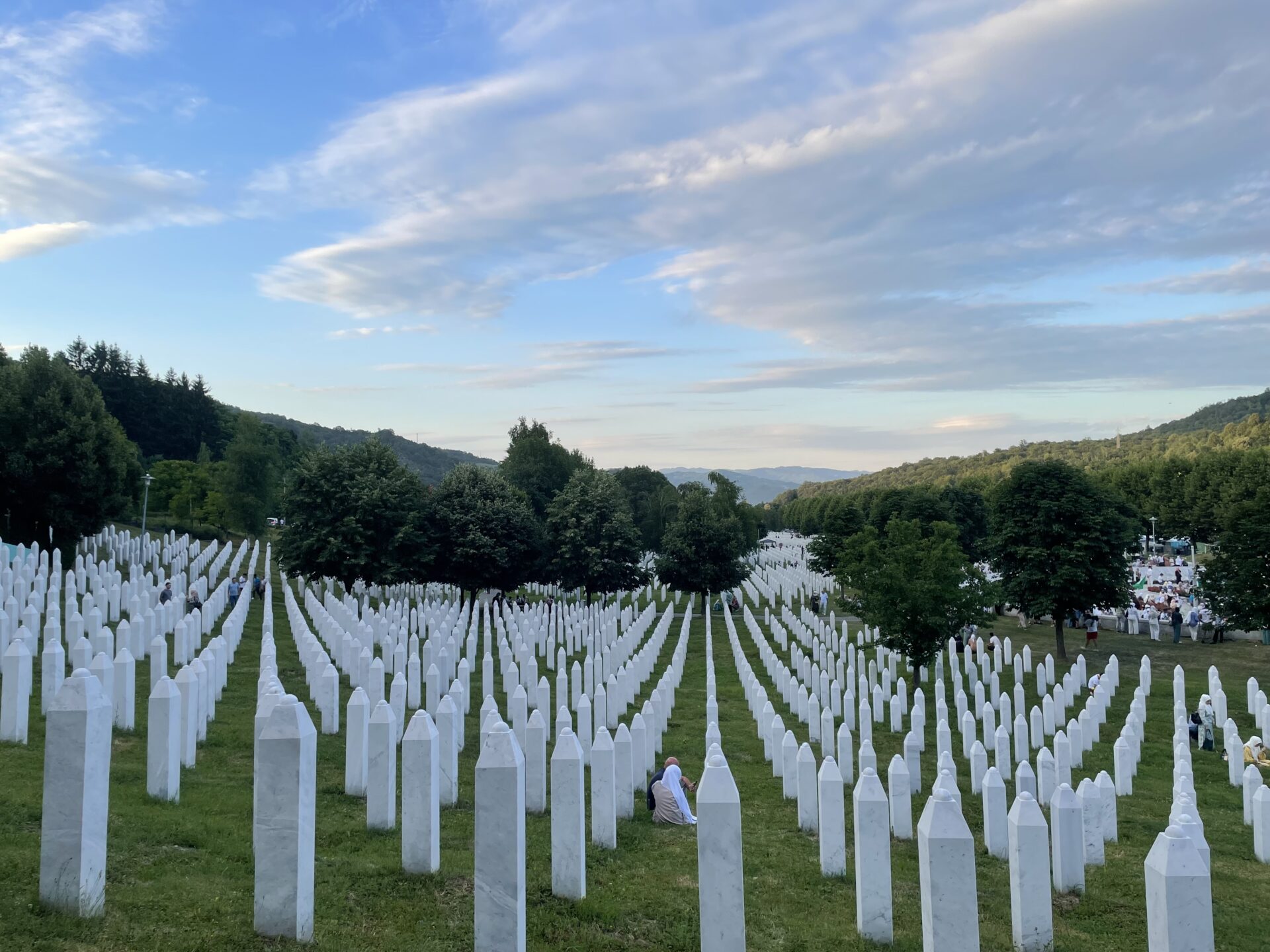
According to the speakers, remembering Srebrenica is vital to preventing the repetition of violence and the rewriting of history. This significance is compounded by the fact that there are about a thousand people still missing from the genocide, and the families of these victims deserve to know the fate of their loved ones. This knowledge is not only their human right but also a crucial perquisite for any form of reconciliation, explained panelists.
Picod, who assists the Bosnian govern in protecting and promoting universal human rights, emphasized that access to justice is critical for ensuring that human rights are prioritized and protected by institutions and society.
Speaking on behalf of the ICMP, an organization that helps locate and identify the missing persons from the Yugoslav wars, Buljić added that victimized communities are unlikely to be open to reconciliation without knowing what happened to their loved ones.
Accountability for the perpetrators of war crimes is also important, especially when the glorification of war crimes and criminals, hate speech, and revisionism continue to violate the human rights of the victims, added Buljić.
The unfortunate persistence of these practices, as Picod explained, makes remembering Srebrenica and working to counteract these forces in Bosnian society all the more necessary.
Representing TRIAL International—an organization that provides personal legal assistance and advocates more broadly to align Bosnian law with international human rights standards—Kuljuh was asked how young people can contribute to safeguarding the rights of victims and bringing perpetrators to justice.
“Critical thinking is currently lacking in the Western Balkans. Ethnonationalist politicians take advantage of this through narratives of collective victimhood, which, in the absence of critical thinking, become deeply entrenched. Thinking critically about these narratives and asking critical questions is necessary to break down these manufactured ahistorical narratives”, said Kuljuh.
Kuljuh urged young people to pose these questions to politicians as well as teachers, relatives, and other authority figures. Young people need to read, familiarize themselves with the facts, remain open-minded, and learn how to think critically in order to question these skewed narratives.
This discussion highlights a wider problem in Bosnian society: citizens are too vulnerable to distorted narratives created or reproduced by ethnonationalist politicians.
Critical thinking is all the more important given the prevalence of genocide denial in BiH, which has reached a stage known as “triumphalism,” where convicted war criminals are celebrated as heroes.
Olivera Simić, an esteemed scholar of international law and transitional justice, explains that for years, politicians in Serbia and Republika Srpska have “created a political and social space in which genocide deniers are normalized.”
“This also impacts the country’s youth, who are exposed to denial in government-sponsored media, education, and online spaces. Documented cases of genocide denial rose from 234 in 2020-21 to 693 in 2021-22, and despite a brief decline in 2022-23, increased threefold in 2023-24”, said Simić.
In 2021, then High Representative Valentin Inzko amended the Criminal Code of BiH, making the denial of war crimes and genocide, as well as the glorification of war criminals, a criminal offense if it is likely to incite violence or hatred. However, this law has rarely been enforced since its passing.
Because genocide denial is still an evident challenge, it is imperative for young people to arm themselves with knowledge and critical thinking skills to combat the growing falsification of history.
Reflecting on his takeaways from the panel, Filip Došljak, a participant from Montenegro, stated that “accountability isn’t just about prosecuting perpetrators. It also includes finding the missing, supporting survivors and their families, and pushing back against denial and historical revisionism. The fact that around 1,000 people are still missing more than 30 years later shows how far we still are from real justice and reconciliation.’’
Adem Ajdin, a participant from BiH, sees missing persons as the most pressing issue in his country and thus credits the ICMP with playing a key role in reconciliation.
Participants also agreed that critical thinking is crucial for spotting and countering misinformation.
“Critical thinking plays a huge role in remembering the Srebrenica genocide, because it allows people to get an unbiased perspective,” said Adem.
Melina Mikić-Božanić from Serbia expressed a similar view.
“It’s important that we learn about the genocide through our own research and thinking, so that we can spot misinformation and explain our position to those contesting the genocide,” Melina said.
According to Filip, “Remembrance of the Srebrenica genocide among young people is what keeps denial and revisionism from taking hold in that generation and keeps these crimes from happening again in the future.”
He added: “But memory alone isn’t enough. It must come with critical thinking. Instead of taking whatever politicians, social circles, or the media say at face value, young people should dig for facts and ask hard questions. Critical thinking is what lets us understand the past through evidence instead of bias, and that’s exactly what we need to protect human rights.’’
This July marked 31 years since the Srebrenica genocide, yet genocide denial sadly still seems omnipresent in Bosnian society. This panel demonstrated that remembering the genocide remains crucial but must be coupled with the development of critical thinking skills that lead citizens, and particularly young people, towards factual historical narratives.