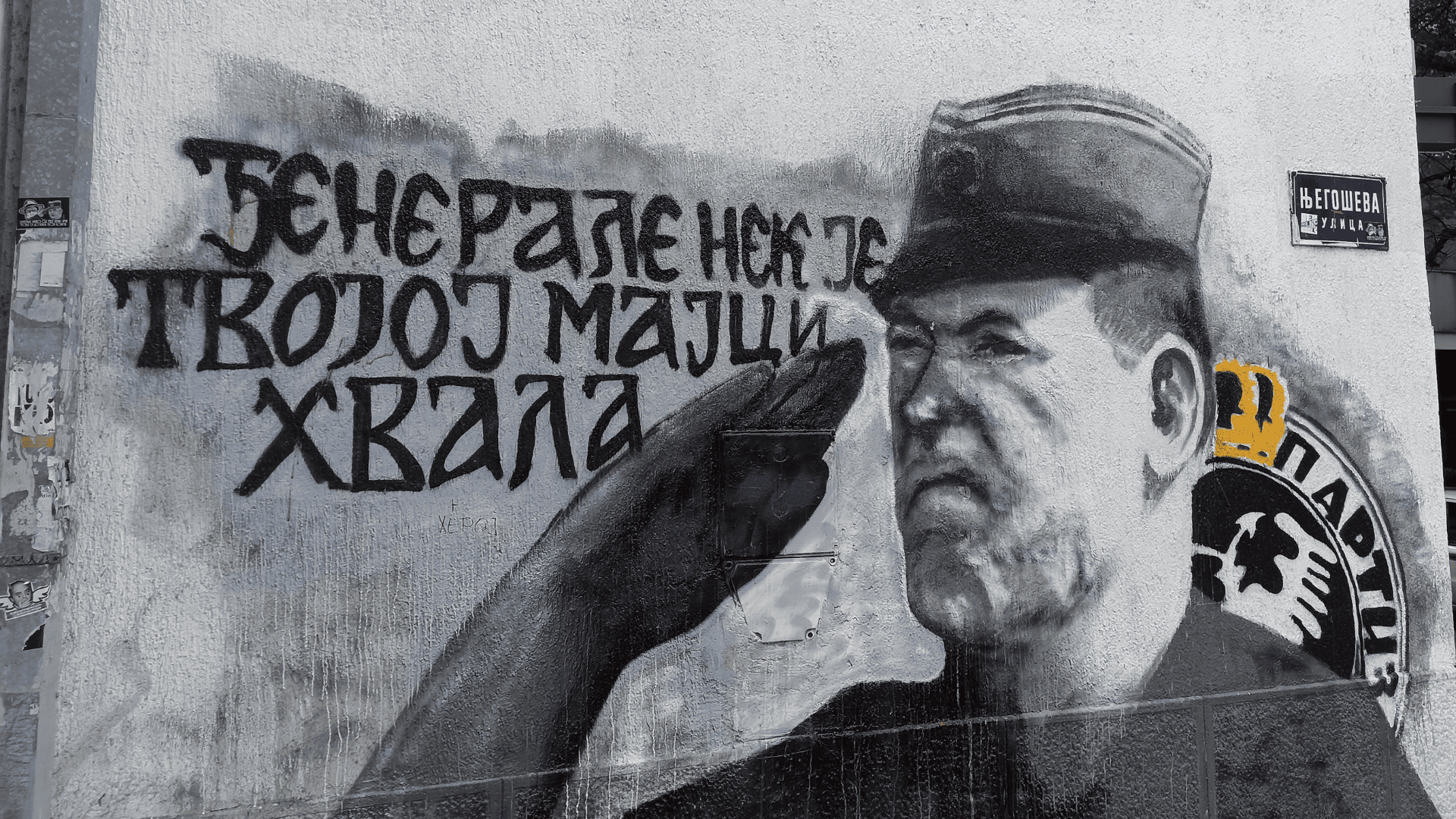
The mural of Ratko Mladić in Belgrade is one of the most controversial “landmarks” of the city, considering everything that happened around and because of it.
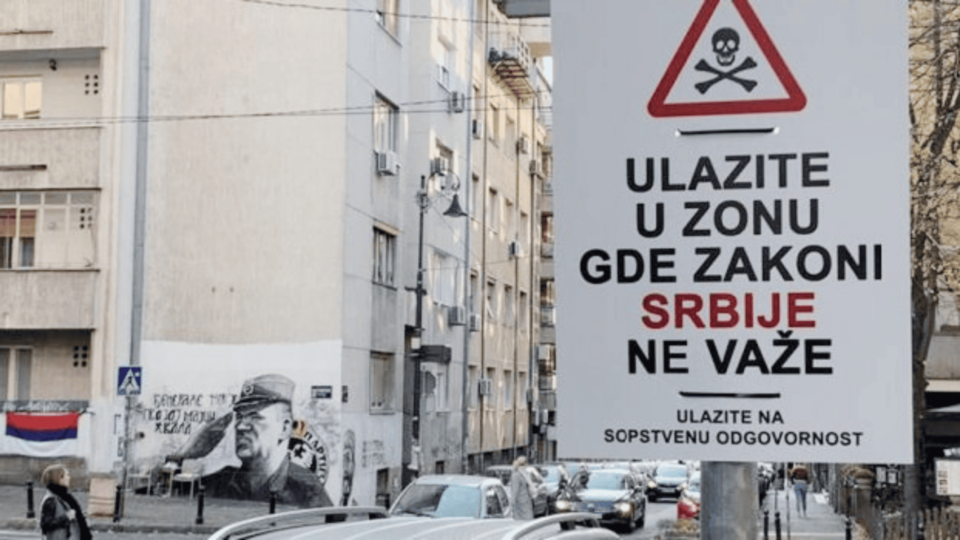
In the busiest streets, Njegoševa and Nenadićeva, the mural has been painted over several times but reappears just as quickly. Although it is currently painted over, dozens of works of graffiti remain, causing considerable tension. These include inscriptions that continue to appear denying court-established facts about war crimes and glorifying Mladić, who is, first and foremost, a war criminal.
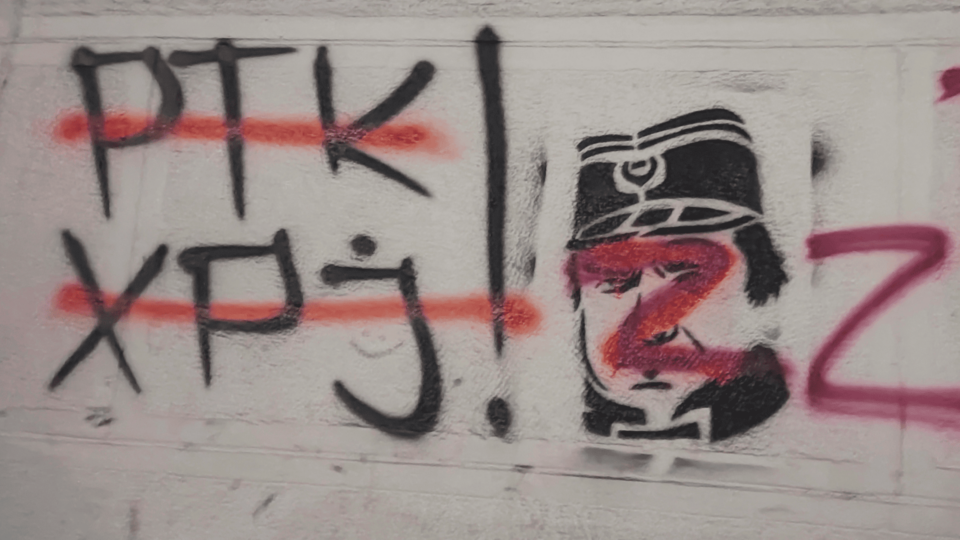
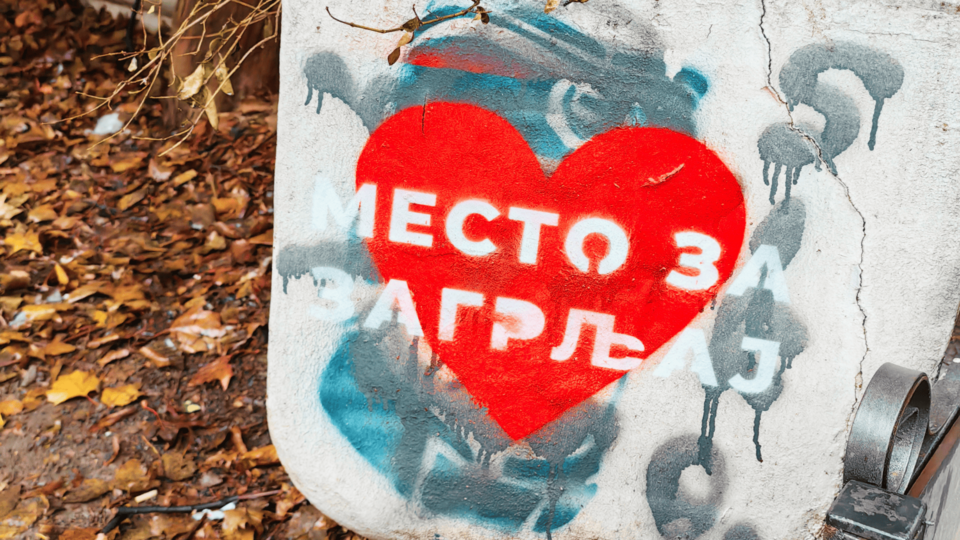
Counter-messages to these murals and graffiti are also present. The case of Aida Ćorović and Jelena Jaćimović, who were attacked and arrested for throwing eggs at Mladić’s mural, is well known to the public. Some of the activists who have painted over other murals or inscriptions have received threats, including death threats, which is why they are afraid to speak publicly about their actions. However, there is strong resistance, and for every instance of Mladić’s glorification, there is an equally passionate response from civil society.
Mladić, the former commander of the Army of Republika Srpska, was sentenced in 2021 to life imprisonment by the International Residual Mechanism for Criminal Courts (IMRC), the successor to the International Criminal Tribunal for the former Yugoslavia (ICTY). The charges for which he was convicted include the genocide in Srebrenica, terrorizing the citizens of Sarajevo (including through shelling and sniping), persecuting Bosniaks and Croats from several municipalities in Bosnia and Herzegovina, and taking international personnel hostage.
Nevertheless, a mural was dedicated to him in the heart of Belgrade. The main question that arises is why that mural and other smaller murals keep appearing. Dalia Koler and Ognjen Ćirić from the Youth Initiative for Human Rights of Serbia place this phenomenon in the context of his 2021 sentencing, when these actions, media representations, and the personality cult of criminals surged. Ćirić adds that young people have been born into this cult of personality and are often know nothing of who Mladić really is, except that he is a “hero” because that’s what they read on the street every day.
Ćorović notes that the mural was painted on one of the city’s busiest streets, where opposition is strongest, at a time when the regime needed to bolster nationalist rhetoric. Marijana Stojčić from the Center for Applied History primarily sees this as a “struggle for meaning in public space.”
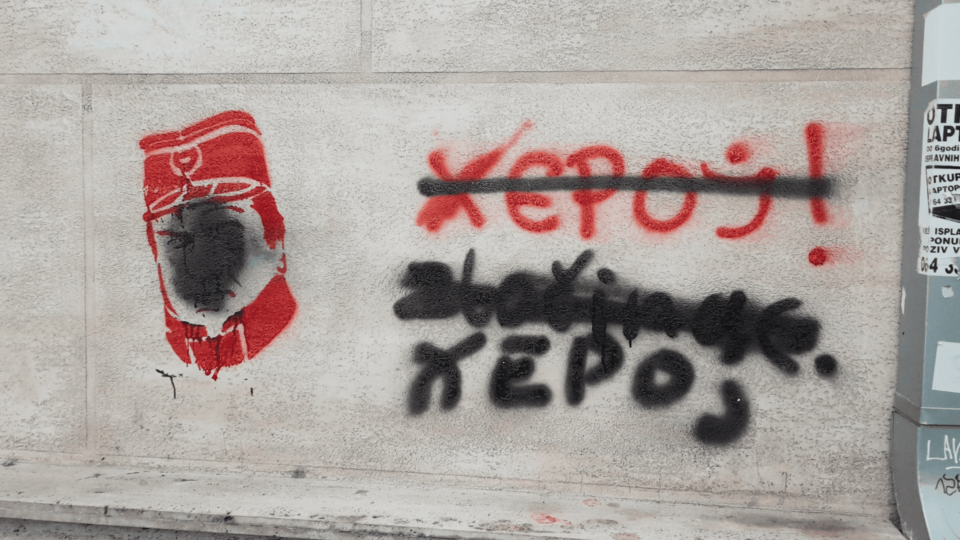
Mladić’s mural appeared on a building on one Belgrade Street in 2021 in the wider city center, and it is not an isolated case, as evidenced by the 308 requests for the removal of murals, symbols, and inscriptions related to Mladić submitted by Serbia’s Youth Initiative for Human Rights. Although the mural has been removed, there are still smaller murals of his silhouette and inscriptions related to the war crimes of the 1990s. The speed with which these works reappear after being removed is notable, particularly given the absence of prosecutions for spreading hate speech on buildings without permits or the consent of residents.
Contesting the Courts Through Textbooks
Official narratives, although they do not necessarily reflect the majority opinion of populations, shape policies at the official level and influence attitudes that become normalized through propaganda. In 2010, the Serbian Parliament adopted the Declaration on the Condemnation of the Crimes in Srebrenica, based on the verdicts of the ICTY and the International Court of Justice (ICJ). Even though it omits any mention of genocide, the declaration only passed with difficulty.
With this declaration, the Serbian National Assembly endeavored to provide full support to the state institutions responsible for prosecuting war crimes and cooperating with the ICTY, which was crucial in locating and arresting Mladić to stand trial. A little over a year after its adoption, on May 26, 2011, Mladić was arrested in the Serbian village of Lazarevo near Zrenjanin. He was then handed over to the ICTY, where his trial began in mid-May 2012 and lasted 530 days.
The final verdict against Mladić is not accepted by the ruling party, nor by the opposition in Serbia. Many still consider him a hero rather than a criminal.
Young people in schools do not learn the judicially established facts about the Srebrenica genocide or other war crimes committed in Bosnia and Herzegovina between 1992 and 1995.
History professor Dubravka Stojanović, speaking to DW in July 2025, noted that in the latest edition of Serbian textbooks, greater space was devoted to the wars of the 1990s, but that it was “used in the worst possible way.” She explained that these textbooks—with one exception, in which the Hague judgements are referenced without commentary—contest the international courts established by the United Nations.
“The main goal of these arguments is genocide denial or the complete relativization of what happened in Srebrenica. This is done in one textbook by claiming that it wasn’t just a case of captured men being executed, but that many of the men died in combat, which obscures the mass and systematic nature of an atrocity aimed at killing all male inhabitants,” said Stojanović.
She highlighted a phrase from another textbook that “the transport of women and children was made possible, which makes it seem almost like a humanitarian action rather than an act of ethnic cleansing.” This book, she notes, attempts to justify the crimes in Srebrenica by claiming that the town “was not a UN demilitarized zone,” as it was portrayed, “as if that could justify the killing of so many people.”
In yet another textbook, the debate focuses on the number of victims, with claims that historians dispute the frequently cited death tolls, that these numbers are exaggerated, or even that the court itself did not accurately determine them, while omitting the fact that mass graves are still being discovered.
“It also contests court rulings, stating that the classification of the crime continues to be disputed, and even that ‘most Serbian legal experts think that the Hague Tribunal is biased,’ thereby directly delegitimizing and belittling it,” Stojanović stated.
Thus, students are not learning about the Srebrenica genocide through judicially established facts, and the official narrative of genocide denial remains dominant in the press and on social media. It’s no surprise then that many are of the opinion that recognition of the genocide means characterizing the Serbian people as genocidal, regardless of the fact that individual responsibility has been proven and that there is no validity to the notion of collective guilt.
Murals and the Culture of Remembrance
As long as “debates” about the genocide and crimes of the 1990s continue in classrooms, the mural of Mladić in Belgrade, according to Stojčić, is necessarily political. It represents “the fight for presence in public space and the promotion of certain values; he’s thus not merely an individual, but a symbol of a kind of politics, which is achieved through exposure in public space.” More generally, she observes that murals, graffiti, and inscriptions in public space have particular meanings in particular social contexts.
In terms of the culture of memory, this phenomenon reflects attitudes towards the past and especially the 1990s. Stojčić considers this to be the dominant framework of memory, which is imposed by institutions “most often implicitly, but sometimes very explicitly.” However, it is also approved by the wider population, where emphasis is placed on extreme right-wing groups that are connected to the ruling structures through previously informal contacts.
Some of the murals, she added, were obviously not painted by a lone individual acting spontaneously. She notes that one graffiti that reads “When the army returns to Kosovo” [Kad se vojska na Kosovo vrati] is very large and would have required considerable time and energy. Moreover, given its location, the painter would have needed special access and would undoubtedly have been noticed.
Although the culture of memory is spoken of in the singular, she points out that different social groups cultivate different cultures of memory. According to her, the dominant narrative about the 1990s propagated by the regime is actually very shallow, and sympathizers do not dig deep enough to understand the ideology and values it represents.
Stojčić explains that an important part of the ruling, right-wing memory politics is turning Mladić into a patriot, and what he did and stood for into a kind of patriotism. This serves to substantiate wider narratives about the continuity of Serbia’s “struggle for liberation,” which resonates with many but is rarely interrogated beyond its most shallow meaning.
“The image of Mladić in public space is a message that crimes are justified,” Stojčić said, adding that “patriotism is being equated with ethnic cleansing, intolerance toward diversity, and violence.”
After some time, people stop noticing monuments, and likewise murals, according to Stojčić. For this reason, she believes that such murals are not intended for the general public so much as for a few “like-minds,” for whom they offer recognition and legitimization in public space.
The culture of resistance in Serbia also represents a struggle against the homogeneity of memory and the right to identity, given that the function of nationalist rhetoric is to present the extreme right as the only legitimate representatives of the Serbian people.
Stojčić also believes that recent years have seen a degree of radicalization driven by the regime, but also a certain exhaustion regarding these topics. This is especially true since student protesters were accused of betraying their nation, with inflammatory calls to “ask the students what they think about Srebrenica!” She adds that one should not focus only on the relationships between politicians and power structures in the region, because that can appear frightening and discouraging. Alongside them, there are entire networks of positive relationships between people in other spheres, where they can be said to be living “parallel lives.”
“In deconstructing narratives, it’s important to connect them with concrete consequences, that is, what they can lead to,” she says, adding that there is a difference between ideology and narrative among right-wing-oriented youth, but when it comes to interpersonal relations, or the question of justice, they begin to think differently.
Resistance, Personality Cults, and Murals
Koler and Ćirić, who have been dealing with murals for a long time, explain that murals are primarily an artform, emphasizing the need for murals to be painted legally, either by buying or requesting permission to paint in a certain area.
“Murals, like any other form of content, cannot legally contain hate speech on any discriminatory basis or against a group of people, nor can it glorify or deny war crimes and criminals,” says Koler.
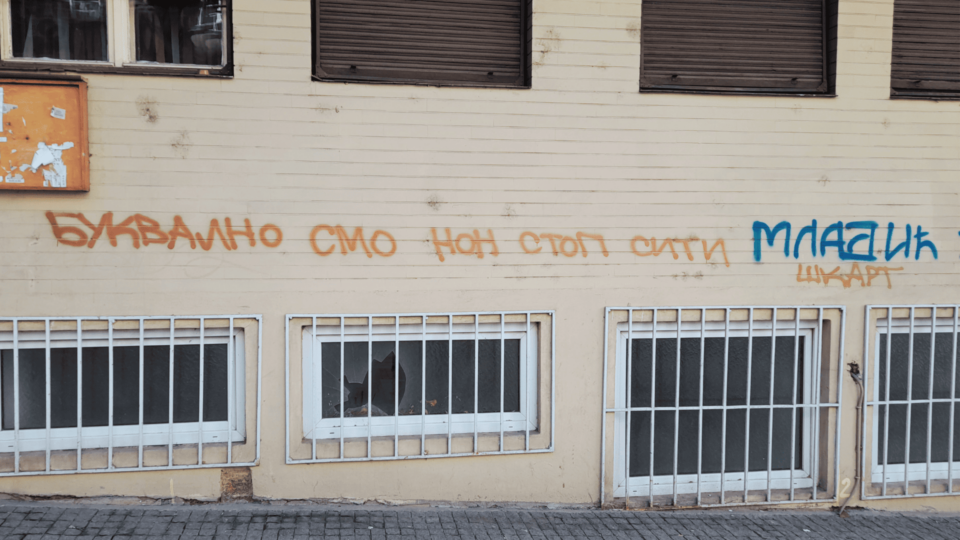
When it comes to the mural of Mladić, Koler states that according to all reports from 2021 to 2023, the tenants did not give permission for the mural to be, making it a form of vandalism of the building. When it comes to the message, she emphasizes the importance of the context: Mladić was sentenced in 2021, which sparked a “graffiti war” of sorts. Many activists and citizens painted over murals as well as created their own, with opposing messages to those of the nationalist groups expressing support for Mladić and claiming his life sentence is unjustified.
Ćirić says that these murals are not only illegal but also systemic, and she expresses concern about their potential to incite violence.
When it comes to the cult of Mladić, Koler points out that it doesn’t exist in isolation but is part of a wider pattern of glorification of war criminals in public space.
“The principle that applies to the case of Dragoljub Mihailović also applies Ratko Mladić: it’s about the continuity of the narrative that rehabilitates actors associated with Chetnik ideology,” said Koler, adding: “This narrative is based on the reinterpretation of history through the prism of ‘heroism,’ with the simultaneous presence of strong ethno-nationalism, self-victimization, and ideas that include territorial pretensions such as the concept of ‘Greater Serbia,’”
The cult of Mladić, according to Ćirić, is one of many sub-cults that make up “one big nationalist cult.” From this repertoire, ranging from the medieval Nemanjić dynasty to the 1990s, elites pluck whatever is most politically expedient in the present moment.
Young people in Serbia were born into a cult of personality, and Ćirić believes that many don’t even know who Mladić really is. They simply think of him as a ‘hero’ because of the murals and media narratives that they are exposed to. It’s easy to build him up as a hero, but it’s also easy to tear down this heroism, because it’s unfounded, Ćirić notes, adding that this will continue until young people question the source of Mladić’s supposed heroism.
“The man by himself doesn’t mean much until young people join this cult of personality and connect with him on some deeper nationalistic basis,” said Ćirić.
With regard to the portraits of Mladić, both as a hero and a war criminal, Koler believes that the media is so flooded with the subject that young people have become desensitized “because they didn’t experience [the war] for themselves. They hear these extremist narratives, and it’s always made into a media spectacle.” Lacking first-hand experience of the wars, many young people feel it doesn’t concern them, and many don’t contest nationalist narratives because they don’t view them as an important factor in their lives at the moment.
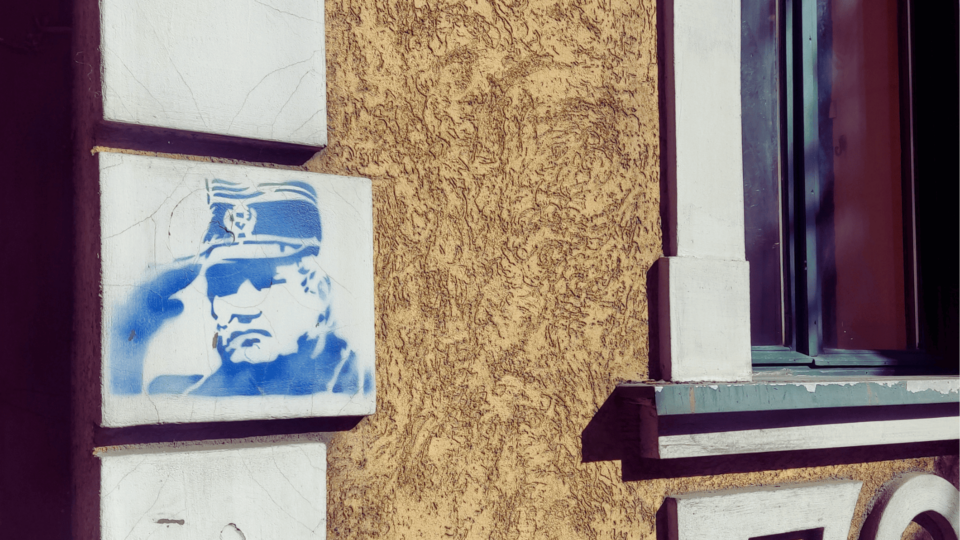
In a 2023 Youth Initiative for Human Rights report, nearly 60% of respondents didn’t know what crimes Mladić was convicted of by the Hague Tribunal. Koler explains that young people don’t know who they are supporting, as evidenced by the fact that many don’t even know that Ratko Mladić is still alive.
Continuously confronted with such murals and graffiti, many young people believe that Mladić is dead, given that he is lauded as a hero at every turn. This makes them even more likely to celebrate or at least respect this convicted war criminal. Koler adds that as of 2023, there were 308 known works of graffiti featuring Mladić, and many more have appeared since.
Serbia’s Youth Initiative for Human Rights has been organizing lectures for young people for years, and Koler says that for many, this is where they first become aware of what happened during the war and the scale of atrocities committed. The problem is that reaching young people is sometimes difficult, and many don’t see the subject of the war as relevant to them or affecting their lives. However, Koler and Ćirić emphasize that some progress is being made, with young people increasingly opting to take part in workshops and lectures. Every year they receive a greater number of applications, including for programs related to the wars of the 1990s.
Fear, the Regime, and Inherited Trauma Versus Solidarity
Ćorović, a peace and civic activist from Novi Pazar, has repeatedly pointed out that young people have no influence on the rhetoric of war crimes denial and the glorification of convicted war criminals. She explained that for a time, many young people didn’t even know who Mladić was because of his stay in The Hague and his absence for many years from Serbian public life. It could almost be said that he had been forgotten—until, that is, the moment it benefitted the Serbian authorities to rekindle nationalist rhetoric. It was then, Ćorović adds, that they “pulled the ‘general’ out of the closet, at a time when he had already been in prison for many years for committing the gravest of war crimes, including genocide.”
Alongside the mural of Mladić, a mural dedicated to Dragoljub “Draža” Mihailović also appeared on a neighboring wall, accompanied by patriotic messages and Chetnik iconography.
Ćorović believes that the figures of Mladić and Mihailović were deliberately chosen as valuable tools of Greater Serbian revisionism to propagate blatant and harmful lies about the National Liberation War and the wars of the 1990s. She states that the only thing that activists in Belgrade could do was to rebel against dominant opinion.
The Youth Initiative for Human Rights conceived of a plan to paint over the mural, which was supposed to happen on November 9, the International Day of the Fight Against Fascism. Even though the gathering was banned at the last minute, Ćorović recalls that several female activists showed up at the scheduled time and spontaneously decided to throw eggs at the mural. This demonstration was unplanned, and Ćorović notes that there was little time to think—the activists simply wanted to do something to show their disagreement with the stance of the Serbian authorities and protest the celebration of a war criminal on the walls of Belgrade.
Ćorović, together with fellow activist and artist Jelena Jaćimović, threw a dozen eggs at the mural and were immediately attacked by men in civilian clothes, who later turned out to be plainclothes policemen guarding the mural alongside hooligans. The two were arrested and taken to the nearest police station, where they were questioned before eventually being released. However, court proceedings quickly followed, which, according to Ćorović, were intended to intimidate them as well as to send a message to the public that anyone who opposes the revision of recent history—more precisely, the lies about the 1990s wars—would be punished. The court summons addressed to Ćorović stated that she was being charged “for disturbing public order and peace” because she targeted the building. However, there was no mention of the mural featuring the convicted war criminal, which clearly indicates that the judicial authorities were well aware of the severity of the criminal offenses for which Mladić was convicted.
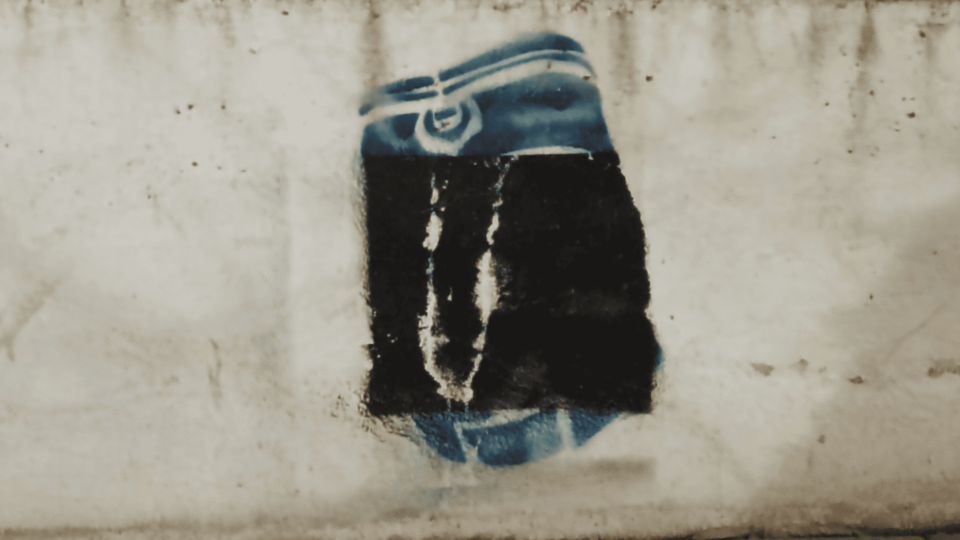
It is clear to Ćorović why Mladić so frequently appears in murals and graffiti as opposed to other figures, such as, for example Radovan Karadžić, the former president of Republika Srpska who was also convicted by the ICTY for genocide, crimes against humanity, and other violations of the laws and customs of war. Mladić is the archetype of a soldier, commander, and warrior, while Karadžić is primarily viewed as a politician in this context.
She also points out that a “triangle” was created between Njegoševa and Aleksa Nenadović streets, which at one point also featured a mural dedicated to Duke Živojin Mišić, who is known as one of the greatest Serbian heroes for his actions at the Battle of Kolubara and on the Thessaloniki Front. The aim was to create a “heroic continuum of Serbian heroes,” equating an actual hero (Mišić) with two war criminals (Mihailović and Mladić) and thus constructing a narrative of continuity in the fight “for the defense of Serbian values.”
Ćorović sees this as “an attempt to present the wars of the 1990s as a freedom struggle” within a longer continuity dating back to at least the First World War, where this struggle is presented as vital for the Serbian people, land, and honor.
In this context, the role of Mladić’s mural is indisputable: he was a military leader and warrior perfectly suited to the regime’s nationalist message that “even now one should go into battle, that young people should prepare for new wars, even against fellow citizens of Serbia.”
As Ćorović states, the treatment she endured reflects “that we no longer have a state and institutions, that we are falling apart at the seams, that brains are being washed, that the rhetoric of victimhood from the late 1980s and during the wars of the 1990s is returning, and that internal enemies are being invented with whom it is necessary to settle scores.”
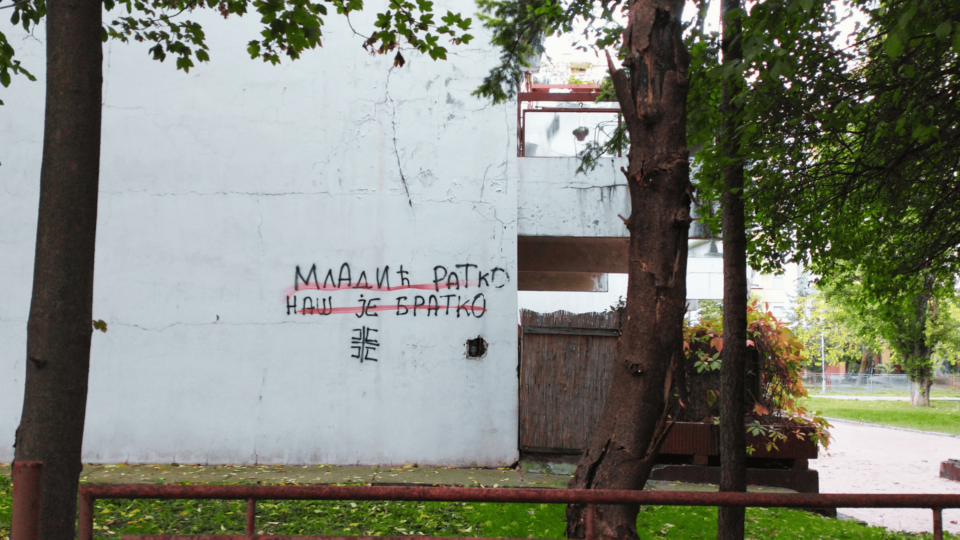
Ćorović also expresses disappointment at the silence of the international community regarding her case and the violation of her free speech. She notes a misperception that dealing with the past and restorative justice are the concern of only a “chosen few,” and that this otherwise painful topic can be handled a few NGO activists.
She also pointed out the Slapp Back Fund of the Krokodil Association, which was created to express solidarity and collect funds to pay the fines imposed on Ćorović. However, it has since expanded to help activists targeted by Strategic Lawsuits Against Public Participation, or SLAPP lawsuits. According to Krokodil, these are “lawsuits filed with the aim of intimidating, burdening, punishing, or harassing the defendant due to public speech and actions, the subject of which are issues of general interest.”
Repainting as Resistance
Many activists have ended up in court because of their activism, particularly anti-war activism and opposition to war crimes denial, including removing hate messages and symbols. It is also common for these individuals to receive threats of death, rape, and other forms of violence.
For this reason, the identities of activists A.F. and S.T. remain protected at their request. As the activists note, while “many threats may be empty, the fact is that the situation in Serbia is escalating toward violence.”
When painting over murals and hate messages, A.F. and S.T. dress as laborers in order to reduce their likelihood of being attacked. They have also had to defend themselves in court and fight misdemeanor charges by asserting that they were restoring the wall on which the mural or graffiti had been painted by returning the facade to its original color.
A.F. points out that because the authorities fail to take action against such graffiti, they have taken its removal into their own hands. Vandals and extremists, knowing that they won’t face repercussions from the state, often guard these murals. A. F. recalls one whitewashing operation that was carried out at night, after which the graffiti reappeared on the wall by one o’clock the next morning.
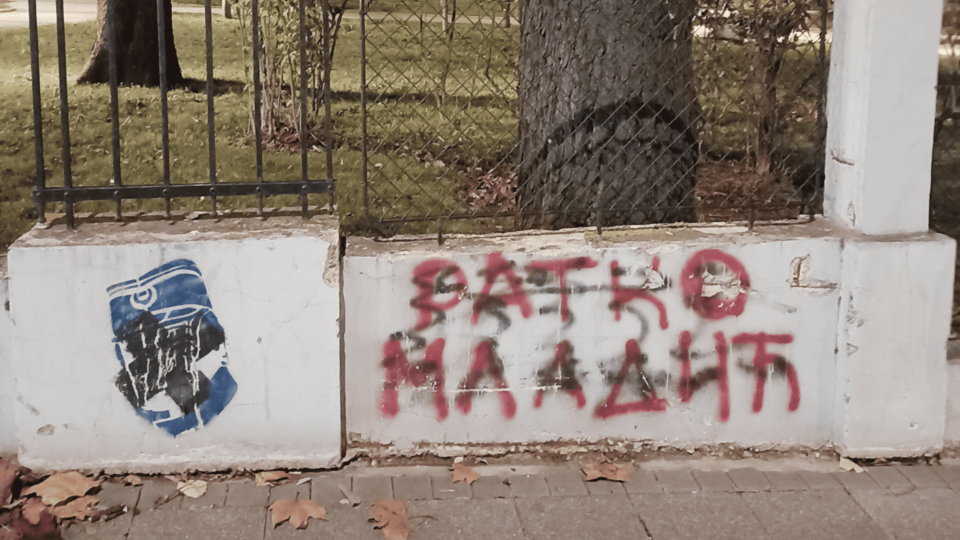
According to A. F, in these operations, “no one can guarantee your safety.”
S.T. confirms that inscriptions or graffiti often reappear on the same walls almost immediately after being covered over, even large works measuring 3 x 20 meters. This also raises questions about financing, as the surface area covered is often equivalent to a small apartment. This, A.F. observes, requires considerable resources. S.T. adds that the messages in this graffiti are not only nationalistic, but also call for homophobia, misogyny, and other forms of bigotry.
Nationalist networks pose a particular threat to activists and can comprise law enforcement and civil servants alongside those who simply do it out of zealousness or as a hobby.
“I would like to stand proud, but then I would no longer be useful, because I would probably be beaten,” said A.F.
“Coffee, a Sweet, Ratko Mladić”
The situation in Serbia is mirrored in other countries in the region, such as Montenegro, where graffiti recently appeared stating “General, thank you for Srebrenica” [Generale, hvala ti za Srebrenici] as well as a rhyme that translates to “Coffee, a sweet, Ratko Mladić” [kafa, slatko, Mladić Ratko]. Likewise, in Bosnia and Herzegovina, a plaque dedicated to Mladić recently appeared in the area of East Sarajevo, and although initially removed, it quickly returned.
Although the idolization of Mladić as a nationalist warrior figure is widespread, it isn’t too late to tackle this problem. However, this would require action from the authorities, which seems unlikely at present. A recent incident wherein a complaint was filed against the mayor of Belgrade for a social media post praising Mladić as a Serbian hero is in indicative. For this reason, it is important to mobilize young people who are able and willing to contest dominant narratives and confront subjects they have long been told to stay away from in order to avoid sparking unpleasant conversations. Every effort must be made to ensure that the next generation resists radicalization, although young people often enter nationalist circles with little thought. It is typically environmental influences rather than independent research and critical decision making that sees people align themselves with these narratives.
In the context of transitional justice, the final verdict against Ratko Mladić is highly significant. However, the continued use of his image to solidify and communally affirm nationalist identity remains an obstacle to reconciliation and a rebuke of the international community, with many people still refusing to recognize him as a war criminal. The fusion of Serbian identity with support for Mladić and other war criminals—that is, the notion that being a “real Serb” is incompatible with recognizing convicted war criminals as such—represents a serious point of contention in both Serbia and the Republika Srpska entity of Bosnia and Herzegovina. However, young people remain the greatest source of hope, as they are increasingly able and willing to pursue common dialogue.
This article was created within the project “Generation Memory”, which is carried out by the Post-Conflict Research Center (PCRC), with the aim of developing inclusive, local peace-building practices and a culture of memory that encourage work on understanding, empathy and critical reflection among young people. The project is financed by UK International Development and is implemented in partnership with the British Council.