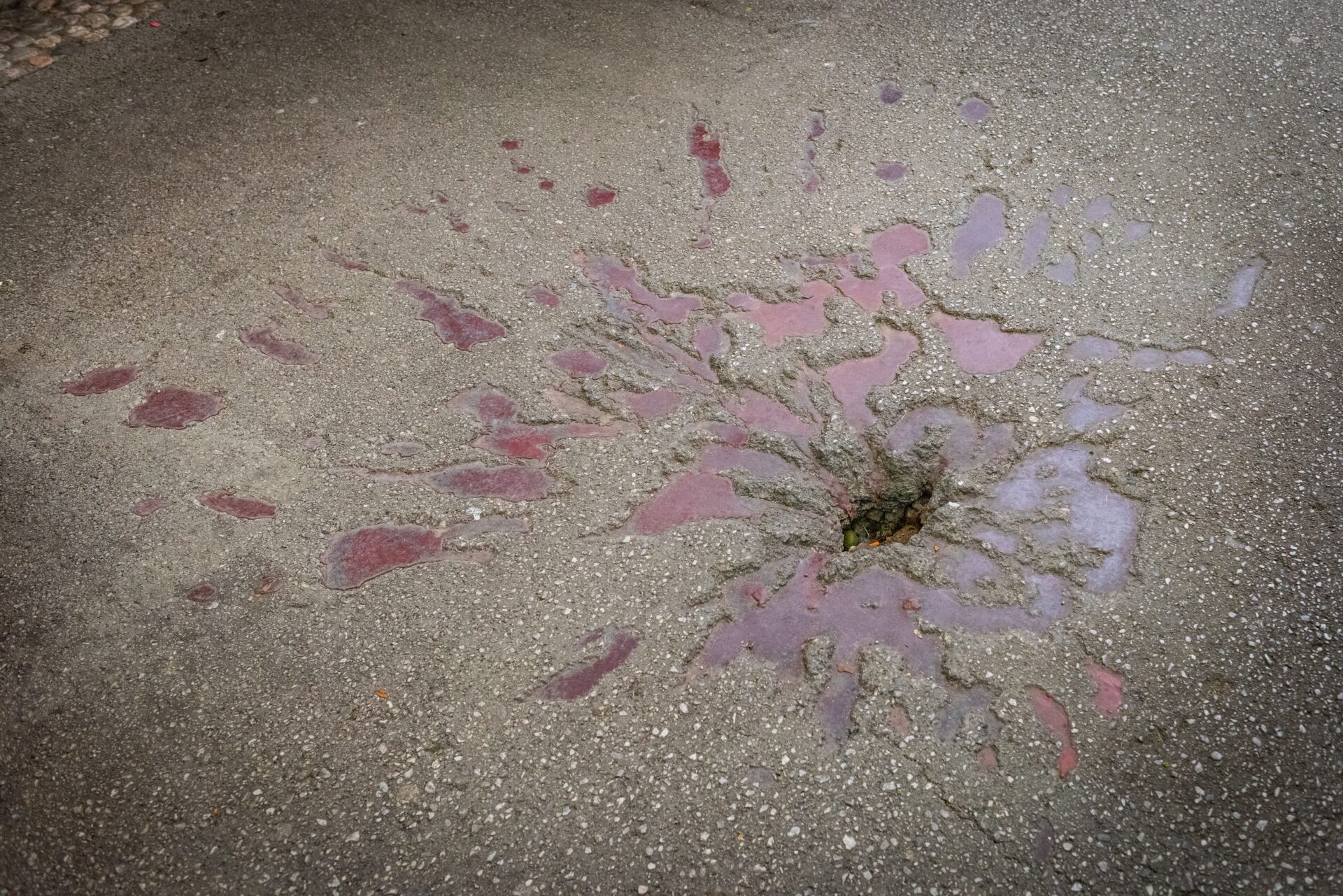
During the siege of the capital city of Bosnia and Herzegovina – 1,425 days long, the citizens of Sarajevo were exposed to terror, including shelling and sniper attacks, on a daily basis.
The shell craters left distinctive scars which, through a less formal and less institutionalized form of memorialization, were filled with red resin and symbolically named Sarajevo Roses. These are everyday markers of memory embedded in the urban fabric of the capital of Bosnia and Herzegovina. This raises the question of whether their visibility has diminished because they have become absorbed into everyday life, and whether they require more mediation of meaning or instead independently allow for more personal and direct remembrance.
The Siege of Sarajevo (April 5, 1992 – February 29, 1996) was the longest siege in modern warfare history. Beyond its duration, it was marked by the deliberate and systematic killing of civilians regardless of where they were (tram, hospital, marketplace, school, street, residential areas, etc.). Electricity and water were cut off, and food deliveries were prevented in order to create unbearable living conditions, while people- including children- were killed by shelling or sniper fire. Thousands more were wounded. During the siege, life became a “record of violence,” something that written reports or statistics alone could not fully capture. All spaces of normal life were transformed into spaces of constant danger.
With the end of the siege, normal life gradually began to return to the city. The population that survived the terror- which was also established in rulings by the International Criminal Tribunal for the former Yugoslavia (ICTY)- was later faced with the complex task of memorialization.
Throughout Bosnia and Herzegovina, memorialization of the 1990-ies period is complicated by fragmented political structures and competing narratives about the past. The construction of memorials and monuments, as one form of memorialization, is regulated through legal frameworks at the entity level or at the level of the Brčko District, while in the Federation of Bosnia and Herzegovina, it is governed at lower levels such as municipalities or cities.
Historian Amra Čusto, who is also the author of the Map of Memory: Sarajevo Roses 1992–1995 and has spent years studying and preserving memorial heritage, particularly through the Cantonal Institute for Cultural-Historical and Natural Heritage, describes memorial heritage as a specific medium through which “social values, ideologies, and historical narratives are materialized.”
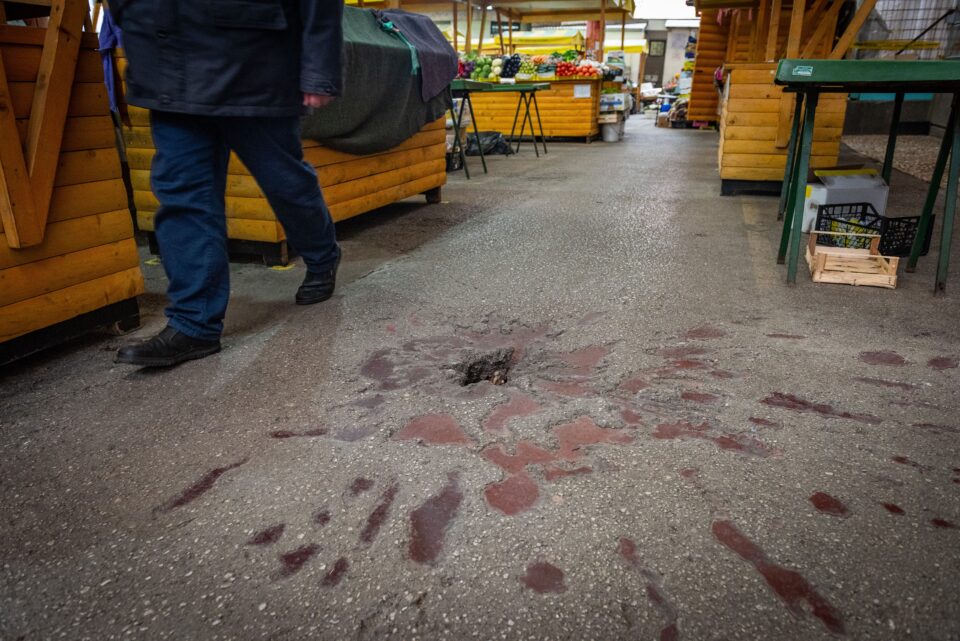
Alongside monuments and memorials, one less formal and less institutionalized way of marking sites of memory in Sarajevo is the Sarajevo Roses. They were not transformed into official monuments or memorials, yet they carry deep symbolic meaning. This form of memorialization emerged organically, created by local communities rather than established through decisions of official institutions.
Unlike monuments and memorials, which seek to fix meaning and provide structured sites of remembrance, Sarajevo Roses remain open to interpretation and allow individuals to engage with memory in a more personal and direct way. However, compared to formal memorialization, they are also less protected and more vulnerable to neglect, disappearance, or reinterpretation over time.
Sarajevo Roses: In Between Everyday Life and Collective Rememberance
Sarajevo Roses were created on asphalt surfaces at the sites of shell craters, which were later filled with red resin. They mark places where at least three people were killed as a result of shelling. Their visual form is striking and inherently paradoxical: the fractured patterns left by explosions resemble the delicate shape of rose petals, while the red color symbolizes destruction and death.
For art historian Elma Fišić, curator at the Historical Museum of Bosnia and Herzegovina, Sarajevo Roses represent a highly successful example of subtle memorialization. Emerging directly from the material traces of violence, they have over time transformed into discreet, almost “silent” carriers of memory that coexist with the everyday life of the urban space.
Dženita Lončarević was 23 years old at the end of the Siege of Sarajevo. Today, she says that the Sarajevo Roses serve as a daily reminder of the preciousness of peace, freedom, and life itself, without the excessive rhetoric or grandiosity often associated with large monuments. Another survivor of the siege, Lejla Mesihović, describes the Sarajevo Roses as “traces of real human lives that were cut short” and as a permanent reminder of the price Sarajevo paid.
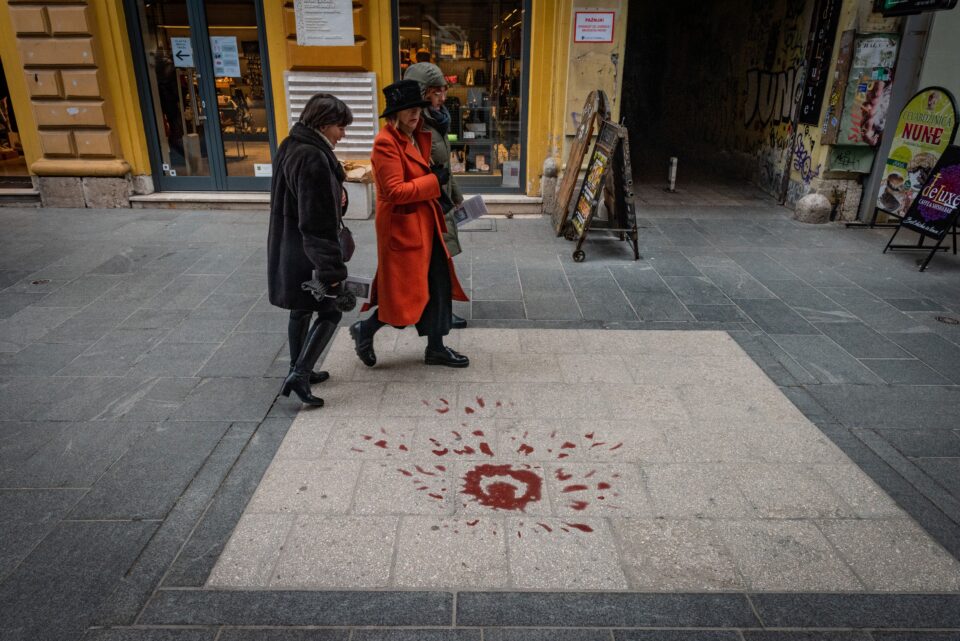
The significance Sarajevo Roses hold for the citizens of Sarajevo is also rooted in their origin. There is no precise record of whose initiative it was to mark these sites; most accounts simply state that the markings were created by the citizens of Sarajevo themselves. This gives them a sense of authenticity that is difficult to replicate through institutionally constructed monuments.
Čusto points out that the Roses were first recognized and valorized as memorials of the siege through professional and research work conducted within the Cantonal Institute for the Protection of Cultural-Historical and Natural Heritage of Sarajevo, before receiving broader institutional recognition. According to her, through activities carried out since the early 2000s- including research, documentation, mapping, and evaluation- the Institute’s team highlighted their historical and symbolic significance, helping establish Sarajevo Roses as an important element of the city’s collective memory.
When asked whether Sarajevo Roses have the potential to become a recognizable part of the broader international culture of remembrance surrounding the Siege of Sarajevo, Fišić points to Stolpersteine as an example- a global practice of “scattered,” decentralized remembrance to which Bosnia and Herzegovina, through the Sarajevo Roses, is increasingly drawing closer.
The Importance of Restoring the Sarajevo Roses
The Sarajevo Roses are located in public spaces and, because of their placement, blur the boundaries between the past and the present. However, this very integration into the urban environment contributes to their fragility.
The Sarajevo Roses 1992–1995 Memory Map, published in 2023, represents one part of the work of historian Čusto, focusing on the promotion of the Sarajevo Roses. She explains that together with her colleague Damir Hadžić from the Institute, they sought to “draw attention to the Sarajevo Roses and the need for their preservation in an innovative and educational way through a map format featuring graphic materials, marked locations, photographs, and numerous lesser-known pieces of information.”
During the process of creating the map, Čusto and Hadžić encountered numerous challenges. She notes that these primarily concerned the physical preservation of the roses, particularly due to “the passage of time, weather conditions, and, even more significantly, construction work and the renovation of sidewalks and streets.” Under such circumstances, Čusto emphasizes, “it was difficult to monitor conditions on the ground because the situation changed almost daily. It was difficult to obtain up-to-date information, and even more difficult to prevent their destruction. Unfortunately, even today, although they are officially registered as heritage assets and despite an awareness of the importance of preserving the original, marked craters of the Sarajevo Roses, the practice of their disappearance from the city’s public spaces continues.”
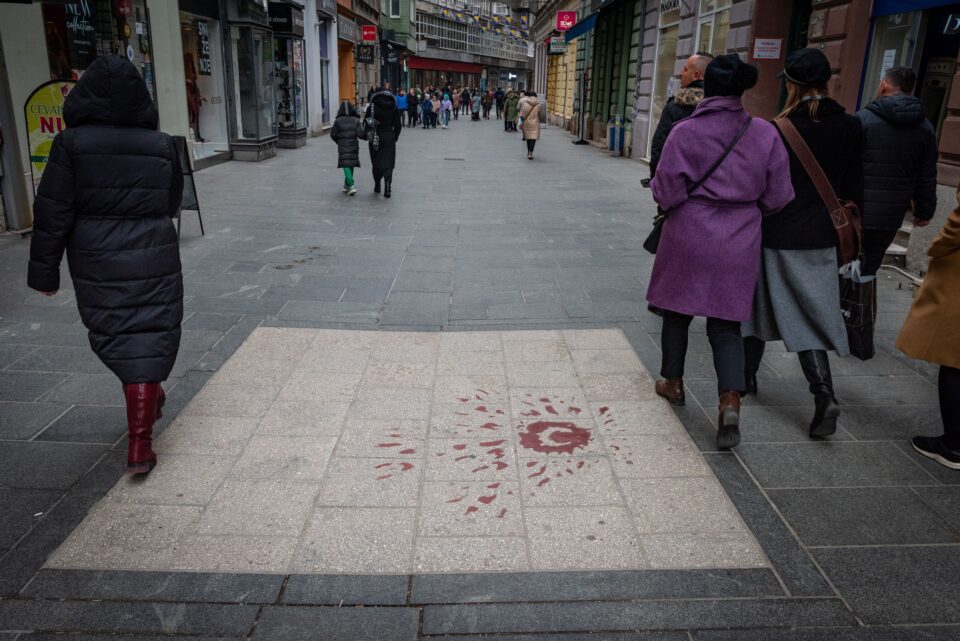
The Sarajevo Roses restoration project, based on a Conclusion of the Sarajevo Canton Government from 2012, is implemented by the Sarajevo Canton Ministry for Veterans’ Affairs in cooperation with the Sarajevo Canton Institute for the Protection of Cultural-Historical and Natural Heritage and the Sarajevo Canton Fund for the Protection and Maintenance of Martyrs’ and Fallen Soldiers’ Cemeteries, Memorial Centers, and Memorials to Victims of Genocide. Since 2023, these responsibilities have been carried out by the Sarajevo Memorial Center, following the adoption of its new official name and its development as an institution dedicated to studying and preserving the history of the war in Bosnia and Herzegovina, with a particular emphasis on confronting the denial of historical facts.
Between 2012 and 2022, the Sarajevo Memorial Center restored 21 Sarajevo Roses. Between 2022 and 2025, it restored an additional 23 Sarajevo Roses located at the Square of the Children of Dobrinja, near the Veterinary Faculty, in Braće Begića Street, on the plateau of the Historical Museum, along Zmaja od Bosne Street, near the Cathedral, in Isevića Sokak, at Karlo Paržik Square, and in other locations.
Ahmed Kulanić, Director of the Sarajevo Memorial Center, stated that since assuming his position, the restoration of the Sarajevo Roses has been a regular annual activity of the Center, and that companies are selected through public tenders to carry out the work. In this regard, the restoration of a number of Sarajevo Roses is also planned for 2026.
“It is of exceptional importance that the Roses be protected from deterioration because they are memorial sites, witnesses in space that authentically portray Sarajevo’s past under siege. This city is full of wounds; on average, 329 shells fell every day. More than 11,541 civilians were killed, including 1,601 children while they were playing carefree games. On a single day in the summer of 1993, 3,777 shells were fired at the capital,”
Kulanić said, stressing that for this reason it is important to preserve the Sarajevo Roses from further decay.
Constructing Memory Around the Sarajevo Roses as an Ongoing and Dynamic Process
Nedžla Kurtćehajić, a PhD candidate in political science and curator of the Memorial Gallery 11/07/1995, emphasizes that “cultural institutions have a responsibility to interpret these traces as dynamic carriers of meaning” and that “their role is multilayered, encompassing the preservation, interpretation, and transmission of meaning.” Fišić notes that the Sarajevo Roses are simultaneously a wound and an interpretation of that wound.
Due to the complexity of the memorialization process, of which the Sarajevo Roses are a part, institutions and individuals responsible for educating the public face a particularly sensitive task. Čusto adds that responsibility for preserving this heritage does not rest solely with experts, but also with other institutions and the local community, precisely in order to reconcile different perspectives on the Roses themselves. She emphasizes that an authentic interpretation of the genuine traces of the siege is crucial.
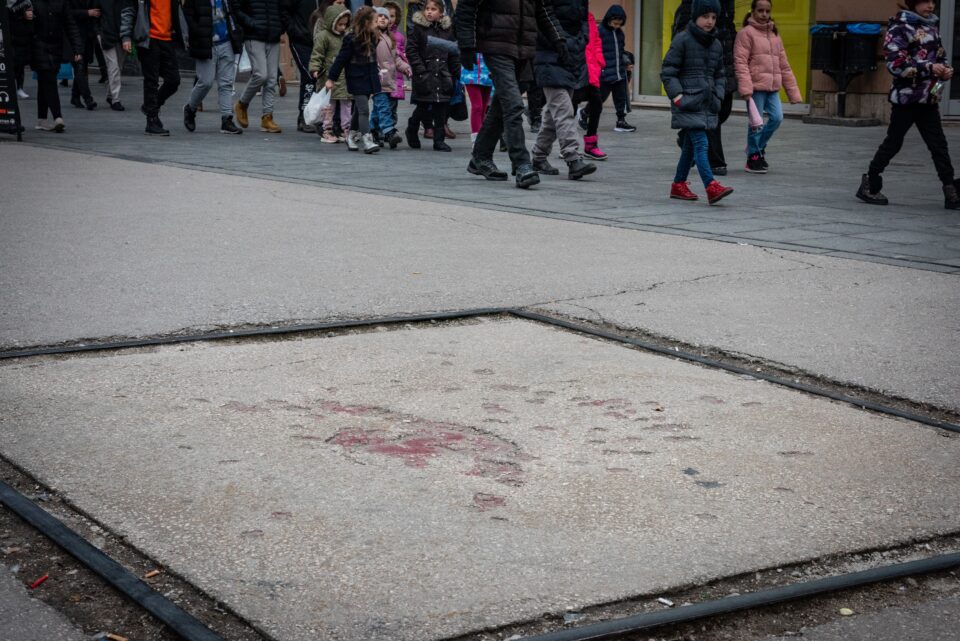
Đema Voloder-Nadarević, a psychotherapist and professor of psychology at the First bosniak gymnasium Sarajevo, was twelve years old when the Siege of Sarajevo began. Like Lončarević, she sees the Roses as places where shells fell on fellow citizens while they stood in lines for bread or water, at marketplaces, on their way to school or work, or simply on their way to play or spend time with friends. She stressed that the Sarajevo Roses reveal the very nature of the war in Sarajevo.
“What is valuable about the Sarajevo Roses is that they preserve the memory that this war was brutal, that no distinction was made between a soldier and a child. People, especially tourists, often find it hard to believe that shells really fell on this city in places where ordinary people moved about,” said Voloder-Nadarević.
Kurtćehajić argues that institutions must contextualize the traces of the siege and “demonstrate their ability to ‘speak’ in a way that is understandable even to generations that did not experience the war.” She adds that photographs, survivors’ testimonies, maps, and archival materials play the most important role because they help unlock the meaning of the Sarajevo Roses. In her view, only through a full understanding of the human dimension of the tragedy can this symbol attain its full significance.
Memorialization does not merely preserve memory; it actively shapes the message about which history a community chooses to remember and what role young people have within that history. Such a message is not neutral: it is both a call to action and a measure of the responsibility that society places on new generations. Fišić emphasizes that it is especially important for “the museological approach not to be static, but to create space for multiple interpretations.” In this way, younger generations can perceive these symbols not as a completed story, but as an open question.
The Educational Potential of the Sarajevo Roses in an Age of Desensitization
Ensuring that young people receive all relevant information about past events, particularly those related to the recent war, while still leaving room for critical reflection, is a complex and challenging task. Moreover, when young people continuously navigate environments in which they are exposed to numerous, and often conflicting, narratives about the past, this can contribute to desensitization.
With the rise of social media and the daily circulation of vast amounts of information, there is a risk that young people may become indifferent to content of this nature. One of the important roles of institutions is therefore to find ways to deepen and renew this relationship with the past and to understand how best to communicate with a younger generation that, due to significant social and technological changes, differs greatly from wartime generations.
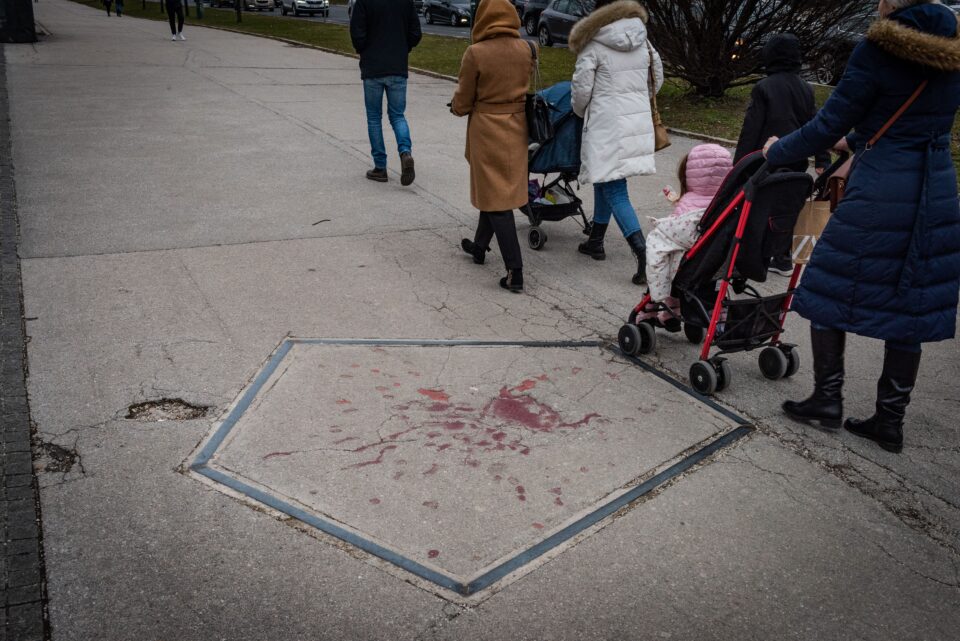
Fišić believes that among younger generations the issue is not simply desensitization in the sense of losing interest or emotional distance, but rather a shift in the mode of perception. What was for previous generations a trauma still being articulated becomes, for younger generations, part of an already existing urban and symbolic landscape. In this sense, the Sarajevo Roses no longer function primarily as a shock or a powerful emotional trigger, but as a stabilized symbol integrated into everyday movement through the city.
She adds that much more needs to be done regarding the Sarajevo Roses. This does not concern their further aestheticization, but rather strengthening their presence in educational programs, museum narratives, and contemporary digital mapping projects. Museums, she stresses, can serve as an extension of the educational process- a place where school knowledge can be expanded, deepened, and transformed into lived experience.
Kurtćehajić likewise believes that the constant presence of wartime symbols in public spaces inevitably leads to their normalization and reduced visibility. Regarding the Sarajevo Roses, she notes that people often pass them by without deeper reflection. Such a relationship indicates insufficient mediation of meaning. For this reason, she argues that a deeper understanding of the symbol can be developed through “personalized narratives, told in language and through media that are familiar to younger generations.”
As an example of a non-traditional learning method that resonates more closely with younger generations, she points to the Archipelago application. Fišić explained that the History Museum of Bosnia and Herzegovina conducts workshops using this application, “through which movement across historical locations and digital layers of augmented reality reconstruct everyday life during the siege.”
The Siege of Sarajevo in the Collective Memory of Younger Generations
Although institutions such as museums, schools, and libraries play an extremely important role in transmitting messages about the war, perhaps even more significant is the way wartime generations speak about the war in everyday life and pass on those experiences through personal stories, anecdotes, and family memories.
Particularly meaningful are the moments when parents speak to their children about their own experiences and explain symbols such as the Sarajevo Roses. Although the Roses are a powerful reminder of civilian deaths, it is important to emphasize to younger generations that war crimes are committed by individuals and that no people bear collective responsibility.
In Sarajevo, as a multiethnic city in Bosnia and Herzegovina, people of all ethnic backgrounds were killed, and all endured the terror together. Even in such circumstances, while struggling to secure the most basic necessities of life, people helped one another and often risked their own safety in doing so. For this reason, remembrance of the war must be free from collective generalizations and directed toward understanding the complexity of human experiences.
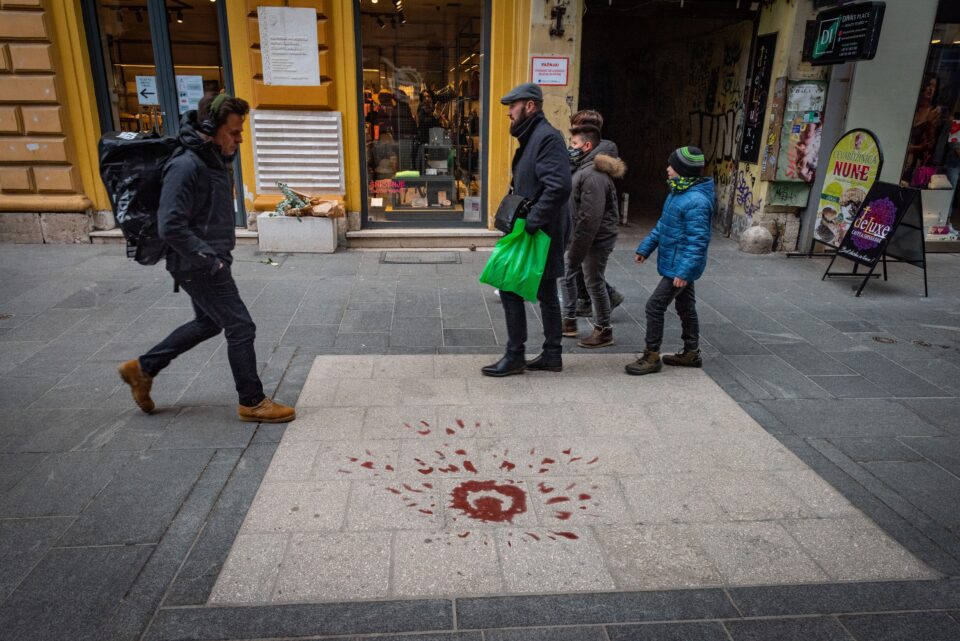
Reflecting on what remains most vivid in her memory from that period, Lončarević highlights the humanity that persisted in inhumane times. She recalls that people cared for one another- both acquaintances and strangers- more than ever before or after the siege. She remembers gatherings by candlelight, long conversations, and humor that endured despite daily danger. She particularly emphasizes that this care was not limited to survival itself but extended to “small” things, such as how someone was feeling or whether a neighbor had enough cooking oil for lunch.
Similarly, Mesihović notes that younger generations will probably never be able to fully understand what the siege meant, which she considers entirely understandable. Nevertheless, it is important for them to know that the siege was not merely a political or military story; it was the real life of people whose youth, education, security, and everyday routines were interrupted, and in many cases whose lives were taken. She stresses that peace, freedom, the ability to study and work without fear, and human dignity are values that should never be taken for granted.
Voloder-Nadarević also emphasizes that young people should first and foremost understand that war is an evil, destructive, and devastating process in which there are no true winners because everyone ultimately loses. Those who survived war, she says, are the last people who would wish another war upon anyone, anywhere in the world.
Finally, Lončarević warns that discussions about the past should not turn today’s young people into hostages of events that occurred more than thirty years ago, no matter how painful and bloody those events were. It is necessary to speak the truth clearly and factually while also encouraging young people to explore other perspectives. In her view, war is a terrible thing, and the only way to prevent history from repeating itself is not only to remember the past, but also to cultivate a willingness to forgive.
This, ultimately, is the most important message of the Sarajevo Roses. Beyond their memorial, historical, and educational value, they should convey to younger generations a warning that people must never be reduced to collectives, that war must never be a choice, and that critical reflection on the past is a necessary condition for a more responsible future.
This article was created within the project “Generation Memory”, which is carried out by the Post-Conflict Research Center (PCRC), with the aim of developing inclusive, local peace-building practices and a culture of memory that encourage work on understanding, empathy and critical reflection among young people. The project is financed by UK International Development and is implemented in partnership with the British Council.