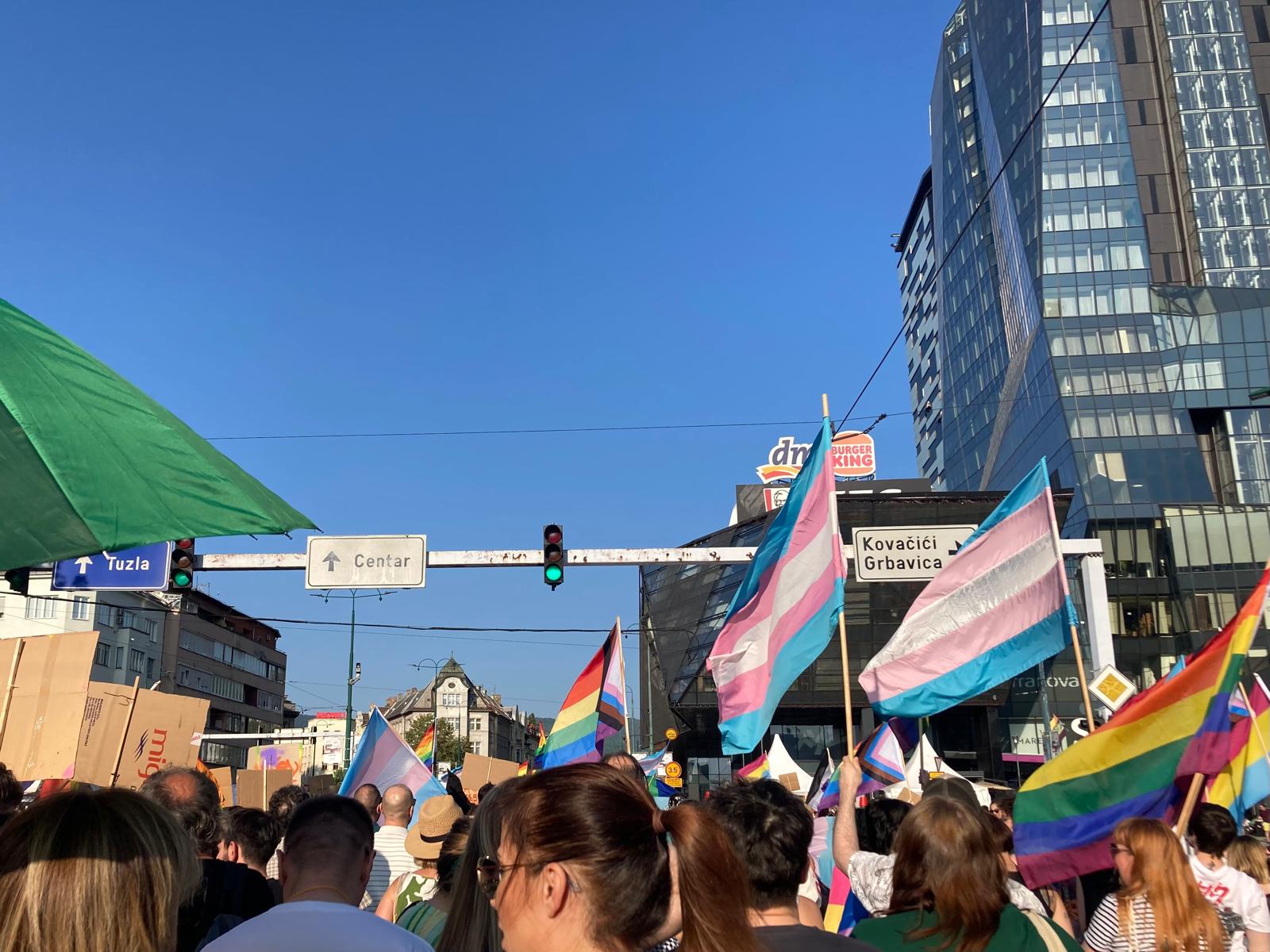
Last year, the sixth Sarajevo Pride March brought thousands of people to the streets of Sarajevo in support of the queer community in Bosnia and Herzegovina.
The atmosphere was cheerful, vibrant, and celebratory. The ‘queer’ or ‘LGBTI+’ community includes people who are not heterosexual and people with a non-traditional gender identity.
There was no tension between protesters, onlookers, and police, and the visible security measures were limited. Although it looked like Pride has always been in the city, it has only been seven years since the first Pride parade was held in the city. Today, this is the largest Pride demonstration in the country. While the capital is slowly getting used to queer visibility, the rest of Bosnia still has many steps to take towards the acceptance and safety of queer people.
Hearts in Windows
Sarajevo’s first Pride March was organized in 2019, in what Jelena Kravljača, speaking on behalf of informal group Bh. Pride March, describes as “a very significant event for Bosnian society.” At the time, there was uncertainty among organizers and protesters about the public response to the march. Safety measures were heightened and there was caution among the protesters. Thankfully, the march passed without any major incidents. A participant in last year’s Pride who describes himself as “a straight, boring, Irish white man” explains that this is the fifth time he is taking part in Sarajevo Pride. He recalls the tension around the very first march and the serious security measures that were taken then, but also the positive atmosphere, which he remembers as “electric.”
We walked downtown instead of up, and when we were going past the windows […] everyone was making hearts at the people in the windows, and they were all making hearts back. The windows were full of people doing that, all the way down.
The positive response to the first Pride march was reassuring for the queer community and allies. Now that there has been continuity in the event for several years, participants and organizers feel secure about celebrating Pride in Sarajevo. Kravljača confirms that the high security measures of the first march are no longer necessary and the atmosphere is generally relaxed. However, there have been instances of hate speech as well as counterdemonstrations. These are signs that the general attitude towards the LGBTI+ community in Bosnia still lacks basic acceptance and understanding.
The Crucial Role of the Law
As in previous years, they are still calling for the same list of demands that are central to the Pride March and published on their website: legal recognition of same-sex partnerships, inclusive laws on gender identity, protection of queer people from domestic violence, the inclusion of hate crimes in the law, and amendments to the law on public assembly to recognize Pride as a political protest. These demands have been the same since the first Pride, because they are salient issues for LGBTI+ Bosnians. So far, none of the demands have been met.
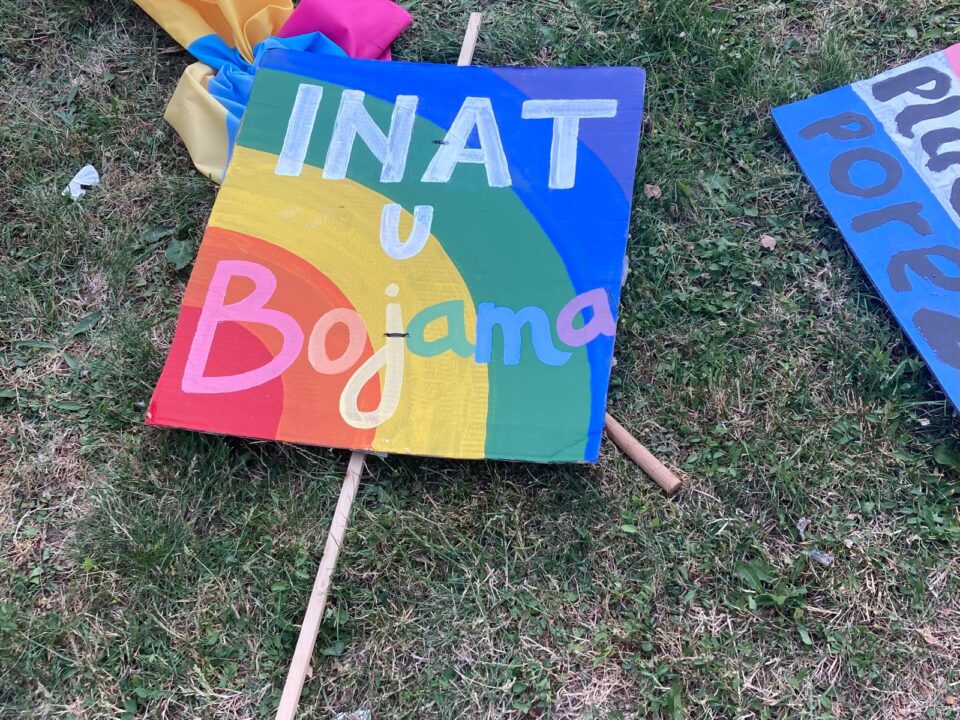
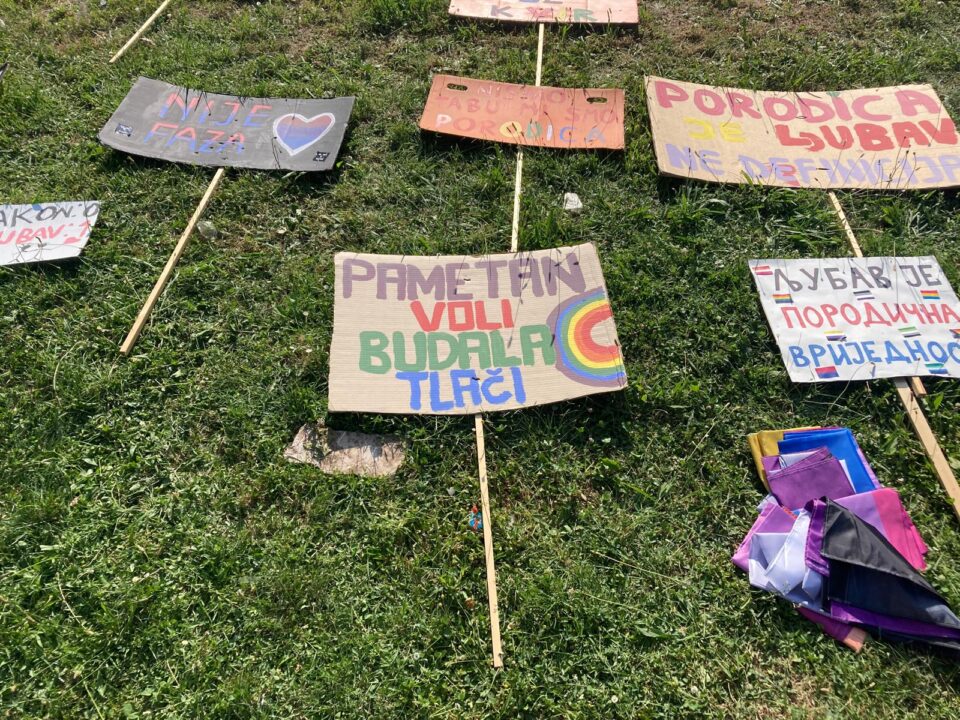
“Today it’s us, but it could be you or someone else tomorrow. That’s why it’s important that we stick together, side by side. For seven years we’ve been taking to the streets of Sarajevo with the same demands – that our families be legally recognized, that we’re protected from violence, that we get the Law on Gender Identity and that the right to assembly be equal for all citizens of Bosnia and Herzegovina. Lesbian, bisexual, intersexual, trans, gay and queer people have been waiting for these laws all their lives, because there is no politics behind none of our demands. We don’t want our lives to be discussed as a political issue. Our lives, our families, our futures are behind our demands,” the organizing committee said.
According to the organizing committee, “Invisibility, isolation, lack of recognition, exclusion, and violence, in both the private and the public spheres, are the biggest problems for the LGBTIQ population in BiH.” Currently, same-sex couples in Bosnia and their children are not protected by the law like other families. The law does not regard two people in a same-sex relationship as family members, which raises issues when it comes to healthcare, child custody, and inheritance, among many other things. There are also differences in queer rights across the country. Sarajevo Open Centre (SOC) is an organization that monitors and advocates for equal rights for queer Bosnians. Their 2025 Pink Report investigating the state of LGBTI+ rights in Bosnia shows that in the Federation of BiH, while there is space for dialogue and discussion on queer rights, the institutional progress is limited. This is illustrated by the fact that the Federation has been working on the implementation of the Law on Same-Sex Partnership since 2018, but little progress is being made. Meanwhile, the Republika Srpska is further behind and is actively reversing laws. The lack of legal rights and regulations goes hand in hand with ignorance about queer issues. Here, same-sex couples are less visible and accepted because such relationships are not officially recognized. Since the notion of ‘gender identity’ was erased from all laws in the Republika Srpska, transgender and intersex people are legally invisible. People cannot be protected by the law if they are not recognized by it, making it crucial that laws across Bosnia include all LGBTI+ people and protect their rights. Equal rights can lead to higher social acceptance and, vice versa, acceptance will help to achieve equal rights sooner. At the same time, regression in queer rights or acceptance in society also influence each other negatively, which can create a downward spiral.
The Power of Equal Rights
Besides demanding equal rights, Pride is also crucial in increasing visibility, acceptance, and support for the queer community. The organizing committee wants people to understand why this is so important: many queer people who are not supported by their environment feel neglected or rejected, and many struggle with poor mental health because of the discrimination they face every day. A large part of this comes from a lack of understanding and visibility, and the annual Pride march aims to change this.
Both the Pride organizing committee and the SOC emphasize that equal rights would result in better access to healthcare, protection of human rights, and safer family lives for LGBTI+ Bosnians. Many Bosnian same-sex couples want to make their relationship official, for instance through marriage, according to the Pink Report. Acceptance is necessary to move towards a future where Bosnian children will not have to feel unsafe because of their sexual orientation or gender identity. The introduction of equal rights has the potential to change the lives of queer people. The Pride committee stresses that there is nothing special about their demands: they simply request human rights for everyone. These legal changes would be important steps towards equality for all Bosnians.
The Future of Pride
Sarajevo is in many ways characterized by exceptional diversity compared to the rest of the country. This is also the case when it comes to Pride. Outside of the capital, visibility and acceptance of the queer community is much harder to find. There are no other cities that host a Pride event, but the organizing committee in Sarajevo works year-round to empower queer communities across Bosnia. Although they would fully support a Pride march in another city, they don’t expect this to become a reality anytime soon. Besides, there is still a lot of work to do in Sarajevo.
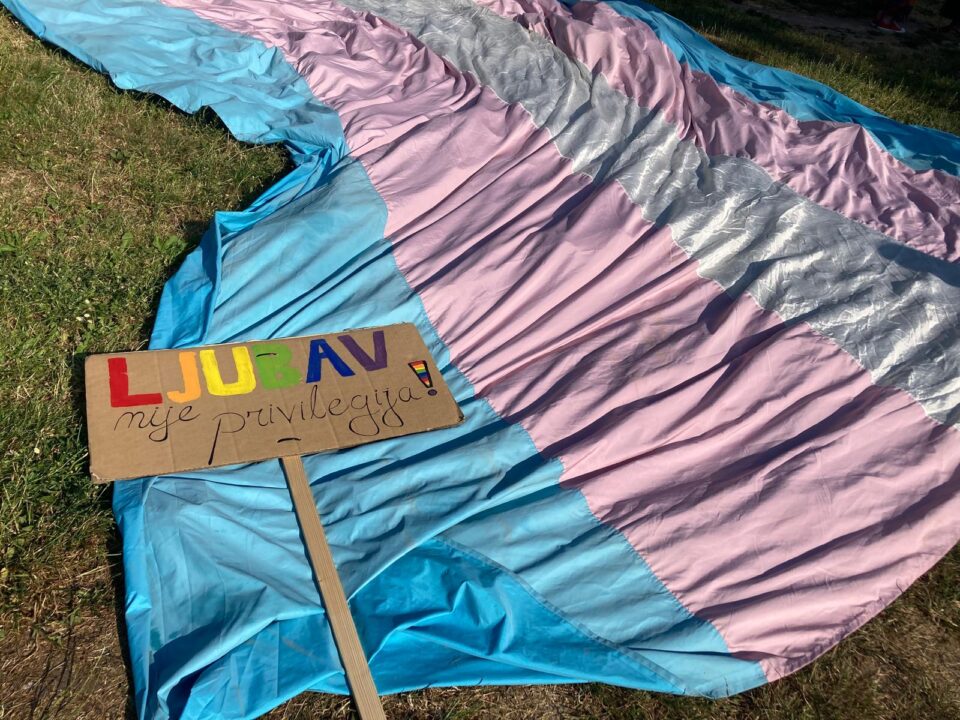
Despite queer visibility in the city, there are still LGBTI+ Sarajevans afraid to come out to society. One protester at the march explained that most of her Bosnian friends who attended were not queer, while her LGBTI+ friends did not feel comfortable joining the march. Insecurity remains in the queer community, but through their resilience and determination, queer visibility continues to slowly advance in Bosnian society. SOC also sees positive changes, although mostly through grassroots efforts. Continued activism is necessary to enforce institutional change. Kravljača emphasises that “every individual who shows up at the protest – whether a direct member of the community, an ally, or a supporter – is of great importance.” The determination to continue striving for equal rights is also expressed by the protesters at Pride: “Ljubav je ljubav – love is love – and I firmly believe that.”