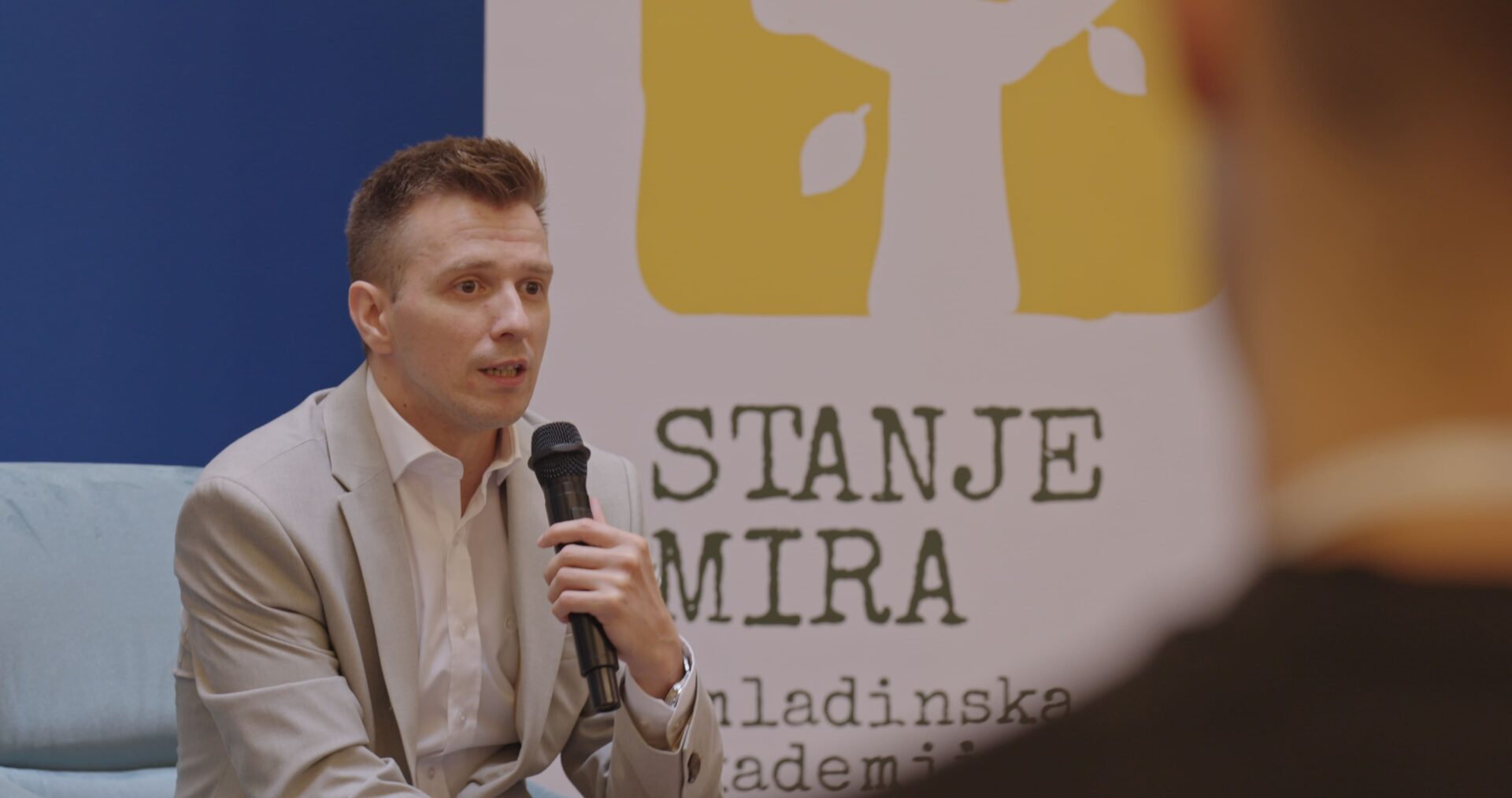
Obstacles are a natural part of life, and challenging circumstances are a constant in our daily journey. Many people give up before they even begin, but simply taking the first step already puts you far ahead of those who let fear, hesitation, or laziness keep them from ever trying.
Life’s constant setbacks and challenges can also be a motivation for progress and an indicator that you only need to take the first step on the path to success.
Denis Agović is a role model and example for others on how to achieve the extraordinary. He turned his childhood passion for basketball into a career that has made him a sensation in Bosnia and Herzegovina and across Europe.
Denis has cerebral palsy and in 2024, he competed in the Masters Tournament in Amsterdam, making him the first professional player with a disability ever to participate in a World Basketball Federation competition.
“It still sounds incredible. By appearing at the Masters Tournament in Amsterdam in 2024, I entered the history of not only European but also world basketball as the first professional basketball player—in this case a 3×3 World Tour player—in history to compete as a person with a disability. My opponents were not people with disabilities, but professional, senior 3×3 basketball players,” said Denis.
As Denis says, his top priority is to remain physically healthy, fit, and in-shape for competitions, ensuring his career lasts as long as possible and is marked by success.
Yet, he sees his greatest achievements as merely an added bonus, because for Denis, fulfilling his dreams is more than enough.
“For a person who was born with a disability and spent part of his life practically immobile, achieving his dream and being able to become a professional basketball player at the highest level in the world is truly a dream come true,” he reflected.
The Importance of Family
On any path to success, the support of family crucial. Denis emphasizes that behind his success are many people who have given him unconditional support and assistance, including fellow professional basketball players, fitness trainers, physiotherapists, doctors, and, most importantly, his family.
“My family has played a special role throughout this journey. They were key in building my mental strength, giving me the confidence to live a life without barriers, and supporting me in the pursuit of my athletic dreams,” he added.
This basketball player, however, has faced numerous obstacles and challenges on the road to success. At no point, he emphasizes, has his journey been easy. In facing these obstacles, the most important thing is to accept their reality and come to terms with the fact that they may never disappear completely. Only through persistent work, sacrifice, and the refusal to give up, Denis explains, can one’s goals be achieved.

Achieving international success is undoubtedly easier with the developed support of the state and institutions. However, due to systemic weaknesses, such support is painfully lacking in Bosnia and Herzegovina, where everything is reduced to an individual struggle. This was certainly true in Denis’s experience.
“We shouldn’t view the lack of support for athletics as a lack of support among individuals, because fellow athletes put their hearts and bodies on the line for Bosnia and Herzegovina. It’s extremely important to understand the role of sports and the promotion of the state, and only then can we understand why institutional support for athletes at all levels of government is extremely important,” said Denis.
Due to the state’s indifference to sports and individuals, more and more people, especially the younger population, are going abroad with expectations of a better life and easier success.
“If you ask me, what our beautiful Bosnia and Herzegovina needs is to give these young people the opportunity to return and put their talents and abilities at the service of their homeland in the future,” Denis asserted.
Great Sacrifice
However, Denis believes that every success must be deserved and earned. Denis’s desire to represent Bosnia and Herzegovina in the best light is beyond doubt. Even without a developed institutional structure that would provide permanent and sufficient support, he is passionately motivated to represent his country.
“It’s obvious that our opponents who play for other countries have a more systematically organized athletic culture, which makes it easier for them to achieve success in sports. Yet, speaking from personal experience, we athletes from Bosnia and Herzegovina have no stronger feeling than our love for our homeland,” he said.
In addition to his sports career, Denis also has other professional obligations, proving that it’s possible to coordinate training and work and achieve success in both fields at the same time.
“Of course, the sport itself requires sacrifices for both preparation and competition, and sometimes it can be very challenging to balance all your obligations. However, when you do what you love with a lot of passion, as I do with basketball, and if you also have the support of your work team—as I also do, thank God—things are basically much easier,” Denis notes with satisfaction.
When he goes out on the court in front of a crowd, he is often met with disbelief. This isn’t a problem for him because he has long accepted his disability and tries to get the most out of himself physically, both in sports and in life. Among many anecdotes from his career, he recalls:
“A beautiful thing happened once when I travelled with the 3×3 national team of Bosnia and Herzegovina to the European Basketball Championship qualifications held in Bucharest. I saw a friend I hadn’t seen in almost 10 years, who, in the meantime, had become the director of the 3×3 national team of Greece. I was making my first appearance on the national team of Bosnia and Herzegovina at that tournament and, in a way, once again pushing the boundaries of inclusion in sports.”
Athletes often turn to coaching after their competitive careers end, and Denis is thinking of pursuing a similar path.
“I’ll definitely remain committed to basketball in some form, especially 3×3 basketball. My goal has always been, through this sport and through my personal example, to show the kids to come what can be achieved with will, sacrifice, and hard work. I want my career to last as long as possible, and then I’m certainly prepared to impart my ‘modest’ basketball knowledge to young talents,” said Denis of his future plans.
This Sarajevo native has been struggling with cerebral palsy since he was born in 1989, but that has never stopped him from realizing his dreams.
“Cerebral palsy, the diagnosis I’ve had since birth, isn’t a disease but a condition. In my case specifically, it’s a reduction in motor skills, although in some forms it can cause more severe damage to the locomotor system. It’s very important to understand that this is a permanent diagnosis and that it’s something that you need to learn to live with and function with,” said Denis.
For those living with disabilities like cerebral palsy, sports are much more difficult, but also very beneficial. In addition to building physical strength that makes everyday life easier, sports also provide motivation, mental stability, and the desire to be better every day than you were the day before, according to Denis.
“As an individual, I might be sort of unique in that I have more endurance than some other disabled people, but that doesn’t make me better. Sports are supposed to teach us, first and foremost, how to be winners in life, and for that, it’s enough just to love what you do. When you do what you love, you might think that you’re the best, but if someone proves that they’re better than you, you leave the field proudly with your head held high and continue to work harder and more than before,” he adds.
Denis believes that this is a universal recipe for success, which must be based on a foundation of hard work and dedication, underpinned by belief in yourself and your dreams as motivation.
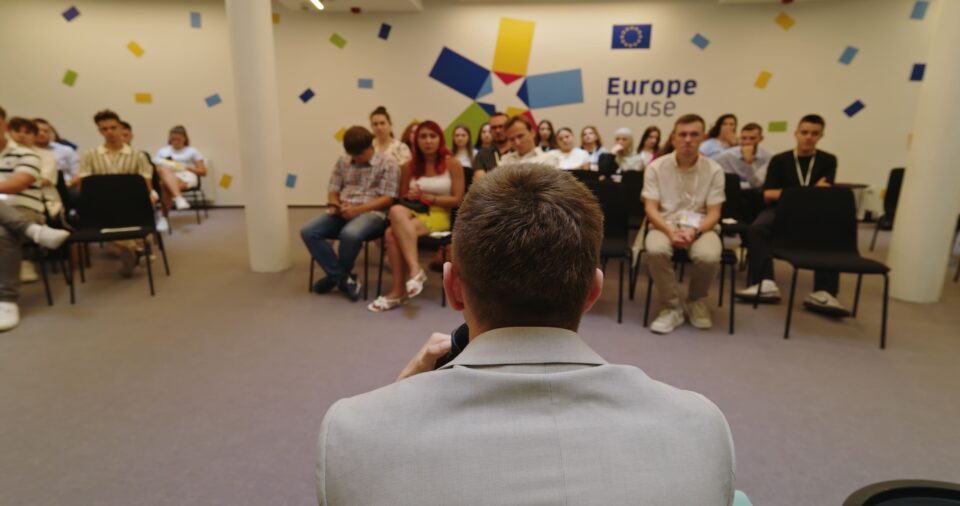
Triathlon Dreams
Denis doesn’t limit himself to just basketball. He has also participated in a marathon and vertical marathon in Sarajevo, leaving many to wonder where he gets so much energy and inspiration.
“It’s true that I love sports, and over the years, I’ve participated in competitions that required me to face great challenges, bordering on the almost impossible for a person with cerebral palsy. With the vertical marathon in 2015, I was confronted with one of the biggest challenges for a person with cerebral palsy, which is stair climbing, where the goal was to climb from the ground floor to the 36th floor of the Avaz Twist Tower, which is 768 steps. That’s one of the true challenges that I’m extremely proud of. The race I ran through the streets of my city was also a special feeling for me because it zapped every last bit of my strength. However, none of that can be compared to the fact that I’m a professional basketball player today,” said Denis.
A few years ago, he decided that he would like to try a triathlon, but that remained just an aspiration.
“In the end, the triathlon remained just a wish, even though I spent a lot of time preparing for the undertaking. Ultimately, I gave up because, due to my lack of balance, I couldn’t perform well enough on the cycling part. So, I gave up on that venture with a heavy heart. It’s one of the most important lessons I’ve learned: no matter how much effort you put in, sometimes you still won’t reach your goal. But it’s important to accept defeat as a means to grow and develop, both as a person and as an athlete,” Denis reflected.
Asked how he deals with opponents who may treat him differently or underestimate him because of his disability, he replied:
“I’ve never actually gotten into a confrontation with people who looked at me as different in some way, or belittled or underestimated me. There were certainly situations like that, but it’s a completely normal part of life. Not everyone you meet in life will understand you completely or see you the way you want. I’m lucky enough to always see myself as my greatest competitor, and the most important thing for me is that when I have the opportunity to do what I love, I give it my best, regardless of the outcome or of certain people’s opinions. They, of course, have the right to their position and opinion, and that’s perfectly fine,” he said.
He adds that playing basketball professionally is his greatest victory. He hopes his story inspires young people to believe in themselves and their dreams, but that it also teaches them that without an adequate approach, dedicated and methodical work, and often enormous sacrifice, there is no success.
“As long as when we leave the court, regardless of the outcome, we can calmly accept the result because we know we gave our very best, we have nothing to regret,” he stated, adding that he hopes everyone finds some wisdom from his story that they can apply in their own lives for staying motivated and finding the energy and strength to face their own challenges.
He encouraged young people to look up to those who become stronger in the face of adversity and allow challenges to push them forward. No one should underestimate themselves, and everyone can reach for the stars. Success is open to all, Denis concluded.