Although young people are often referred to as the future of society, the question arises ahead of the 2026 elections scheduled for October 4 in Bosnia and Herzegovina: to what extent are they truly part of its political present?
There are 519 candidates across 18 lists for the Tuzla Canton Assembly, with citizens set to elect 35 representatives. Young people are among the candidates, yet mere inclusion on an electoral list does not fully reflect the scope of their actual involvement in political life. The question remains whether they participate in policy creation and decision-making, or if their role is largely confined to pre-election activities and token representation.
In publicly available election platforms, political parties most often mention young people in the context of education, employment, economic security, and remaining in the country. The Party for Bosnia and Herzegovina (SBiH) includes a Youth chapter in its 2026 election platform, while the Social Democratic Party (SDP BiH) highlights Jobs and Youth. Meanwhile, the Party of Democratic Action (SDA) and People and Justice (NiP) link youth-related issues to several broader policy areas. No current, publicly available 2026 election platform could be found for the Democratic Front (DF) to allow for a similar comparison.
However, while election platforms reveal what parties promise young people, they do not indicate the extent to which young people are actually given space within the parties’ own political structures. Consequently, youth representation is not merely a matter of the number of names on electoral lists, but also concerns the opportunity to participate in decision-making, policy formulation, and the assumption of political responsibility.
Between Presence and Actual Influence
Amer Jusić, a young candidate, believes that politics is not a realm reserved only for older generations. His decision to get involved in politics, he says, stemmed from a desire to be politically engaged after considering various political options.
“It isn’t reserved for ‘mustachioed men’ – those types who are far removed from who we are. On the contrary, it’s open to all of us,” Jusić says.
He believes that young people do have a role in decision-making, though such opportunities remain scarce. He attributes this not primarily to older people standing in their way, but rather to a lack of interest among young people in political engagement.
“Young people have adequate scope for decision-making, yet very few take advantage of it. Admittedly, this is not because older generations are sabotaging their opportunities, but rather due to a lack of engagement in politics or even political apathy on their part,” says Jusić.
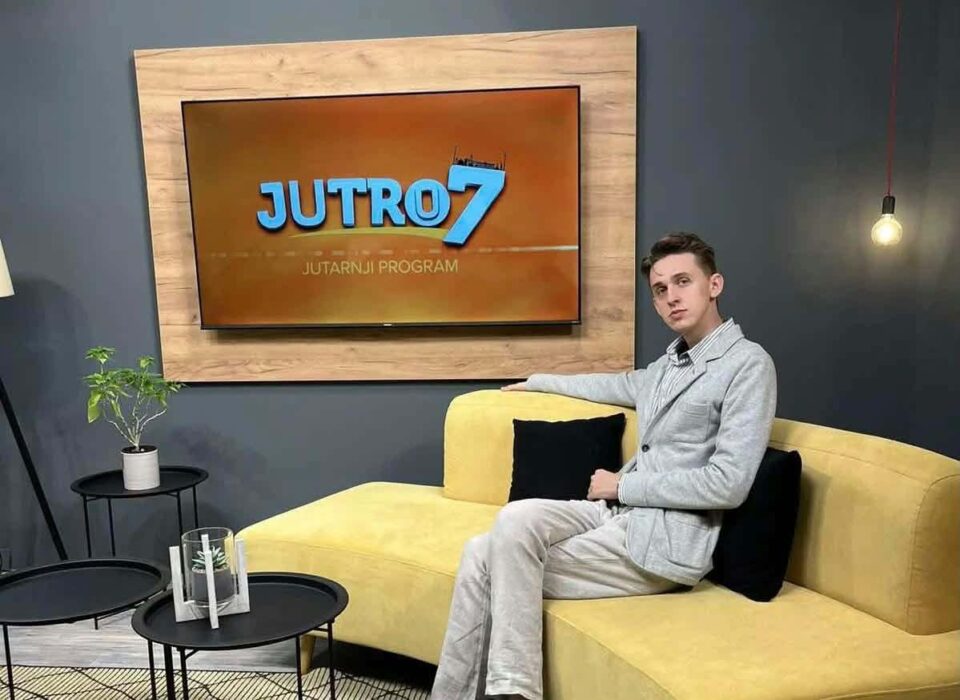
Admir Smigalović, an SDP councilor, also emphasizes the need for more active youth participation; speaking from personal experience, he notes that while young people are indeed given opportunities today, there is still room for improvement.
“From my own experience, I can say that young people are being given somewhat more space today than in the past, but I believe we can and must always do more. I am a relatively young person myself who was given the chance to participate in political life and assume responsibility, and that is precisely why I believe such opportunities should be extended to other young people,” says Smigalović.
For him, however, mere presence is not enough.
“It has never been enough for me to simply be present. I believe that when we are given an opportunity, we should demonstrate that youth can be an asset—through energy, fresh ideas, a willingness to work, and a different perspective on problems.”
Smigalović believes that young people should be involved in policymaking and decision-making, not just pre-election activities.
“I think young people should be given increasing opportunities to participate in shaping policies and making decisions, rather than just being part of election campaigns. Of course, that opportunity comes with responsibility. Young people must show that they are ready to work, learn, and take responsibility for their proposals,” he said.
Therefore, as he puts it, age should not be the sole criterion.
“I would like to get to the point where a young man is not viewed primarily by age, but by what he can offer to the community,” said Admir.
“Young People Are an Indispensable Part of Every Agenda”
Admir Karić, a political official, believes that while young people feature in the programs and documents of political parties, their participation often fails to progress beyond that stage.
“Young people are an important part of every written document produced by political parties. Unfortunately, that is usually where it ends; they remain merely part of the plans,” Karić notes.
He identifies another issue: young people often settle for a limited role within political structures, while their ambitions, as he puts it, can be stifled by more experienced politicians.
Speaking about his own party, Narod i Pravda (People and Justice), Karić notes that young people are recognized in party congress documents and programs, but also that they have had to fight for concrete positions through active political engagement.
“Young people are represented on election lists, and not just for the sake of appearances. They often serve as key drivers of the processes,” says Karić.
However, the number of young candidates for him in itself is not a sufficient indicator of their political importance. He believes that expertise and moral credibility should be important when selecting a candidate, regardless of age.
“I’m not an advocate for someone being somewhere just because they are young and to satisfy quotas,” Karić points out.
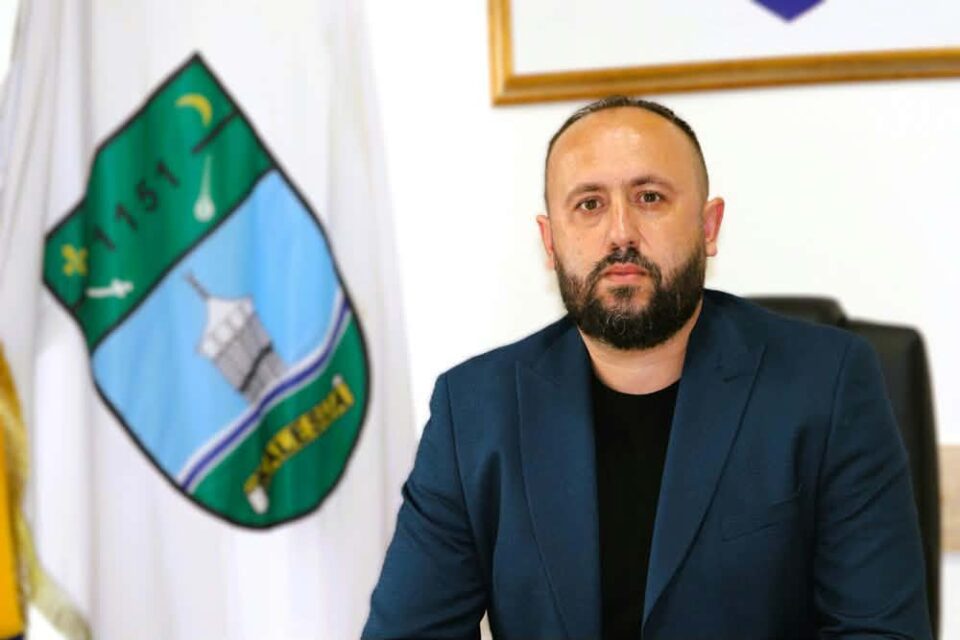
He believes in a combination of experience and youth, warning that placing young people in certain positions does not necessarily change political action. As he says, he would always entrust the position to a young person and appoint experienced people as advisers.
“Here in Bosnia and Herzegovina, it is often the practice that older people are in positions, and young people are ‘appointed’ as advisers, and in this way they gain the sympathy of the public”, he believes.
Who Needs to Open Up Space for Young People?
In the local elections of 2024, according to data from the Central Election Commission of BiH, among the 26,089 certified candidates, 21.39 percent were under 30 years old. At the same time, young people made up 15.84 percent of the electorate.
Vehid Šehić points out this gap, arguing that young people’s presence in political structures still does not match their social importance.
According to the data at his disposal, Šehić says that young people’s participation in the legislature remains very low. As an example, he singles out the state House of Representatives, where there is not a single representative under the age of 30, while the entity parliaments have about seven.
He sees the problem not only in the number of young people on lists or in parliaments, but also in the way political parties open space for new generations.
“I would like young people within political parties to fight for their status, rather than serve as window dressing,” Šehić says.
In his opinion, responsibility is shared: young people must be more active and fight for their place, but party leaderships must also show greater willingness to give them that space.
“Young people must also fight for themselves, but party leaderships must certainly be far more responsible and give young people a chance by sending them to public forums or conferences organized by their political entity,” Šehić emphasizes.
At the same time, responsibility also lies with those who create candidate lists, who, he believes, should show greater responsibility toward different age groups.
For Šehić, the inclusion of young people does not mean excluding more experienced politicians.
“Knowledge must be the main point of reference,” he says, believing that different generations should work together, with young people bringing new energy.
“Politics is like a football team. You have experienced players, middle-aged players, and young players who bring new energy. That is how we should think about politics too, by having that mix,” Šehić says.
On the other hand, Admir Smigalović’s experience shows what that space can look like at the local level. As a council member, he sees political engagement as also involving direct work with citizens.
“First of all, I would tell a young person not to give up on their ideas and not to be afraid to take the first step. I entered politics wanting to contribute to the community through my work, and I quickly realized that concrete changes can also be made at the local level. As a council member, through conversations with citizens, council questions, and initiatives, one can directly point out problems and try to find solutions,” Smigalović says.
He adds that the political engagement of young people does not have to begin only with a candidacy for a higher level of government.
“A young person can influence decisions through local institutions, youth organizations, youth councils, public hearings, and civic initiatives, as well as through active participation within political parties. It is important not to wait for someone else to open up space, but rather to be ready to get involved, propose solutions, and persevere when encountering obstacles,” says Smigalović.
Not Just a Question of Quantity
The question of political participation is not only a question of the space that parties give to young people. It also raises the broader question of why citizens, especially young people, choose to become politically engaged in the first place.
According to Kenan Efendić, the problem of citizens’ motivation to participate politically is not limited to young people, nor is it specific to Bosnia and Herzegovina. As he notes, the democratic system and the very “promise of democracy” have been shaken in both the United Kingdom and the United States, which are considered the cradles of democracy. In his view, these societies have a gap between the formal possibility for individuals to freely shape their own lives and the fact that decisions about broader social life and resources are made by narrow circles of the most powerful.
He adds that we can also recognize similar relationships, to some extent, in Bosnia and Herzegovina. Nevertheless, he believes that, as a smaller society in which people know one another, we still have the possibility of creating authentic networks of cooperation, voters, and civic initiatives. In addition, Efendić sees as a problem the long-standing creation of a sense that the state does not function and that a solution will come only with some “better” state rather than through action in the present.
“I believe the reason is twofold, at the very least: a lack of hope that elections can influence a form of oligarchic rule, and a lack of belief in their own role—their own capacity for action, or ‘agency,’” says Efendić.
In his view, young people do have the opportunity to take action at the local level.
“What stops a dozen activists in a smaller community from preparing one of their own and pushing them forward as a municipal councilor? It might take fewer than a thousand votes. Young people know the answer to that question,” says Efendić.
However, the issue of youth political participation goes beyond mere numbers on electoral lists. He points out that, for decades, political representation has been viewed through the lens of counting candidates, while less attention is paid to the ideas and political values they bring.
“I think the more important question is what kind of candidates these young people are, not how many of them there are,” he emphasizes.
He points out that youth itself does not necessarily mean a new political idea. Space for young people’s political engagement will not open up on its own. He believes that the greatest responsibility for their political breakthrough lies precisely with them.
“Politics and social life are a field of great battles; no one will simply give anyone space to work,” he says.
Young people, he says, must fight for space first within political parties or even “at their doors,” and then in the broader political arena.
From policy documents, through positions on candidate lists, to actual participation in policymaking, several steps separate formal presence from political influence. The interviewees place responsibility for this space differently. In addition to the question of how many young people are on electoral lists, the equally important question is what happens after their names appear: do they become part of political decision-making, or do they remain part of the pre-election picture?