Public memorialization, which includes the erection of monuments and memorials, is an integral component of transitional justice and dealing with the past.
Unfortunately, in the countries of the former Yugoslavia, memorialization is often an instrument of ethno-national memory politics, which reinforces pre-existing versions of truth—“ours” and “theirs.” These narratives affirm the innocence and suffering of own’s own group while relativizing their crimes against others, victimhood culture, and promoting hate speech.
Memorials are not only a tangible part of the public landscape; they reflect what and how a society chooses to remember and how the past is taught, according to the Humanitarian Law Center of Serbia. They add that, ideally, memorials should be “places of learning, empathy and public recognition of victims, based on facts and documented knowledge of what happened.”
Across Bosnia and Herzegovina (BiH), Croatia, Serbia, and Kosovo, the situation is very similar when it comes to memorialization, mainly focusing on narratives of defensive heroism in accordance with the dominant narratives of each state. Monuments to civilian victims of war are mainly reserved for majority ethnic groups in these communities. There are also neutral memorials for all civilian victims of war, but transitional justice experts do not consider these a complete solution either, as they would require a comprehensive chronicle of what happened and to whom.
Consistent and inclusive memorialization should avoid divisive, one-sided narratives and the politicization of the past, as recommended in various international commitment documents. In the case of BiH, the importance of memorialization is highlighted in the Constitution, the Dayton Peace Agreement, the United Nations (UN) Report on Truth, Justice, Reparations, and Guarantees of Non-Repetition, the recommendations of the 2025 Universal Periodic Review (UPR), and the Opinion of the European Commission on Bosnia and Herzegovina.
Memorialization was a component of transitional justice in the 1990s, even before the field was firmly established. However, it has since been pushed aside, probably because the focus has been on culture and society rather than law and politics, according to Louis Bickford, who is the founder and executive director of the non-profit Memria, a lecturer at Columbia University, and an expert on human rights and transitional justice.
Bickford says that the “addition” of memorialization as the fifth pillar of transitional justice is an insufficient move and has come too late. Even so, it has been a very positive development, as it compels lawyers and policy experts to consider the power of memory. “I still locate this in the realm of cultural change, mindset shifts, and narrative construction about the past, which are very difficult to legislate,” says Bickford.
However, he stressed that law and policy should provide general principles for memory processes—like inclusivity, openness, transparency, participation, and outreach—as opposed to dictating specifics, such as the form or content of memory work.
Established Fact as a Guiding Principle
Initiatives to erect monuments and memorials have been led by survivors, associations, and civil society, with the support of citizens and international organizations.
Without the help of the international community—more specifically, the decision of former High Representative in BiH Wolfgang Petritsch—the memorial and cemetery for the victims of the Srebrenica genocide would not have been possible. After the tireless struggle of the survivors, primarily the Mothers of Srebrenica, former High Representative Christian Schwarz-Schilling issued a 2007 decision enacting the Law on the Srebrenica-Potočari Memorial Center and Cemetery for the Victims of Genocide, recognizing the significance of such an institution for achieving reconciliation among the peoples of BiH, facilitating the return of displaced persons and refugees, and securing lasting peace.
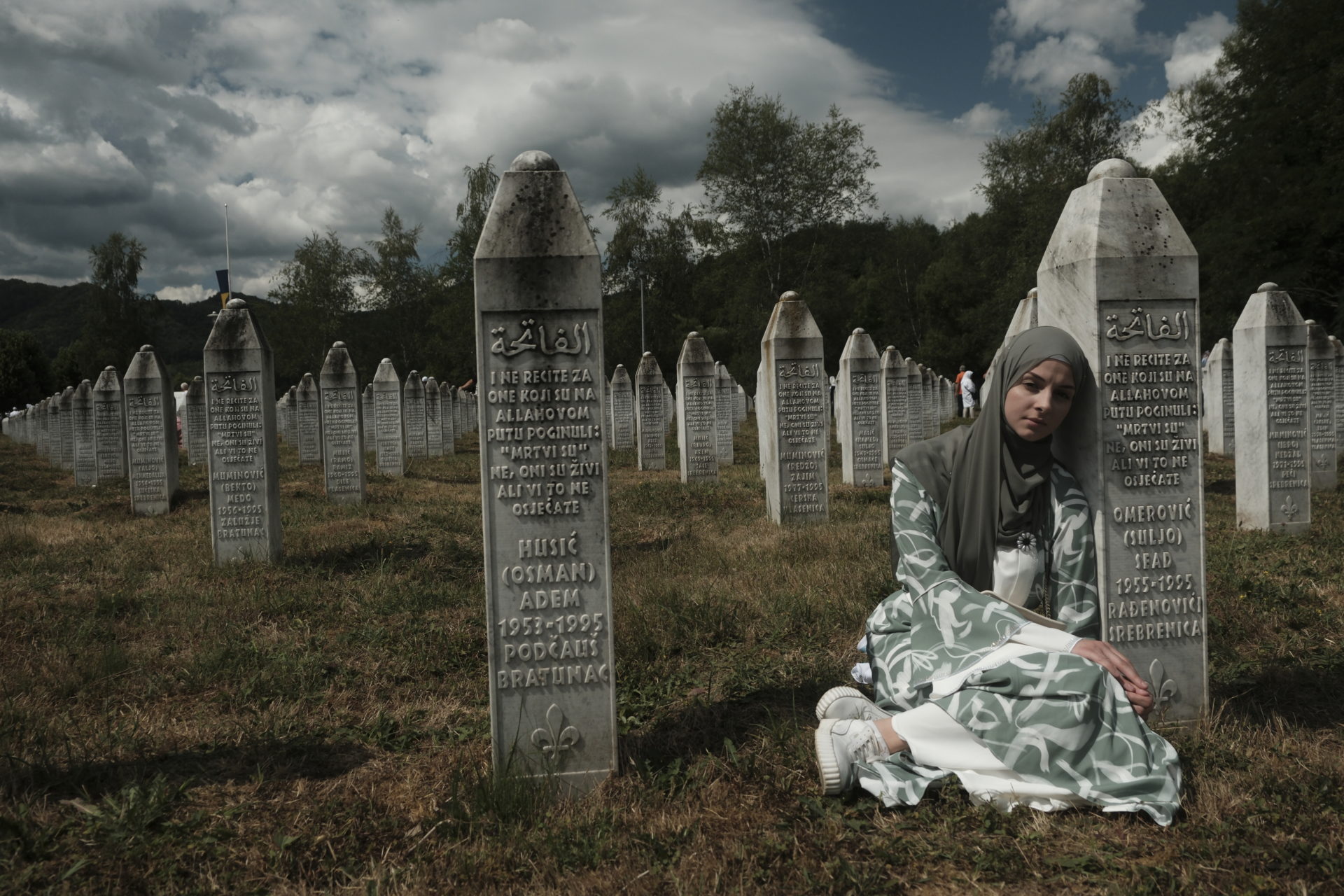
The Srebrenica Memorial Center is a state institution founded in 2000, headquartered in Potočari (Srebrenica) as a place of remembrance for the victims of the 1995 Srebrenica genocide, with a commitment to preserving history and confronting the forces of ignorance and hatred that lead to genocide.
As established by the International Criminal Tribunal for the former Yugoslavia (ICTY) and later the International Residual Mechanism for Criminal Tribunals (IRMCT), more than 8,000 Bosniak men and boys from Srebrenica and 13 surrounding towns in Eastern Bosnia were killed in an act genocide in July 1995, and thousands of women, children, and elderly were forcibly relocated. After the executions, the victims were buried in primary graves and later transferred to secondary and tertiary graves, of which there is abundant evidence.
The first final verdict for genocide was issued against Radislav Krstić, who served as Commander of the Second Romanija Motorized Brigade of the Army of Republika Srpska (VRS) until September 1994 and then as the Chief of Staff of the VRS Drina Corps, and was promoted to the rank of Major General in June 1995. He was sentenced to 35 years in prison in 2004 for aiding and abetting the genocide in Srebrenica.
In addition to Krstić, the ICTY convicted 17 other people of genocide and other crimes committed in and around Srebrenica. Radovan Karadžić, former president of Republika Srpska, Ratko Mladić, former commander of the VRS Main Staff, Zdravko Tolimir, assistant commander for intelligence and security affairs of the VRS Main Staff, Vujadin Popović, former chief of security of the VRS Drina Corps, and Ljubiša Beara, former chief of security of the VRS Main Staff, were sentenced to life imprisonment.
“Respect for judicially established facts can be a definitive guiding principle when erecting monuments and memorials. Such a practice would help ensure objectivity and a credible representation of events,” said Rada Pejić-Sremac, Program Coordinator of the IRMCT Mechanism for Information for Conflict-Affected Communities.
She emphasized that the ICTY and IRMCT’s concerted effort to document war crimes and establish facts has contributed to the development of a legal framework and raised awareness of the importance of justice and accountability.
“Implementing this approach in BiH could involve cooperation with government institutions, NGOs and local communities. Joint activities and dialogue among relevant stakeholders are key to achieving consensus on the importance of truth and justice, as well as to ensuring a model that will include all victims,” said Pejić Sremac.
Marginalization of Civilian Victims in the Politics of Memory
There is no complete database of all monuments and memorials erected in BiH. According to the Central Register of Monuments, more than 2,100 monuments were built between 1996 to 2016 are dedicated to the suffering of civilians and/or combatants during the years 1992-1995. However, some municipalities are not included in this register.
The Association for Social Research and Communications (UDIK), which is the creator of the Central Records of Monuments (CES), states that more than 1,400 monuments are located in the territory of the Federation of Bosnia and Herzegovina (FBiH), 288 of which are located in Tuzla Canton. In the Bijeljina region of Republika Srpska, which includes the area of Zvornik, there are 231.
According to CES data, more than 1,200 monuments dedicated to the victims of the so-called “Homeland War” have been built in Croatia, the majority of which are located in Vukovar-Srijemska (109) and Sisak-Moslavina (100).
In Serbia, the majority of monuments are dedicated to the victims of the 1999 NATO bombing and the Kosovo War. CES recorded 301 such sites, most located in Belgrade.
According to the UDIK analysis, most monuments in the region are dedicated to soldiers, followed by those dedicated to soldiers and civilians, and only then to civilian victims of the war.
“Our analysis has shown that memorials have been built in various forms, and some of them are memorial plaques, crosses, fountains, busts, memorial busts, churches, and various memorial complexes,” said Edvin Kanka Ćudić from UDIK.
Ćudić pointed out that UDIK is conducting additional research that will include the years after 2016, which should complete the CES database of monuments and memorials.
The fact that most monuments and memorials were built for soldiers tells us, according to the Humanitarian Law Center of Serbia, that although civilians often constituted the overwhelming majority of the victims in many environments, they are still marginalized in the dominant politics of remembrance.
“When monuments are erected far more often to fallen soldiers than to civilians, this shows that societies continue to primarily interpret war through heroic, national, and military optics, and much less through the perspective of human suffering and the suffering of civilians,” said Jovana Kolarić, a researcher at the Humanitarian Law Center of Serbia.
She added that this also tells us that in post-Yugoslav societies, the status of national hero is far more politically expedient than the status of a civilian victim.
“A military victim fits more easily into the narrative of defense, sacrifice, and collective pride, while civilian victims often open up more difficult questions: who is responsible for their suffering, why were they unprotected, what did the institutions do, and how can we acknowledge suffering regardless of ethnic background. That is why civilian victims are often relegated to the margins, even though the recognition of their suffering could be the basis for a more inclusive and empathetic culture of remembrance,” explained Kolarić.
A Struggle of Strength and Patience
The legal procedure for erecting monuments and memorials is different in the Republika Srpska, the FBiH, and the Brčko District. In November 2011, the Republika Srpska adopted the Law on Monuments and Memorials of Liberation Wars, which regulates who gives consent for the construction of monuments and memorials.
“Prijedor is one of the most obvious indicators that memorialization in the region is not primarily a matter of respect, but of political power. Families of murdered children and activists have been seeking permission to erect a monument to the 102 murdered children of Prijedor for years, but local authorities have persistently refused or postponed it,” said Kolarić.
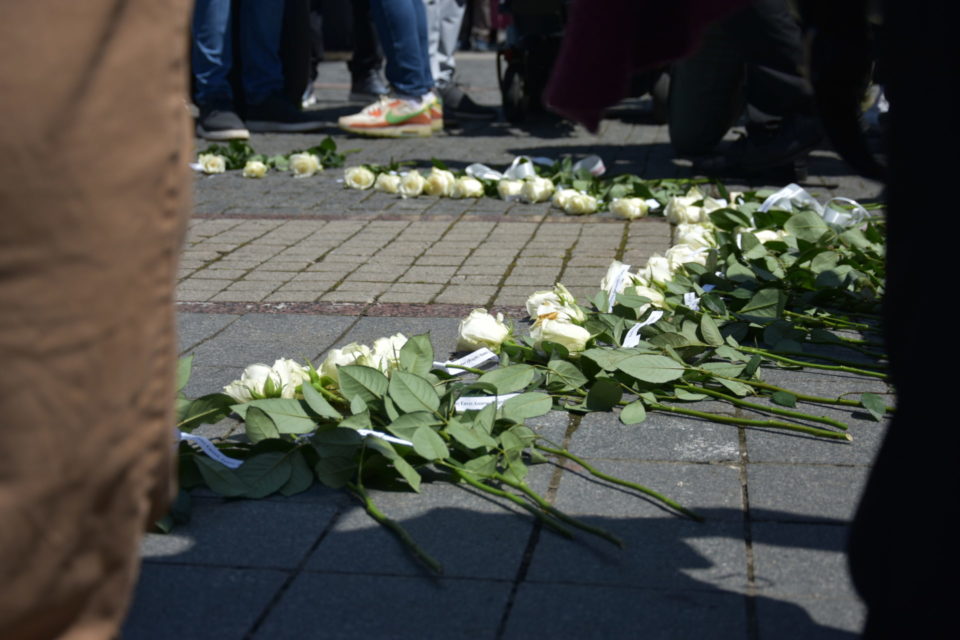
The example of Prijedor is also cited by historian and researcher Nicolas Moll. He explained that long-time Bosniak survivors from Prijedor are fighting to turn three former concentration camps–Omarska, Keraterm, and Trnopolje–into memorials, but local authorities are opposed to this. Today, there is nothing there except for a small memorial plaque in Keraterm. At the same time, he added that in parts of Prijedor where they are the majority, Bosniak returnees have managed to build monuments, for example in Kozarac. He also mentioned the initiative to build a monument for the 102 murdered children, stressing that their continued fight for this monument demonstrates their strength and resilience, and he hopes that one day they will achieve their goal.
“Building a monument is often a struggle that requires a lot of patience and perseverance,” Moll pointed out.
Milica Pralica, president of the Oštra Nula Citizens’ Association, cited the civic initiative Jer me se tiče [Because it Concerns Me], which aims to establish a monument for the 102 murdered children, as an example of the desire to restore humanity to victims. The intention is to mark where someone’s children, siblings, and loved ones were killed in a way that everyone can empathize with. She believes that this type of memorialization contributes to reconciliation.
According to Kolarić, the inability to build a monument for the 102 murdered children in Prijedor cannot be viewed as a local problem but reflects “the conscious denial of public recognition to the victims and a political message that recognition of the murdered children is unacceptable. And it is unacceptable because it would necessarily mean recognition of the nature of the violence that was committed in that city.”
This, as she pointed out, sends a message to the families that their pain is not legitimate or desirable in public space and tells the entire community that critical reflection on the past is not desirable either. “This is contrary to every idea of transitional justice, which is based precisely on the recognition of victims and the right of the community to know and remember,” Kolarić said.
According to the verdicts of the ICTY, the IRMCT, and the Court of BiH, the VRS and its affiliates committed persecution, imprisonment, torture, murder, sexual violence, and other crimes against Bosniak and Croat civilians in the Prijedor area.
Politically Structured Messages
In the FBiH, where more monuments and memorials have been built than in other parts of the country, there is also discontent. Decisions on the erection of monuments and memorials are made at lower levels, by municipality or city governments.
Regarding the monument to the murdered children of Sarajevo, Pralica states that there are narratives that some parties are dissatisfied with because there are no “other names.” “If we cannot reach a minimum consensus on the murdered children in Bosnia and Herzegovina, whatever their ethnic or religious affiliation, we cannot talk about reconciliation. We must accept the facts, and this is not the case on the part of the political elites. Auto-victimization is the most effective, without political will,” explained Pralica.
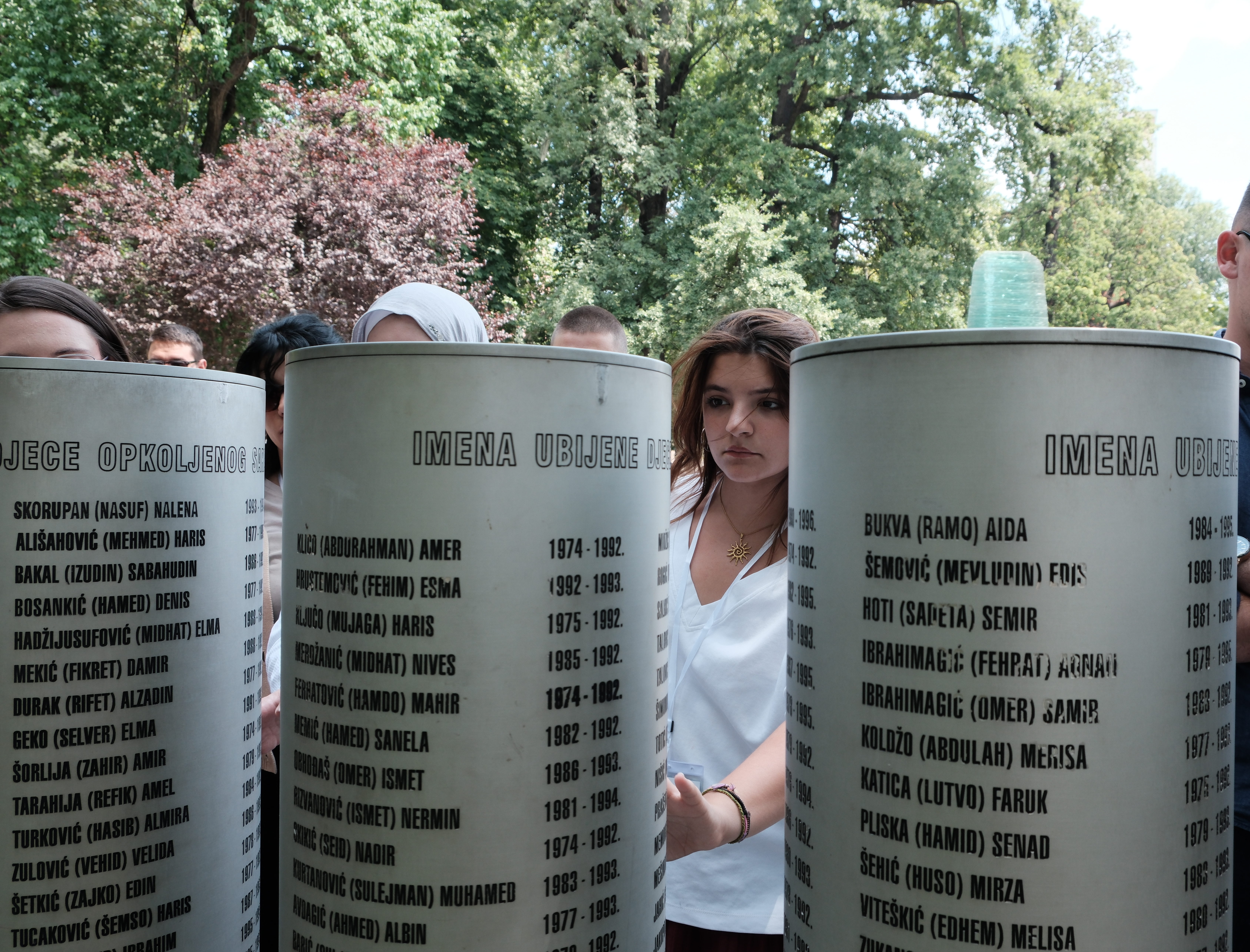
The city of Sarajevo endured the longest siege of a capital city in the modern history of warfare, subjected to shelling, sniping, and terror from VRS positions, according to ICTY and IRMCT verdicts. Unofficial data from Sarajevo victims associations indicates that over 11,000 citizens of the city were killed, of which 1,601 were children.
During the siege, sporadic killings of Serb and other citizens of Sarajevo were committed by the 10th Mountain Brigade of the ARBiH led by Mušan “Caco” Topalović. Their bodies were thrown into the Kazani Pit in Sarajevo’s Stari Grad Municipality. The final number of victims has never been determined, and some are still being searched for. In 2021, city authorities erected a memorial at the Kazani site, but there are also protests from victims’ families.
Kolarić says that the Kazani monument was an important symbolic step forward, but numerous criticisms were directed at the fact that the names of all the victims were not listed, nor were the perpetrators named, so the final message remained incomplete and politically “structured.”
The Law on Monuments and Memorials, passed in 2003, is in force in the Brčko District, and stipulates that monuments—whether politically and ethnically neutral or not—can be erected as long as they respect the equality of all constituent peoples and relate to the period from 1992 to March 5, 1999.
With the help of the international community and local authorities, a monument was also erected in Brčko in 2023 dedicated to all civilian victims of the war.
Monuments for all civilian victims of war, according to Pejić Sremac, allow for the recognition of the suffering of all victims, taking into account the facts of the war, which is of “essential importance for building coexistence.”
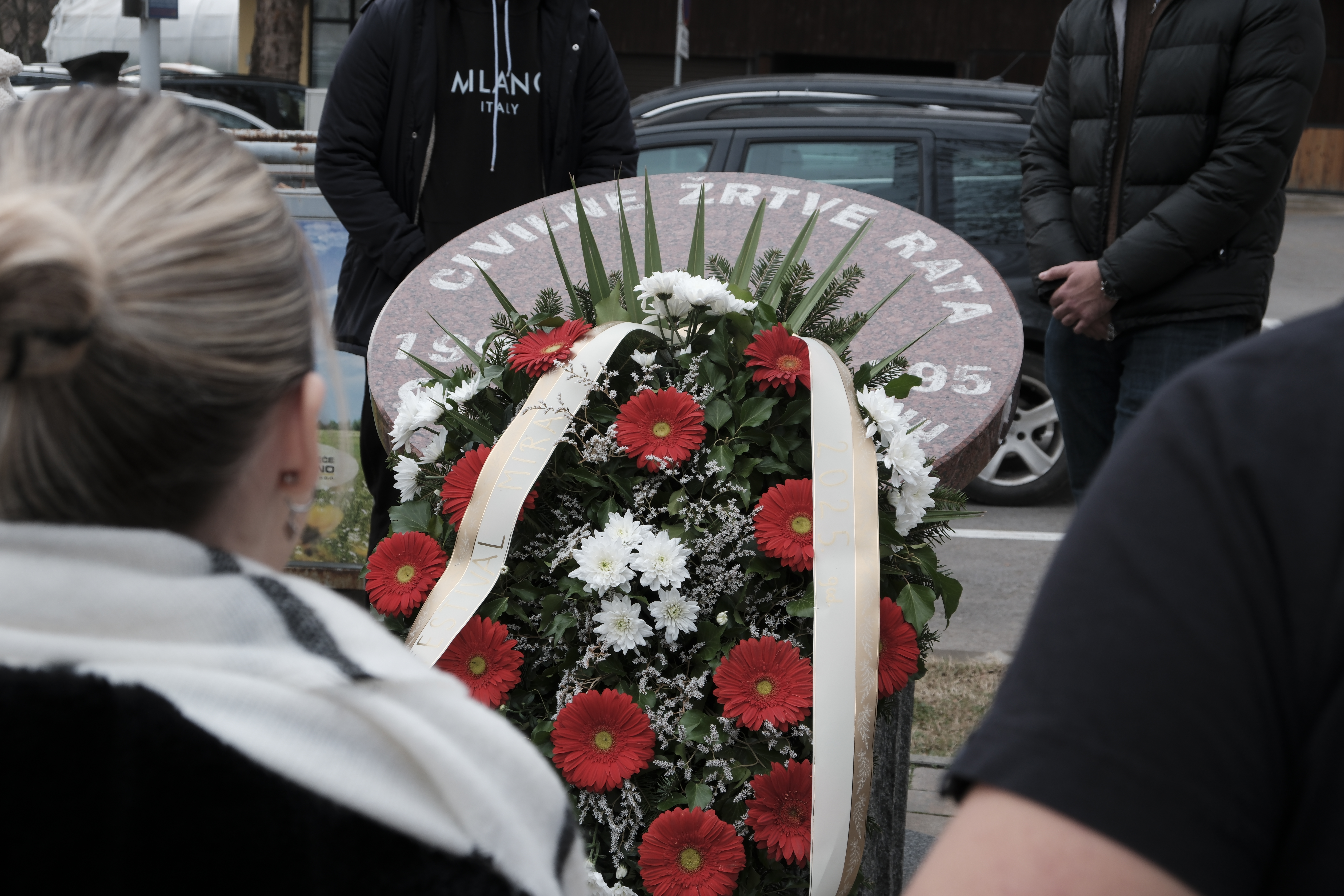
Moll says that monuments dedicated to all civilian victims of war can be useful, but it depends on who takes the initiative to build them, for what purpose, and what form they take. “It’s very important that the decision about the monument is not made secretly behind closed doors, but through an open process of discussion. And while monuments dedicated to victims are important, it would make sense to develop more monuments about other aspects of the war, for example, people who helped and saved others or dedicated to everyday life or cultural practices during the war,” said Moll.
Given the absence of uniform standards for memorialization at the state level in BiH, current practices are highly fragmented practices and often do not further the cause of memorialization. Lejla Gačanica, Human Rights Associate at the Human Rights Team of the Office of the UN Resident Coordinator in BiH, says that adequate normative regulation could have a positive effect on reconciliation processes. She emphasized that the key is not in the mere existence of regulations, but in their quality.
“The framework must be aimed at overcoming existing divisions, inclusive and transparent in the process of adoption, non-discriminatory, and based on the real needs of victims and survivors. It is also necessary to rely on existing domestic expertise and to lead mechanisms that will ensure its consistent application in practice,” said Gačanica.
Sonja Biserko, founder and president of the Helsinki Committee for Human Rights in Serbia, says that memorialization can help, but we need to have insight into what happened chronologically. “Without understanding why it happened, it will do anyone any good. I think it’s very important to follow chronologically when it started, why the Serbian elites started it in the 70s, 80s, and why it intensified after Tito’s death. Without that, it looks as if we’re all just savages who grabbed each other by the throat and that’s it,” Biserko explained.
She emphasized that all sides had victims, but the majority of victims in BiH were Bosniaks, and in Croatia, Croats. Moreover, the consequences of Belgrade’s war policy made victims of many Serbs as they became refugees in huge numbers, including in Croatia and Kosovo.
Denial of the Right to Remember
Memorialization in the region, as Biserko explained, is based on ethnic principles, the principle of the majority group, and “one-sided, there is no objectification, no reference to others, and it reshapes the perception of a broader picture of what happened.” She believes that this problem is most pronounced in Serbia because some of the war crimes were committed by the Serbian side in Croatia, Bosnia, and Kosovo. Serbian victims are mostly commemorated through memorials or graffiti commemorating, for example, the expulsion of Serbs from Croatia or NATO interventions, neither of which is put into the context of what happened in Croatia, Bosnia, or Kosovo.
Serbia has a Law on War Memorials in force, which stipulates that memorials must be in accordance with the “achievements of Serbia’s liberation wars,” which, according to experts, formally prevents memorialization for crimes committed by Serbian police, military, or volunteer units in Serbia.
Thus, the Humanitarian Law Center of Serbia notes that many victims and their families have been denied the right to memory and a dignified memorial to their suffering, even though they were killed on the territory of Serbia, by Serbian units, and in many cases, were citizens of Serbia at the time of their deaths.
In Croatia, the practices of commemorating the victims are in line with the dominant understanding of Croatia’s role in the wars of the 1990s. According to experts, such social memory is very exclusionary and concentrated almost entirely on celebrating the military victories of Croatian forces and preserving the memory of the civilian victims of Croatian nationality.
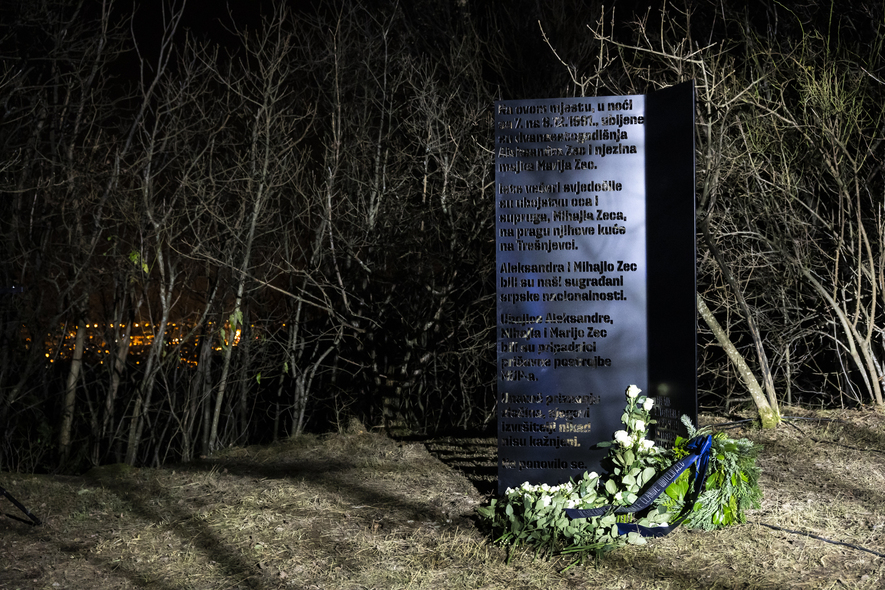
Branka Vierda, an independent researcher and educator in transitional justice and memory politics, stated that the monument erected in memory of the murdered members of the Serbian Zec family from Zagreb is a rarity in Croatian memorial practices. She explained that it is a memorial plaque that was erected on Mount Sljemen in December 2023, as a result of joint efforts made by civil society and the City of Zagreb. The monument was erected after years of civil society advocacy.
“The special feature of this memorial plaque is that it states that the perpetrators of the murder of the girl Aleksandra, her mother Marija, and her father Mihajlo, were members of the MUP unit of the Republic of Croatia, which indicates that the murders were committed out of nationalist hatred. I think it’s also important to point out that Tomislav Tomašević, the first mayor of Zagreb, joined the 2021 commemoration that civil society organizations hold every year on December 7, the anniversary of the murder,” stated Vierda.
A monument to the 72nd Military Police Battalion was erected in front of the Lora Military Base in split, where its members committed crimes against prisoners. According to the Humanitarian Law Center in Serbia, this does not merely represent a commemoration of fallen soldiers but functions as a political message that the proclaimed heroism of the unit is more important than what happened at that location.
The erection of memorials in Croatia is not regulated by a specific law that covers the process in its entirety, but rather by a combination of laws and decisions of local government bodies, depending on the type of monument and its location.
Questionable Inclusive Memorialization
When asked if change is possible when it comes to memorialization in Croatia, Vierda said that in the current socio-political context of rampant ethno-nationalism, it is difficult to allow for a more inclusive consideration of social memory of the 1990s at the national level.
A similar practice is also visible in Kosovo, where state institutions are more focused on heroic commemoration than inclusive memorialization. Most non-governmental organizations are dedicated to the politics of memory, acknowledging crimes. and ensuring dignified memorial activities for survivors.
Speaking on behalf of the Kosovo Humanitarian Law Center, Besnik Beqaj said that due to the lack of inclusive commemoration and education, younger generations are more cautious when it comes to topics of the past. This is because the war is taught in a manipulative way, and state institutions are focused on heroic commemoration and other actors are more focused on victims, while the same state, in the field of youth education, focuses on victimization.
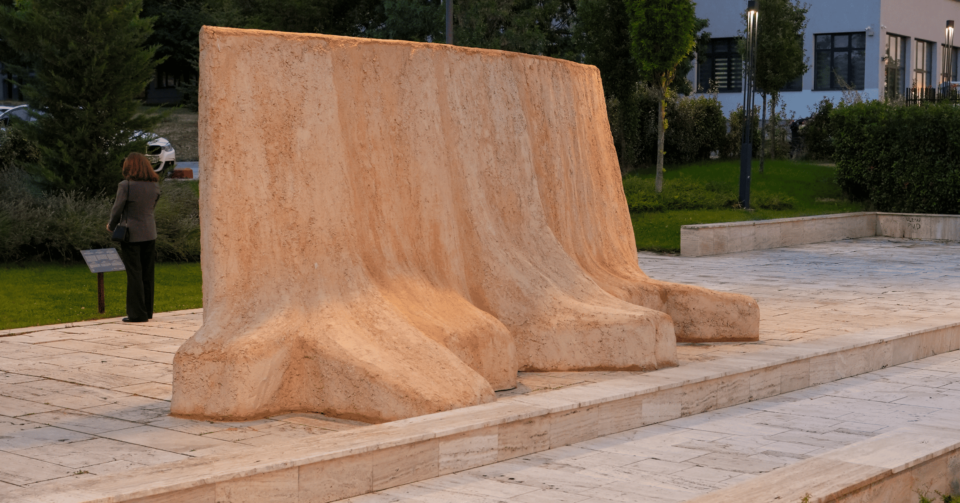
Bekim Blakaj, Executive Director of the Kosovo Humanitarian Law Fund, states that the pioneers in the field of memorialization are civil society organizations. For him, “good memorialization leads to reconciliation and the fight against future genocide.”
Speaking generally about the one-sided narratives that also prevail in Kosovo, he highlighted the example of the Fund’s exhibition “Once Upon a Time and Never Again,” dedicated to 1,100 children missing and killed during the war in Kosovo, which they wanted to hand over to the authorities as a permanent installation, with little success. Their only condition was that the content not be changed, that is, that all victims be included. Unfortunately, no government museum accepted their offer.
The Jahjaga Foundation established a museum dedicated to survivors of sexual violence during the Kosovo War in Pristina, which serves as a platform for reflection, testimony, and education about the experiences of survivors of sexual violence in the war. It preserves their personal stories and challenges social stigma as part of collective memory and processes aimed at justice.
Arbentina Krasniqi, project manager of the Jahjaga Foundation, said that their approach to memorialization is designed to create empathy, not division. She explained that artifacts are continuously added and include handicrafts made by survivors. This provides a form of art therapy but also a source of income for survivors.
Memorialization as a Pedagogical Issue
As in Kosovo, civil society efforts toward various aspects of memorialization are noticeable in other countries. There are museums, oral history projects, and artistic works that document and speak about the events of the 1990s. As an expert in the field of transitional justice, Bickford believes that no strong memorialization initiative can take place without respecting and understanding local traditions, cultural norms, and ways of remembering. He adds that it is possible to get stuck in traditional ways of commemoration and memorialization, which would leave us with cemeteries and tombstones.
“What I have seen around the world is work that treats memorialization as a pedagogical issue and relies more on theories of learning and dialogue than on theories of mourning,” Bickford noted.
According to Gačanica, when done properly, memorialization has an important social function: it recognizes and affirms the dignity of victims and survivors, recognizes the violation of human rights and the suffering they endured, and contributes to the establishment of facts and broader social recognition of crimes.
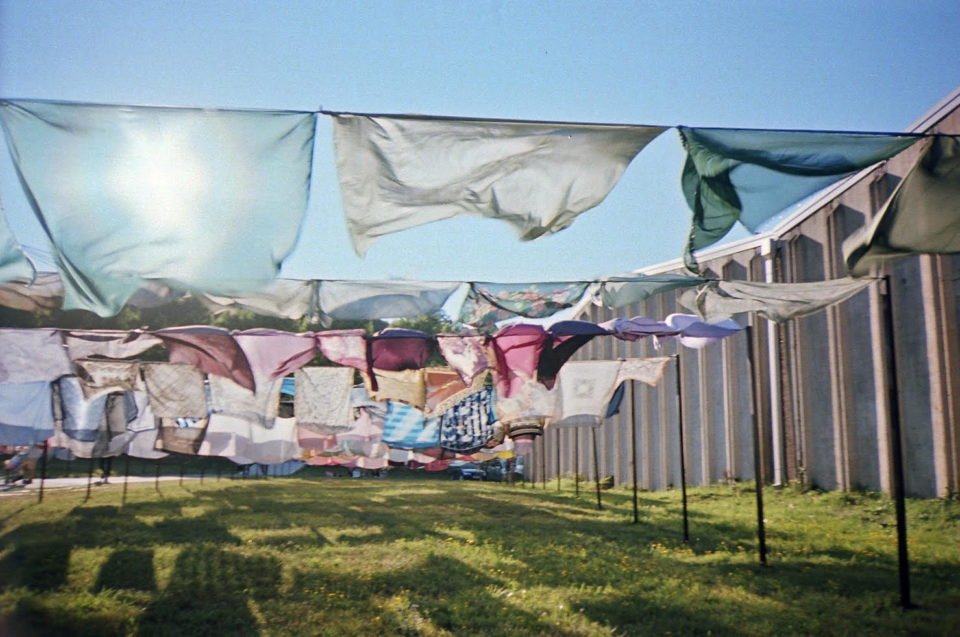
The motive for the authorities to do this, Gačanica stated, primarily stems from the state’s obligation to respond to the rights and needs of victims and survivors, including the right to reparations. Memorialization, as a form of symbolic reparations, is an important element of that response. In addition, establishing clear standards in this area, according to her, can contribute to combating hate speech and denial, which are already regulated through existing legislation, but also act preventively in terms of guarantees of non-repetition.
“Consistent and inclusive memorialization can prevent the continuation of practices that are based on divisions, one-sided narratives, and the politicization of the past,” Gačanica asserted.
She also cited incentives stemming from BiH’s international commitments, including recommendations from last year’s UPR, which emphasize the need to strengthen the reparations framework, the recognition of victims, and the promotion of reconciliation and social cohesion. The report of the UN Special Rapporteur also clearly situates memorialization as a key component of symbolic reparations and prevention. Likewise, obligations under the BiH Constitution and the Dayton Peace Agreement reinforce the principles of human rights and non-discrimination in this context.
Among the motivations for action, Gačanica also highlighted the European integration process, including the European Commission Opinion on Bosnia and Herzegovina, which states the need to strengthen the rule of law, reconciliation, and democratic governance, including a responsible approach to dealing with the past.
Biserko, who has studied the German experience of dealing with the past for years, believes that it isn’t too late when it comes to inclusive memorialization. “It wasn’t possible to expect those who committed crimes to do something relevant for new generations. I think now is a good time, but for that we need support from outside. It was important to document history, which many organizations and individuals have done. We no longer have any unknowns; now it is just a matter of interpretation and incorporation into some truth,” concluded Biserko.
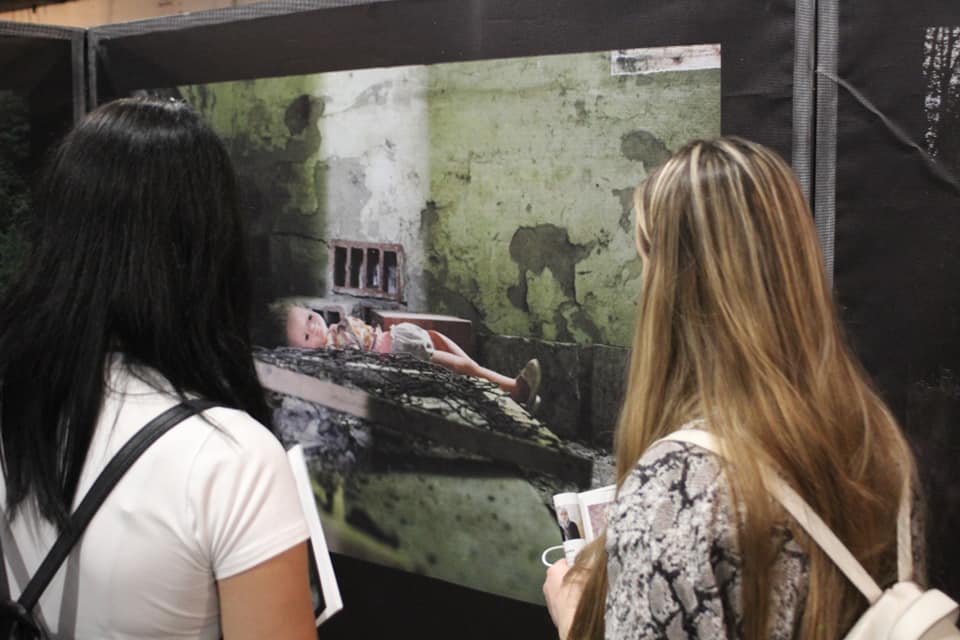
Guided by experience and research, Vierda said that for victims, the most important thing is that the places where they or their families were hurt are appropriately marked and that there is public recognition of their suffering by high-ranking officials. “This means that it is important to include survivors and victims’ families as well as representatives of the communities to which the victims belonged in the processes of designing memorials, selecting their locations, and other details,” said Vierda, emphasizing that the inclusion of young people from different ethnic groups in the memorialization processes is particularly important.
According to her, the processes of memorialization are oriented towards the future, so it is actually quite logical that young people in particular visit places of suffering, where they have opportunities to meet with witnesses and field experts to discuss wartime events. Passing on this knowledge and experience contributes to efforts towards prevention and non-repetition.
“Monuments are one part of culture or memory—an important one, but not the only one. Others include anniversaries, books, educational activities, films, art, and especially discussions and debates,” said Moll. He concluded that monuments alone are not enough; even more important than any monument are the people who carry the memory and who articulate it in a constructive way in public space.
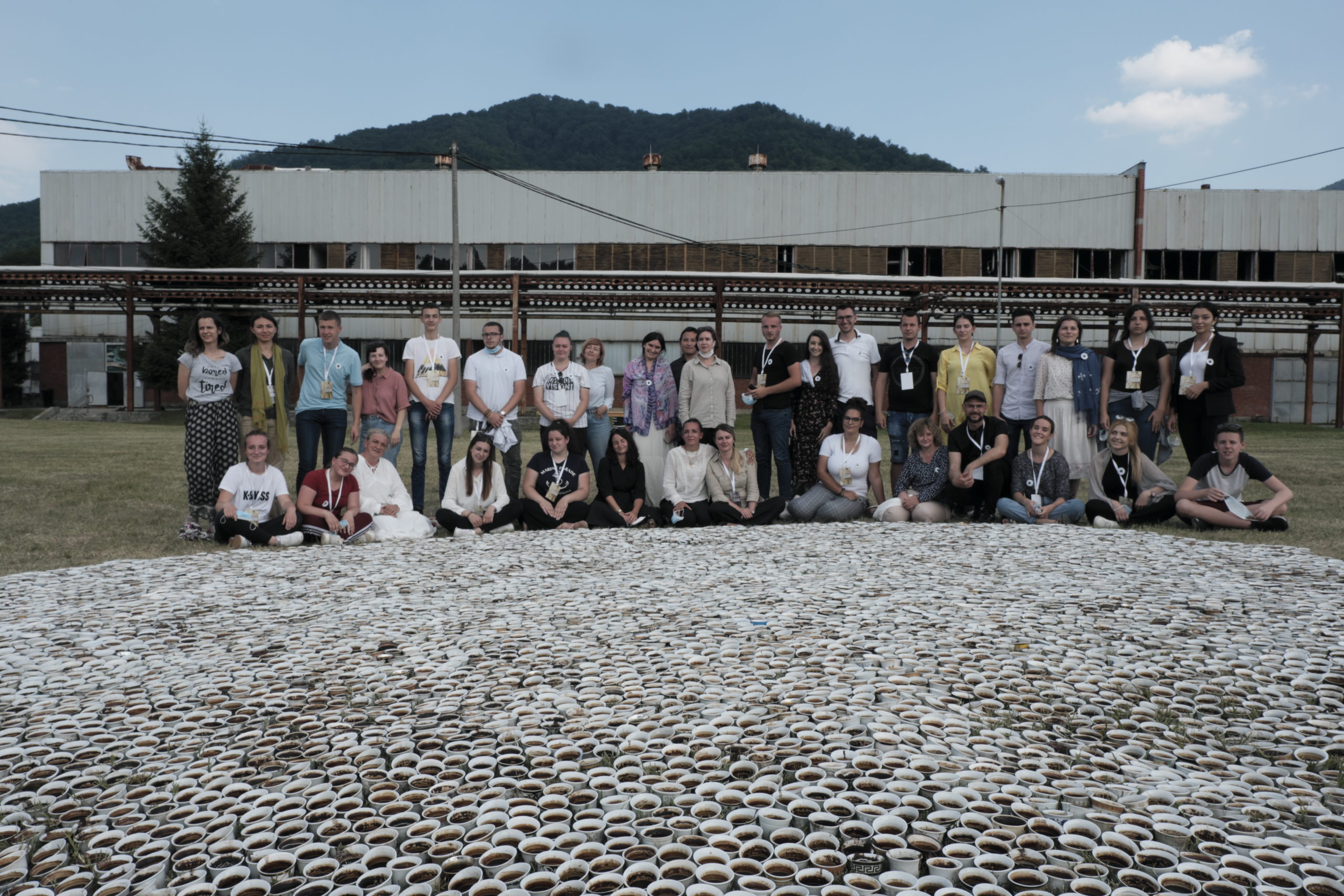
This article was created within the project “Generation Memory”, which is carried out by the Post-Conflict Research Center (PCRC), with the aim of developing inclusive, local peace-building practices and a culture of memory that encourage work on understanding, empathy and critical reflection among young people. The project is financed by UK International Development and is implemented in partnership with the British Council.