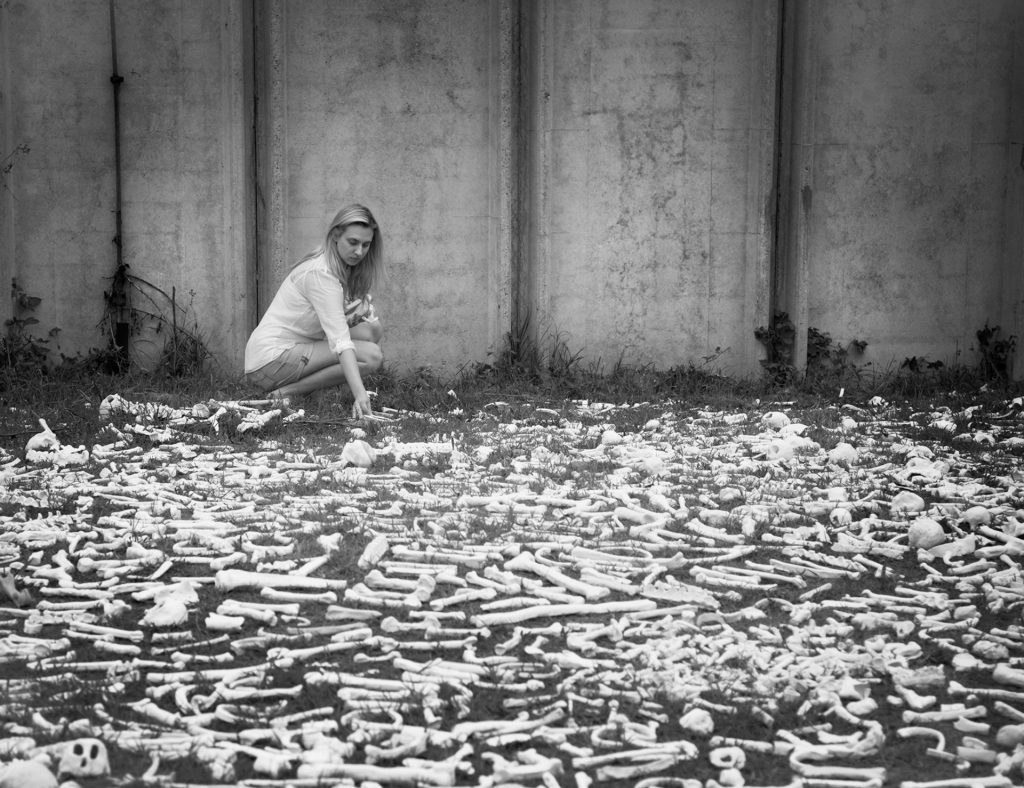
In a world where history often dictates what is remembered and what is forgotten, some places refuse to remain in silence.
These are places of suffering – spaces where time has stood still, but memory continues. One such place is Srebrenica, a symbol of pain and loss and a warning to humanity. In such places, people’s main time reference is the period before and after the war. Where the lives of thousands of people were cut short, a void remains that neither years nor attempts to forget can fill. Srebrenica is not just a historical event, nor a geographical point on a map. It is a wound of collective memory, a place that reminds us of how far human hatred can go, but also how important it is to preserve the truth. Behind the numbers are people—names, families, dreams, lives violently cut short. It is precisely in this fact that the greatest weight lies.
Drawing a parallel with Danilo Kiš’s book A Tomb for Boris Davidovič, where one fate becomes a symbol of all those who disappeared in systems of violence and oblivion, we can also consider Srebrenica a tomb of thousands of Boris Davidovič’s. These are people whose stories are interrupted, their names often reduced to numbers, but whose fate must not remain without a voice. Their suffering warns that oblivion is not only the absence of memory, but also the danger of repeated catastrophe. Therefore, such places must not simply remain part of the past; they must become a part of our collective consciousness as a permanent warning and a reminder of our responsibility to preserve, remember, and pass on the truth.
“History is written by the victors. Legends are woven by the people. Writers fantasize… Only death is certain.”
—Danilo Kiš
Mass Execution Sites Remain Beyond Memory
At first glance, there is nothing in the town of Kravica in Bratunac Municipality to suggest that genocide—the largest mass atrocity in Europe since World War II—was committed there.
A long concrete structure, a former hangar for the local Agricultural Cooperative, stands by the road, surrounded by silence and everyday life. The doors are closed. The walls have been renovated. The space looks like any other industrial facility in rural eastern Bosnia.
Only those who know what happened in July 1995 pause. “They killed my child here,” a woman says quietly as she stands a few meters from the entrance. Among those who return to this place every year is Munira Subašić. Her son was killed in this very hangar.
“There’s no plaque, there’s nothing. It’s as if nothing happened,” says Munira.
The mass killings after the fall of Srebrenica were carried out in several locations. They were systematic, well-organized, and completed in a short period of time. These sites are now meticulously documented in the judgments of the International Criminal Tribunal for the former Yugoslavia (ICTY), the International Residual Mechanism for Criminal Tribunals (IRMCT), the Court of Bosnia and Herzegovina, and the work of the International Commission for Missing Persons (ICMP). The largest execution sites were in Kravica, Orahovac, Petkovci, Kozluk, Branjevo, and Pilica.
Thousands of people were killed at these sites—men and boys who were trying to break through to territory controlled by the Army of the Republic of Bosnia and Herzegovina (ARBiH), or those who were captured after the fall of the enclave by the Army of Republika Srpska (VRS).
Yet, almost three decades later, most of these sites have no official markings. Unlike Potočari, which has become a central place of remembrance for those killed in the Srebrenica genocide, other execution sites remain outside institutional memorialization.
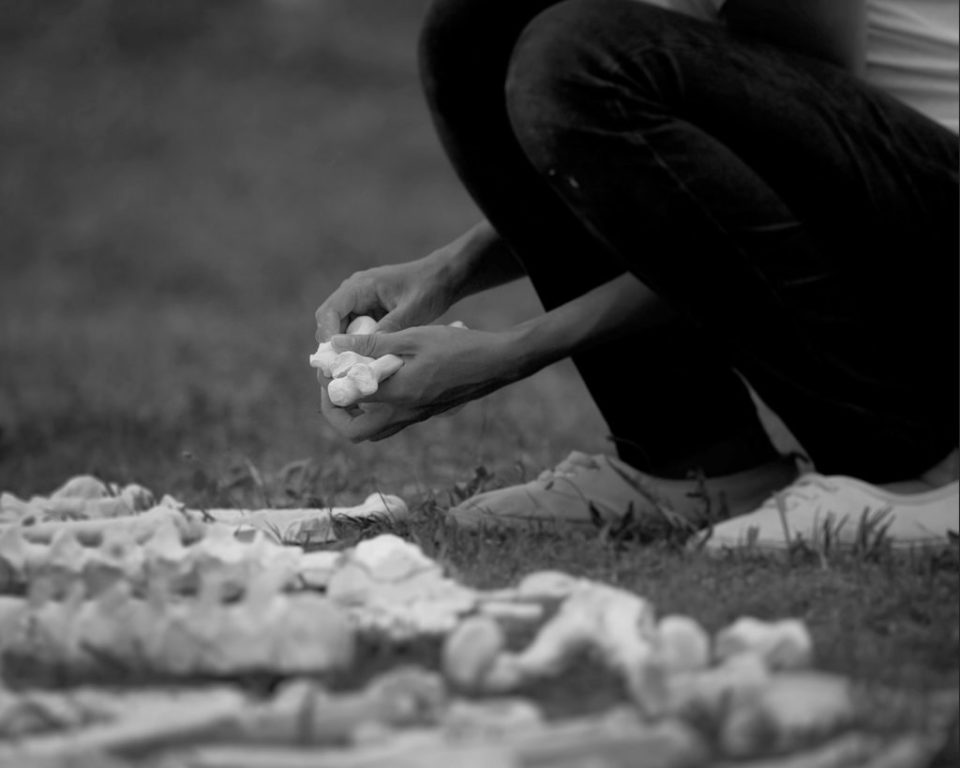
Kravica: An Execution Site Without A Memorial
According to judicially established fact, more than a thousand people were killed in the Kravica hangar in just one day. The prisoners were brought in trucks, locked in the facility, and then killed with firearms and explosives. Survivors testify to the chaos, panic, and attempts to find refuge in a space where none existed.
After the murders, the bodies were moved to mass graves, which were later further dug up and relocated to cover up the evidence.
Today, however, the area bears no sign that the crime took place there. The facility has been restored and is still in use. People walk past it without stopping. For the families of the victims, this is unacceptable.
Attempts to commemorate Kravica have been ongoing for years. However, each initiative encounters the same problem: the lack of consent from local authorities. Bratunac Municipality, led by Lazar Prodanović, plays a key role in issuing permits for the erection of memorials.
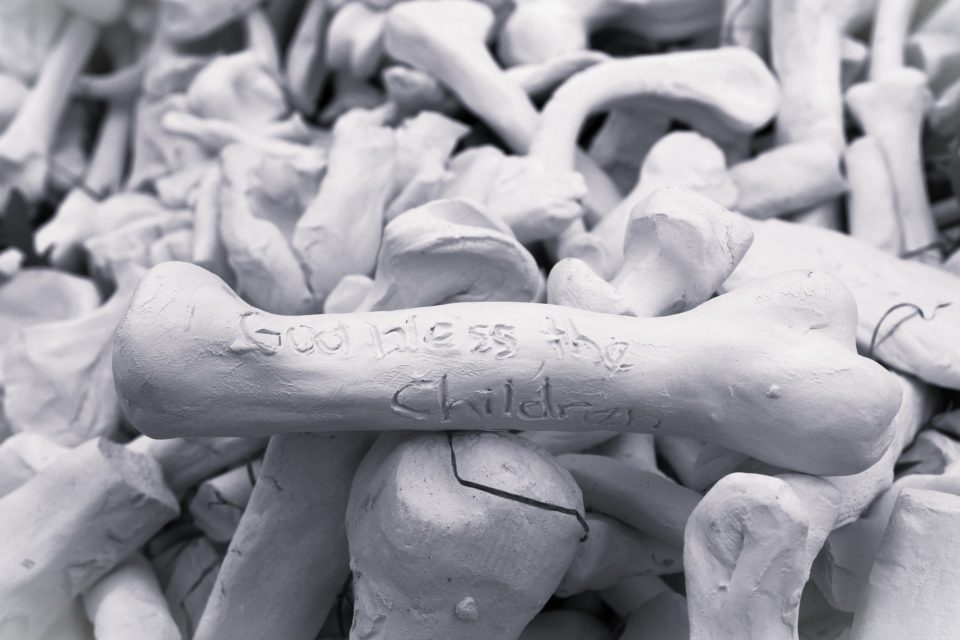
According to victims’ associations and memorial organizations, consent for commemorative markers has been withheld. Without it, any memorial would be illegal and subject to removal.
This institutional deadlock is part of a broader problem. The political attitude toward the Srebrenica genocide, which continues to cause deep divisions in Bosnia and Herzegovina.
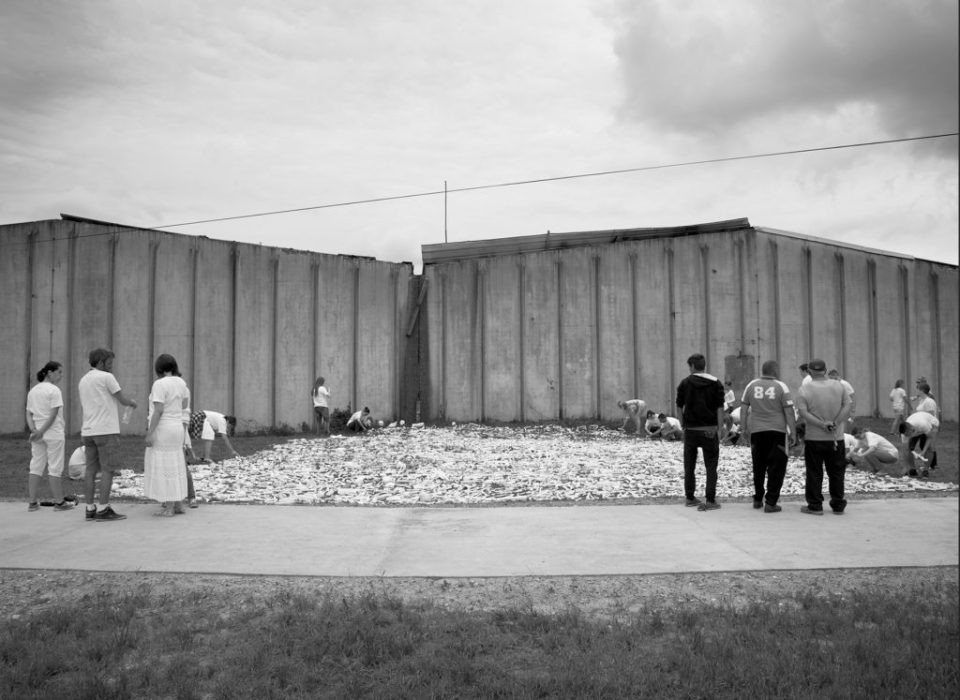
In the absence of an official memorial, families and survivors organize their own commemorations. Every year in July, they gather in front of the hangar in Kravica. They bring photographs and flowers and recite prayers.
But even that act requires procedure. Gatherings must be reported to the police, and the presence of police forces at these events is common. “We have to ask permission to cry at the place where our loved ones were killed,” says one of the participants in the commemoration. For many, this is an additional trauma.
Commemorations are not always without tension. Over the years, various incidents have been recorded: verbal insults, genocide denial, and the removal of improvised markers. Such incidents rarely receive wider attention, but they leave a strong impression on the participants. For survivors, going to the site of executions also means confronting an environment that often does not acknowledge what happened there.
The Fight for Memorialization
The Srebrenica Memorial Center is trying to expand the culture of remembrance beyond the complex in Potočari. The director of the Srebrenica Memorial Center has repeatedly stressed that memorialization must encompass all atrocity sites, not just one. Mapping, conducted by organizations such as the Balkan Research Network in Bosnia and Herzegovina and Pro Peace, is an important step — but without physical markers, these sites remain largely invisible.
For the families of victims, a memorial plaque is not just a symbol. It is confirmation that a crime occurred. Without it, the space remains neutral — or, as many say, “cleansed of the truth.” Survivors like Hasan Nuhanović point out that without clearly marked sites, the past is never fully confronted.
The process of transitional justice in Bosnia and Herzegovina is often viewed through court rulings. However, one of the main pillars in this process is memorialization. Without marked sites, atrocities remains abstract, denial gains space, and reconciliation is slowed. In this sense, unmarked execution sites represent a serious obstacle to long-term social recovery.
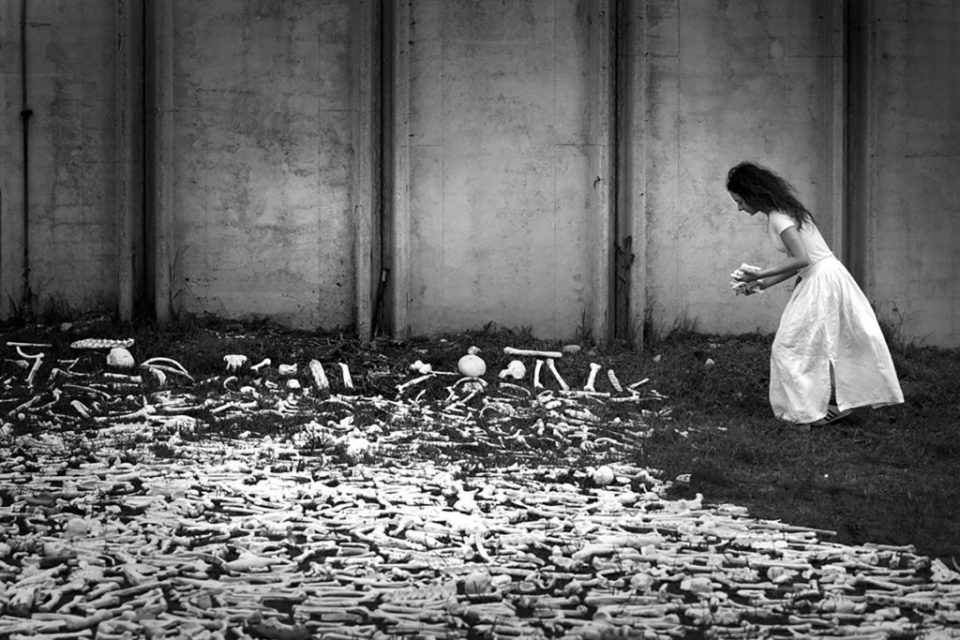
Between Memory and Silence
While Potočari draws thousands of people each year, other places remain empty—without signs, without plaques, without institutional recognition—but not without meaning. For those who visit these places, they remain the most accurate map of what happened. “We will come as long as we live,” says one woman as she lays flowers in front of the hangar in Kravica.
Behind her, the building stands motionless, without inscriptions or interpretation, as if nothing happened there.
The mass executions of men and boys during the July 1995 Srebrenica genocide were mostly carried out in the municipalities of Zvornik and Bratunac. After these crimes were committed, the sites largely returned to their ordinary functions, often without adequate marking or institutional protection. Places of mass executions include the Agricultural Cooperative in Kravica, two meadows in Orahovac, a school and a dam in Petkovci, a school and Drina River bank in Kozluk, the Branjevo Military Farm, and the Pilica Cultural Center.
KRAVICA: The first mass killing of Srebrenica men and boys took place on July 13, 1995, in the warehouse of the agricultural cooperative in Kravica. As established by the ICTY, the men and boys were transported by bus from the meadow in Sandići or ordered to walk in a column to the single-story warehouse along the Bratunac – Konjević Polje road. By five in the afternoon, the warehouse was so crowded that some detainees almost suffocated. That evening, the killings began. VRS soldiers shot at the detainees with M-84 submachine guns and automatic rifles. They threw hand grenades through the windows and opened fire from outside. The shooting would occasionally subside, but continued intermittently throughout the night. According to the ICTY and Court of BiH, more than 1,000 men and boys were killed in Kravica.
ORAHOVAC: A convoy of buses from Bratunac transported detainees to the village of Orahovac on July 14, 1995. About 2,500 Bosniak men and boys, aged 15 to 70, were crammed into the school gym. In the afternoon, VRS officers arrived at the school, including Drina Corps Chief of Security Vujadin Popović, VRS General Staff Chief of Security Ljubiša Beara, and Drina Corps Zvornik Brigade Chief of Security Drago Nikolić. Shortly after their arrival, the detainees were separated into smaller groups and blindfolded. They were taken out of the school, loaded onto trucks, and driven approximately 800 meters to two meadows. They were ordered to jump off the trucks and form lines. As soon as the trucks pulled away, bursts of gunfire began. For the next two hours, the detainees were brought in by truck, lined up, and shot. When the first meadow was covered with bodies, the soldiers moved to the second, where the killing continued. At least 839 Bosniak men and boys were killed in those two meadows, according to the verdicts.
Today, the area is covered in meadows and farmland. Most of the area looks like a typical rural landscape, with no visible signs of the scale of the crime. Despite this, families of victims and survivors organize visits to the site every year, often as part of a wider program of commemorations held in July.
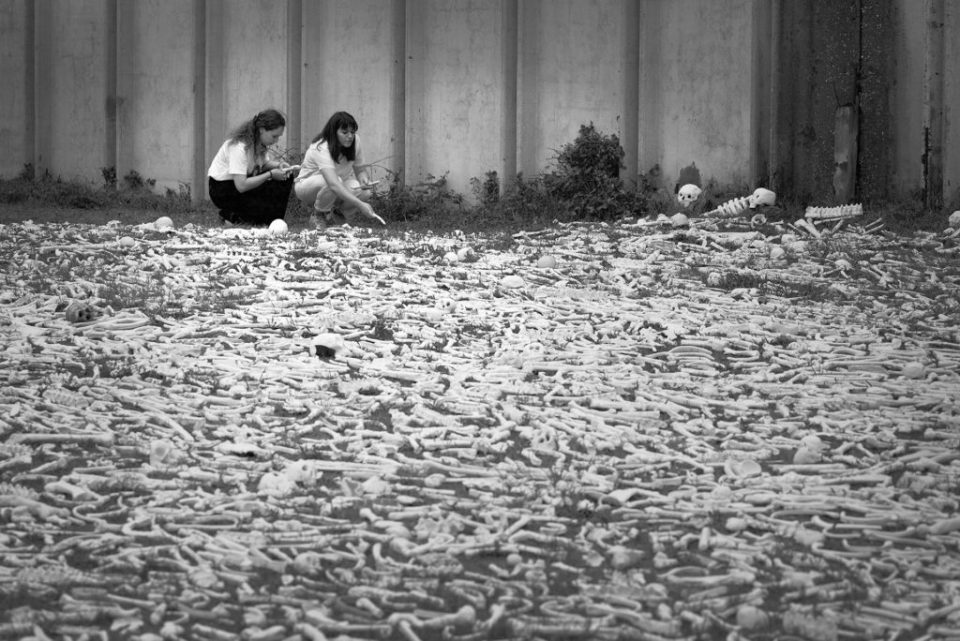
PETKOVCI: On July 14, 1995, about 1,000 detainees from Bratunac were transported by buses and trucks to a new school in the village of Petkovci, near the headquarters of the Zvornik Brigade. As they got out of the vehicles, they were ordered to put their hands behind their heads and sing Serbian songs. According to the verdicts, soldiers called out to the detainees to come out of the classrooms in groups, after which gunfire rang out. At some point, the detainees were taken from the classrooms, loaded into trucks, and driven to a field near the Petkovci Dam. They were ordered to get off the trucks in groups of five to ten and line up. Soldiers with black balaclavas over their heads began shooting at the detainees. People fell on the bodies of those who had been killed in front of them. As determined by the verdicts, at least 815 men and boys were killed in Petkovci, some in the school and some in the field near the dam.
Witnesses report that people were crowded together, without enough air, water, or food, which led to additional suffering before the executions themselves. After being detained, the prisoners were transported to the Petkovci Dam, where mass executions were carried out. The isolated terrain around the dam allowed for the crime to be carried out discreetly. Today, the school building still stands, but it is not adequately marked as a site of suffering. The dam functions as an infrastructural facility, and the natural environment around it—water, vegetation, and silence—creates a sharp contrast to the events of the past. These places are still the subject of commemorative visits, but without a permanent display that would provide more detailed information to visitors.
KOZLUK: On July 14, 1995, buses carrying detainees from Bratunac arrived at the school in Ročević, located not far from the Zvornik-Bijeljina road. They were detained in the school gym. The following afternoon, the men and boys were transported by trucks to a place on the banks of the Drina River, near the village of Kozluk. They were driven to a previously dug pit, and the detainees were ordered to jump from the truck. The soldiers lined up on either side of the pit, first shooting at the detainees as they jumped from the truck. The shooting was disorganized and chaotic, according to testimonies, and the wounded detainees tried to escape, clinging to bushes amidst the shooting. At least 815 men and boys were killed in Kozluk, both in the school in Ročević, and some on the banks of the Drina River.
The bodies of the murdered were buried in mass graves to cover up the evidence of the crime. Today, this area is partly industrial and used for gravel mining, without any clear memorial signage to indicate its past. It is this transformation of the space that contributes to its “invisibility” in collective memory, except for those who actively seek information or participate in commemorations.
BRANJEVO: On July 14, 1995, several buses full of prisoners from Bratunac were brought to a school in Kula, a hamlet in the town of Pilica. Two days later, part of the group of prisoners was taken by bus to the nearby Branjevo Military Farm. Soldiers took the prisoners off the buses and demanded that they hand over money, beating them if they said they had none. Upon arrival at the meadow, the prisoners were told to stand with their backs to the soldiers, who then opened fire on them. After each burst of gunfire, the soldiers asked if there was anyone alive to bandage, and anyone who responded was finished off with a bullet to the head. According to the verdicts, about 1,200 men and boys were killed at the Branjevo Military Farm.
This site is often cited in testimonies and court proceedings as an example of the systematic nature of the genocide. Today, Branjevo is used as agricultural land. There is no developed memorial center or interpretive marker to document the events. Commemorations are held occasionally, but the site remains relatively unknown to the general public, especially outside the region.
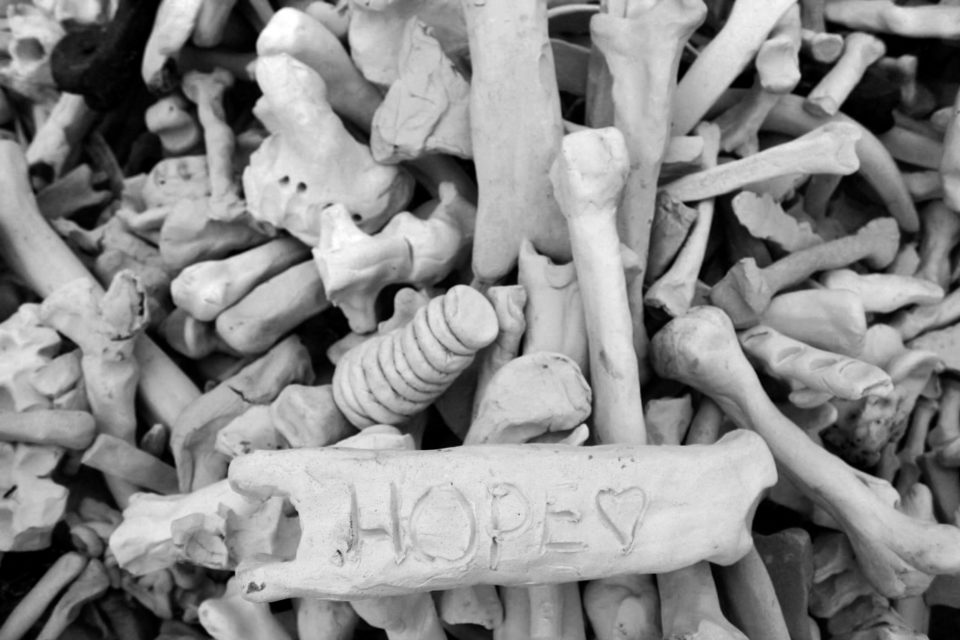
PILICA: Around 500 detainees were held in the Pilica Cultural Center. The prisoners were locked in the building and then killed, making this site one of the most moving due to the very nature of the crime. During forensic investigations in September 1996 and October 1998, human blood, bone fragments, and tissue were discovered stuck to the walls and floor, as well as significant damage caused by weapons and grenades. Bullet holes marked the wall behind the stage, indicating that the detainees were brought onto the stage before being executed. In addition, bullet casings were found scattered in and around the building.
The Cultural Center building still stands today and has been physically preserved, underscoring the continuity between the past and the present. Its purpose is not clearly defined, and the marking is insufficient in relation to the significance of the events that took place there. Unlike open spaces, this facility has the potential to be transformed into a memorial center, but this has not been realized so far.
A common feature of all these places is their return to spaces of everyday life. Fields are cultivated, schools are open, roads are used, and buildings have new or unchanged functions. This transformation does not mean that their historical importance has been diminished, but rather indicates the complex relationship between space, memory, and forgetting. The lack of clear and visible markers further contributes to these places remaining unknown to the general public.
An important aspect of these sites is their connection to mass graves. After the executions, the bodies of victims were often moved from primary to secondary graves, which was an attempt to cover up the crime. This process made it difficult to identify the victims later and prolonged the suffering of families who had been searching for the remains of their loved ones for years. Despite this, thanks to forensic research and international efforts, thousands of victims have been identified.
In the contemporary social and historical context, these places have multiple meanings. They are at the same time crime scenes, places of memory, and places of everyday life. Their insufficient marking raises questions about the way societies deal with the past, as well as the role of education and institutions in preserving historical memory. For this reason, the study of these locations is of particular importance, as it shows how traces of mass crimes can fit into contemporary space, often without a clear and visible reminder of the events that took place there.
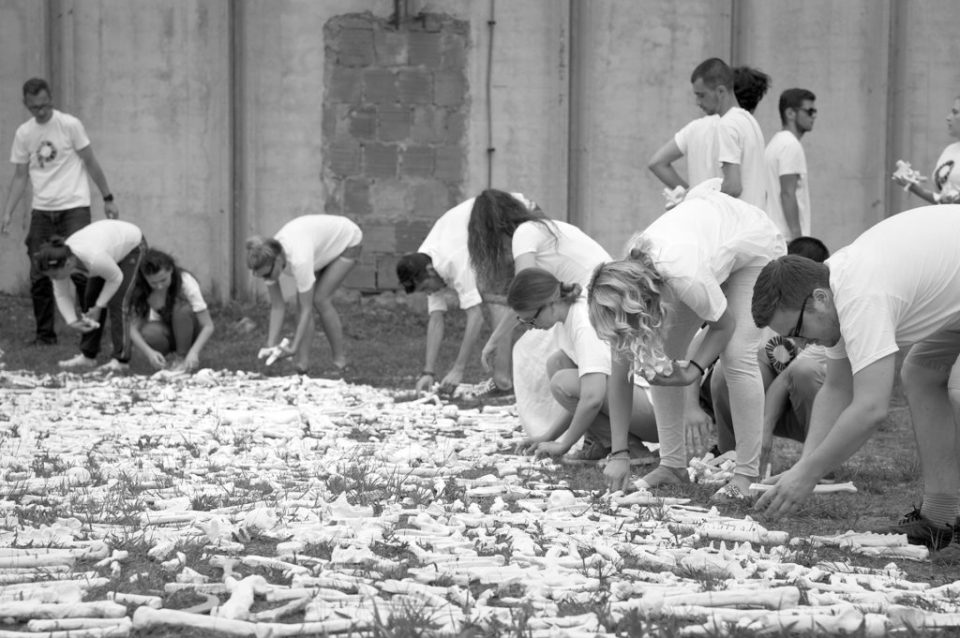
Boris Davidovič: Don’t Let the Bastards Get You Down
The sites of the mass executions of Srebrenica men and boys—Kravica, Orahovac, Petkovci, Kozluk, Branjevo, and Pilica—exist today as spaces where everyday life and the harrowing legacy of mass atrocities intertwine. Their insufficient marking and almost seamless integration into the landscape do not mean that their meaning has disappeared, but that it has been suppressed from public consciousness and left to fragmentary memory. It is precisely in this silence and the absence of clear marking that the danger lies—that the places that witnessed the systematic destruction of people become ordinary dots on the map, without a clear meaning.
In this sense, a deeper parallel can be drawn with Danilo Kiš’s work A Tomb for Boris Davidovič, where the fate of an individual reveals the mechanism of a system that not only destroys life, but also seeks to erase the traces of that destruction, to reshape the truth, and to control the way the past is remembered. In this context, the expression “bastards” is not an insult directed at individuals, but a metaphor for an impersonal, repressive system that operates through violence, concealment, and the erasure of identity.
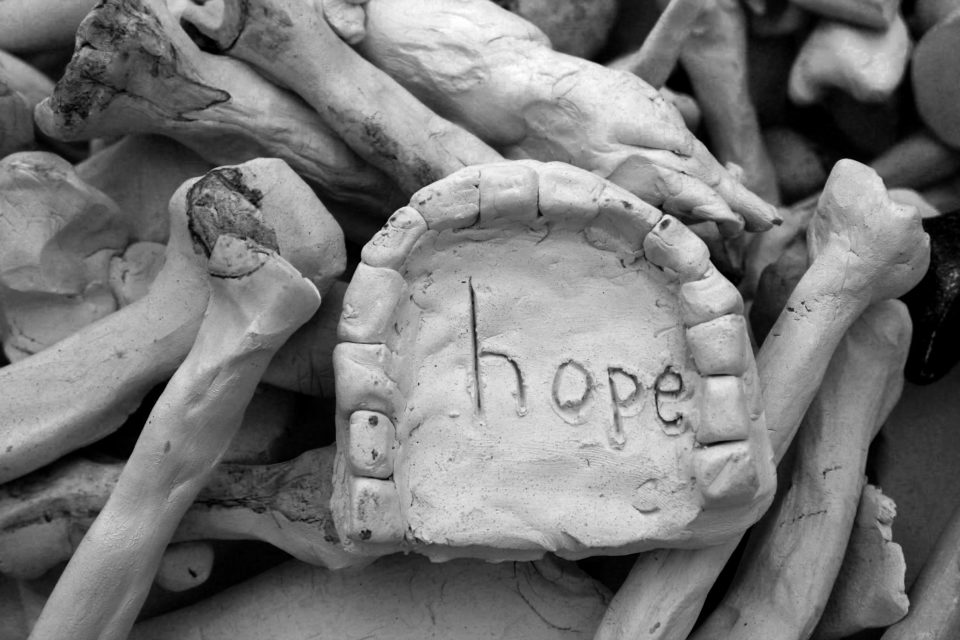
Applying this idea to the execution sites of 1995, it is clear that the problem is not only in the crime itself, but also in the way the space functions after the crime. When sites of mass execution are left without clear markings, when they are transformed into fields, roads, or everyday facilities without visible reminders of the past, then space is created for precisely what Kiš warns against: the silent operation of a “system” that erases traces, relativizes events, and enables forgetting.
In this sense, the message “Don’t let the bastards get you down” takes on a broader meaning. It signifies not only resistance at the moment of violence, but also resistance after it – resistance to forgetting, denial, and indifference. It implies active preservation of memory, insistence on the truth and marking the places of suffering as permanent reminders of what happened. Without this, the space becomes neutral, and neutrality in this context means the loss of historical consciousness.
Therefore, these places are not just geographical points, but symbols of the struggle between memory and forgetting. As with Kiš’s book, where the individual disappears into the archives and constructions of the system, there is a danger here that the victims will disappear from the space if that space is not marked and explained. For this reason, preserving the truth about these locations is a form of resistance – not only to the past, but also to any future attempt to suppress it.
Finally, the parallel with Kiš’s work suggests that the fight against these “bastards” does not end with the violence. It continues through the way we remember, speak, and commemorate. In this sense, the responsibility lies not only with institutions, but also with society as a whole – not to allow the places of suffering to become places of oblivion, but to remain permanent witnesses to history and warnings for the future.
This article was created within the project “Generation Memory”, which is carried out by the Post-Conflict Research Center (PCRC), with the aim of developing inclusive, local peace-building practices and a culture of memory that encourage work on understanding, empathy and critical reflection among young people. The project is financed by UK International Development and is implemented in partnership with the British Council.