The erection of monuments and memorials is one form of commemoration. They play an important role in informing and educating people about human rights violations.
Additionally, they function to permanently honor and commemorate events, preserve public memory, raise awareness of abuses of power, and develop critical democratic debate about the past, present, and future.
In Bosnia and Herzegovina (BiH), monuments and memorials typically commemorate victims according to their ethnicity or affiliation with a particular army. Only a select few pay tribute to all civilian victims of war, such as the memorials in Brčko and Vareš, and a memorial in Žepče. These serve to remind us of human suffering, recognize and honor victims, bring communities together, and combat the minimization and denial of war crimes.
In addition to these monuments and memorials for all civilian victims, BiH also has a monument to peace and tolerance in Bosanski Petrovac, which similarly contributes to the fight against denial and demonstrates a commitment to living together despite differences.
Time heals some wounds, but not all, according to Dr. Marko Romić, a specialist in trauma psychology. He explains that “over time, people learn to live with their wounds, or some circumstances occur that help us to get over the wounds more easily.”
Edvin Kanka Ćudić from the Association for Social Research and Communications (UDIK) considers monuments and memorials to all civilian war victims to be a sign of progress for a community that has retained its multiethnic character even in the aftermath of conflict. While acknowledging that it’s difficult to say how effective these mechanisms are at present, Ćudić believes that, in the long run, “the mere existence of such a memorial can achieve a lot in unifying a community.”
Progress Towards Multi-Ethnic Community
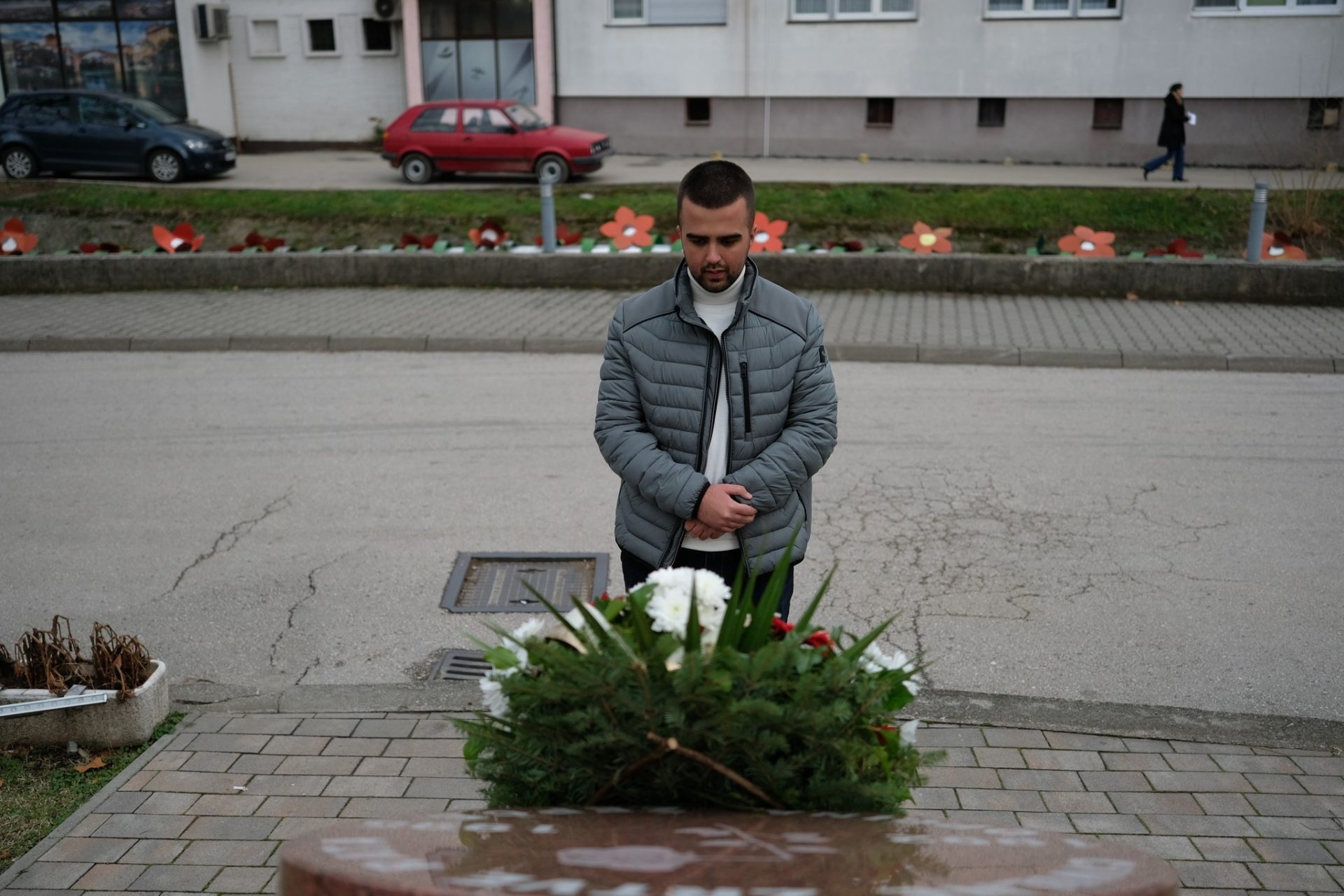
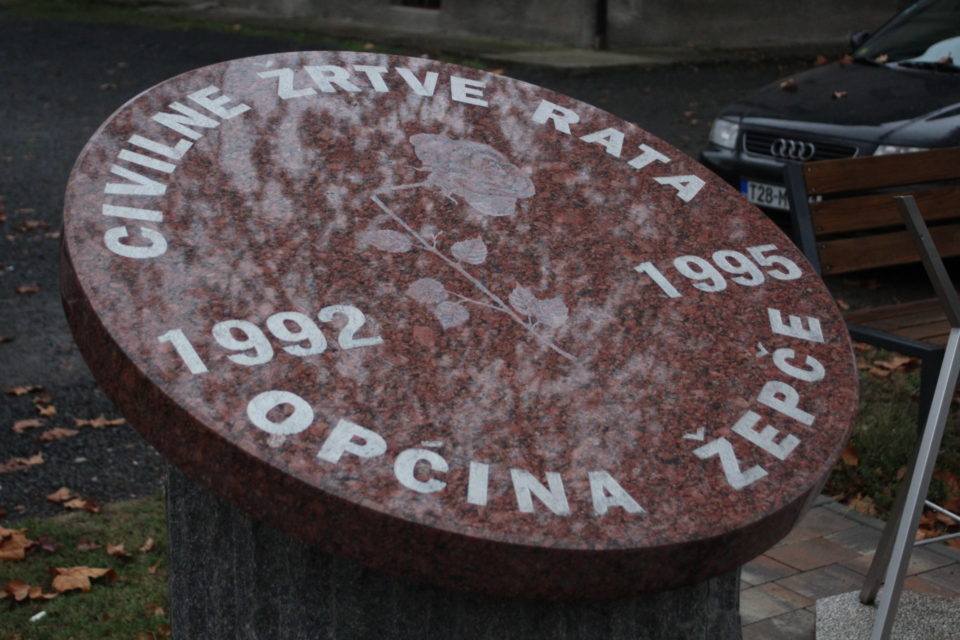
With the aim of encouraging reconciliation, a memorial was built in the town of Žepče honoring civilian victims of the Bosnian war. The opening of the memorial in 2021 was widely attended by international officials. The memorial, which is dedicated to 109 civilian victims without any religious or national distinction, takes the form of a broken rose.
The memorial project was undertaken by the Association of Civilian War Victims of the Municipality of Žepče, which initiated its construction, offered the conceptual design, and oversaw the finalization of the memorial.
“The members—that is, the families of the victims—were consulted throughout. They had the opportunity to express their views, proposals, and suggestions, and they actively participated in the entire decision-making process,” according to the office of Žepče Mayor Mato Zovko.
In addition to victims’ families, the broader local community also contributed to the project, particularly regarding the location of the memorial. Žepče Municipality, the Zenica-Doboj Cantonal Government, and the OSCE Mission in BiH participated in implementing and financing the memorial with a total value of 12,000 marks.
During the unveiling of the memorial, Mayor Zovko described the memorial as the least that could be done for the civilian victims of the war, stressing that it should serve as a warning to everyone to never allow the tragedies of the past to be repeated.
Kathleen Kavalec, the head of the OSCE Mission at the time, stated during the 2021 unveiling that the event was made possible thanks to close cooperation with the then-UN Resident Coordinator, Ingrid Macdonald.
“The OSCE and the UN have a long-standing strategic partnership in the field of promoting reconciliation. This is one example of our joint work,” Kavalec said.
A plan has also been proposed to build a memorial to all civilian victims of the siege of Sarajevo, which would aim to convey the weight of the suffering endured by the civilian populations of Sarajevo City and Canton. While it isn’t clear when its construction will be completed, the project is currently in the phase of obtaining urban planning consent, after which the processes of obtaining the necessary permits, developing the main design, securing budget funds, and organizing and implementing the construction can begin.
The initiative was launched by the Association of Civilian Victims of War of Sarajevo Canton. As explained by the Department for Urban Planning, Investments, Housing, and Communal Affairs of the City of Sarajevo, this organization represents thousands of registered members—survivors and victims’ families—and has actively advocated for the project, representing the interests of the victims’ families in the institutional process.
Designed by Asmir Šabić and Zulejha Šabić-Zatrić, the memorial will be located in Skenderija, as determined by a competition. “The choice of location is good because there was a sniper zone in that place and many pictures of the suffering of Sarajevans at that location have traveled around the world,” says Šabić.
The Association of Civilian Victims of War of the Sarajevo Canton has approved the text that will be inscribed on the memorial, which reads as follows: “During the siege of Sarajevo, at least 11,541 citizens were killed, of whom more than 5,564 were civilians […] The city was under siege for 1,425 days by the military and police forces of the Federal Republic of Yugoslavia (Serbia and Montenegro) and the self-proclaimed Republika Srpska.”
A list of fallen Sarajevo citizens will also be included, based on the association’s records. The text will be signed by the City of Sarajevo, alongside a QR code providing access to content by the Association of Civilian Victims of War of the Sarajevo Canton and relevant data from the Hague Tribunal.
Unity and Acceptance Among All Peoples
Since 2021, a monument to peace and tolerance has stood in the town of Bosanski Petrovac. Designed by Ismet Kasumović, it symbolizes residents’ commitment to living together in peace and tolerance regardless of differences. The monument embodies the values of peace, freedom, and a prosperous future, and was ceremonially unveiled as part of an event organized by the OSCE in BiH on the occasion of the International Day of Peace on September 21. “We can be a positive example to all local communities that in Bosanski Petrovac, a life of togetherness and acceptance of all traditions and peoples is possible,” the Bosanski Petrovac Municipal Office stated.
Since the end of the 1990s war in BiH, more than 2,500 war-themed memorials have been built. Dr. Melisa Forić Plasto, a senior assistant at the University of Sarajevo Faculty of Philosophy, is the author of a 2019 academic article entitled “A Divided Past For a Divided Future!? The 1992-1995 War in Current Bosnian and Herzegovina History Textbooks.” The article explains that memorialization is most often dictated by majority ethnic groups with the aim of fostering collective identity, reinforcing narratives of in-group sacrifice and out-group guilt, marking territory and ethnic borders, and signaling the undesirability of other groups in that area. Minorities are most often excluded from these processes, leading to what the UN has described as “memorial tyranny”—the non-recognition of alternative narratives that traps people in the constant repetition of the past.
The denial of atrocities committed by or in the name of one’s group, according to Dr. Romić, stems from the fact that it is painful and unacceptable for us to believe that we ourselves have committed evil or may have evil within us. He also added that admitting one’s own crimes implies a responsibility that many are not ready to accept, and which is sometimes expressed in the form of remorse.
In his 2024 paper “Bosnia and Herzegovina: The Perils and Pitfalls of Memorialization in Divided Post-Conflict Societies,” Dr. Goran Šimić, a professor of criminal and international criminal law and transitional justice, emphasizes that the decision to erect monuments is often influenced by the ethno-nationalist political elite, which opens up space for selective interpretations of the past.
There is no law governing monuments at the state level in BiH. In the Republika Srpska (RS) entity, the Law on Monuments and Memorials of the RS Liberation Wars, adopted in 2011, is in force, while in the Federation of Bosnia and Herzegovina (FBiH), procedures rely on laws on spatial planning and protection of civilian victims of war, as well as municipal and cantonal regulations.
The laws most similar to those in the FBiH and the RS are the Law on the Protection of Properties that have been declared national monuments of BiH by decisions of the Commission for the Protection of National Monuments and the Law on Cultural Properties of the RS. On the other hand, the Brčko District of BiH passed the Law on Monuments and Symbols in 2003, which established a procedure for placing monuments and symbols in public spaces.
Local urban planning departments give approval for the erection of memorials, but this legislation lacks relevant transitional justice criteria and standards for the erection of memorials. The Transitional Justice Strategy, a document drafted in 2011 but never adopted, contains a framework for dealing with the past, including reparations to victims and institutional reforms. Among other things, the Transitional Justice Strategy also envisaged the construction of a memorial to all victims of the war in BiH. This would grant each community the right to its own forms of remembrance without offending others, thereby encouraging mutual respect, dialogue, and compromise. In his article, Dr. Šimić refers to Janine Clark’s work from 2013, in which she highlights the potential problem of “too much memory,” which prevents the progress of society and often directs it towards conflict.
“Pay Your Respects In Your Own Way”
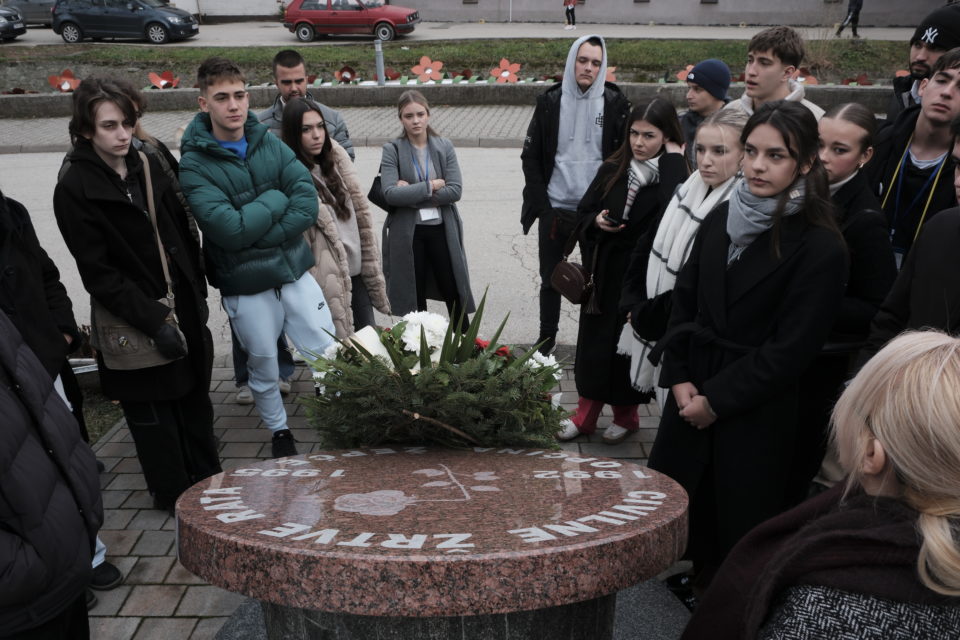
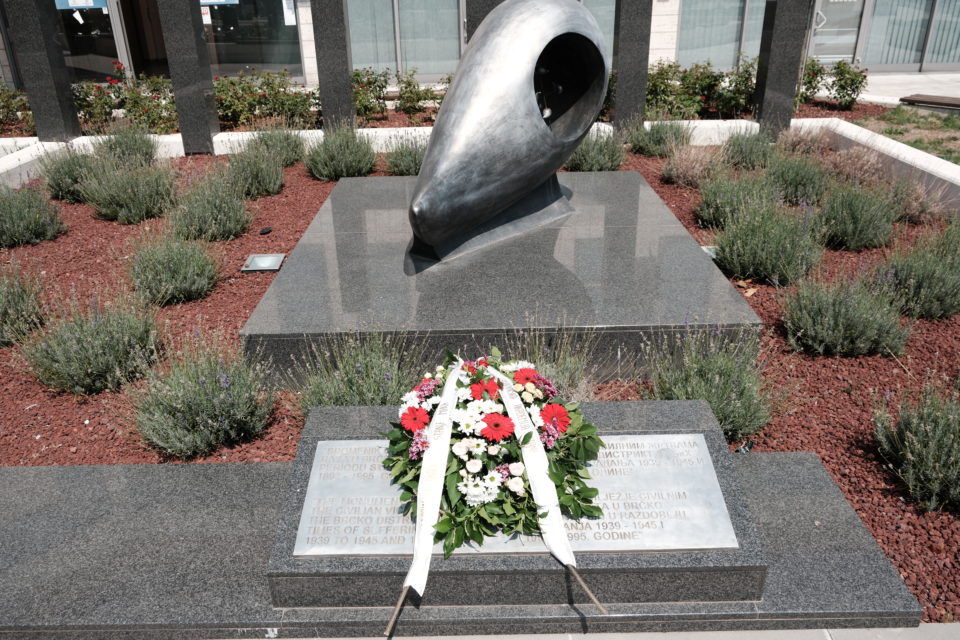
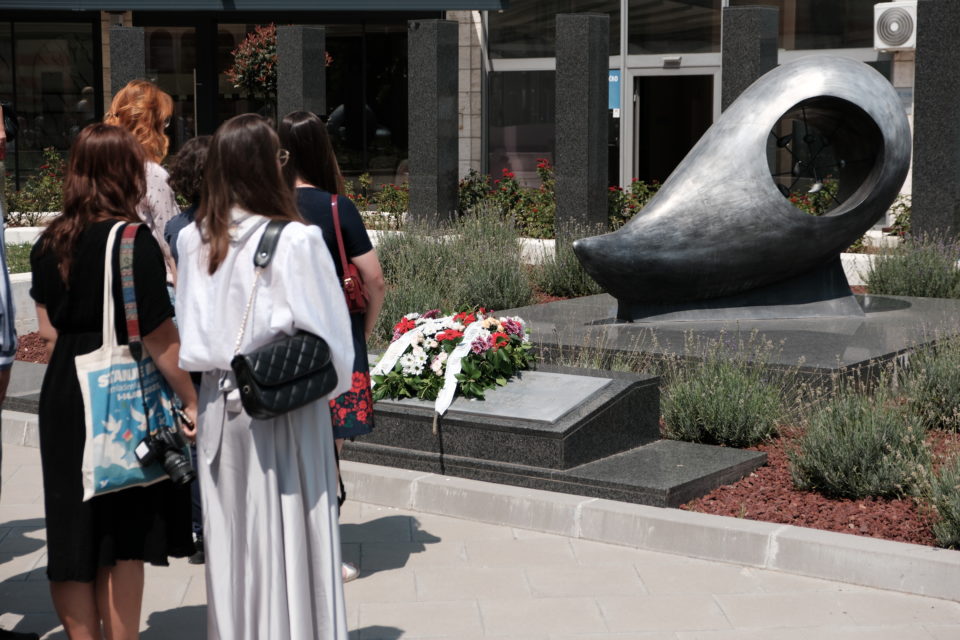
When it comes to monuments and memorials, it is crucial to avoid messages or symbols that offend or disparage other communities. Phrases like “criminal Serbs,” for example, only deepen divisions by casting blame on an entire nation. However, omitting facts is not desirable either. In Brčko, the first memorial to all civilian victims of war in BiH, regardless of ethnic or religious affiliation, was unveiled in 2023. The memorial encompasses victims from both the Second World War and the war of the 1990s, without listing the names or numbers of victims. On the memorial in Vareš dedicated to all civilian victims of the war, there are no religious or ethnic symbols—only the inscription: “Pay your respects in your own way.” The memorial was nevertheless threatened with removal due to shortcomings in procedural implementation. Ultimately, however, it wasn’t removed.
Dr. Forić Plasto notes that it is almost impossible to avoid controversy when it comes to national symbols because they are interpreted differently by different groups, as is the case with the fleur-de-lis, the checkerboard, or the double-headed eagle. However, it is not only symbols that are subject to interpretation. The 1992-1995 war in BiH is designated as an “aggression” in Bosnian and Croatian textbooks, while in Serbian history textbooks, it is dubbed a “civil war.” According to Dr. Forić Plasto, this paves the way for minimizing or denying crimes, and ultimately falsifying facts. Neutral names include the past war, the previous war, and the last war. Furthermore, there are disagreements over the terminology of certain events—particularly the designation of genocide, which some reject as merely war crimes.
The process of memorialization contrasts the visions, goals, and strategies of several interest groups. It may therefore be inadequate for reconciliation between groups, especially in deeply divided post-conflict societies. Additionally, the process of memorialization is a contentious element of post-conflict symbolic politics because it is prone to nationalist manipulation that can cause inter-ethnic tensions. The dark side of memorialization consists of strengthening opposing narratives of victimhood and guilt, emphasizing ethnic or religious differences, and promoting ideologies such as ethnic nationalism. Dr. Romić also highlights the grave consequences of transgenerational trauma: “The generation of 20-year-olds who fought in the 1990s listened to the stories of their fathers and grandfathers about the war they had fought in and ‘relived’ their traumas with them. That same generation now tells war stories to their children, so trauma continues to live on in new generations.”
Thus, the question remains how to make memorialization, as an important aspect of transitional justice, acceptable to all, avoid ethno-national divisions, and contribute to coexistence and dealing with the past.
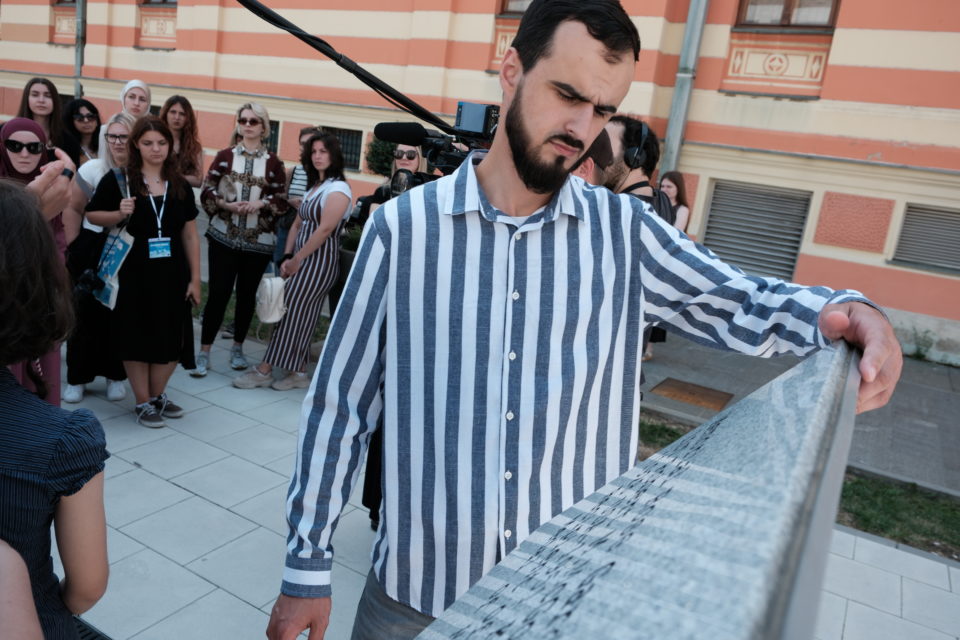
This article was created within the project “Generation Memory”, which is carried out by the Post-Conflict Research Center (PCRC), with the aim of developing inclusive, local peace-building practices and a culture of memory that encourage work on understanding, empathy and critical reflection among young people. The project is financed by UK International Development and is implemented in partnership with the British Council.