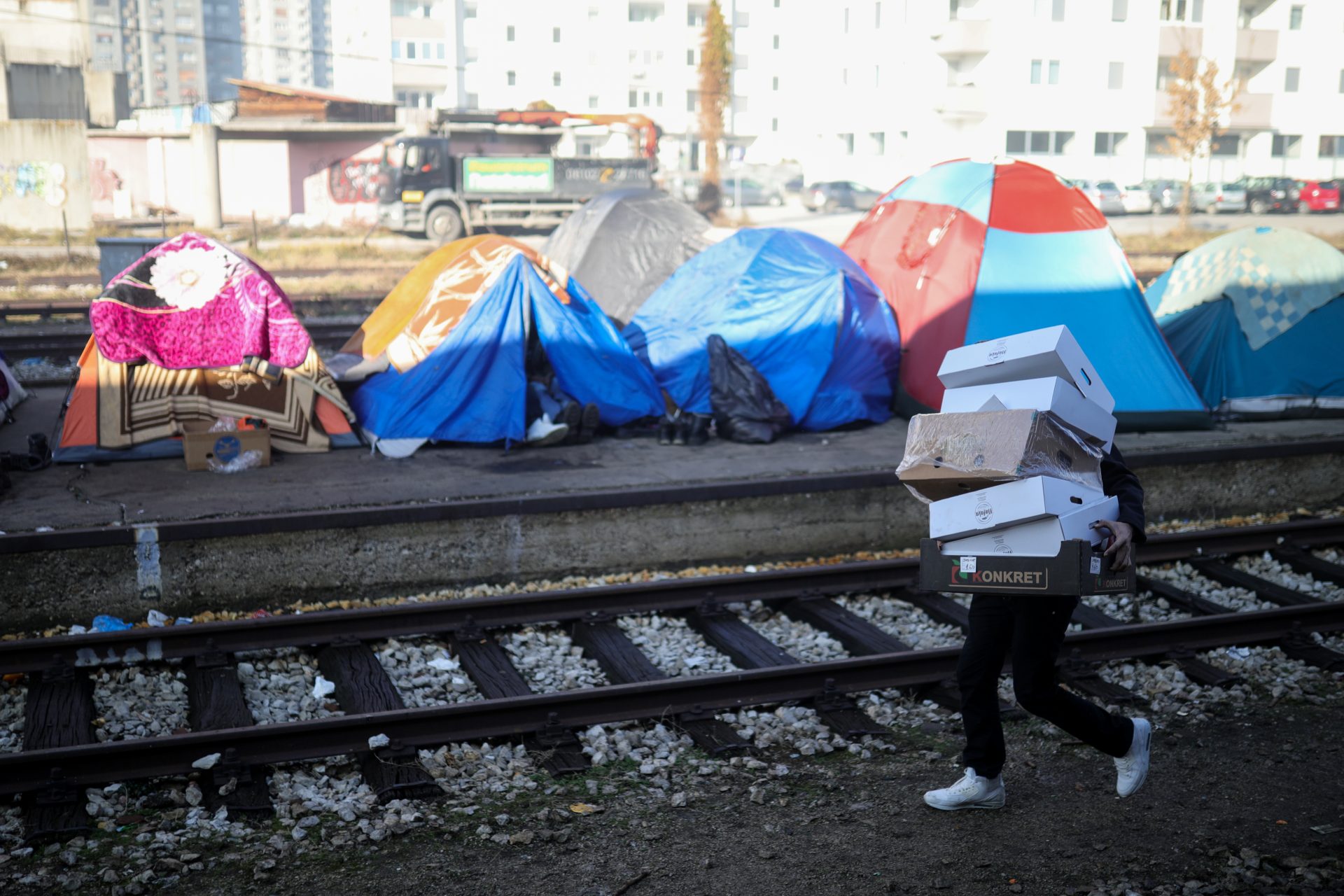
A downward trend in migrant arrivals reveals that migration to Bosnia and Herzegovina is changing. Further investigation demonstrates how the drive for EU membership is shaping this change.
Bosnia and Herzegovina (BiH) is experiencing a significant shift in migrant arrivals, with statistics revealing more than a 50% decline from 2024. The path towards European Union (EU) accession has played an undeniable role in shaping these new migratory norms. With EU membership remaining a pertinent goal for BiH, new trends have arisen, sparking important dialogue on the consequences of changing processes like migration.
New Developments in Border Regulation
The decline in migrant arrivals in recent months has overlapped with three primary developments in border regulation. The first is the Law on Border Control adopted in January of 2025 with eleven votes in favor and four against. An important step towards stricter border regulation in BiH, the law focuses on addressing security risks at the border by enabling new Advanced Passenger Information/Passenger Name Record (API/PNR) systems. Speaking about the law, Luigi Soreca, the Head of the EU Delegation and Special Representative of the EU in BiH, stated, “We dare to hope that this is a sign that political actors recognise what is fundamentally important for the country at this moment on its European path.”
The next major development in border regulation came in June 2025, when the EU announced the signing of a new Status Agreement to “strengthen migration and border management cooperation.” This agreement would facilitate a joint operation between the government of BiH and the EU border agency Frontex to stop irregular migration. Frontex is already involved on neighboring borders, having established a role in Serbia and Montenegro’s border security. The cooperation between Frontex and the BiH government illuminates the continued, if not growing, influence of the EU in the Western Balkans.
In July 2025, the third development in border regulation came with the adoption of the Strategy for Integrated Border Management and the Action Plan for its implementation from 2025 to 2029. Similar to previous border regulation initiatives, these measures are aimed at strengthening security by aligning BiH with international border management standards.
These developments reinforce border regulation by providing a potential response to the influx of migrants. Moreover, they demonstrate the EU’s influence on migratory policies, including the underlying impact of EU accession ambitions on approaches to migration in BiH.
The Role of the EU
Since 2016, BiH has been enveloped in a long struggle with the aim of eventually gaining EU membership. The country has slowly advanced through this process, from achieving candidate status in October 2022 to entering accession negotiations in March 2024.
EU membership has been a focal point due in large part to its potential benefits for the country’s development. In 2023, remarking on the importance of EU integration for BiH, High Representative Christian Scmidt stated, “Membership will provide great support to Bosnia and Herzegovina in development and infrastructure projects. It will be an additional guarantee of stability and security for its citizens.” In other words, EU membership is viewed as a position that would promote greater rights and protections for the people of BiH.
The EU has identified several “key priorities” that must be addressed for BiH to move towards eventual membership. These priorities, clearly outlined in a fourteen-point list, emphasize reforms to strengthen rule of law, lower corruption levels, and better protect freedoms. One such task is to “improve work on ensuring effective border and migration management capacities, as well as ensuring the functioning of the asylum system.” The EU accession process has thus made migration and border management a high priority for BiH, providing vital context for the recent emphasis on border regulation.
Why has the EU placed migration and border management on this list of crucial reforms? The answer may lie in BiH’s position as along the infamous “Balkan Route.” Since 2015, migrants have flooded the Western Balkans with the aim of reaching the EU along the migratory path known as the “Balkan Route.” Although BiH was not originally a prominent point along this path, it has since become a relevant transit country that receives high numbers of asylum-seekers and refugees looking to reach the EU.

The EU’s concern over border management in BiH reflects its commitment to maintaining its own borders and ultimately to discouraging passage along the Balkan Route. If irregular migration through BiH continues, these migrants are likely to eventually reach the EU. Prioritizing migration and border management in BiH is connected to wider efforts to secure EU borders.
Rising Concerns for Migrants
Although border security measure may have been introduced to prevent irregular migration and better manage EU borders, critics have raised concerns about the adverse impact of EU regulations on the rights of migrants.
Expressing such concerns, attorney and advocate Emina Zahirović-Pintarić has implied that recent regulation is leaning towards legalizing migrant pushback. She writes, “By introducing legal grounds for pushbacks, Bosnia is moving toward practices that could lead to widespread human rights abuses.” She explains that aligning with EU conditions must not come at the cost of migrant rights, concluding that progress is not truly progress if it disregards fundamental rights.
The decline in migrant arrivals clearly correlates with the push towards EU-accepted border practices. While accession and EU membership remain pivotal for BiH, rising concerns demonstrate that upholding migrant rights must also be prioritized in this process.