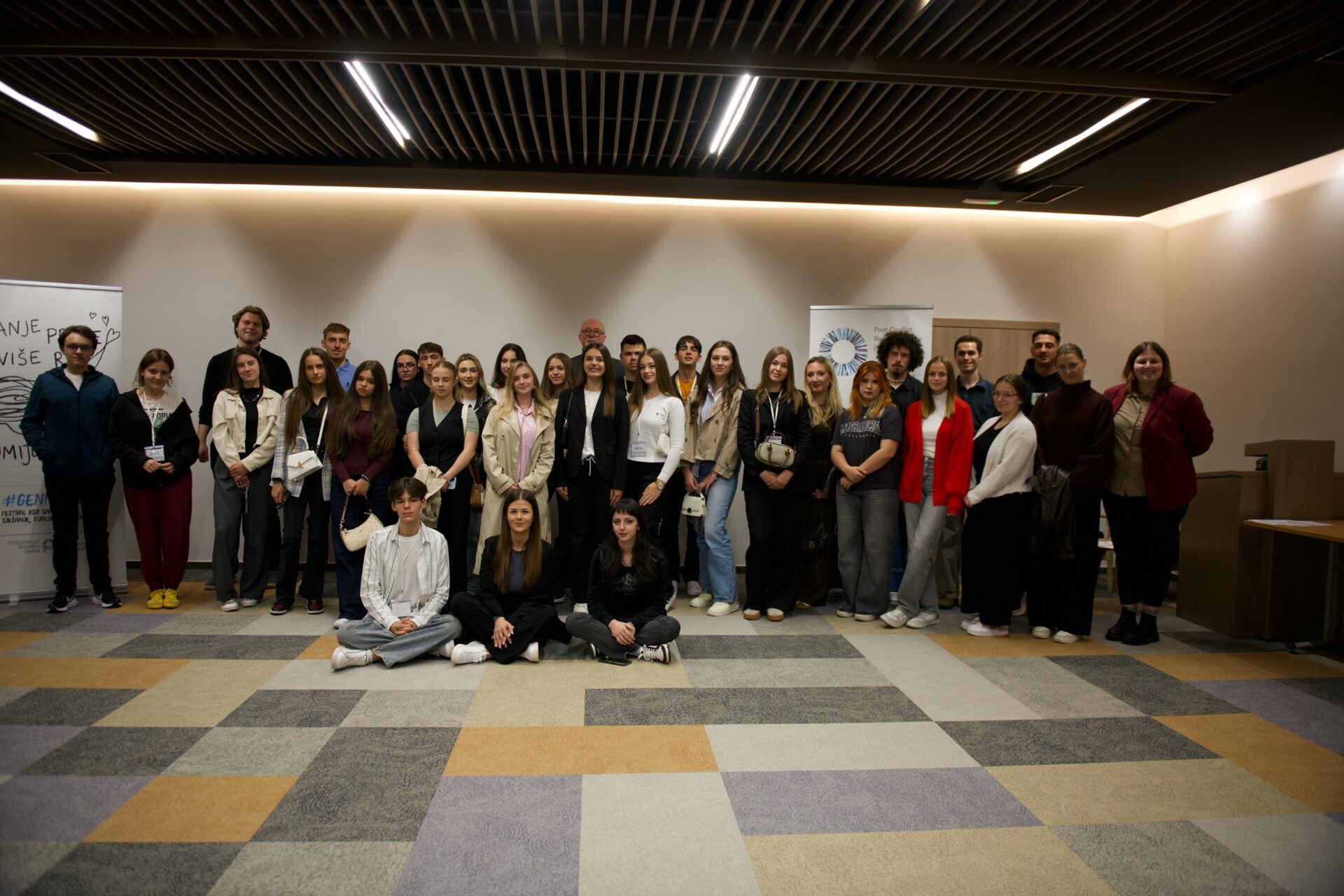
About 40 young people gathered for the fifth Peace Festival, organized by the Post-Conflict Research Center (PCRC) to discuss and learn about peacebuilding through inclusive memorialization, art, and activities designed to promote critical thinking and respect for multiculturalism in Bosnia and Herzegovina (BiH).
This year’s Peace Festival, held from May 15th to 18th, brought together young people from 20 cities in BiH: Zenica, Kakanj, Kladanj, Ilijaš, Zavidovići, Tuzla, Breza, Donji Vakuf, Bugojno, Živinice, Srebrenik, Tešanj, Ključ, Ilijaš, Teslić, Bihać, Fojnica, Lukavac, Travnik, Sarajevo, and Banja Luka. During the program, participants visited two memorial sites, Osmica in Vitez, and Ahmići to pay their respects. They also learned about transitional justice and contemplated processes of dealing with the past.
Opening the festival, PCRC Program Director Tatjana Milovanović emphasized the importance of involving young people in the processes of building peace and preserving the culture of memory.
“It’s through dialogue, learning, and mutual connection that we’re building a generation that will preserve the memory of the past, but also actively work to create a more peaceful and fair future for everyone,” said Milovanović.
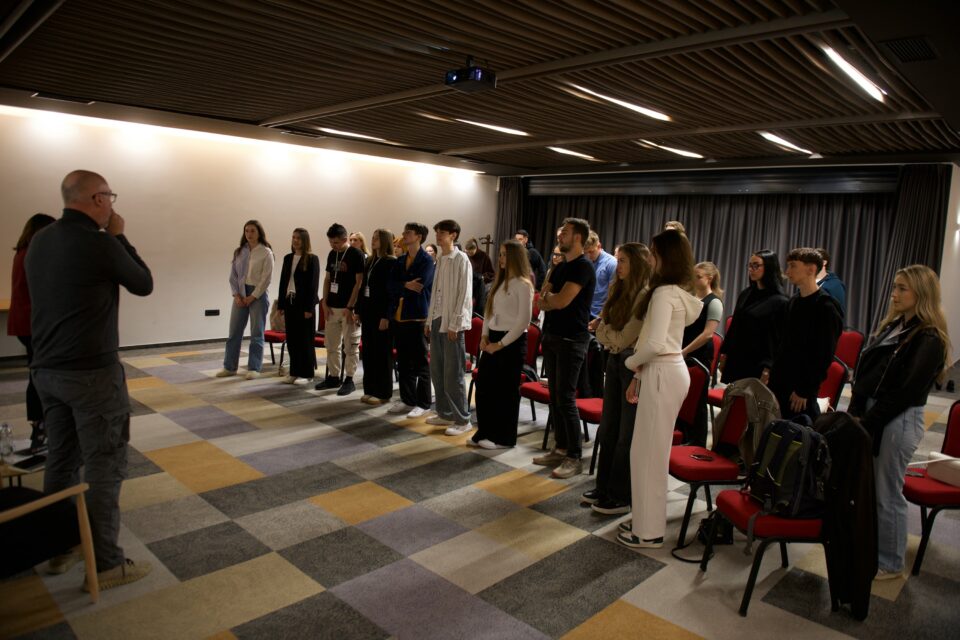
On the second day of the festival, an interactive session titled “The Culture of Memory in Bosnia and Herzegovina” was led by Refik Hodžić, an expert in transitional justice. During the session, participants discussed the importance of dealing with the past, the challenges of memorialization, and the role of young people in building a society based on facts, dialogue, and mutual respect.
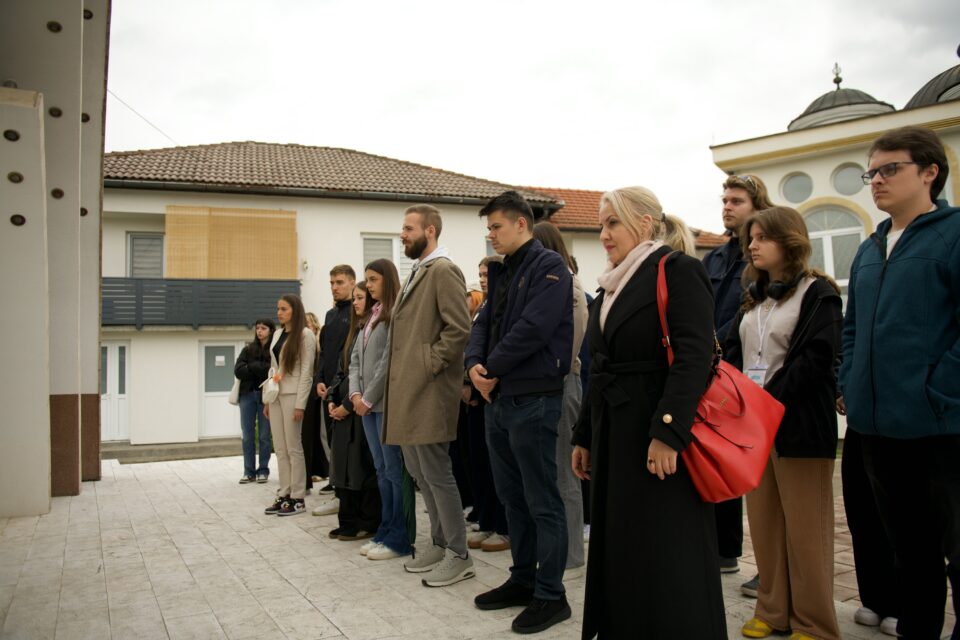
Special visits were organized to the village of Ahmići and the Osmica memorial in Vitez, where participants spoke with Imam Mahir Husić and Ivan Sajević.
Imam Husić spoke about coexistence in Vitez and the massacre of 116 Bosniak civilians in Ahmići on April 16, 1993, by the Croatian Defense Council (HVO). He thanked festival participants for honoring those killed in Ahmići and emphasized that peace and coexistence are the only path forward for the future of BiH.
The Osmica memorial is located at the site where, according to judicial verdicts, eight children were killed and five wounded by a shell fired from an area controlled by the Army of the Republic of Bosnia and Herzegovina on June 10, 1993. Sajević said that the site “shouldn’t be a place of hatred, but should serve as a warning so that this does not happen again to anyone.” Today, he added, children still gather at this location to laugh and play, symbolizing “the victory of life over death.”
Adem Ajdin, a festival participant from Ilijaš, stated: “I can say that the photos of suffering and mass murder that happened in Ahmići are blood-chilling. The story of the youngest victim, who was only three months old when she was brutally burned in a kitchen oven, is very poignant. The parents we met at the Osmica memorial told us about the suffering they endured after the death of their children. We were grateful to them for giving us a warm reception and talking to us about the tragedy.”
Adem described his understanding of inclusive memorialization as a process of looking back and remembering unfortunate historical events, as well as viewing them exclusively through the lens of judicially determined facts, without the influences of historical revisionism, relativization, or politicized narratives.
“The Ahmići and Osmica memorials stand as testaments to the pain suffered and the evil inflicted on the innocent. As such, even after so many years, they are places of sadness and regret. Today, however, as young people, our message from these places is not one of hatred or revenge, but a message of remembrance and love. We want to work together towards a better future so that such evil is never again permitted, to give love another chance, and to work to build a society of peace that we can be proud,” remarked Filip Spasojević, a festival participant from Teslić.
Mia Ćejvanović, a participant from Tuzla, noted that Ahmići and Osmica are two different stories of the same suffering and pain, which transpired only a short distance apart. “They show us how much everyone suffered during the war and mourned the lives lost. Ahmići and Osmica are not only symbols of victimhood but also places of hope, where people feel remorse. They are a warning for the future,” Mia reflected.
During the panel session “Generation Memory: Youth in Action,” on the third day of the festival, Adelisa Mašić, Elma Hasanspahić, and Jelena Savić spoke about their research projects within the Generation Memory Fellowship, which focuses on places of memory in BiH. The panel was moderated by Edvin Kanka Ćudić from the Association for Social Research and Communications (UDIK), which has been working on memorialization initiatives in BiH for years, including the creation of the only regional database of post-war monuments. He emphasized the importance of memorial culture and asked the young participants to consider what research and writing about monuments and memorials means to them.
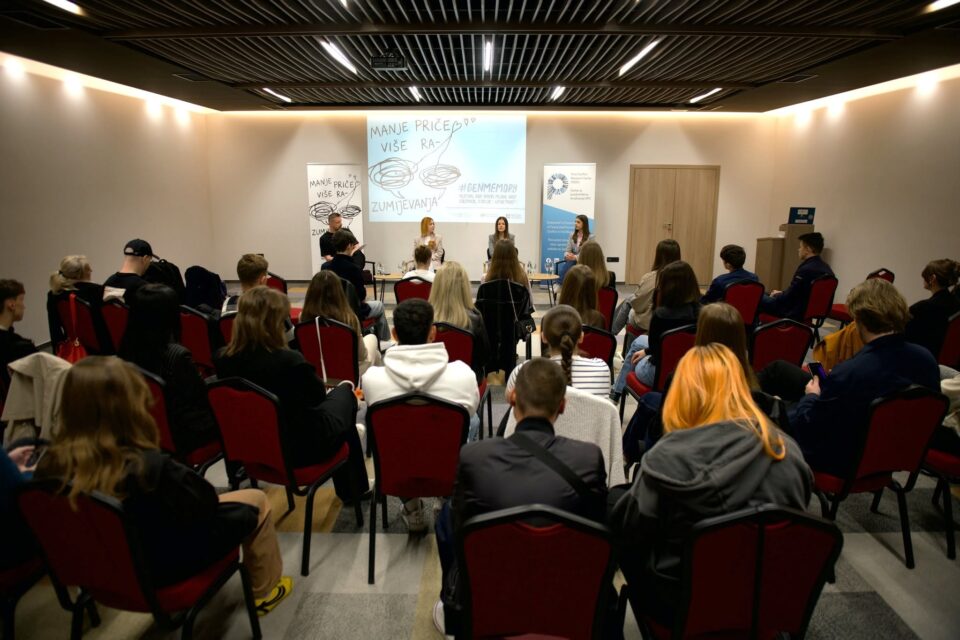
“I believe that text has the power to raise questions that are often sidelined and encourage important dialogue,” said Elma.
The program also featured the photography exhibition “Love Tales,” which explores inter-ethnic relationships and marriages in BiH. Through personal stories, it reminds us of the importance of mutual understanding and human connection.
Jelena Savić from Gradiska spoke about the role of art in preserving the culture of memory:
“Art can help preserve the culture of memory by conveying the stories and experiences of the victims in an emotional and human way. Through film, music, photography, literature, and theater, people develop empathy more easily, because they see not only facts and figures but real emotions, fears, and fates. Art also gives young people the space to learn about the past in a way that encourages them to understand, engage in dialogue, and prevent renewed violence and hatred.”
Speaking about her participation in the festival, she added:
“I’m coming away from this Peace Festival with new acquaintances, different perspectives from young people, and an even greater awareness of the importance of peace, tolerance, and mutual understanding. I think that the conversations, emotions, and experiences shared here are something that will remain long after the festival is over.”
For many participants, the festival was an opportunity to gain new knowledge, but also to meet peers from different parts of BiH.
Participant Emela Isanović from Sarajevo emphasized the importance of active youth engagement in such projects:
“I was inspired by the fact that young people today have the opportunity to talk about important things and to preserve memories of the past. Through this project, I realized how important it is for young people to learn about the past and talk about it. It was very useful, because I learned a lot of new things and met like-minded people.”
She added that young people should be involved in more activities, socializing, and projects where they can showcase their ideas because “when they do something interesting and useful, they have a greater desire to be active in their community.”
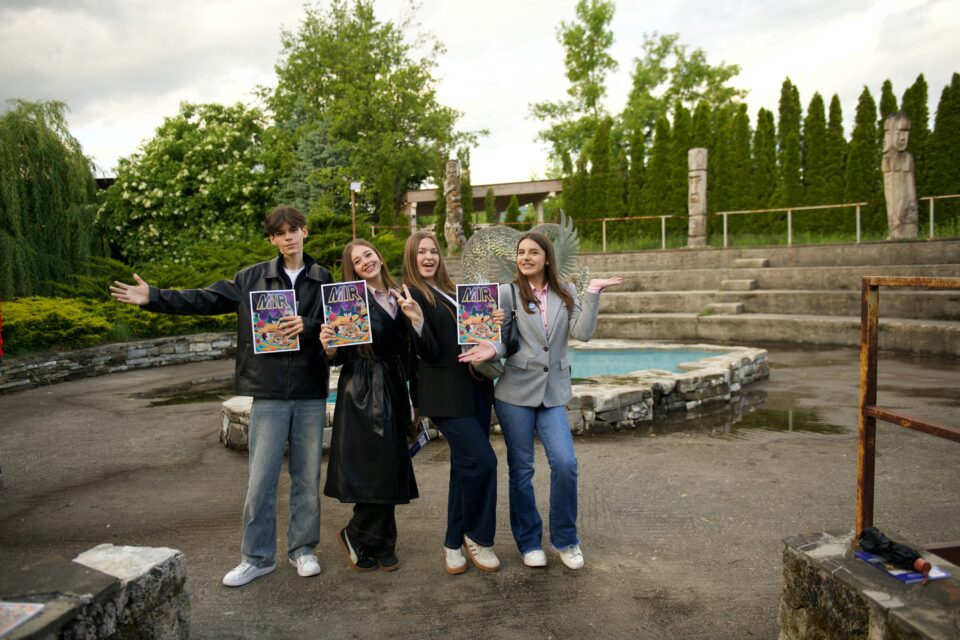
This year’s Peace Festival showed once again that young people in BiH want to talk about the past, learn from it, and build a society based on empathy, understanding, and respect for all victims. Their messages clearly demonstrate that the culture of memory belongs not only to the past, but also to the future they are building together—a future in which they choose peace.