In Bosnia and Herzegovina (BiH), monuments and memorials are erected in various places—along main roads, in city squares, next to schools, in cemeteries, on hills overlooking cities, along riverbanks, and on bridges.
It is not known how many there are in total. Some are large and monumental, while others are just modest plaques with a few names. Although sometimes overlooked by passersby, these structures have been shaping space, memory, and the way society talks about war for thirty years.
In a country where there is still no single law regulating the erection of memorials, these sites have long been more than places of piety. They convey political messages and identity boundaries, as well as represent attempts to preserve memories of victimhood. At the same time, these sites sometimes reflect a selective interpretation of the past dictated by national narratives.
According to the Central Register of Memorials created by the Association for Social Research and Communications (UDIK), 2,143 memorials were erected in BiH between 1996 and 2016, spread out over142 municipalities and cities as well as the Brčko District. These memorials are dedicated to the suffering of civilians or members of former military formations, such as the Army of the Republika Srpska (VRS), the Croatian Defense Council (HVO), the Army of the Republic of Bosnia and Herzegovina (ARBiH), and the National Defense of West Bosnia (NOZB). There are more memorials erected to soldiers than to civilians.
Former members of the VRS in Višegrad, the HVO in Živinice, and the ARBiH in Goražde maintain that these memorials are reminders of the dead and should not offend anyone. While some believe that ethnic groups have every right to build memorials in places where they constitute the majority, others say that the story behind a memorial is more important than its appearance, and that those honoring convicted war criminals are offensive.
Non-governmental organizations concerned with inclusive memorialization and transitional justice view memorials as opportunities to pay respect to the victims on one side of the conflict, bolstering claims of exclusive and disproportionate suffering. Such memorials thus cause discomfort among citizens of other groups, especially those returning to pre-war residences. They explain that memorials should be inclusive and based on judicially established facts. Within this framework, they argue that the memorialization of military forces should be considered only if it reflects the desires and needs of the local population. However, they emphasize that this should be part of a strategic approach that promotes multiple perspectives, rather than serving a unilateral approach to memory.
How Memorials Shape Space and Memory
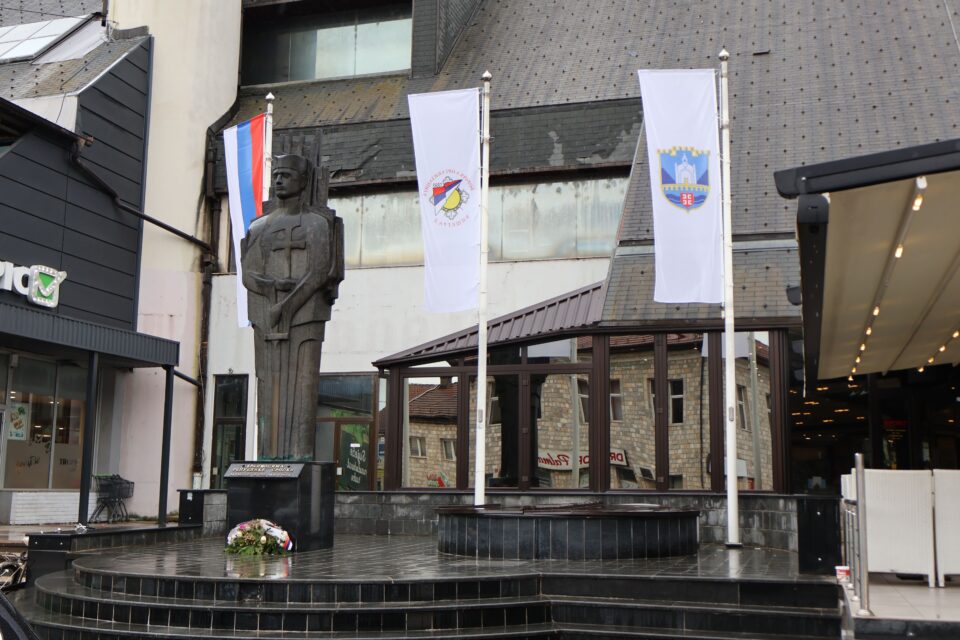
In Višegrad, a city associated with some of the most serious war crimes committed in BiH, a memorial complex dedicated to the VRS is located in the very center of the city.
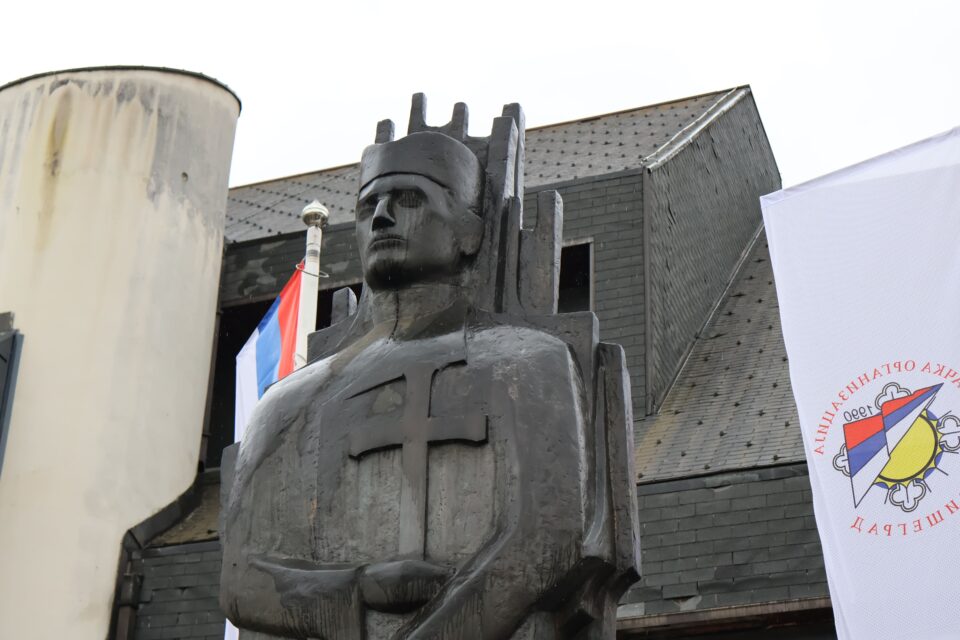
This memorial, situated on the Square of Fallen Fighters, consists of a bronze sculpture of a soldier atop a tall stone pedestal bearing the inscription “The people of Višegrad are grateful to the defenders of the Republic of Srpska.” The memorial complex includes a fountain, access steps, and a plateau paved with marble slabs with decorative LED lighting. The restoration of the memorial in 2021 was supported by the Republika Srpska Government, Višegrad Municipality, and the company Hidroelektrane na Drini.
The plateau features a bust of a soldier by the sculptor Branko Tijanić, which was erected in 2000 in memory of fallen fighters.
“We know that 145 people lost their lives for the defense of Višegrad and the creation of Republika Srpska. And in honor of their victims, we erected a bust of a soldier that symbolizes the defense of Višegrad and the creation of Republika Srpska,” says Svetozar Guzina, former commander of the 1st battalion of the VRS Ilidžan Brigade and president of the municipal veterans’ organization.
The complex has been renovated in recent years, including with new marble, new posts, and the addition of a fountain. Guzina believes that the site “will last for the next 30 or 40 years.”
For him, as well as for many veterans, such memorials represent, first and foremost, the history of the nation and a reminder of the dead.
“I don’t think that anyone should be offended by Muslim or Croatian memorials. So, this memorial isn’t offensive to either Muslims or Croats. The Serbian people are proud of their achievements. Let the memorial stand, let the well-meaning people who pass by it pay homage to the shadows of these people. I am satisfied as far as that goes,” he says.
When it comes to memorials, Guzina insists that the problem isn’t in the commemoration of victims, but rather in what he calls “provocations.” He believes that commemorations become a problem only when they turn into a display of political or war symbols.
“If it’s dignified, it’s not a problem. If it’s certain flags and provocations, then it is. Why would I go to Sarajevo or Goražde with a Serbian flag on the days of the defense of Goražde to provoke people? So, there’s no need for a Muslim to come to Višegrad with the war flag of the Army of Bosnia and Herzegovina,” said Guzina.
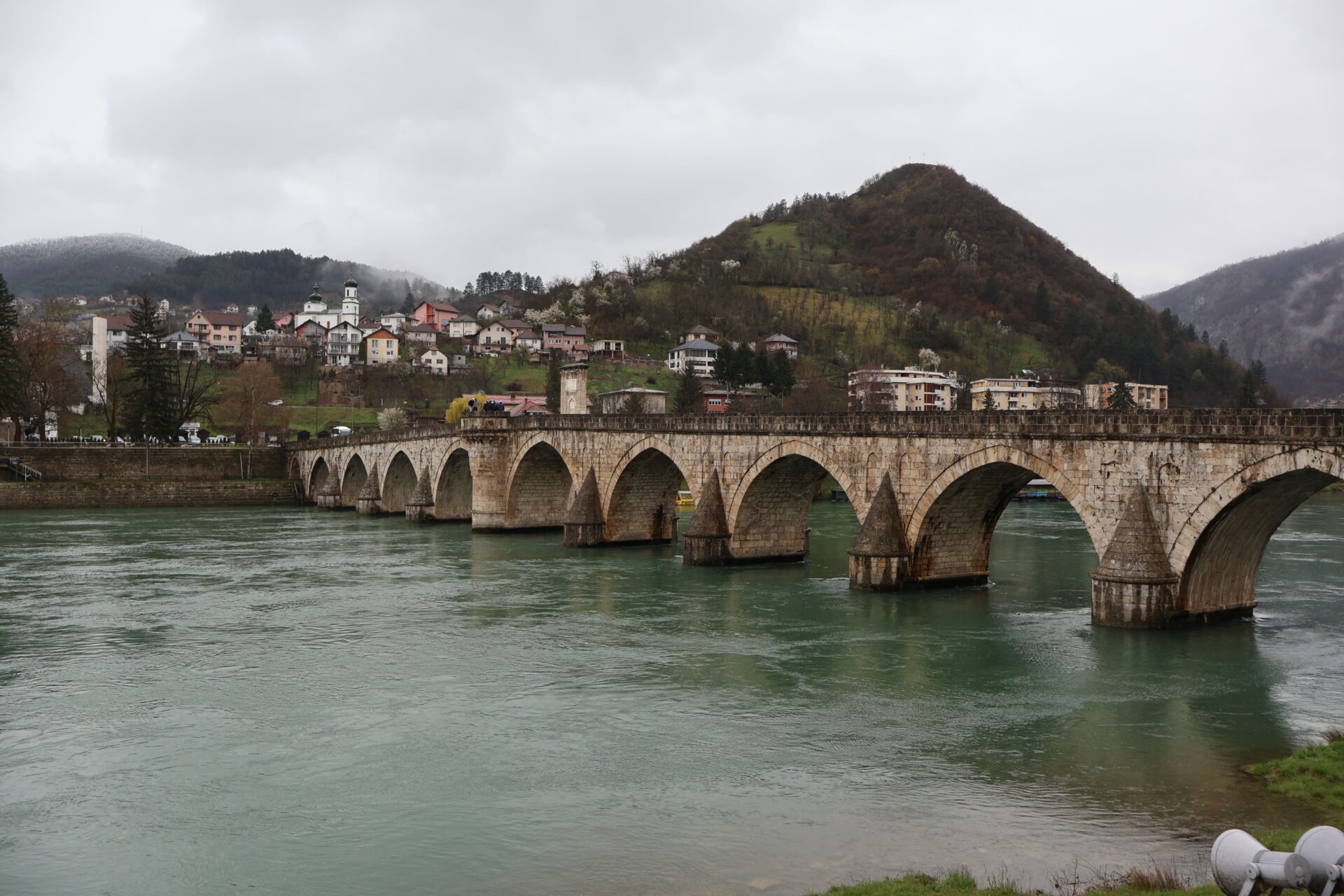
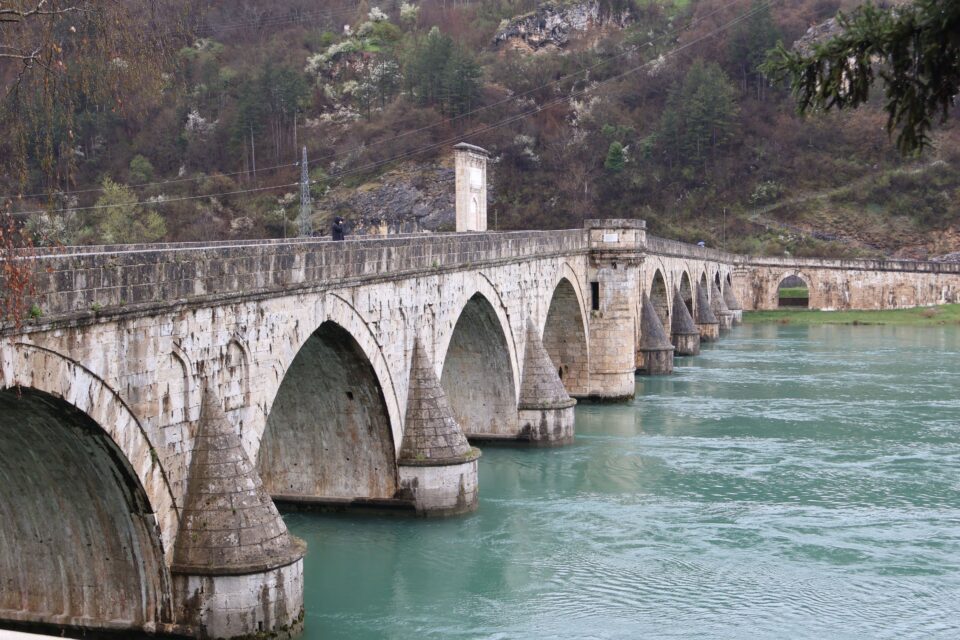
Speaking about the commemoration of war victims in Višegrad, Guzina states that commemorations for Bosniak victims have been held for years without incident, and he sees this as the basis for possible coexistence after the war. He recalls how, immediately after the signing of the Dayton Peace Agreement, busloads of people came to Višegrad to commemorate victims on the Mehmed Pasha Sokolović Bridge, and despite the city’s difficult history, there were no attacks or conflicts. He continues:
“All those people who came here can confirm that not a hair on their head was harmed, that they were not met with any whistles, stones, or anything else. To this day, they commemorate all of that in peace; they walk in harmony through the entire town to the mosque, pray, and nobody bothers them. Personally, I believe that everyone should commemorate their own, but they shouldn’t interfere with others. Because my biggest problem is this: if we Serbs commemorate what we commemorate, Muslims and Croats should not criticize us, nor should we criticize them. Let them commemorate their own dead. Why not?”
When asked about monuments to civilian victims of war, especially in places where local authorities do not allow their construction, his position remains consistent—that “everyone should build their own monuments on their own territory.”
“To poke a finger in someone’s eye and then demand a memorial—I’ll again use the example of Višegrad. I believe it’s a provocation for someone to demand that a Muslim memorial be built in the center of Višegrad. We simply don’t need that. Let us socialize, work, have higher salaries and incomes and everything else, a better life, and as for memorials, let them be in the territory where the majority people live,” Guzina states emphatically.
When Memorials Become Dividing Lines
Such attitudes, however, are exactly what some researchers, activists, and human rights organizations see as one of the key problems of Bosnian memorialization: the division of memory by ethnic territories and the insistence that the victims belong only to “their” territory and “their” people.
Denis Džidić, director of the Balkan Investigative Research Network of BiH, believes that the abuse of memorialization poses a serious problem in the country today, especially when it comes to military formations whose members or commanders are connected to war crimes.
“Of course, the commemoration of military events is also important, but we already have many of these. The abuse of military memorialization, unfortunately, often includes a certain, highly insensitive memorial approach, which doesn’t account for the fact that certain units were unfortunately involved in war crimes. This absolutely doesn’t mean that all members of that unit are guilty—of course, the guilt should be individualized,” says Džidić.
He believes that the issue of memorials cannot be viewed separately from the wartime history of individual units and the experiences of the people who live in these areas today. He points out that from the perspective of transitional justice and returnee communities, it is understandable that memorials dedicated to formations whose commanders or members participated in serious war crimes—including ethnic cleansing, crimes against humanity, or genocide—cause discomfort, pain, and additional traumatization for survivors and victims’ families.
“It’s logical that this type of memorial can put members of returnee populations, those who survived war crimes or whose loved ones may still be missing, in a very uncomfortable position, with very uncomfortable emotions. In this context, thought and sensitivity are crucial when making memorialization plans, and it’s especially important to look at it from the angle of what is potentially being defended with the construction,” adds Džidić.
He reflects on particularly problematic instances where military memorials are erected while the construction of memorials to civilian victims is disputed:
“We can’t see the memorial to VRS soldiers in Prijedor as acceptable if, at the same time, the construction of a memorial for 102 murdered children is not allowed […] Within the reality of memorializing a certain micro-location, we must take into account that some things should be a priority. That priority should primarily given to the victims and those who suffered the most.”
For Džidić, the key problem is that BiH has never developed a unified strategy for transitional justice and collective memory.
“Memorials should be inclusive and based on judicially established facts. Within this framework, the possibility of memorializing military forces should be considered if that is the strong desire or need of the local population, but this should be part of a strategic approach that […] provides multiperspectivity, rather than being built for the purpose of a one-sided approach to memory,” Džidić notes.
The UDIK, which is currently working to update its 1996-2016 memorial database, issued the following statement on the occasion of the International Day of Monuments and Sites on April 18: “Monuments are an opportunity to express respect for ‘our’ victims and a way to show society how ‘we’ suffered the most,” while political structures use them for the purpose of manipulating the electorate.
One Memorial Unites Two Armies
While the narrative in Višegrad centers on the creation and defense of Republika Srpska, Živinice offers an example of a very different kind of a war memorial—one that seeks to unite two armies that fought both alongside and against one another during the war.
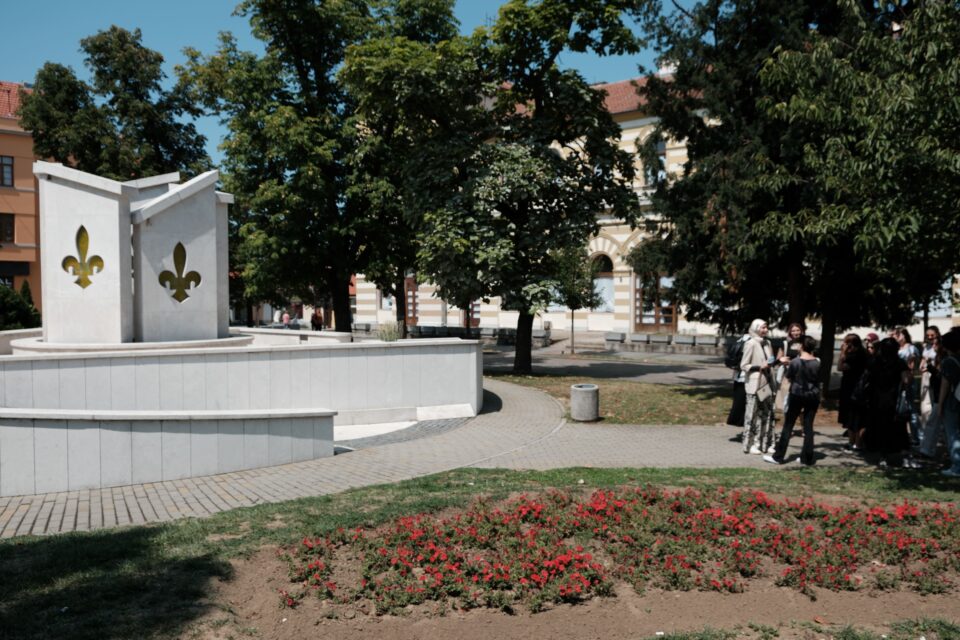
Located in the Živinički Sokolovi Memorial Park, this single memorial features both a Catholic cross and a Muslim star and crescent. The Živinički Sokolovi unit simultaneously operated as part of the HVO 115th Zrinjski Brigade, the ARBiH, and the 108th Infantry Brigade of the Brčko HVO.
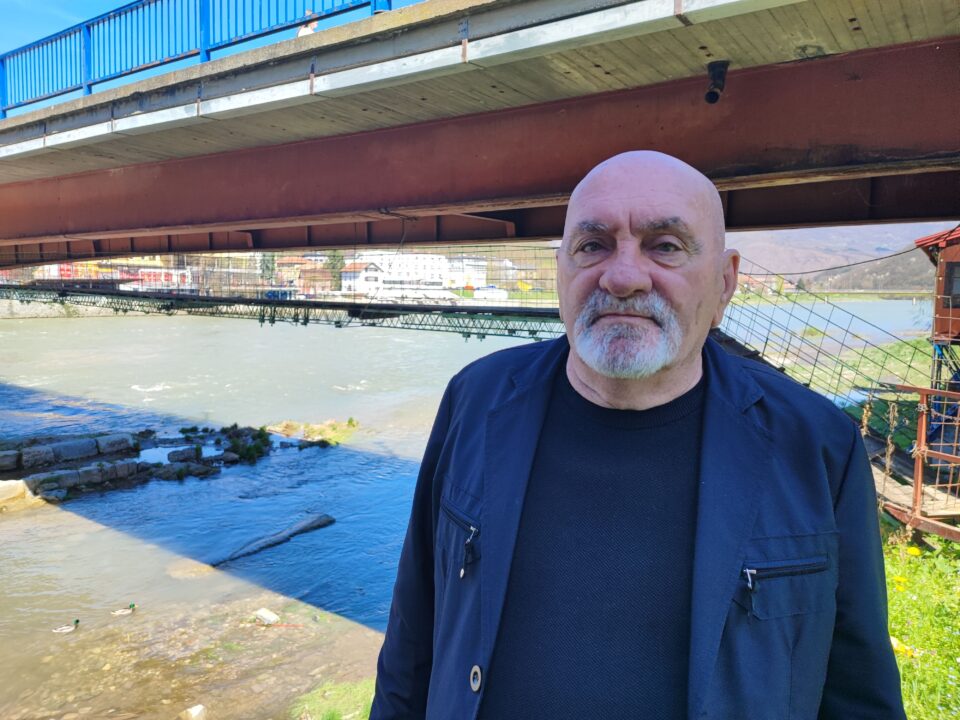
Drago Jakić, a former commander of the unit and the president of the Živinički Sokolovi Association of Volunteers and Veterans, explained that the unit was established on March 15, 1992, with around 500 members—60 percent Croats and 40 percent Bosniaks. Twenty-three members of the unit were killed, and their names are inscribed on the plaques in the memorial park.
“After the war, we built a memorial. Since we were among the first to go to war, we were also among the first to build a memorial, in 2004. At the memorial, we have a cross, and we have a star and crescent. Beneath the cross are listed the fallen Croats, and beneath the star and crescent are the fallen Bosniaks. They are all within the same circle,” Jakić explains, emphasizing that the memorial received significant funding from the Croatian government.
He adds that such memorials are rare, but also that accepting the truth and responsibility leads to a healthier future for the community.
“Bosnia will continue to exist, one way or another. With us or without us, it will exist. But it will be much easier, and we will be far more advanced, if we overcome all of this in time. I know it’s painful, but life must go on, and unfortunately we will have to overcome all of this somehow so that the future for young people can be better,” Jakić emphasizes.
However, he acknowledges that, for many veterans, the war never really ended.
“The war is over. There certainly won’t be any more war like it once was. Yet, it still continues to this day. We’re far more aware of this than younger people might be. You can’t forget, you have to forgive. I know, it’s difficult. We experienced all manner of things on those frontlines, so how healthy we all are is questionable. Today, I sometimes wake up with those images. But again, no matter how it was, we have to forgive for the sake of the future,” says Jakić, adding that reconciliation is the only option for the people of BiH.
Unlike many political speeches that accompany commemorations, Jakić speaks openly about war crimes and the need for them to be condemned and prosecuted regardless of the nationality of the perpetrators:
“I myself cannot forgive war criminals on any side. There’s no excuse. I can’t forgive people who targeted civilians. They must condemn their own, among themselves. I personally was a commander, and anyone who behaved in such a way wouldn’t be with me. To target civilians and commit war crimes, to capture a person and to kill unarmed people, wounded people…”
The question of civilian victims often opens the deepest divisions when it comes to monuments in BiH. While military memorials are erected across the country, civilian victims of war often remain un-memorialized, or the construction of such memorials is disputed for years. Jakić believes that civilians are unfairly neglected.
“No one mentions civilians and civilian victims. Civilians were the foundation—without civilians, there would have been no one to welcome us, no one to make us some food, no matter how modest. They also gave us morale. Because of them, we were up there on the hill,” he reflects.
Unlike many memorials that come alive only during anniversaries, the Živinički Sokolovi Memorial Park is now a part of everyday life. The complex houses the association’s premises and a plateau where citizens gather for religious and social activities, and where children often play, according to Jakić.
“The memorial park is fenced off. It has a plateau where children often play basketball. On Easter, Christmas, and St. Nicholas Day, we give out packages. When there are anniversaries and memorial masses, we gather there. It’s not just a monument, but a place where people live,” he explained.
The Story More Important than the Appearance of the Memorial
Enisa Hrelja from Goražde, a former member of the ARBiH who worked in a military tribunal during the war, shares Jakić’s view.
“As for the monuments being built, both in the Federation and in Republika Srpska, I think that sometimes there is too much rushing and literally competing to build and glorify—sometimes even certain individuals, to the point that it occasionally resembles iconography, even idol worship,” she says.
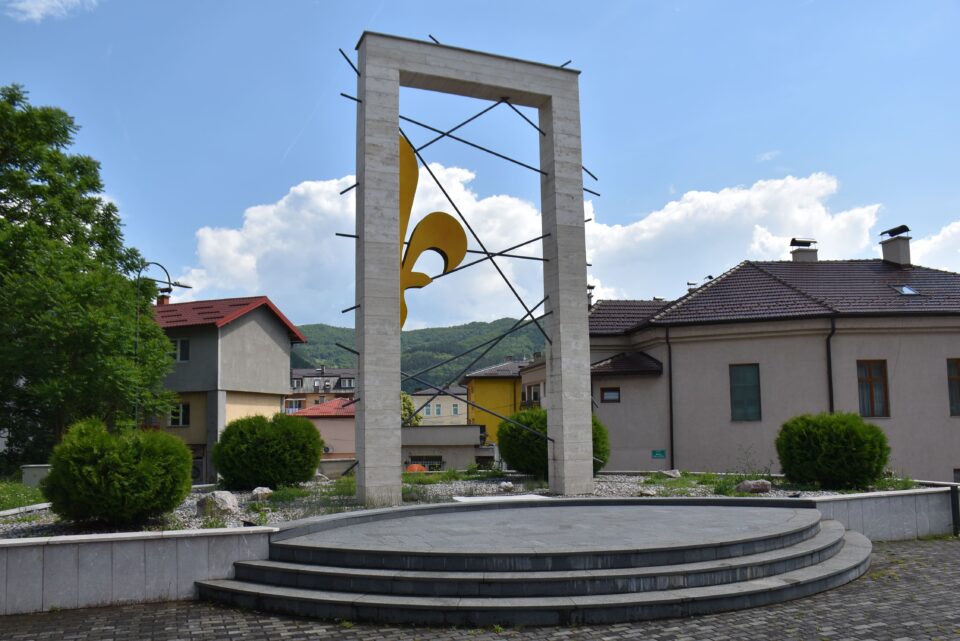
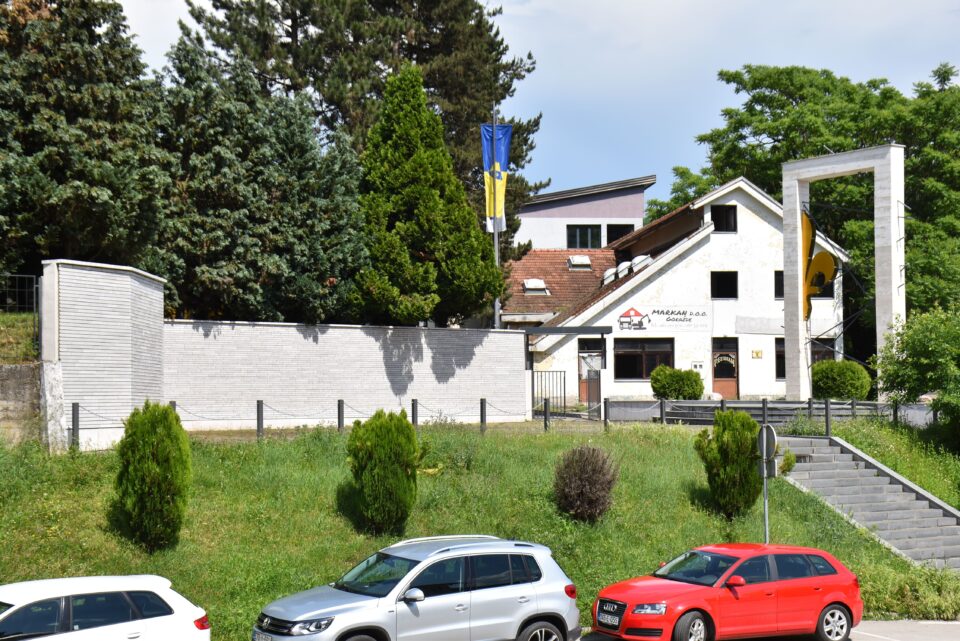
The central memorial in Goražde, titled “Goražde Hero City, to Its Defenders,” was modernized and ceremonially reopened on May 4, 2022, marking the 30th anniversary of the beginning of the siege and resistance of the city. The reconstructed complex on the plateau in front of the building of the Bosnian-Podrinje Cantonal Government features monumental architecture that replaced the former, more modest memorial from the early post-war period.
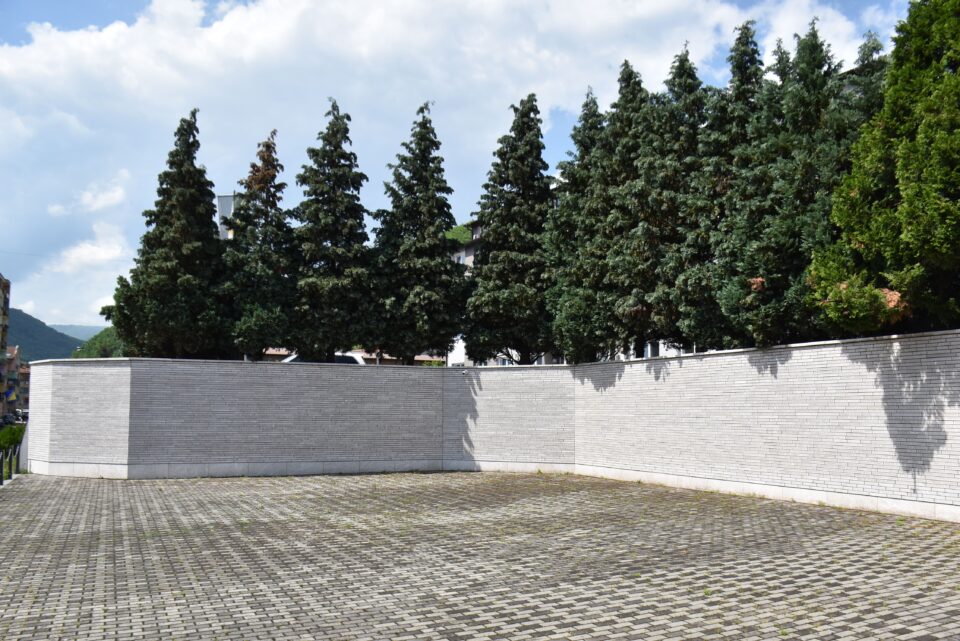
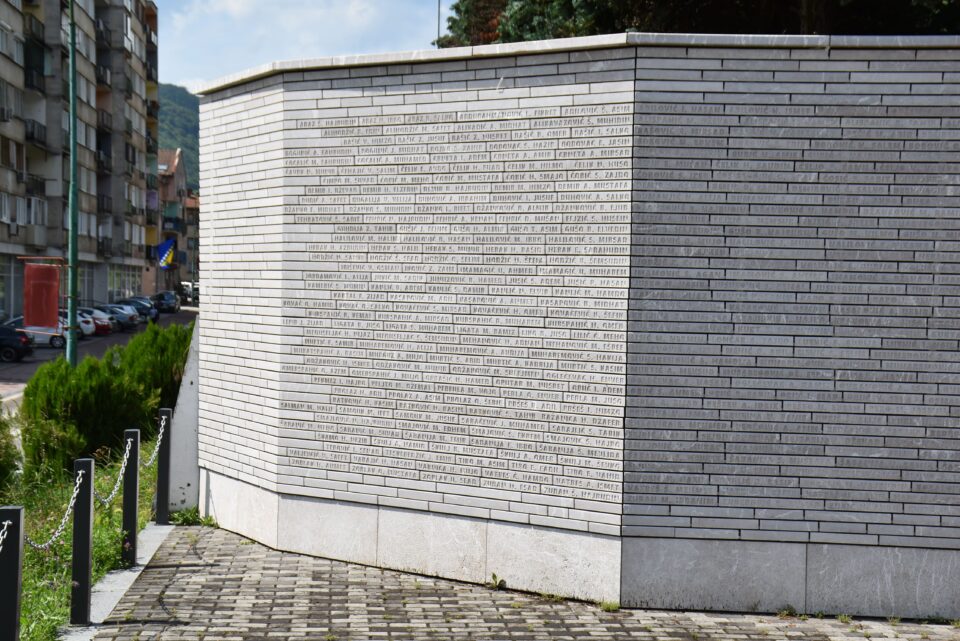
The conceptual design of the memorial was done by architect Haris Šalo from Aring LLC. It features a large, central stone “Gate of Life,” with a golden lily on one side symbolizing survival and the aspiration to freedom. There is also a memorial wall inscribed with the names of 2,115 fallen soldiers, with space intentionally left for subsequent additions.
The project, at a cost of about 240,000 KM, was carried out by the Cantonal Ministry for Veterans’ Affairs. The construction was jointly financed by the Bosnian-Podrinje Canton, the City of Goražde, the Sarajevo Canton Ministry of Veterans’ Affairs, and local companies including Ginex and Emka Bosnia.
Hrelja recalls that the original memorial was erected in 1999, but that it was neglected over time and later reconstructed. She says that while she may be emotionally attached to that memorial because it was built right after the war, today she is “more interested in what the memorial says than what it looks like.”
“You can’t say everything with one memorial or one sculpture or something. Let’s be clear: there needs to be a story to be told about that memorial,” she explained.
For her, the biggest problem isn’t the number of memorials but the absence of a unified and meaningful narrative. “Memorials should be there, but too many memorials will not convey one clear story to be remembered, but many stories that will eventually mix together and be forgotten,” Hrelja reflected.
A memorial, she emphasizes, shouldn’t simply be a place where flowers are laid once a year, but part of a much broader story of remembrance and education:
“Someone has to take care of the memorial, to create a whole program for maintenance and the dissemination of memory to the world.”
She cited the example of Auschwitz, where explanations of what occurred at the site are available for visitors from all over the world, which is not the case at Bosnian memorials.
However, unlike the opinions expressed in numerous public debates that often end in new divisions, Hrelja says that she personally has never been offended by memorials to other armies, except those that glorify convicted war criminals.
“Believe me, I’m not offended, except by the memorials that glorify proven war criminals. Only those. And there are proven war criminals from various periods. Everyone has the right, in their own country, to pay attention to a certain population. And the HVO, together with the ARBiH, fought at certain times. The RS also has the right to commemorate those people. Whether they were right or not, time will tell, and it’s showing now. Too many memorials and glorifications, especially these, can lead to the deterioration of relations among people,” Hrelja warns.
She highlighted another dimension of memorialization: the efforts to honor the memory of the women who served in the war. As a member of the association of female ARBiH veterans, she took part in an initiative to erect a memorial in Sarajevo dedicated to all women who served in the ARBiH during the war.
“It was conceived as a unique memorial, without a name and features, so that no one could claim it as their own. It refers to all women who served in the Army of the Republic of Bosnia and Herzegovina, both those who died and those who survived,” stated Hrelja.
Like the interviewees from Višegrad and Živinice, she also returns the conversation to everyday life: “We all need a good, strong economy and living conditions. Memorials won’t give us that.”
Between Piety and a Political Message
Džidić warns that the problem in BiH is not the memorials themselves, but the messages they send and the political context in which they’re created. He believes that many of the memorials being built today are primarily motivated not by concern for the memory of the victims, but by political incentives.
“It’s an abuse of transitional justice mechanisms. We’re currently at a stage where these monuments are built solely for the purpose of mobilizing for elections, dividing ethnic and religious groups, and as an orchestrated means of insulting others in order to sow as much discord as possible,” said Džidić.
He noted that it’s clear from the appearance, symbolism, and commemorative approach of some memorials that their goal is not just to honor the dead but to maintain social divisions. He cites the example of a monument to the VRS in Kalinovik, which is directly tied to Ratko Mladić, who was convicted of genocide and war crimes by the Hague Tribunal.
Džidić believes that such memorials can be a source of fear, discomfort, and additional trauma for returnees, survivors, and victims’ families. He adds that commemorations and memorials that indirectly glorify convicted war criminals are particularly controversial, because we are no longer talking about the culture of memory but about conscious political action.
According to Džidić, it’s often forgotten in BiH that memorialization is not only a question of a nation’s right to commemorate its victims, but also a question of responsibility in the spaces where these monuments are created.
“Erecting a monument in a place with returnee community that has survived mass crimes is not the same as in a place where there’s a wider social consensus. That’s why every memorial must be considered in the context of the local community, including the messages it sends and whether it contributes to reconciliation or deepens divisions,” asserts Džidić.
This is perhaps the greatest paradox of the Bosnian culture of memory. While political elites have been competing for three decades over whose monuments will be the biggest, most visible, and most pronounced, almost all the people who live next to these memorials—former combatants, returnees, and victims’ families—eventually return to the discussion of other issues: jobs, the economy, peace, children, and normal life.
Nevertheless, the monuments remain as reminders that the war in BiH is not just a thing of the past, but lives on in stone, bronze, and language. For this reason, memorials, too, have never just been a question of the past, but a question of what kind of society Bosnia and Herzegovina wants to become.
This article was created within the project “Generation Memory”, which is carried out by the Post-Conflict Research Center (PCRC), with the aim of developing inclusive, local peace-building practices and a culture of memory that encourage work on understanding, empathy and critical reflection among young people. The project is financed by UK International Development and is implemented in partnership with the British Council.