In Bosnia and Herzegovina (BiH), post-war monuments represent the political and ethnic forces of localities, encouraging a narrative in which women often have no voice.
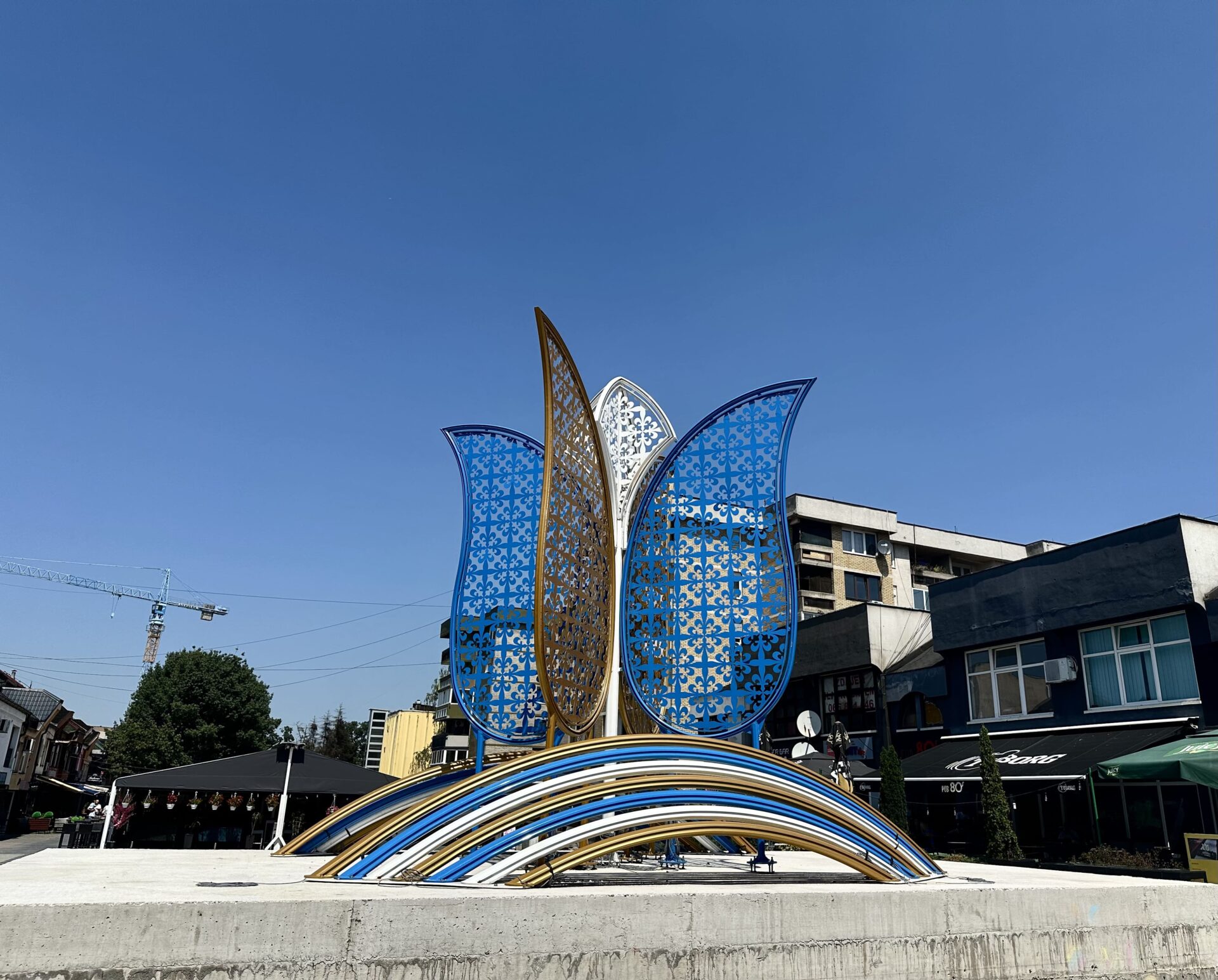
Although gender is not a primary factor in the construction of monuments, most are erected in honor of men, as soldiers, or of civilian victims of war, including women. Thirty-one years later, small steps have been made to commemorate the the female experience in war, with the monument to the Bosnian and Herzegovinian woman and heroine opened on June 19, 2026 on the City Boulevard in Živinice. Hope still remains that December 8th will one day be the Day of Remembrance for the suffering of female victims.
After the 1992-1995 war ended with the signing of the Dayton Peace Agreement, the reconstruction of the infrastructure in BiH began, as did the construction of monuments to those killed. Memorialization, which includes various ways of remembering, includes both men and women, but monuments honoring soldiers, the majority of whom were men, are approved and built in far greater numbers. Between 1996 andto 2016, more than 2100 monuments were built, and about 90% of monuments constructed between 2016 and 2020 honored military victims.
Edvin Kanka Ćudić is the founder of UDIK, a Bosnian NGO that gathers research on genocide, war crimes, and human rights violations in former Yugoslavia. He affirms that “monuments to military units are always large in size and are primarily financed from the local or entity budget.” These monuments tend to memorialize the military forces of the dominant ethnic group where the monument is built. Ćudić adds that monuments to civilian victims tend to be commemorative plaques that are always smaller in size.
While these differences are visible in size and form, architects involved in memorial design argue that gender is not always a primary factor guiding the creative process. Zulejha Šabić Zatrić, an architect, explains that distinctions between “male” and “female” memorials are not usually intentional in design methodology. “We would not say that differences between monuments are motivated by whether they are ‘male’ or ‘female’ monuments. We use similar, if not the same, methodology in every case…,” she noted. She added that even the Monument to the Victims of Wartime Sexual Violence in Bosnia and Herzegovina in Vogošća has to be designed without any gender-specific markers in order to include all victims of war crimes.
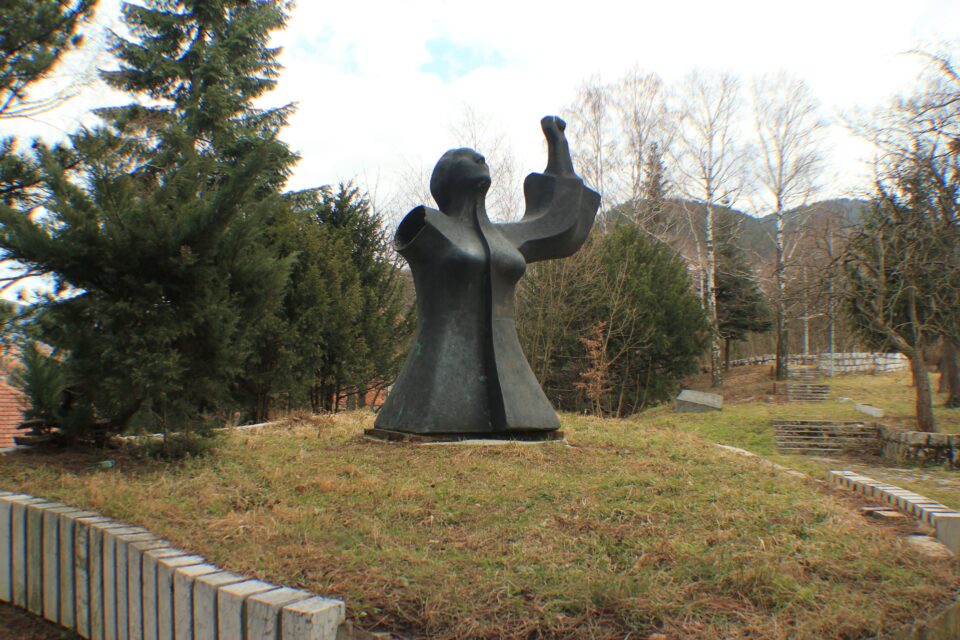
The majority of monuments dedicated to women in BiH were built before the 1992-1995 war to commemorate women who played important roles during World War II. An example is Vraca Memorial Park in Sarajevo, where a 4-meter-tall bronze statue stands of a woman with her arms held high, as if begging for freedom from the world, in remembrance of the women who fought and were killed in World War II.
Ljilijana Siničković, the Country Director of the German NGO ProPeace in BiH, emphasized the significance of monuments dedicated to women: “It doesn’t mean disregarding other memorialization efforts, but preserving the memories of women who have perished and who are forgotten in the discussion of the conflict in Bosnia and Herzegovina. By having different approaches to identities in memorialization, we would be better able to understand the past and learn from it.”
According to Ćudić, the extent to which women are commemorated depends largely on “the strength of patriarchy in a given community and the space women have managed to claim within society.” While some women were combatants, the majority are remembered, if at all, as civilian victims, he explained.
Lejla Gačanica, Experienced Legal Advisor, shares this opinion, noting that the representation of gender during and after the war in BiH followed typical patriarchal patterns: “It was either entirely marginalized during the war and in the immediate post-war period, or women were predominantly seen as victims. This war gave rise to new, exclusive ethnic identities, and within the official narratives, there is little to no room for other identities or forms of self-definition.”
She adds that the main reason for this is the three dominant war narratives in the country.
“This makes the work of creating, preserving, and promoting memory related to women’s experiences in the war—whether in terms of recognizing their suffering or honoring their contributions to peace—marginal. It remains on the periphery of official collective memory and is still largely part of an alternative narrative,” Gačanica said.
Siničković explained that we have several women and women’s organizations that have shown solidarity by proactively working with women across the country, but their efforts have rarely or never been recognized by decision-makers.
“Everything stops when it comes to decisions by political institutions,” says Siničković.
ProPeace has also continuously been advocating for the designation of December 8th as a day to commemorate the suffering of female victims of the wars in the 1990s.
Shifts and Limits Over Time
Ćudić believes that the efforts to declare December 8 a Day of Remembrance of the Suffering of Female Victims strengthen the sense of community, memories of heroines, and spirit of anti-fascism in the country and region. No matter their ethnic or national affiliation, women’s solidarity should have no borders. The key, as he pointed out, is in connection and mutual understanding.
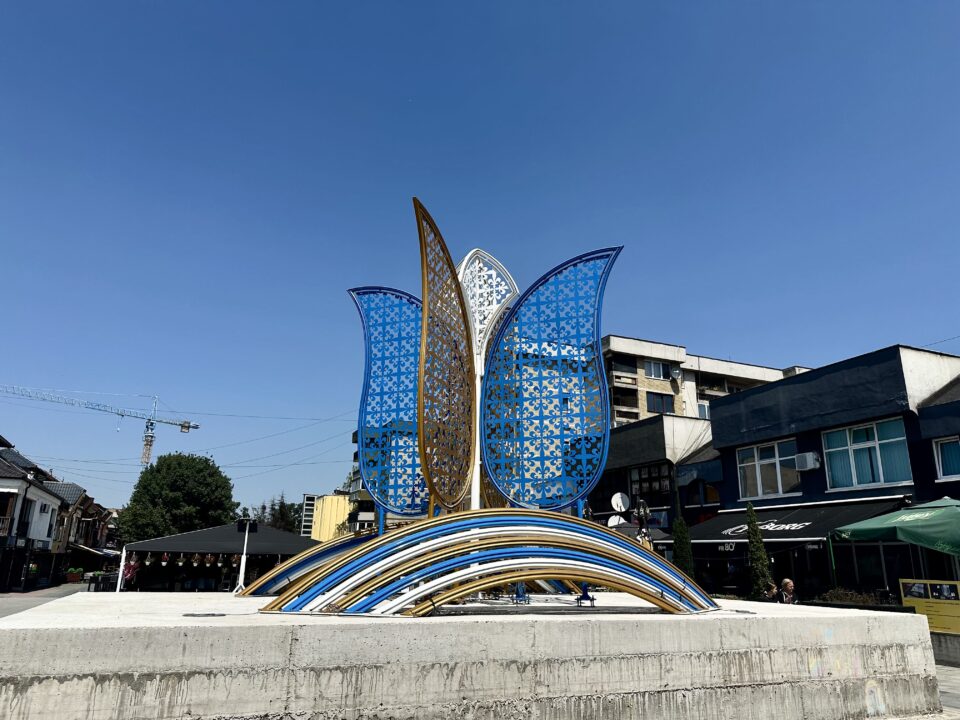
Decision makers in the small Bosnian town of Živinice may be the first to change the monument narrative with the unveiling of Bosnia’s first monument dedicated to women. A tulip in the colors of the BiH flag was built in the town, aiming to represent women’s strength and resilience across time and throughout the country’s rich history.
Even though the visibility of women in memorialization processes has increased, it has remained on the margins. Ćudić observes that in recent years, memorialization debates have become more prominent, creating space for women to participate not only as victims but as active agents shaping memorialization. He believes that women are increasingly empowered to take ownership of memory processes.
The transitional justice process and the International Criminal Tribunal for former Yugoslavia (ICTY) have played a crucial role in changing how conflict related violence against women is understood and observed within a society. As Ćudić observed, the ICTY’s verdict in the Kunarac–Kovač–Vuković case was particularly significant, establishing sexual violence as a war crime and shaping subsequent rulings.
“However, despite all the positive changes, places like the Vilina Vlas Hotel in Višegrad have not been properly marked. Tourists stay there, many unaware of the crimes that took place there,” Ćudić added.
In terms of international frameworks, one of the most significant is the UN Security Council Resolution 1325 on Women, Peace and Security (WPS). This resolution recognizes the disproportionate and unique impact that armed conflict has on women and girls, while also acknowledging the vital contributions they make to conflict prevention, resolution, peacekeeping, and peacebuilding.
“The WPS agenda emphasizes the need for the equal and full participation of women in all peace and security efforts, and addresses issues such as conflict-related sexual violence, accountability, and access to justice,” Gačanica explained.
Without monuments dedicated to women in BiH, their experiences and stories will be challenged or forgotten. Siničković adds that “Memorials and other commemorative activities for other identities, including gender, would make space for discussions on the essence of experiencing war as well as a way forward for the country.”
Gačanica concluded that addressing the gender perspective in memorialization, whether through monuments or broader remembrance practices, means directly confronting structural gender inequality and discrimination. “This is not simply about erecting one monument to honor women; it’s about shifting the underlying social norms, values, and systems that have historically marginalized women from public memory and formal recognition.”