Rising neo-fascist tendencies are sweeping Europe, including Bosnia and Herzegovina. Bosnian activist groups, however, are prepared to resist even the most covert forms.
Flowers, wreaths with golden lilies, and little blue and yellow flags line the streets of all major cities in Bosnia and Herzegovina (BiH) every year on May 9th. This year marks the 81st anniversary of the defeat of Nazi Germany in World War II, ending fascism’s more than decade-long grip on Europe.
When we hear on the news that neo-fascist tendencies are again on the rise, it does not necessarily mean that democracies are again giving way to military dictatorships. Rather, it refers to political actions and societal changes often associated with the term fascism.
In BiH, these developments are visible in different forms. Neo-fascist groups like the Zrinjski ultras, the East Alternative, or the Bosnian Movement of National Pride exist, though they currently have limited political sway. Common narratives of these groups include the revision of the country’s many-sided history, including the denial of the Srebrenica genocide, and the call for an ethnically homogenous state.
These groups do not openly refer to themselves as “fascist” or “neo-fascist.” In public statements, they even claim to oppose fascism. Nonetheless, they still display many characteristics of this ideology, cloaked in different and seemingly harmless symbols.
Understanding Fascism in All its Forms
In his famous 1995 essay, Umberto Eco describes fourteen traits of fascism, including a “cult of tradition,” a “fear of difference,” and the sentiment of “permanent warfare.” The common ground for all traits is that they derive “from individual or social frustration.” These criteria do not all have to be met simultaneously, as fascism can present itself in various nuanced forms depending on the context of its appearance. It is thus often difficult to discern these factors, especially when they are hidden behind populist rhetoric. It is even more difficult to detect the long-term motive behind fascist thinking and behavior: the aim to undermine the anti-fascist foundation that was laid in 1945. Unfortunately, this can even be seen in BiH, a country with a unique and enduring anti-fascist history.
Bosnia’s Longstanding Anti-Fascist Legacy
In 1941, during World War II, Yugoslavia was occupied and divided. This led to the establishment of the Independent State of Croatia (NDH), a puppet state of the German Third Reich that included the territory of BiH.
However, even during its peak in the 1930s, fascist ideology could never gain a strong foothold in Bosnian society. Shortly after Yugoslavia’s surrender, partisan units formed who stood ready to liberate the region from its fascist occupiers and their collaborators. Although the early movement consisted largely of communist forces, it was soon backed by many people.
Women played a crucial role in the anti-fascist struggle. Though unique in Europe, they quickly made a name for themselves as equal partners on and off the battlefield. Founded in 1942, the Antifascist Women’s Front (AFŽ) soon became an indispensable part of the partisan liberation of Yugoslavia.
In its entirety, the resistance was held together and driven by one shared goal: reclaiming the country together, despite differing beliefs.
The members of the partisan front also set up potential state authorities like the National Anti-Fascist Council of the People’s Liberation of Bosnia and Herzegovina (ZAVNOBiH). Unlike Western and Central Europe, Yugoslavia was finally liberated in 1945 by its own people, with the assistance of Allied forces.
Going forward, this achievement greatly shaped post-war Yugoslav identity.
“Antifascism became a core value in and for Socialist Yugoslavia, and the People’s Liberation Struggle the dominant topic in Yugoslavia’s official memory culture,” explains Nicolas Moll, a Sarajevo-based historian.
However, especially after the break-up of Yugoslavia in the 1990s, historical events and their derived values have increasingly been re-interpreted.
“While the antifascist legacy has often been directly attacked in Croatia and instrumentalized for nationalist purposes in Serbia, in Bosnia and Herzegovina, there are a mix of attitudes towards this legacy: forgetting, neglecting, rejecting, and nationalist reappropriation […] We can also find persons and groups who want to uphold the antifascist legacy of the Partisans, even if they are a minority and often struggle to be heard amidst the ethnonationalist domination and fragmentation of this country,” Moll continues.
Upholding the Anti-Fascist Legacy
Today, various groups are working hard to sustain public awareness of Bosnia’s anti-fascist legacy. Notably, the Association of Veterans of the People’s Liberation war of Yugoslavia (SABNOR) uses its wide network of eyewitnesses and other supporters to preserve the memory of the anti-fascist struggle during World War II.
Many activist groups choose to operate using an explicitly anti-fascist ethos: the Prijedor-based Youth center KVART, for example, holds its Regional Antifascist camp; the fashion brand Partyzan Clothing offers unique clothes combining iconic anti-fascist slogans with contemporary styles; Sarajevo’s Tito café combines Bosnia’s vibrant coffee culture with an atmosphere reminiscent of the partisans’ time.
Cultural and educational institutions have also adopted innovative strategies to generate enthusiasm for learning about Bosnia’s anti-fascist legacy. The History Museum of BiH concluded the “Wer ist Walter?” project, which tells the stories of the resistance fighters who combated Nazism and fascism across Europe.
This project utilized both traditional and digital mediums, with outputs including a museum exhibition, a scholarly book, and a multilingual digital platform. Moll, as co-creator of the project, explains that this multi-faceted approach is designed to broaden historical knowledge and memory of the resistance. This comes at a time when many, especially young people, often have only one-sided or superficial ideas about this integral part of European history.
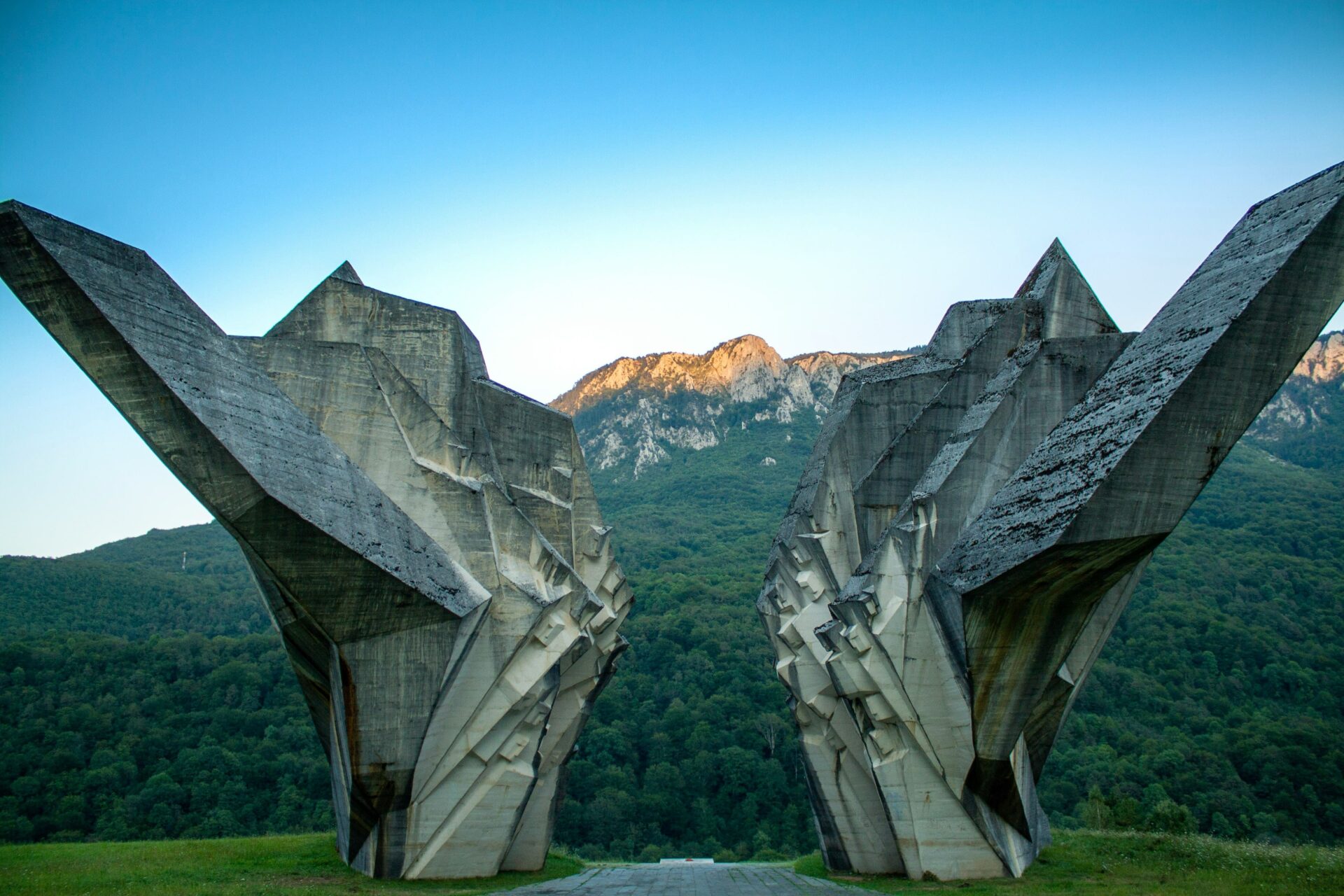
A similar initiative using digital space to educate the wider public is the website Spomenik Database. Set up in 2016, it collects photographs of iconic anti-fascist monuments across Southeast Europe and offers online explanations about the monuments and their importance for regional memory culture.
Tackling Fascism One Issue at a Time
Other activists are fighting for anti-fascist values in a different way: by linking their struggle to specific and pressing social issues and focusing on one key problem at a time. Although some issues might seem unrelated at first, they all contribute to the bigger picture: addressing core problems that facilitate fascist thinking in the first place. Trying to achieve sustainable and socially just economic transformation in BiH has been an important and longstanding challenge. The country’s stunning nature and wildlife, a particular source of pride for citizens, is endangered by policies that value economic profit over ecological preservation. The foundation Fondacija Atelje za društvene promjene (ACT) has therefore made it its goal to preserve the beauty of Bosnia’s ecological system and to ensure a high quality of life for all citizens. ACT aims to combat both problems simultaneously.
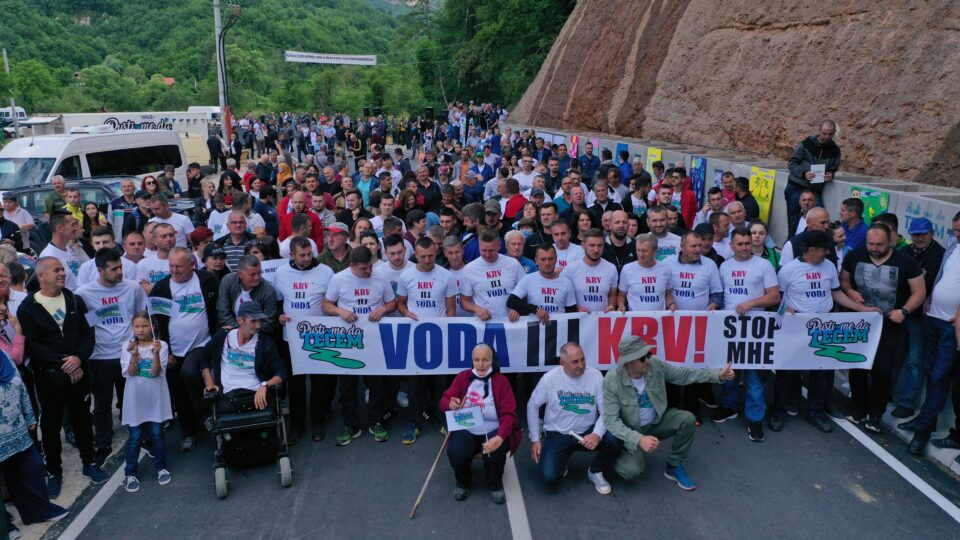
“We have repeatedly said that there is and cannot be ecological justice without social justice. When local movements across Bosnia and Herzegovina and the region defend rivers with their bodies, standing in front of dredgers, in courts and in the media, they are not just fighting for rivers; they are fighting for people, a dignified life, and a healthy future,” explains Lejla Kusturica, the director of ACT.
Like in the 1940s, many activists from diverse backgrounds have come together over time with a single voice. They have seen that only united is it possible to tackle the difficulties activists face.
“What distinguishes this movement is community and solidarity in levels unseen in the mid-1990s in Bosnia and Herzegovina or the region. People have simply become aware and started to see beyond the nationalist and crass narratives that are being promoted everywhere here,” Kusturica continues.
The Enduring Struggle for Women’s Rights in BiH
Another impediment to lasting peace in BiH is the failure to fully ensure women’s and gender-related rights.
That is why the CURE foundation is advocating to improve women’s rights, reduce gender-based violence, and end discrimination against minorities. For this purpose, they co-founded the network Ženska mreža BiH, which brings together 40 organizations and individuals united by one goal: fighting for the crucial feminist as well as anti-fascist idea of equality for all.
Like the partisans in occupied Yugoslavia, CURE members act on behalf of those most affected by the problems caused by neo-fascist thinking. Jadranka Miličević, director of CURE, describes why continued advocacy is more important than ever.
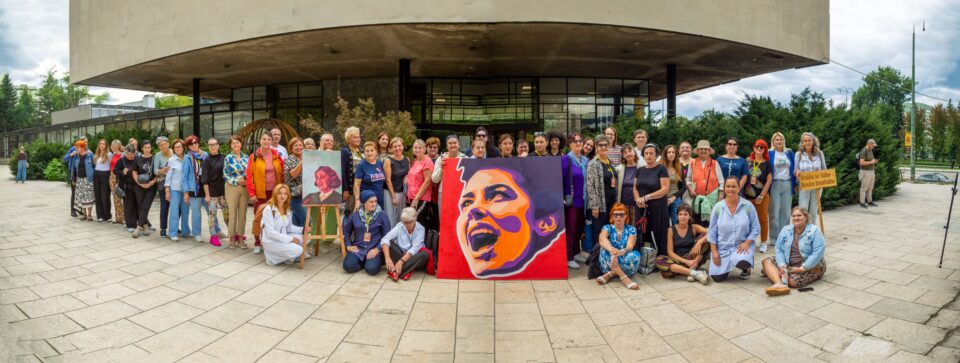
“BiH Citizens are not recognized as major drivers of change in the context of women’s rights. Numerous initiatives launched by civil society have been processed slowly or abandoned, because we lack the support of the majority of the BiH public.”
The main obstacle in their work, Miličević says, is the corrupt government system that has allowed the same people to remain in power for more than 25 years, stoking fears of renewed conflict while failing to solve pressing social issues for all citizens.
For Miličević, this makes it especially troubling how little recognition neo-fascist developments receive in modern-day BiH.
“It’s worrying how much fascism is spreading in society, through the education system, public narratives, the media, as well as through institutional tolerance of hate speech and violence. Therefore, we believe it’s high-time that people in BiH once again recognize antifascism not as an ideology of the past, but as a current response to the rise of extremism, misogyny, anti-gender equality movements, racism, and violence against marginalized communities.”
More Antifascism Advocates Needed
Neo-fascism trends are on the rise in Bosnia and Herzegovina, Europe, and across the world. Combatting them is especially difficult because many are not openly marked as fascist, but rather re-branded and disguised. Nonetheless, activists in Bosnia and Herzegovina are upholding the struggle for anti-fascism.
As the inspiring examples presented in this article show, these activists employ a combination of well-established, unique, and innovative strategies. They are continuously working to form a strong and united front against the problems BiH is facing and to tackle social issues before they become open conflicts—upon which fascism feeds.
Ultimately, they are all fighting for the same goal, as eloquently stated by Lejla Kusturica.
“We believe that all these struggles are connected, equally important, and require broader social engagement in order to defeat neo-fascism, the polluters of our rivers, forests, and air, and the inefficient healthcare system, and to stop the mass exodus of young people from what is, to us, the most beautiful country in the world.”