Murals, memorial plaques, and graffiti typically represent a form of art, sending universal messages or beautifying city walls.
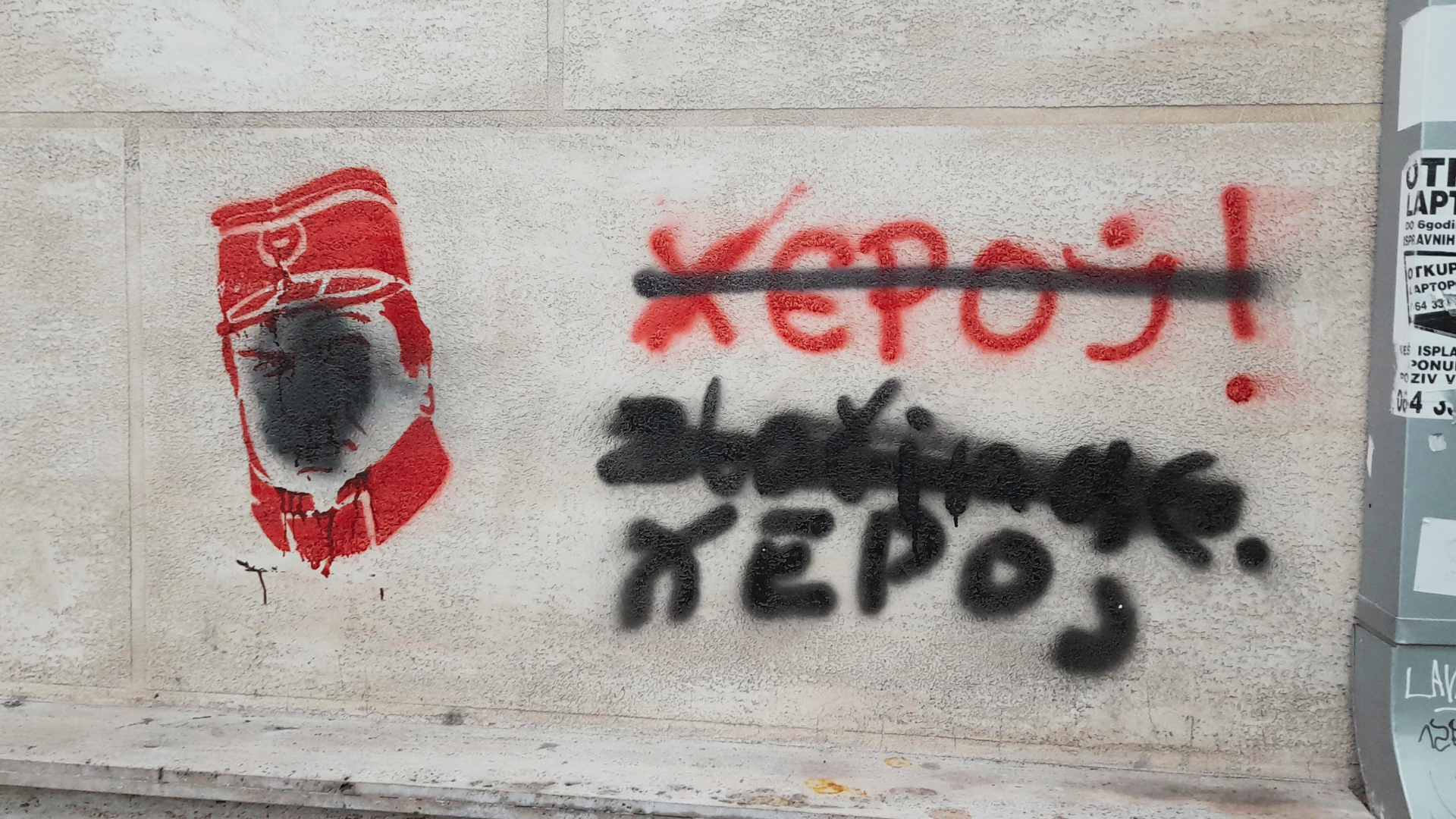
In Bosnia and Herzegovina (BiH), however, these works are part of the ongoing struggle over the interpretation of history and identity, especially when they depict controversial figures from the wars of the 1990s. While some say that this is simply a byproduct of the absence of an official historical interpretation, to others it is a source of trauma, causing offense and deepening divisions. Experts maintain that murals dedicated to convicted war criminals create closed ideological systems aimed not at dialogue but at reenforcing existing beliefs and political attitudes.
Near the Vraca Memorial Park in East Sarajevo—a place that, in the collective memory of the former Yugoslavia, had profound anti-fascist symbolism and represented a unique narrative about the Second World War—a memorial plaque honoring Ratko Mladić has sparked considerable debate, including initiatives both to remove and restore it. The plaque reads: “On May 19, 1992, the Commander of the General Staff of the Army of Republika Srpska, General Ratko Mladić, inspected two battalions of the self-organized people of the municipality of Novo Sarajevo. Combat organization East Novo Sarajevo.”
Mladić was sentenced to life imprisonment in 2021 before the International Residual Mechanism for Criminal Tribunals (IRMCT) for genocide in Srebrenica, the shelling and sniping of Sarajevo during the longest siege of a capital city in the modern history of warfare, other war crimes committed in several BiH municipalities, and holding international personnel hostage. The final verdict against Mladić was preceded by a trial before the International Criminal Tribunal for the former Yugoslavia (ICTY), which began in May 2012.
The memorial plaque in East Sarajevo was erected in 2014, and and has since been covered in tar, painted over, and repainted several times. Individuals have been arrested and prosecuted for repainting the plaque, but ultimately it still stands and has been returned to its original state after each incident.
East Sarajevo Mayor Ljubiša Ćosić emphasizes that the memorial plaque is not essentially dedicated to an individual as such but represents a symbol of memory of the local population that mobilized at a specific historical moment, whereby the name Ratko Mladić appears as part of the then-command structure rather than a central ideological figure.
Several murals are also been dedicated to Mladić in other cities in BiH, as well as to other controversial figures. These include a mural in Mostar honoring Slobodan Praljak, the former Chief of Staff of the Croatian Defense Council, who was convicted by the ICTY along with five other officials of the so-called Croatian Community of Herzeg-Bosnia. Praljak was sentenced to 20 years in prison but committed suicide by poison during the sentencing.
In most cases, murals are painted on privately-owned buildings, thereby precluding the intervention of local authorities. This is despite legal provisions of the BiH Criminal Code, imposed by the then High Representative Valentin Inzko in July 2021, which criminalize the glorification of war criminals.
These criminal provisions have yet to be fully and consistently implemented. In some cases, institutional responses to murals of convicted of war criminals have been totally absent or very superficial. In returnee communities and localities with pronounced ethnic divisions, this contributes to the politicization of the space of memory, where the presence of murals or symbols is not only an expression of an individual attitude but also a collective message about belonging, power, and the limits of acceptable identity.
The Balkan Investigative Reporting Network (BIRN) in BiH defines memorialization as an important part of the process of dealing with the past, through which communities commemorate suffering, preserve the memory of victims, and transfer knowledge about past events to future generations. They emphasize that memorialization is not only erecting monuments, but also developing educational programs, documentary projects, museums, commemorations, and media content that enable society to understand the consequences of war and violence.
“Bosnia and Herzegovina does not have a single law on memorialization, nor a systemically organized state strategy for the culture of memory, which is why the erection of monuments and memorials often depends on local political structures and administrative decisions,” noted Džana Brkanić, a journalist and researcher at BIRN.
According to her, the existing legal framework mainly relies on entity, cantonal, and local spatial planning regulations, without any clear standards that would define the role of memorials in the processes of transitional justice and social reconciliation. Such an institutional void, she believes, creates a space in which memorialization becomes a dominant political issue rather than a universal social process based on the recognition of suffering and respect for all victims.
In practice, victims’ families continue to face administrative and political obstacles when trying to mark places of suffering, detention camps, and mass graves, all while murals and memorials to those convicted of war crimes continue to be erected in certain areas. She warns that such practices produce a deeply divided memory space in which different communities develop parallel and competing narratives about the past.
Public Space as a Projection of Social Relations
Dr. Asim Mujkić, a professor of philosophy and political theory at the University of Sarajevo Faculty of Political Science, views public space as a complex system of symbolic production, where meanings are constantly produced, consolidated, and challenged. Thus, what is found on the walls of cities is not a coincidence or a spontaneous expression but the result of the relationship of social and political power.
According to Dr. Mujkić’s interpretation, public space is a structure in which certain actors have the capacity to determine which messages will appear in the visible space of the community, but also in what way these messages will be interpreted, thus shaping the framework of collective understanding of the past and present. In this sense, murals depicting war criminals do not function only as static visual elements; they are active bearers of ideological messages that gradually become normalized through daily exposure and cease to be subject to critical questioning, turning into a “natural” part of the urban landscape.
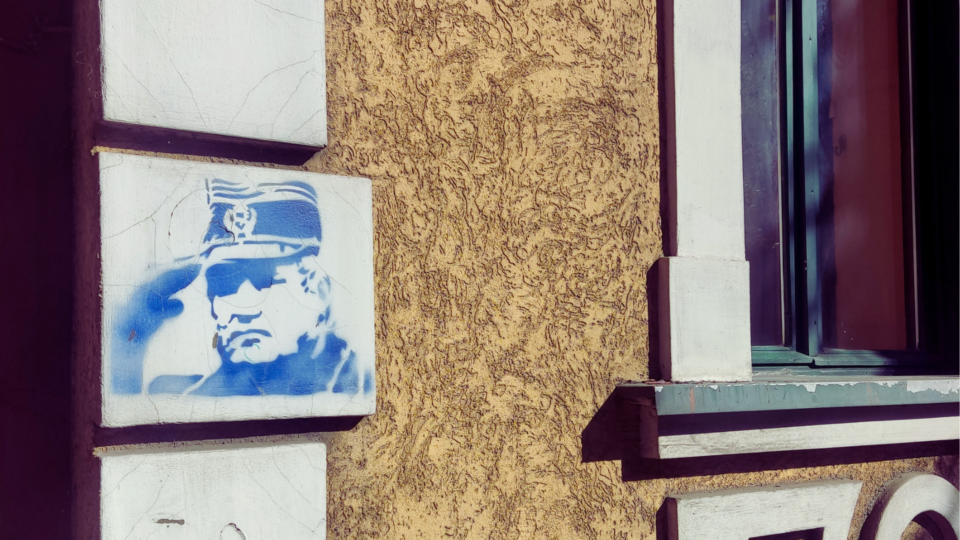
Dr. Mujkić stresses the key role of normalization in this process. Controversial historical figures are gradually moved from the sphere of moral and legal condemnation to the sphere of everyday presence, which affects the long-term collective perception of responsibility and historical facts. He further points out that such symbols in public space often have an exclusionary function, because they implicitly send the message that only certain narratives have the right to be seen, while others are suppressed or delegitimized, thus turning public space into an instrument of social hierarchization. He also makes a clear distinction between art and propaganda, emphasizing that art implies universal communication and the possibility of identification of different groups with its messages, while murals that glorify convicted war criminals represent closed ideological systems that do not strive for dialogue but confirm existing beliefs and political attitudes.
Memory Politics and Parallel Interpretations of the Past
Mayor Ćosić approaches the issue of erecting memorial plaques and murals to those convicted of war crimes from the perspective of political and social plurality of memory, emphasizing that BiH functions as a space in which there is no single historical interpretation, but multiple parallel narratives that are deeply rooted in the collective experiences of different peoples. According to Ćosić, conflicts over murals, memorials, and public symbols do not stem solely from their content but from the fact that different communities perceive the same historical events in fundamentally different ways, which makes it impossible to form a single social consensus about the past.
Ćosić additionally problematizes the gap between judicial verdicts and the social acceptance of those verdicts, stressing that international court processes, although legally binding, do not have to be identical to the collective memory or perception of local communities.
She sees the long-term stability of society as dependent on recognizing differing interpretations of the past while minimizing the political instrumentalization of these interpretations. Moreover, she emphasizes the need to shift focus to future generations and their socio-economic challenges.
Brkanić likewise noted that BiH functions through parallel cultures of memory that rarely interact, while memorialization is often used to strengthen national identities and political divisions. She points out that most memorials and commemorations remain exclusive to individual ethnic communities, without a wider social context that incorporates the perspectives of other groups.
She places particular emphasis on the problem of selective memory, through which only the suffering of one’s own community is highlighted while crimes against others are ignored or relativized. Such an approach, in her opinion, directly affects the young generations who grow up with one-sided interpretations of the past, making it difficult to develop empathy, critical thinking, and dialogue. As a possible way out of this social situation, Brkanić advocates the development of a more inclusive culture of memory based on judicially established facts and respect for all victims, as well as greater youth engagement through educational, media, and documentary projects that illuminate the consequences of war beyond ethnic divisions.
The Ethical Limits of Memory
For Murat Tahirović, president of the Association of Victims and Witnesses of Genocide, murals depicting convicted of war criminals do not represent a question of interpretation, but rather a question of the ethical boundaries of society and its attitude towards the suffering of victims. He points out that such symbols cannot be seen as neutral cultural or artistic expressions, but as an extension of war in a symbolic form, which negates or relativizes the judicially determined facts about the crimes committed.
According to him, the presence of such murals in public space has a direct and deeply traumatic effect on survivors because it sends a message that their suffering is not only unacknowledged but also reinterpreted into narratives that glorify those responsible for that suffering. Tahirović additionally emphasizes that there is a clear and insurmountable difference between the culture of memory, which implies empathy, recognition and responsibility, and the culture of glorification, which implies the justification of violence and historical revisionism. He also warns of the long-term consequences of such practices on young generations, who grow up in a space where controversial figures are presented as positive role models, which shapes their understanding of history, identity and moral values.
For Almir Marić, a humanities professor at Džemal Bijedić University in Mostar, public murals of convicted war criminals are an extremely negative social phenomenon that perpetuates existing divisions and complicates processes of dealing with the past.
“These activities contribute to the maintenance of social conflicts and make it difficult for society to move in the right direction,” said Marić, adding that the fact that such murals continue to appear and be restored indicates insufficient systematic work with younger generations as well as damaged social values. Thus, instead of universally accepted role models, controversial and legally condemned personalities are affirmed in public space.
He emphasizes that deep divisions in society are especially evident in the interpretation of the 1992-1995 war, which makes it even more difficult to build trust and joint social action.
Speaking about the border between freedom of expression and the glorification of war criminals, Marić points out that democratic societies must balance freedom of speech with judicial accountability and the dignity of victims. He warns that freedom of expression is often abused in practice to glorify convicted war criminals.
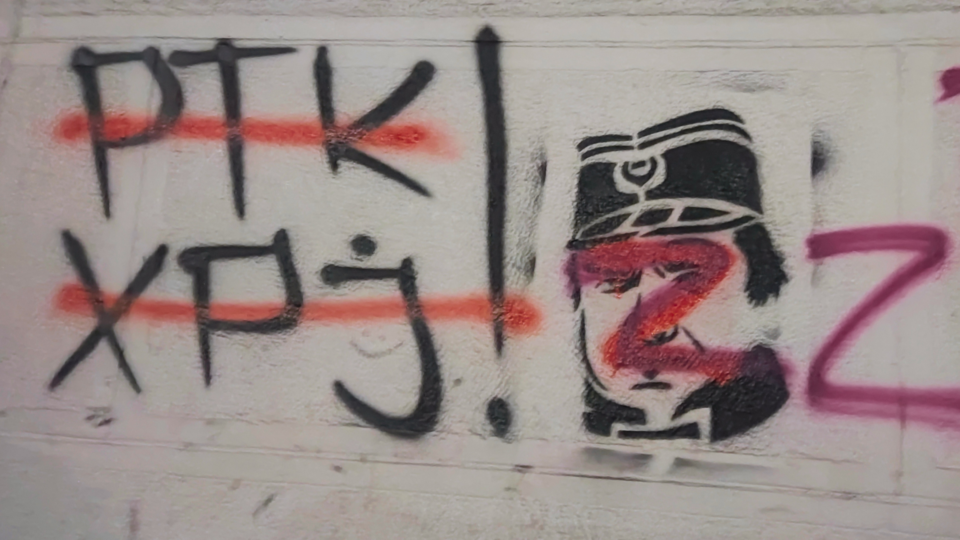
He further notes that such murals have a negative impact on victims’ families by renewing their trauma, as well as on younger generations, who may develop distorted value attitudes and an affirmative attitude towards controversial symbols of the past.
When it comes to institutional responses, Marić believes that the competent authorities in BiH can do much more to suppress the glorification of war criminals, and that there is no clear and consistent strategy for memorialization and the culture of memory.
According to his assessment, existing measures are largely fragmented and focused on commemorating dates without a long-term and strategic approach. When asked about the role of art and murals in the reconciliation process, Marić believes that they can make a certain contribution, but that their real impact on social change should not be overestimated. He emphasizes the need to evaluate past practices in order to understand what has been done so far and where efforts have fallen short.
Brkanić considers it particularly problematic that younger generations are growing up in a society where historical interpretations are often one-sided and politically motivated, which is why the education system, media, and public space rarely encourage a critical understanding of war and its consequences.
For this reason, she emphasized the importance of projects based on judicially determined facts, investigative journalism, and personal testimonies of victims, as these can provide a basis for developing a more inclusive culture of memory. A long-term sustainable culture of memory, she added, can only be built by respecting all victims, rejecting the glorification of war crimes, and creating space for dialogue between different communities. She points out that the culture of memory should not serve to maintain conflicts and political division but to shed light on the consequences of violence and preserve the dignity of victims.
Bridging Difficult Disagreements
BiH, as well as the wider region of the former Yugoslavia, remains a space where the past is not finished but continuously reinterpreted through public space; where murals, memorial plaques, and graffiti do not represent only physical objects but bearers of deeply conflicting political and social narratives. While some see them as a legitimate form of memory, identity, and historical continuity, others perceive them as instruments of denial and the normalization of violence and obstacles to the reconciliation process that deepen existing social divisions.
Between academic interpretations, political discourses, the experiences of victims, and transitional justice research, there remains a broad and difficult-to-bridge area of disagreement that institutions have not yet managed to transform into a common framework for understanding the past. In this context, public space remains a mirror of a society that has not yet managed to reach a consensus on its own history, and without that consensus, the future remains an open field of conflicting interpretations, memories, and identities that continue to form in the shadow of unfinished pasts.