
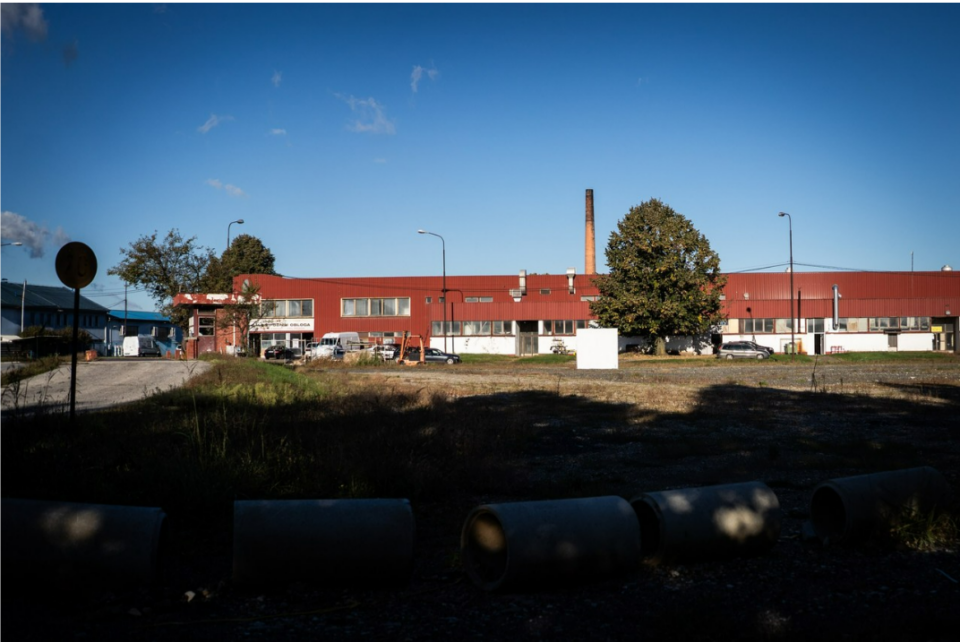
Once a well-known iron ore mine, after 1992, the name Omarska became synonymous with the most notorious detention camp where Bosniaks and Croats from the Prijedor area were tortured and killed.
Thirty-four years since the closing of the Omarska Camp, not a single monument or memorial exists there to memorialize these atrocities. According to survivors and transitional justice experts, the reason lies in years of narrative manipulation by the political parties active in the region.
“The absence of a memorial does not erase the memory of the camp or of the camp’s victims. This absence becomes a silent, suppressed rebellion, and pain. Instead of a memorial being a basis for learning about the past, it becomes a constant source of social tensions,” said Mirsad Duratović, president of the Association of Prisoners of Prijedor, who survived the horrors of the Omarska Camp and its ‘White House’ as a minor.
Efforts to mark the Omarska Camp have been underway for years, ever since former camp inmates began returning to their pre-war homes. The closest they ever came to a solution, Duratović explained, was more than 20 years ago, but even then, they were stopped by local politics and some former inmates who were not satisfied with the conceptual design of the proposed memorial center. The area of the Omarska Camp was formerly owned by the company Arcelor Mittal, but due to a recent change in ownership, Duratović says they are even further from establishing a memorial than they were in 2005. Despite this, through the independent initiatives of the Association of Prisoners of Prijedor, they have managed to put up memorial plaques.

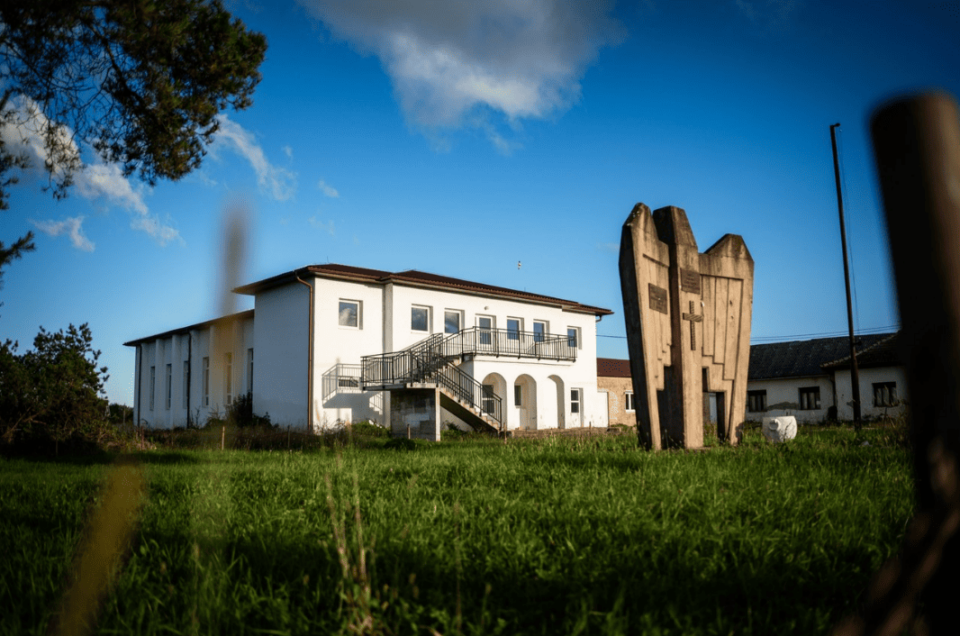
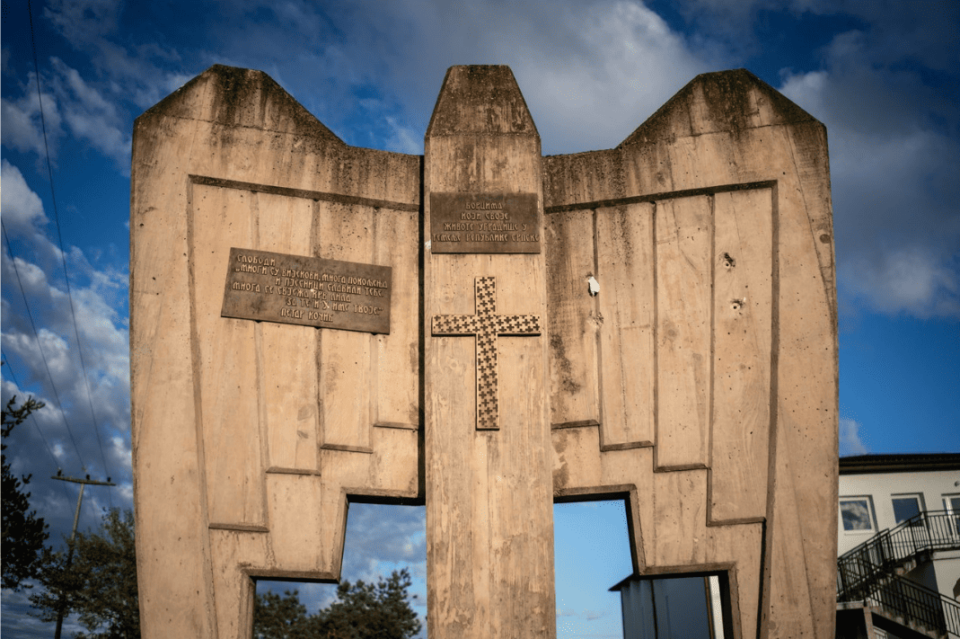
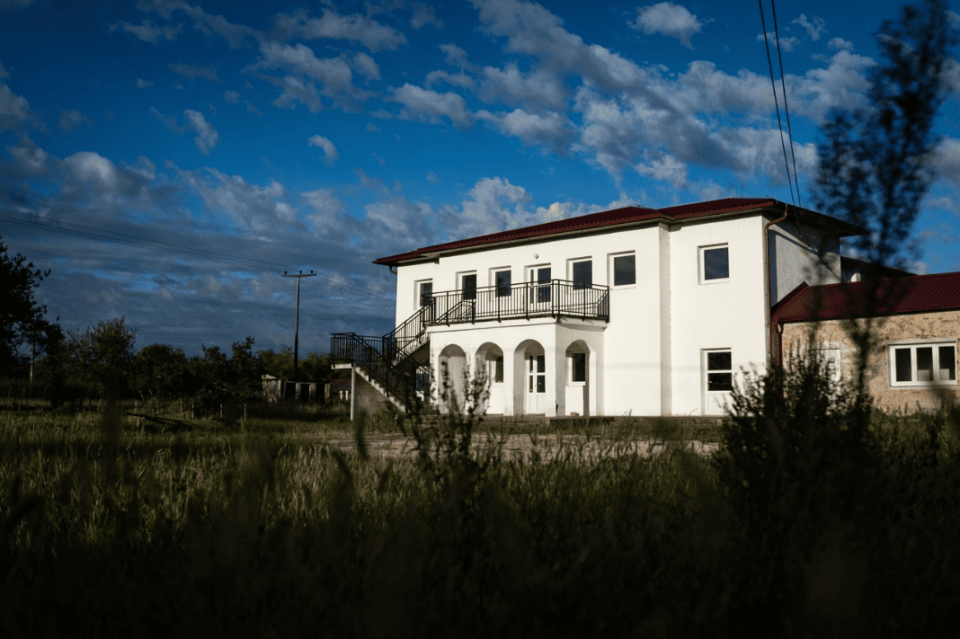
“In the Omarska Camp’s most notorious detention facility called the ‘White House,’ we installed two memorial plaques in 2017. One memorial plaque with an appropriate text is in the name of the former inmates of the Omarska camp, and the other memorial plaque is for the Serbs from Prijedor who live and work in Belgrade today. I think it is the only detention facility in Bosnia that has been marked in such a way,” said Duratović.
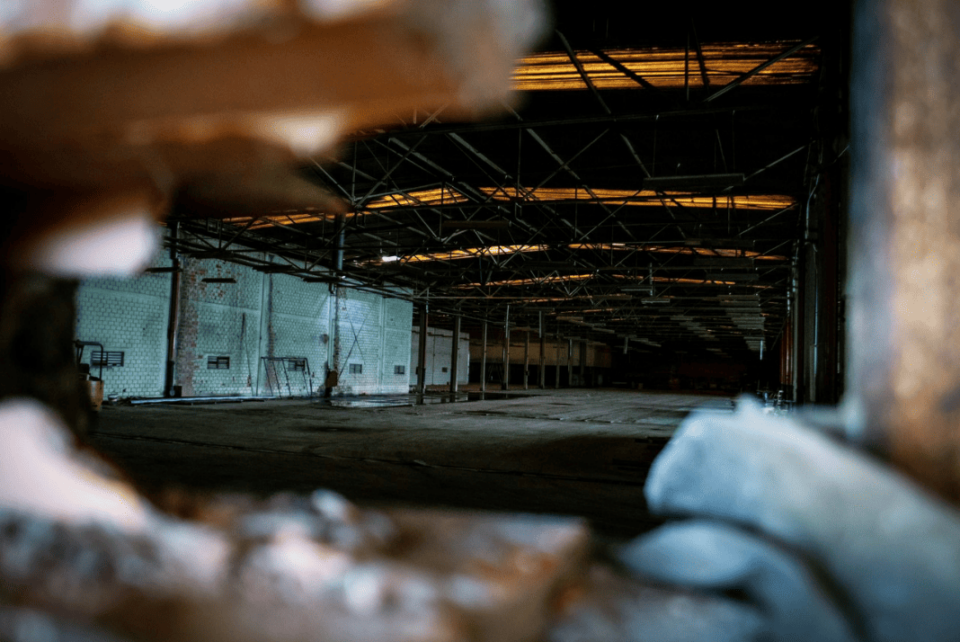
The camp was established in the vicinity of the Omarska Mine complex in May 1992, after Serbian forces took over Prijedor. The prisoners were mostly men, as well as about 40 women, who were mainly kept in three different buildings: the administrative room where interrogations were conducted and where most of the women were imprisoned; a garage or hangar; and the ‘White House’—a small building where brutal beatings were carried out. There was also a cement courtyard between the buildings known as the runway and another smaller building known as the ‘Red House,’ from which the prisoners taken there rarely came back alive.
According to survivor testimonies, the conditions in the Omarska Camp were harrowing. Male and female prisoners were kept in a confined, unsanitary spaces. They were starved, receiving food only once a day and barely enough of it to survive. The little water they were given was usually unclean. They weren’t able to change clothes and had no beds to sleep on. Medical care was withheld, while beatings were common, including with various objects such as wooden clubs, metal rods, tools, thick industrial cables, rifle stocks, and knives. In addition to beatings, detainees were subjected to torture, rape and sexual abuse, humiliation, murder, and various forms of terror.
Omarska was not the only such camp in Prijedor. Another was Keraterm, founded on the site of a pre-war ceramics factory, where, according to testimonies, more than 190 Jews were shot in just one night. Additionally, another camp was located in the small village of Trnopolje, five kilometers south of Kozarac, which, in 1991, had about 5,000 inhabitants, most of whom were Bosniaks. In 1992, this small village became one of Prijedor’s longest-running camps, through which about 5,000-6,000 people had passed by the time it was closed in December of that year. After the closing of the Omarska and Keraterm camps, numerous inmates were brought to Trnopolje. In August 1992, the picture of an emaciated inmate, Fikret Alić, was published on the cover of Time Magazine, exposing to the world what was happening in Prijedor at places that until then were being referred to as “reception centers.”
On August 6, 1992, journalists Ed Vulliamy, Penny Marshall, and Ian Williams revealed the existence of a camp for non-Serb civilians in the vicinity of Prijedor. In just a few days, the shocking pictures of emaciated detainees traveled around the world and shocked the conscience of humanity. Shortly thereafter, the United Nations Security Council established the International Criminal Tribunal for the former Yugoslavia (ICTY).
The crimes committed in Prijedor were prosecuted by the ICTY and the Court of Bosnia and Herzegovina. It was to this court that the case against Prijedor camp personnel Željko Mejakić, Momčilo Gruban, Dušan Fuštar, and Duško Knežević was transferred for further processing in accordance with ICTY procedures.
By the final judgment of the Court of Bosnia and Herzegovina, Mejakić, the Omarska security chief, was sentenced to 21 years in prison; Gruban, a shift commander at Omarska, to seven years in prison; and Knežević, who had no official position at either Omarska or Keraterm, to 31 years in prison. Fuštar, a shift commander at Keraterm, entered into a plea agreement and was sentenced to nine years in prison.
According to research by the Post-Conflict Research Center and the Srebrenica Memorial Center from September 2021, the ICTY and the Court of Bosnia and Herzegovina have sentenced more than 40 people to more than 600 years in prison for crimes committed in and around Prijedor.
Despite these verdicts, those who survived the crimes committed in Prijedor have been deprived in the healing process by the absence of a memorial or memorial center. Such a memorial would not only be focused on the past but would also be oriented toward the present and future, building trust with the aim of preventing the repetition of crimes.
Denying the existence of these camps and preventing the establishment of memorials represent secondary traumatization for survivors and families. Recognition of war crimes and massive human rights violations is necessary to restore dignity to survivors. In order for memorialization processes to have a positive impact, these atrocities must be publicly recognized by competent institutions, who have a critical responsibility in this process. If the social environment negates what survivors have experienced, it creates a feeling of rejection from the community in which they live.
“The ban on marking sites of suffering makes it impossible to close a painful chapter, leaving the trauma open. Denying the crime sends a signal that the ideologies that led to the camp are still present. This causes survivors to have a justified fear that history could repeat itself, which makes it difficult to reintegrate and live freely in the community,” Duratović said.
He added that the children and grandchildren of survivors grow up in an atmosphere where their family history is ‘forbidden’ or ‘disputed,’ which contributes to the development of transgenerational trauma. “Prohibitions on the placement of signs and monuments also send a message that laws and local authorities do not protect all citizens equally. This creates a deep gap between victims and institutions, making processes of reconciliation and building trust almost impossible,” Duratović asserted.
Commemoration as a ‘Living Archive’
For former camp inmates, their families, and the families of victims, commemoration, although emotionally exhausting, is an irreplaceable part of the process of dealing with the past that represents social recognition of their pain. Through commemoration, at least for one day, “private” trauma ceases to be a personal burden and becomes part of a wider social narrative.
“Commemorations at the authentic locations of former camps also serve as a ‘living archive’ because they preserve facts from being forgotten or potential revisions of history. Directly confronting the facts through survivor testimonies sends the strongest message to younger generations about the importance of preserving human rights and peace,” Duratović points out.
By their very nature, the camps were places of dehumanization, operating in a way that deliberately destroyed the minds, bodies, and spirits of those captured.
“Commemorations symbolically restore dignity to those who were reduced to numbers there, affirming their humanity and identity. Without commemorating suffering, processes of building trust and coexistence remain on fragile foundations, because true reconciliation can rarely exist where trauma is silenced and crimes are denied,” says Duratović.
In order to move from a state of conflict to a society based on the rule of law, it is crucial for institutions to assume responsibility for memorialization as well. When memorialization processes rest solely on survivors’ shoulders through individual initiatives and civil society efforts, they are treated as the memories of a single group rather than the entire collective. Using court rulings and archival materials as foundations, institutions should create a framework for an official culture of memory that will not be subject to different interpretations and historical revisionism.
“When the state or local government erects a monument or builds memorial centers, they are declaring that the victims’ suffering is an indisputable fact for that community. This act frees the survivors from having to constantly prove their own trauma. Institutional participation in memorialization gives victims a sense of protection, acceptance, and recognition of their suffering and also shows that human rights take precedence over daily politics,” says Duratović.
The Association of Prisoners of Bosnia and Herzegovina also views the participation of public institutions in memorialization and remembrance as a precondition for the institutionalization of truth and justice in Bosnia and Herzegovina, which the Union has been insisting on for three decades.
“This institutionalization and socialization is a necessary prerequisite for building a high-quality, truly democratic state for all individuals who feel that this is their only homeland. Institutionalization through the Act on the Protection of Victims of War Torture would bring concrete guidelines for strategic and operational action in terms of the formation of memorial centers,” says Professor Seid Omerović, president of the Association of Prisoners of Bosnia and Herzegovina.
According to him, the experiences of camp survivors have been significantly diminished by the absence of an adequate law protecting the victims of war torture: “This population is not recognized by the existing Laws on Civilian Victims of War throughout our country—in the Federation, Republika Srpska, or Brčko District—and 95 percent of the post-war population has absolutely no rights or status as victims.”
The Association of Prisoners of Bosnia and Herzegovina is of the unequivocal opinion that memorialization and remembrance must be based on truth and expertly verified facts, particularly those proven in lengthy proceedings by internationally recognized and respected institutions like the Hague Tribunal. “In all these and similar proceedings, camp inmates made the greatest contribution in establishing truth and attaining justice, to the extent that it is attainable in this world. In return, they never received an adequate law, even though to this day they contribute significantly to their country and to truth and justice, even from Sydney, Arizona, and Chattanooga,” emphasizes Omerović.
Memorials Entrenching Divisions Rather than Building a Healthy Memory Culture
The suspension of the construction of a permanent memorial center at the Omarska Camp site reflects the disposition of the Prijedor municipal authorities. This disposition is also evident in their refusal to either officially reject or issue consent to erect a monument to the 102 children murdered in Prijedor during the war.
Edin Ramulić, an activist at the KVART Youth Center and the Jer Me Zače initiative, believes that Prijedor is fairing better than anywhere else in the region when it comes to memorialization, given the extreme difficulty of erecting memorials at sites of suffering during the war in the 1990s.
“We are hostages of a ‘winning-side syndrome’ that characterizes the territories conquered and defended during the war. Thus, former Serb detainees can’t place a memorial plaque at the Čelebić Camp near Konjic or at the Silos near Tarčin, Croat detainees can’t place a plaque at the Battle of the Neretva Museum in Jablanica or the Iskra Stadium in Bugojno, and Bosniak detainees can’t even approach the Heliodrom Camp or place a memorial plaque in the Manjača Camp. In fact, in terms of memorialization, things are much better in Prijedor than anywhere else in the region. Only in Prijedor, all three camps have some character, even though the current authorities still carry on the legacy of the people who opened those camps,” says Ramulić.
When it comes to the memorial to Prijedor’s murdered children, there was early progress in the negotiation process, but the current mayor of Prijedor put a stop to it: “It’s positive that not a single official in Prijedor has ever spoken out against the memorial to the murdered children, but they decided not to issue a permit. In this, their greatest allies were politicians from the so-called pro-Bosnian parties. Let’s be clear: nobody supports such memorials—memorials not tied to the nation, religion, or politics. Memorials in this country function to cement divisions and incite hatred, not to honor victims or build a healthy culture of remembrance,” Ramulić arguers.
Youth as a Demographic Beyond National Narratives
Although Ramulić believes that commemorations in Prijedor are isolated to individual ethnic groups, he notes that the young people in KVART represent actors that go beyond national narratives.
“There are three separate narratives: the national Serbian one, which is backed by the authorities, their budget, and the church; and then the national Bosniak one and, to a lesser extent, the Croatian one, which are backed by the [respective] religious communities, local associations, and very often local politicians. All three narratives have their visible forms in public space, memorials, commemorations, and exclusive manifestations within their own ethnic group. They don’t infringe on one another or indicate a need to engage in any kind of dialogue about the past. [KVART] appeared as a separate supranational a narrative, through which we strive to create events, commemorations, and debates that are accessible and open to all identities while being careful not to make any compromises but strictly stick to established facts as well as general human values,” Ramulić explains.
Regardless of the limited organizational capacity, White Ribbon Day has existed for years as the primary commemorative event tied to Prijedor, just as July 11th is for Srebrenica.
“We take a completely different approach to organizing the commemoration of the murdered children on this day than anything else that happens in BiH in terms of commemorations. Our main motto is ‘let’s be human,’ and in our case, it turned out to be a good formula, so that White Ribbon Day belongs to everyone—that is, so that it doesn’t belong to just one national narrative. Another unique commemoration is Night in Trnopolje, where our intention was to create an alternative to the existing, strictly national commemorations. At the authentic site of the former camp, we created a space for a lively debate on human rights, along with book promotions, film screenings, and poetry readings that go late into the night,” explains Ramulić.
Although young people associated with the KVART Youth Center actively participate in the organization of White Ribbon Day—preparing materials and white ribbons, performing cleaning details, and designing art installations—the number of young people who visit the commemorative event is still minimal.
“The content of Night in Trnopolje is geared toward young people, and we ensure additional youth participation by including it in the program of one of the youth camps organized by KVART. Sometimes other organizations like Bridge of Peace and the Sedra Association from the Netherlands also include it in their programs. However, we can’t say there are a significant number of young people who are in any way connected to commemorative practices. The majority of Prijedor youth, or those who come to Prijedor from the diaspora in the summer, don’t show any interest in commemorative practices,” Ramulić notes.
What these young people from different communities have in common, according to Ramulić, is their disinterest in commemoration processes in Prijedor, no matter whether their families include civilian victims of war or soldiers who served in the armies that fought it.
“I know some young people from Prijedor who have never missed a single match of the national football team but haven’t attended even one commemoration honoring their father who was killed. And it’s not just young people. As a general rule, fewer people attend commemorations than the number of victims at the place being commemorated. Although many people—around 300 to 400—gather every year at the Keraterm and Omarska camps, that’s still less than those killed or disappeared in those camps. Most former inmates don’t come to these commemorations, so how can we expect these commemorations to be more important to young people?” said Ramulić.
He is well aware of the importance of such initiatives for the preservation of memory within the community. This is especially true for younger generations, who receive little to no formal education about these events and instead rely on family narratives. These narratives are often subject to the nationalist influences that prevail in public space and thus don’t encourage empathy for the suffering endured by members of other groups.
“No matter how much greater the reach of national narratives among young people, the appearance of initiatives like ours in public space can cause them to reconsider what is presented to them every day through monuments, media, and various content created by the authorities and associations close to them that arose from the war,” Ramulić points out.
Mirsad Duratović believes that marked places of suffering are essential for the development of empathy towards the other side among young people who didn’t directly experience the conflict.
“Without them, children learn about the conflict exclusively through often biased textbooks or stories told at home. Only when a community accepts the right of every victim to be remembered can a stable and shared future be built,” says Duratović. He adds that sincere reconciliation requires the courage to look into the past, mark sites that are painful, and affirm that such evils mustn’t be repeated.
The Role of Educational Institutions in the Memorialization of War Crimes
Discussing the thematic representation of camps and places of suffering within the educational institutions of Bosnia and Herzegovina, Dr. Jasmin Medić, a research associate at the University of Sarajevo Institute of History, notes that much depends on individual initiatives and policies.
“If we’re talking about primary and secondary education, the topic has been introduced in the history curriculum in the Canton of Sarajevo, thanks to the willingness of those of us who worked on it, considering this issue indispensable for understanding what happened in Bosnia and Herzegovina during the aggression. I can say that it’s never enough, given what transpired, but it’s sufficient to spark interest in further research among students with an interest in such topics. Other cantons have their own ‘educational policies,’ and in the Republika Srpska entity, this is colored by politics and a nationalist approach to interpretations of these events,” Medić points out.
He notes that the ultimate question is how much interest teachers have in adequately educating students to confront issues of detention camps and other war crimes. During his master’s and doctoral studies at the University of Sarajevo Department of History, Medić says his professors supported him in dealing with these topics. From his perspective, younger generations of students from different faculties are increasingly interested in studying the war against Bosnia and Herzegovina and its consequences, but it’s still crucial to make these topics more accessible to them.
“Presenting dry facts, burdening them with numbers and dates, has proven to be an ineffective method. On the other hand, visiting sites of atrocities, interdisciplinary approaches, and discussions with surviving witnesses of war crimes has yielded significant results. It’s often the case that those who have visited atrocity sites, taken a history class there, or talked to witnesses want to engage in war crimes research professionally. So, I can say that many individuals are making significant contributions to education,” explains Medić.
Given the differing narratives in public and political discourse, it’s important that young people who want to engage with the topics of war crimes and memorialization have access to verified facts.
“I recommend that everyone start first with the judgments of the International Criminal Tribunal for the former Yugoslavia or Hague Tribunal. These judgments are the foundation because they can provide authentic documents archived in the Tribunal’s database, witness statements, or contact those who testified. The Hague Tribunal, regardless of certain shortcomings, is a thorn in the side of anyone who relativizes or denies genocide or other crimes. There’s a reason that the Tribunal ad hoc is rejected by those who want to impose a nationalist narrative. Rejecting what has been proven in The Hague reflects both a fear of the truth and a fear of facing the past,” Medić observes.
Yet, there will always be those who deny, relativize, or even celebrate war crimes.
“A young man in Prijedor may see and hear nothing except that some Serbian soldiers died for freedom, and that’s where the story ends, just as a young man from Sarajevo can walk all over Sarajevo and not find anything out about Kazani, Dobrovoljačka, or Viktor Bubanj. There is no risk, things have already happened irreversibly. A young man from Prijedor can only get information that some children were killed there on May 31st, and on August 30th, that some people in Prijedor are still missing. It’s a question of when [commemorations] will cease to be organized. The International Day of Missing Persons wasn’t even observed last year,” Ramulić points out.
Dr. Medić emphasizes the importance of noting the influence of those who deny or relativize war crimes, as many of them have never had the courage to defend their positions in court: “I think it’s important to know when it’s appropriate to respond to things like that and when it’s not. Then, we have a law that prohibits denial, so it’s necessary to put continuous pressure on the Prosecutor’s Office to file indictments and bring those people to court,” says Medić.
Approaches to Communal Memory
Opposing views on the role of memorials and institutions in Prijedor do not actually stem from a disagreement about the importance of memory, but from a deep mistrust in the ways in which it is shaped today.
For survivors like Mirsad Duratović, the memorial center represents a minimum standard of recognition and dignity, as well as the permanent preservation of the truth. For Edin Ramulić, meanwhile, practical experience shows that the institutionalization of memory often ends with its instrumentalization—exclusive, ethnically tinged, and politically burdened.
This disparity suggests that the problem is less in the memorials themselves and more in the context in which they are created. In a society where there is no common framework for the recognition of facts, any attempt at memorialization risks becoming another parallel narrative rather than a meeting space. Thus, as Ramulić warns, memorials can entrench divisions, while their absence, according to Duratović, is “a constant source of social tension and pain.”
Between these two extremes, the space for the future may lie precisely in models that insist on verified facts, openness, and the inclusion of different communities—frameworks that do not see memorialization as the end of the story but as the beginning of a dialogue.
This article was created within the project “Generation Memory”, which is carried out by the Post-Conflict Research Center (PCRC), with the aim of developing inclusive, local peace-building practices and a culture of memory that encourage work on understanding, empathy and critical reflection among young people. The project is financed by UK International Development and is implemented in partnership with the British Council.