Three decades after the violent conflicts that claimed thousands of lives and profoundly shaped those who survived, a central question remains across the Western Balkans: how can the voices, experiences, and needs of those most affected be placed at the center of policy and societal action?
While important progress has been made in this regard, including the development of institutional frameworks, the prosecution of war crimes, and the search for and identification of missing persons, for many survivors, recognition remains uneven, support insufficient, and justice incomplete.
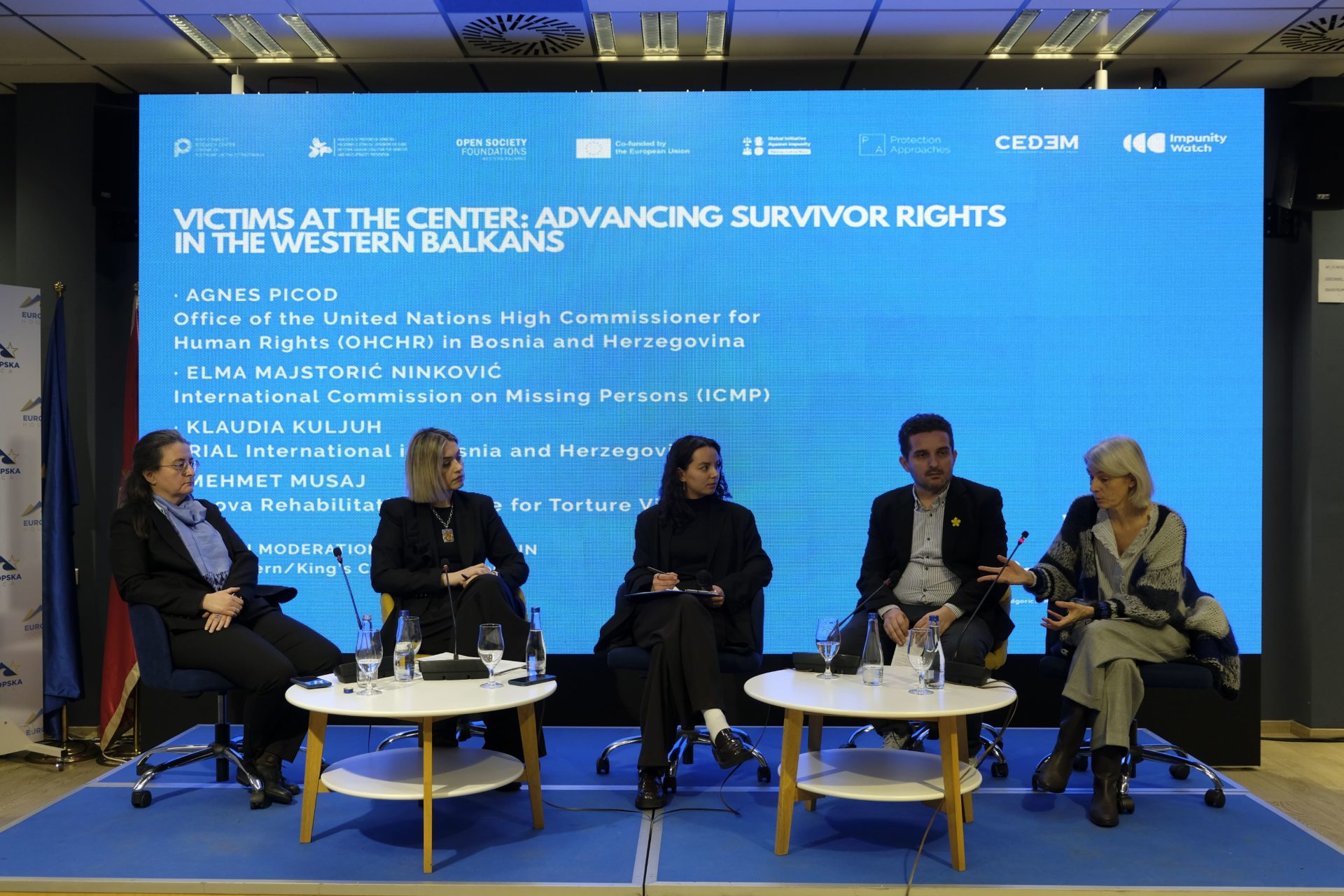
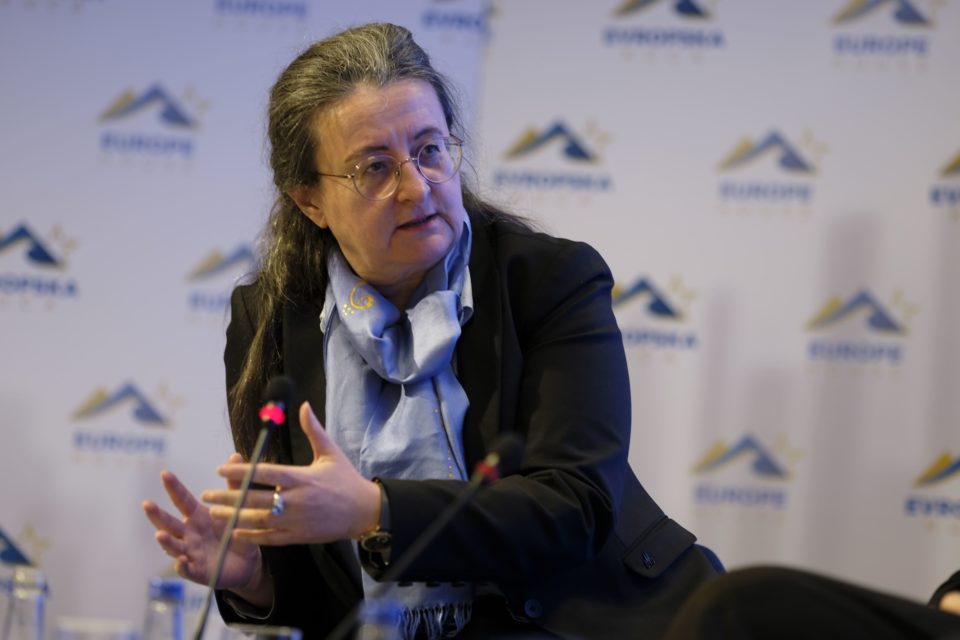
These issues set the stage for the final panel “Victims at the Centre: Advancing Survivor Rights in the Western Balkans,” of the inaugural Western Balkan Peace Forum. Bringing together practitioners with extensive experience working directly with survivors, the discussion explored what a genuinely victim-centered approach looks like in practice, where key gaps remain, and what kinds of action are still required. The panel featured Agnès Picod, Head of the Office of the United Nations High Commissioner for Human Rights (OHCHR) in Bosnia and Herzegovina; Elma Majstorić-Ninković of the International Commission on Missing Persons (ICMP); Klaudia Kuljuh, Head of Programme at TRIAL International in Bosnia and Herzegovina; and Mehmet Musaj, Senior Manager at the Kosovo Rehabilitation Centre for Torture Victims. The session was moderated by Karlotta Hein, a graduate of the Master’s programme in Conflict Resolution in Divided Societies at King’s College London.
A central question running through the panel was what a victim-centered approach actually requires from institutions, governments, and civil society. One common answer emerged clearly from all panellists: recognition. As Picod stressed “the fundamental step to having a victim-centred approach is to really recognize all victims, by all parties of the conflict,” which she described this as absolutely central to rebuilding society. Thus, any meaningful victim-centered approach, the panelists agreed, must begin by acknowledging victims and survivors as such, not only in legal terms, but also in political narratives, public discourse, and institutional practice.
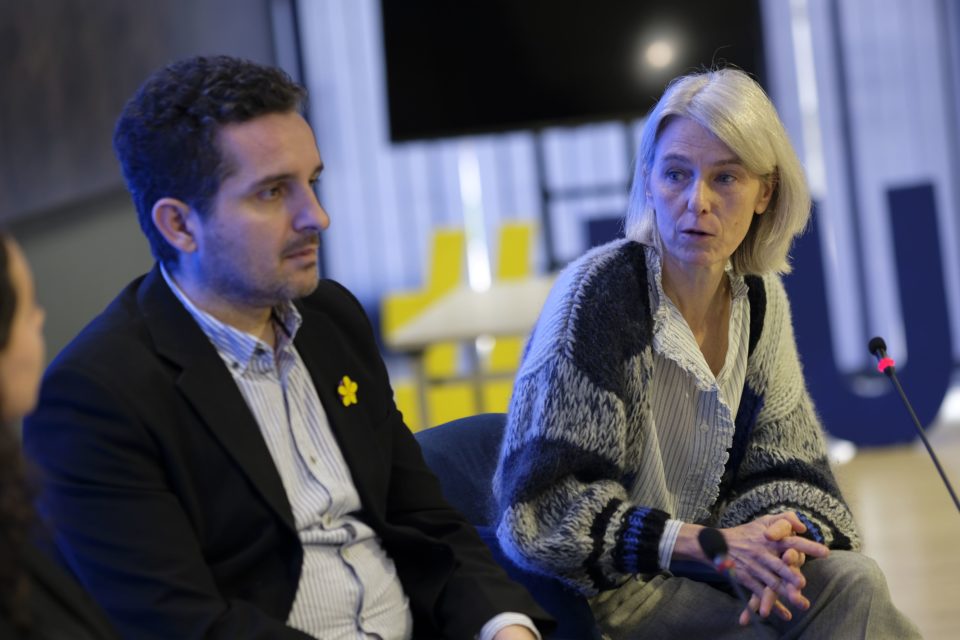
At the same time, the panel made clear that such recognition remains uneven and limited. As Musaj shared from his work with survivors of wartime rape, abuse, and torture, this recognition is still lacking profoundly. He described war rape as “one of the most silent crimes,” underscoring how it has been made invisible at multiple levels, within families, communities, and institutional structures. This structural silence makes it particularly difficult to reach survivors, build trust, and provide meaningful support. Precisely for that reason, recognizing both the crime and those who have survived it is an essential step.
Further reflecting on Bosnia and Herzegovina, Picod pointed to the persistence of a “hierarchy of victims,” noting that while the focus on survivors of conflict-related sexual violence has been necessary, other victim groups have often been neglected. This selective recognition, she argued, undermines reconciliation by perpetuating divisions and excluding groups from acknowledgement and reparation processes.
Fragile Trust in Institutions
Another key theme mentioned was trust. Musaj stressed that, for him, the most important thing is trust, while also noting that building it takes time. He underscored that survivor-centered support depends not only on services or legal frameworks, but on creating conditions in which survivors feel safe enough to seek support and share their experiences. Picod echoed this point, arguing that creating an environment in which people feel safe and able to trust their communities and institutions is essential. Yet, she noted, this remains a critical issue in Bosnia and Herzegovina and across the region more broadly. When survivors do not believe they will be heard or protected, many choose not to come forward and file complaints or seek justice through the courts. In this sense, low trust in institutions is not only a political problem but a direct barrier to access to justice.
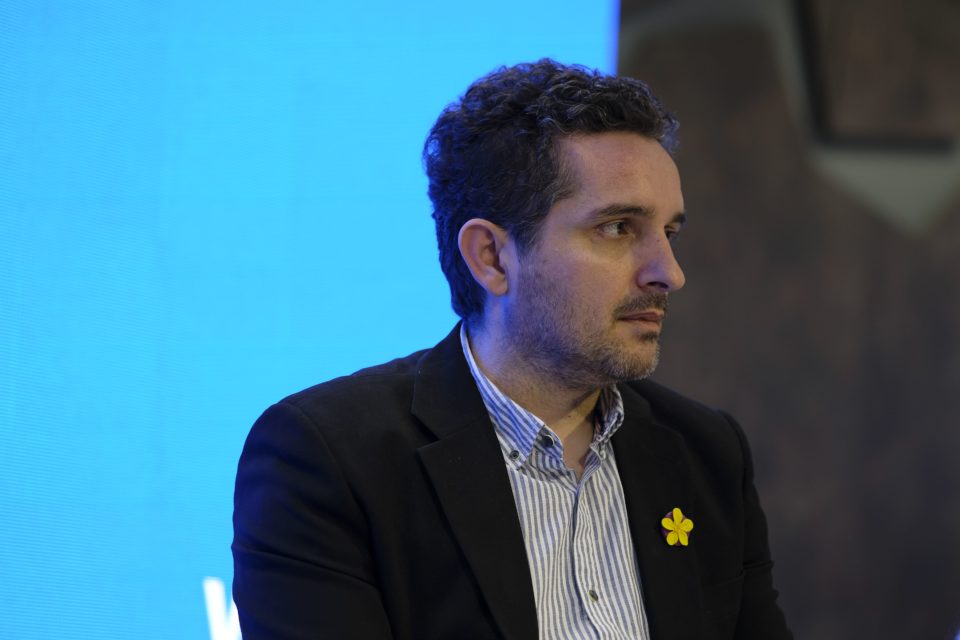
In discussing how a victim-centered approach is implemented in practice and where limitations persist, a central issue mentioned was the gap between formal commitments and implementation. As Majstorić-Ninković pointed out, while institutions have, in theory, placed survivors at the center through legislation and policy, progress remains limited without the necessary technical and financial resources. She therefore stressed the need for stronger political and financial support, particularly from the European Union, to sustain the work of regional organizations.
Moreover, the panelists emphasized that much of the work with survivors has been and is being carried out by civil society, which Picod noted has been “very convenient for authorities.” Kuljuh added to that by describing civil society as the “actual driving force,” while pointing out that the burden and responsibility should rest with governments. CSOs can be “the watchdogs over the process,” but they cannot replace state responsibility. As she put it, the “ball should be thrown back to the governments.”
Regional Steps Forward
Finally, the panelists were asked to propose one concrete regional step to strengthen survivor rights across the Western Balkans. Picod argued that Bosnia and Herzegovina should make use of the EU accession process as leverage to push for advances in transitional justice. Majstorić-Ninković further emphasized the importance of regional cooperation, particularly in addressing the issue of missing persons, stressing that “conflict crosses borders, graves cross borders, so justice has to cross borders” as well.
Shifting the focus to local ownership, Kuljuh called for recognition, apology, and a willingness to take responsibility within the region itself rather than waiting for the international community to do the work. Musaj likewise highlighted the role regional civil society can play in identifying common challenges, shared vulnerabilities, and examples of good practice. While acknowledging the scale of the task, he argued for small practical steps, including the development of common frameworks through which organizations can respond more effectively to survivors’ needs.
The moderator concluded that placing survivors at the center of transitional justice in the Western Balkans requires more than rhetorical commitment. “Recognition, trust, institutional responsibility, and sustained regional cooperation emerged as interconnected objectives for advancing survivor rights and reconciliation”, explained Hein.
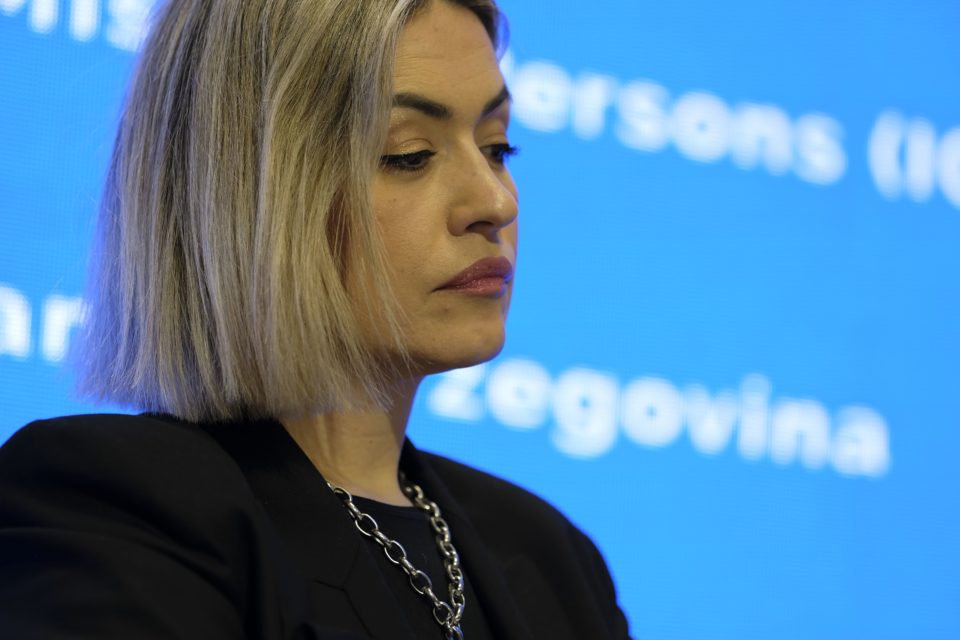
She added that while CSOs play a vital role in supporting survivors and driving progress, lasting change will depend on stronger political will, adequate resources, and inclusive approaches that acknowledge the experiences of all victims.