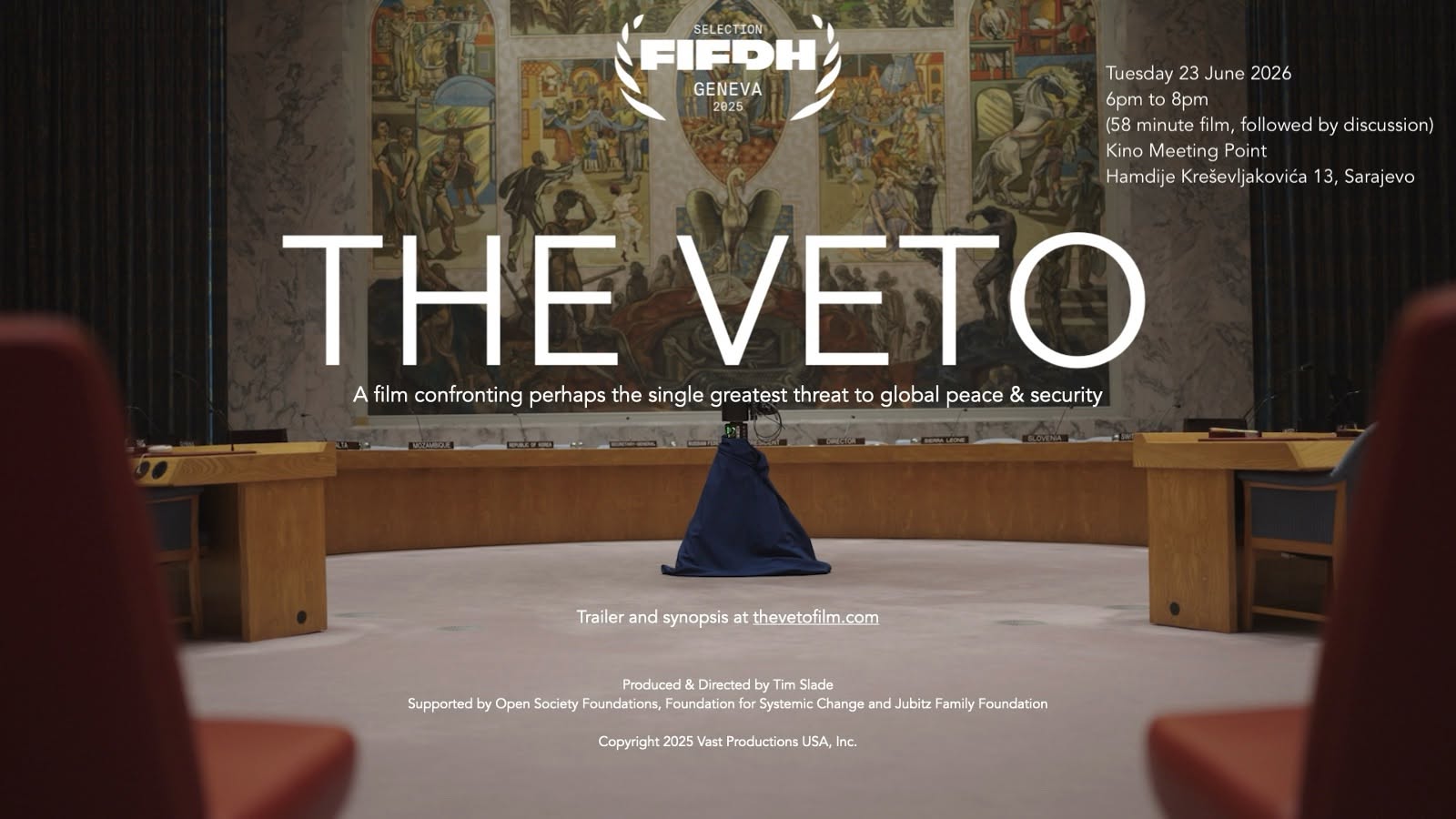
“The Veto,” a 58-minute documentary made by director Tim Slade last year, premiered at the Sarajevo Kino Meeting Point this June. The film addresses the long-debated topic of the veto power: the exclusive right of the five permanent members of the United Nations Security Council to block any resolution unilaterally.
Over the years, many nations and experts have called for reform of the veto power, but its establishment in Article 27(3) of the UN Charter was a precondition for the superpowers’ participation, making it seem “untouchable.” However, when vetoes are cast in the face of genocide, war crimes, and crimes against humanity, calls for innovative solutions resurface. This film is one such call, featuring leading global experts’ insights on the pathways to breaking the Security Council deadlock.
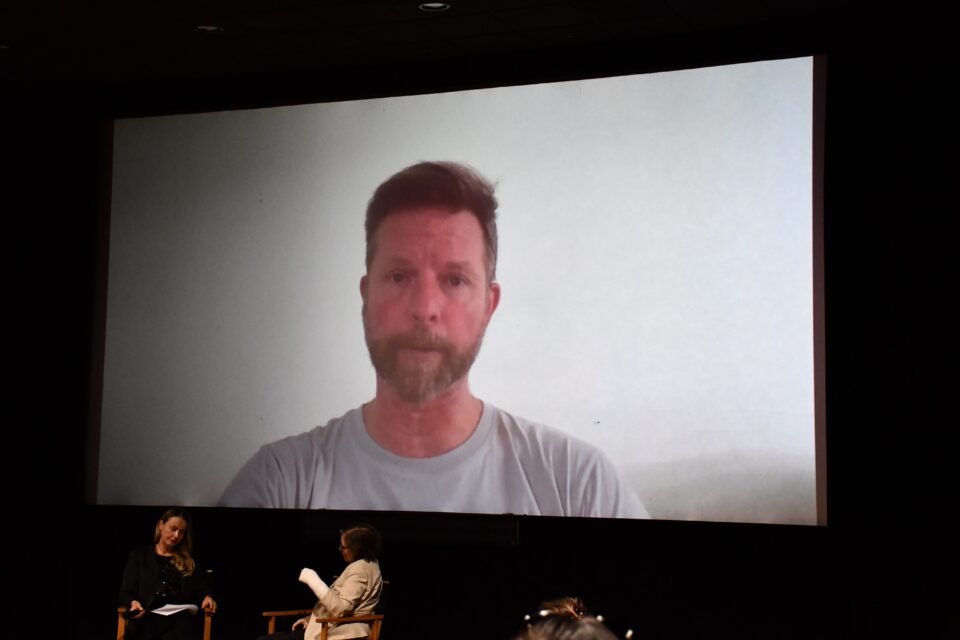
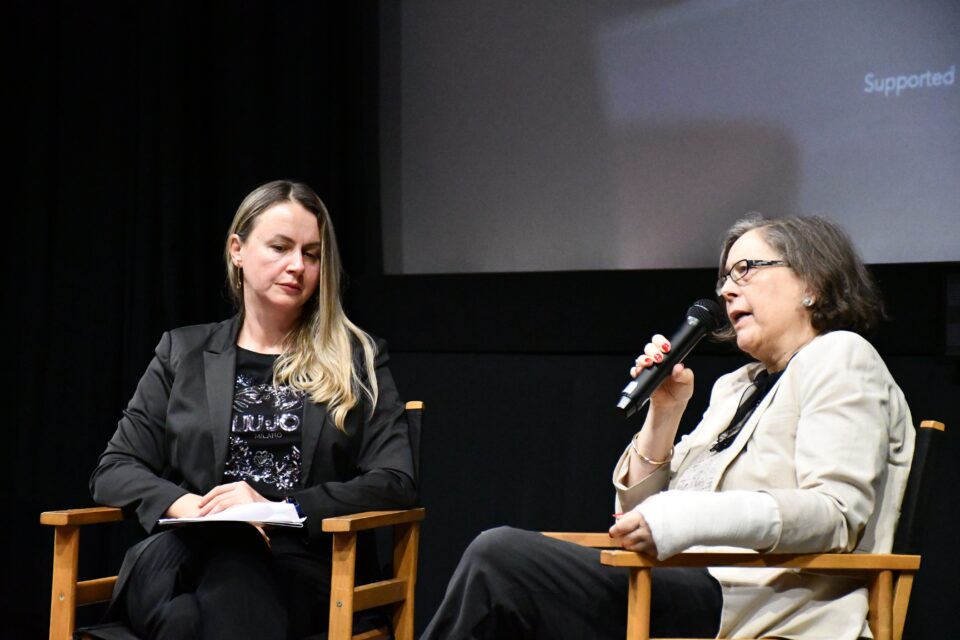
After the screening, Slade addressed the audience by video and expressed his appreciation that the event was able to take place in Sarajevo, “the hero city,” where the International Criminal Tribunal for the Former Yugoslavia operated free from any veto, bringing some accountability for war crimes perpetrated from 1992 to 1995.
Professor Jennifer Trahan, a renowned expert on international law and justice, emphasizes that “the former Yugoslavia certainly witnessed what it was like in the early 1990s to have a slow response from the UN system. So much more could have been done earlier in the war, and it really took a long time for the West to wake up to the crimes occurring.”
In May 1993, the UN Security Council unanimously adopted Resolution 827, which created the ICTY to hold people accountable for the atrocities committed. Ever since the ICTY’s establishment, it has conducted research and has indicted over 160 individuals for crimes committed during the Bosnian War.
Professor Rachel Kerr, a historian of transitional and post-conflict justice, explains that there are two reasons why the veto was not used in the case of the ICTY: firstly, the end of the Cold War meant that there were no longer two politically opposed factions in the Security Council safeguarding their (and their allies’) interests; secondly, there was a growing concern for human rights in the West.
Daniel Saxon, a former senior prosecutor at the ICTY and law professor at Leiden University, notes that the Security Council did impact the tribunal’s work by setting a “completion strategy,” a deadline to conclude indictments and send certain “less grave” cases to be prosecuted in national courts.
Today, however, the veto mechanism—designed as a form of “political accommodation” for the Permanent Five powers—that was unused in Bosnia is now being misused in such a way as to perpetuate conflicts around the world.
In their 2023 report Vetoing Humanity, which examined 23 of the most protracted conflicts globally, Oxfam Novib found that 27 of the 30 Security Council Vetoes cast on these conflicts concerned the Occupied Palestinian Territories, Syria, and Ukraine.
Russia and China have used their veto power several times to block resolutions aimed at easing the humanitarian crises in these regions, such as an extension of a nine-month program of cross-border assistance to northern Syria, limiting access to water, food, and medicine for 4.1 million people.
Moreover, Russia repeatedly used its veto power to block Security Council resolutions concerning its operations in Ukraine, not just regarding its invasion of Ukraine in 2022 but also the annexation of the Crimean Peninsula in 2014. While dozens of states have pledged their support for a “Special Tribunal for the Crime of Aggression in Ukraine,” this is still in the formative stages, led by the European Commission.
Saxon says this tribunal may try the accused in absentia, which would not satisfy most victims, but it might also create new jurisprudence vis-à-vis the crime of aggression, thereby advancing international law.
One of the most pressing conflicts is Israel’s siege of the Gaza Strip, in which the International Court of Justice ruled that Israel’s acts could infringe on the rights of the Palestinian people under the Genocide Convention.
However, in spite of these findings and global protests the veto power has consistently prevented the Security Council from acting on these demands. The United States has used its veto power six times against the passing of any resolution perceived as unfavorable towards Israel, including a draft resolution that would have demanded an immediate and permanent ceasefire in Gaza.
“These permanent members are willing to use the veto and veto threat to protect themselves and/or their allies, as a result, blocking the Security Council, even in the face of ongoing atrocity crimes,” Trahan explains.
In all, the case of the ICTY demonstrated the possibilities for progress in peace and security at a unique time in Security Council politics characterized by the end of the Cold War, Western agreements on human rights issues, and an alignment of international interests in the case of the former Yugoslavia.
However, in an increasingly fragmented era of international politics, the possibility of another alignment for modern cases of intensified violence, conflict, human rights violations, and genocide seems bleak. Especially in the shadow of the UN80 reform, which anticipates shifts in the UN’s structure and mandates, those involved with peace and security, especially civilians, must push for proactive cooperation rather than another chance alignment of interests.
The film “The Veto” conveys this message in a manner that is understandable and palatable to audiences.

Scholars like Trahan advocate for a legal approach, suggesting that at times when a permanent member blocks the council’s actions to prevent crimes like genocides, it violates a state’s obligations related to jus cogens and can be at odds with treaty obligations.
The conflicts that unfolded in the former Yugoslavia have passed, but their impact on these societies will be forever felt. The ICTY was just one step in the right direction taken by the international community, even after years of delays in action. That being said, current conflicts are enabled by political deadlock.
By bringing this important political conversation to the fore, “The Veto” shares with viewers and commentators the responsibility to take action and advocate for a modernized and humanized UN system.